Coop gear, ranked by the problem it solves
Nearly every coop in this category ships short of something. Here is what is genuinely missing, in the order it is worth buying.
We have not handled these coops, and we do not pretend to have. Here is what we did instead. Links to Amazon earn us a commission at no extra cost to you - disclosure.
| # | Coop | Best for | Honest count | Price |
|---|---|---|---|---|
| 1 | 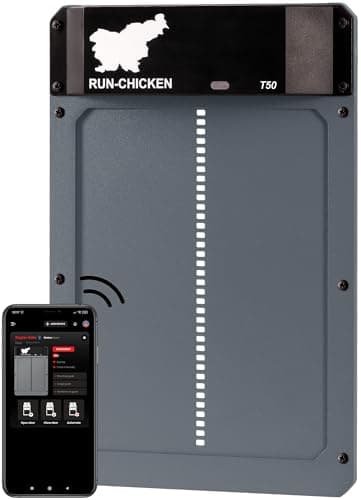 RUN-CHICKEN Door T50 Automatic OpenerTop pickBattery-powered aluminum with app and timer control. The one automatic door here that does not depend on winter sun. | The door that just keeps working | not published | |
| 2 | 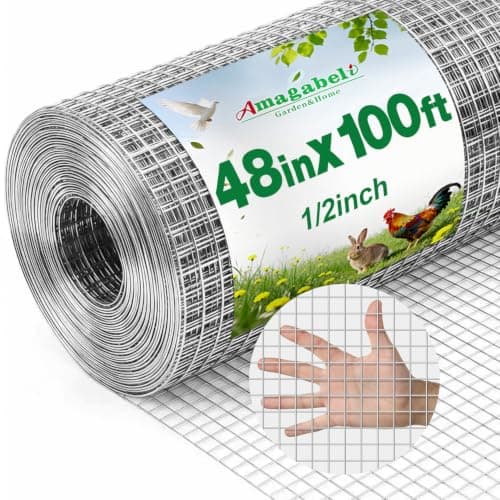 Amagabeli 1/2" Hardware Cloth, 48in x 100ftHalf-inch aperture, 19 gauge, hot-dipped galvanized after welding. This is the specification that actually keeps raccoons out. | The single most important predator purchase | not published | |
| 3 | 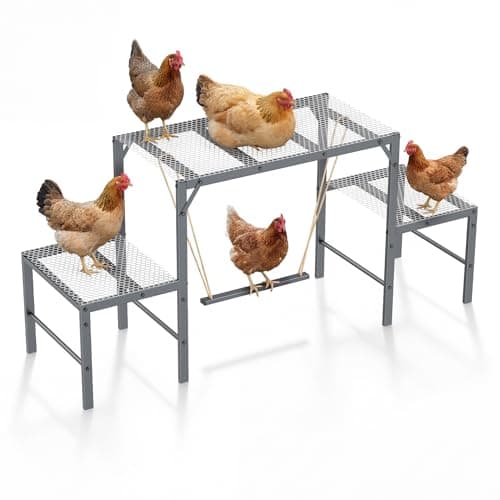 Magicfly Chicken Perch and Roosting Bar57.5in of metal roosting bar. Roost length is the spec people forget, and it is 8in per standard hen. | Adding roost length without carpentry | not published |
A coop arrives looking complete. It usually is not. The same few gaps show up across brands and price points, because they are the parts that cost a manufacturer money without showing up in a listing photograph.
The buying order
- Half-inch hardware cloth. Not optional, and the cheapest life-saving purchase you will make. Hardware cloth against chicken wire.
- A latch that needs two motions on every opening, including the nest-box lid. Latches.
- A waterer, on day one - no coop includes one, and hens must never go 12 hours without water. Waterers.
- A feeder, on day one too - and one that closes, if you would rather not feed the local rats. Feeders, and rat-proofing if they already found you.
- An automatic pop door, if you value not being home at dusk every day. Automatic coop doors.
- Roost bar. Most coops supply less than the published 8 inches per standard bird. Roosting bars.
- Nest boxes, but only if you are actually short - one per four hens is the guidance and most coops over-supply them. Nesting boxes.
- More run, if the coop turned out smaller than the listing implied. A bolt-on panel run costs a fraction of replacing the coop - run extensions.
- Climate gear last: a radiant panel for hard winters, a shutter fan for hard summers. Heaters, fans and vents.
What coops consistently get wrong
| Component | What ships | What it needs |
|---|---|---|
| Run mesh | Chicken wire or 1in+ welded mesh | Half-inch hardware cloth, 19 gauge |
| Door fastening | Hook-and-eye, turn button or plain bolt | Two-motion latch, or bolt plus carabiner |
| Roost bar | One short bar, often the wrong shape | 8in of bar per standard hen, 2in+ flat top |
| Nest boxes | Often 6 boxes on a 3-hen coop | One per four hens - usually a surplus, not a shortage |
| Ventilation | Small vents at or below roost height | Larger openings high on the walls, meshed |
| Pop door | Manual slide, sometimes with no latch | Automatic opener, or a latched manual door |
Start with these three
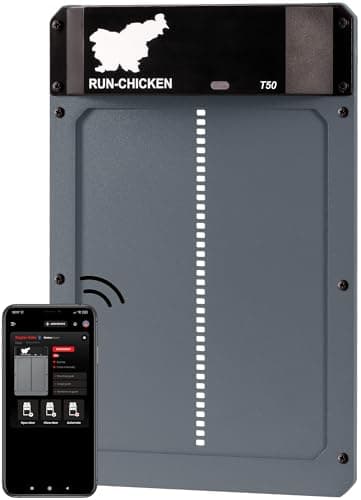
Top pick · The door that just keeps working
RUN-CHICKEN Door T50 Automatic Opener
Battery-powered aluminum with app and timer control. The one automatic door here that does not depend on winter sun.
What the numbers say
The manufacturer does not publish the dimensions this calculation needs, so we do not print a number.
Figures from RUN-CHICKEN published specifications (Amazon listing) · 13.8"L x 9.4"W x 1.3"H · Aluminum
Battery rather than solar is the important choice. A solar door's worst performance and your longest nights arrive in the same week, which is exactly when a door failing open costs you a flock.
Aluminum construction rather than plastic matters at the door itself, because this is the part a raccoon works at.
App and timer control both present, so it works whether or not you want it on your phone.
Good
- Battery power is unaffected by December daylight
- Aluminum door rather than plastic
- Timer and app control both supported
Not so good
- Batteries need replacing on a schedule you must remember
- Costs more than the solar units
- Opening size fixed by the unit
Skip this if: you have no way to check on it. Any automatic door needs an occasional look; a battery one needs its cells thought about before winter.
#ad · how this is funded · price as of October 17, 2026
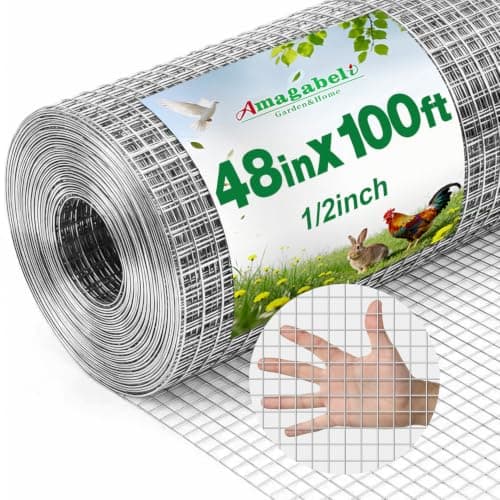
Pick 2 · The single most important predator purchase
Amagabeli 1/2" Hardware Cloth, 48in x 100ft
Half-inch aperture, 19 gauge, hot-dipped galvanized after welding. This is the specification that actually keeps raccoons out.
What the numbers say
The manufacturer does not publish the dimensions this calculation needs, so we do not print a number.
Figures from Amagabeli published specifications (Amazon listing)
Half-inch aperture is the number that matters. A raccoon can reach through 1in mesh and a weasel walks through 1in chicken wire; half-inch stops both.
Galvanized AFTER welding, not before, is the second specification to check. Welding burns the coating off, so mesh galvanized beforehand rusts at every joint - which is exactly where it needs to hold.
19 gauge is the practical minimum for a coop perimeter. Thinner mesh sold as hardware cloth exists and bends open by hand.
Good
- Half-inch aperture excludes raccoons and weasels
- Hot-dipped galvanized after welding, so joints do not rust first
- 48in width covers most run walls in a single run
Not so good
- Cutting it is hard on the hands and on your snips
- 100ft is more than a small coop needs
- Edges are sharp and need capping or folding
Skip this if: only if you already have half-inch hardware cloth. Do not substitute chicken wire - it is a containment material, not a security one.
#ad · how this is funded · price as of October 17, 2026
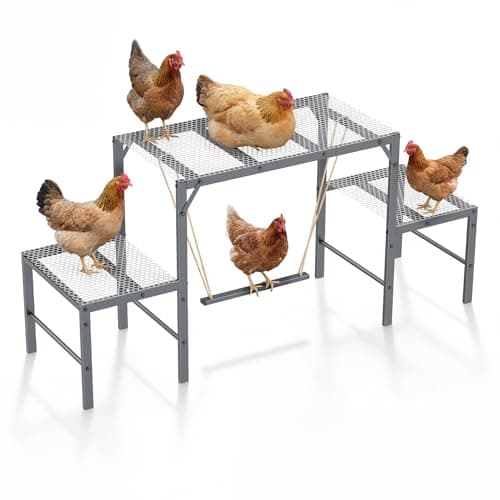
Pick 3 · Adding roost length without carpentry
Magicfly Chicken Perch and Roosting Bar
57.5in of metal roosting bar. Roost length is the spec people forget, and it is 8in per standard hen.
What the numbers say
The manufacturer does not publish the dimensions this calculation needs, so we do not print a number.
Figures from Magicfly published specifications (Amazon listing) · 57.48"L x 16.92"W x 26.96"H · Metal
57.5 inches of bar is roughly seven standard hens at the 8in-per-bird figure our calculator uses.
Roost space is the constraint people discover in winter, when birds huddle and the ones pushed off the bar sleep in the nest boxes - which is how you end up with dirty eggs.
Freestanding, so it works in a coop where you cannot easily fix a bar to the walls.
Good
- Adds real roost length with no carpentry
- Freestanding, so no wall fixing needed
- Metal will not harbor mites the way rough timber does
Not so good
- Takes up floor area you may not have
- Metal bars are colder underfoot than timber
- Not adjustable in height
Skip this if: your coop already has adequate roost length. Work it out first at 8in a bird - our calculator prints the figure.
#ad · how this is funded · price as of October 17, 2026
All the gear pages
- Automatic coop doors - the upgrade with the biggest effect on daily life
- Coop heaters - when supplemental heat is justified, and when it is a fire risk
- Coop fans and vents - moving air in a hot climate
- Roosting bars - shape, height and how much length per bird
- Nesting boxes - how many you need and how many you were sold
- Run extensions - the cheapest fix for a coop that turned out too small
- Feeders - stopping feed waste, and stopping the rats that follow it
- Coop lights - holding up winter laying on the published schedule
- Roll-away nest boxes - when the egg needs to leave the nest immediately
- Coop cleaners - deodorizer against disinfectant, and which job you are actually buying
- Nesting pads - excelsior against washable, and which a roll-away box needs
- Coop wheel kits - making the coop you already own movable
- Chicken swings and enrichment - where a toy sits on the published list
- RUN-CHICKEN T50 against the Omlet door - the two doors people cross-shop
- Waterers - the published water figures, and what stays clean and unfrozen
- Run flooring - what to put down when the run turns to mud
- Solar coop doors - automating the pop door with no power at the coop
- Cold-weather coop doors - the doors that still close below freezing
- Coop floor coverings - the sealed layer the bedding sits on, and why peel-and-stick is the wrong one
Questions people actually ask
+What do I need to buy with a chicken coop?
+Are automatic chicken coop doors worth it?
+How much roosting bar does a chicken need?
+Do I need a heater in my chicken coop?
Sources
Read next
Automatic chicken coop doors
Automatic pop doors compared on trigger, power source, opening size and what happens when it is 10 degrees out.
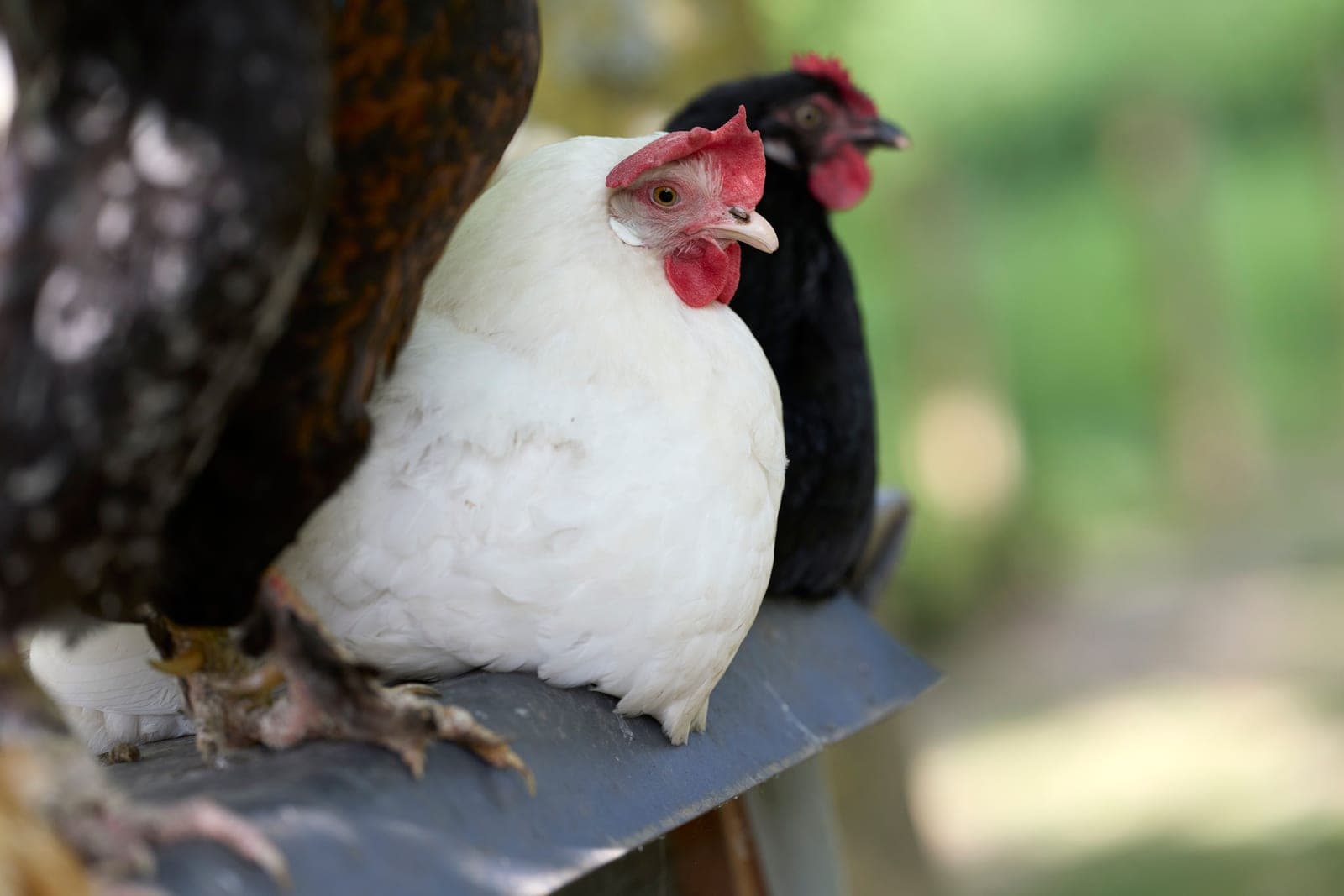
Roosting bars, and how much bar a flock needs
The published per-bird roost length, why flat beats round, and how to add bar without carpentry.
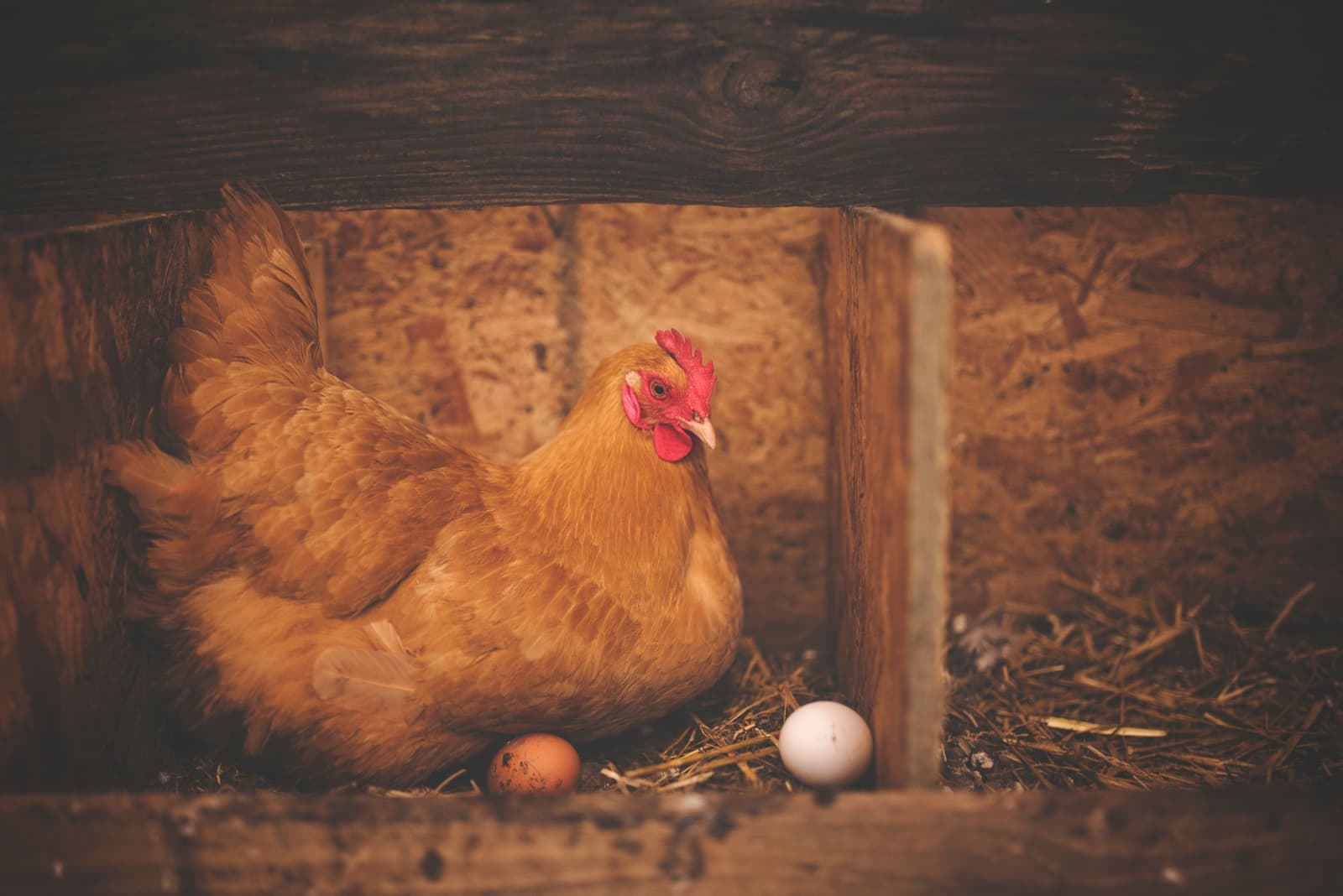
Nesting boxes, and the six-box three-hen coop
How many boxes a flock needs, why coops oversupply them, and what to do when you genuinely are short.
Coop heaters, and whether you need one
Flat radiant panels compared, with an honest answer first on whether heat is the right intervention at all.

Coop fans and ventilation hardware
Vent placement, how much opening a coop needs, and when a powered shutter fan earns its wiring.
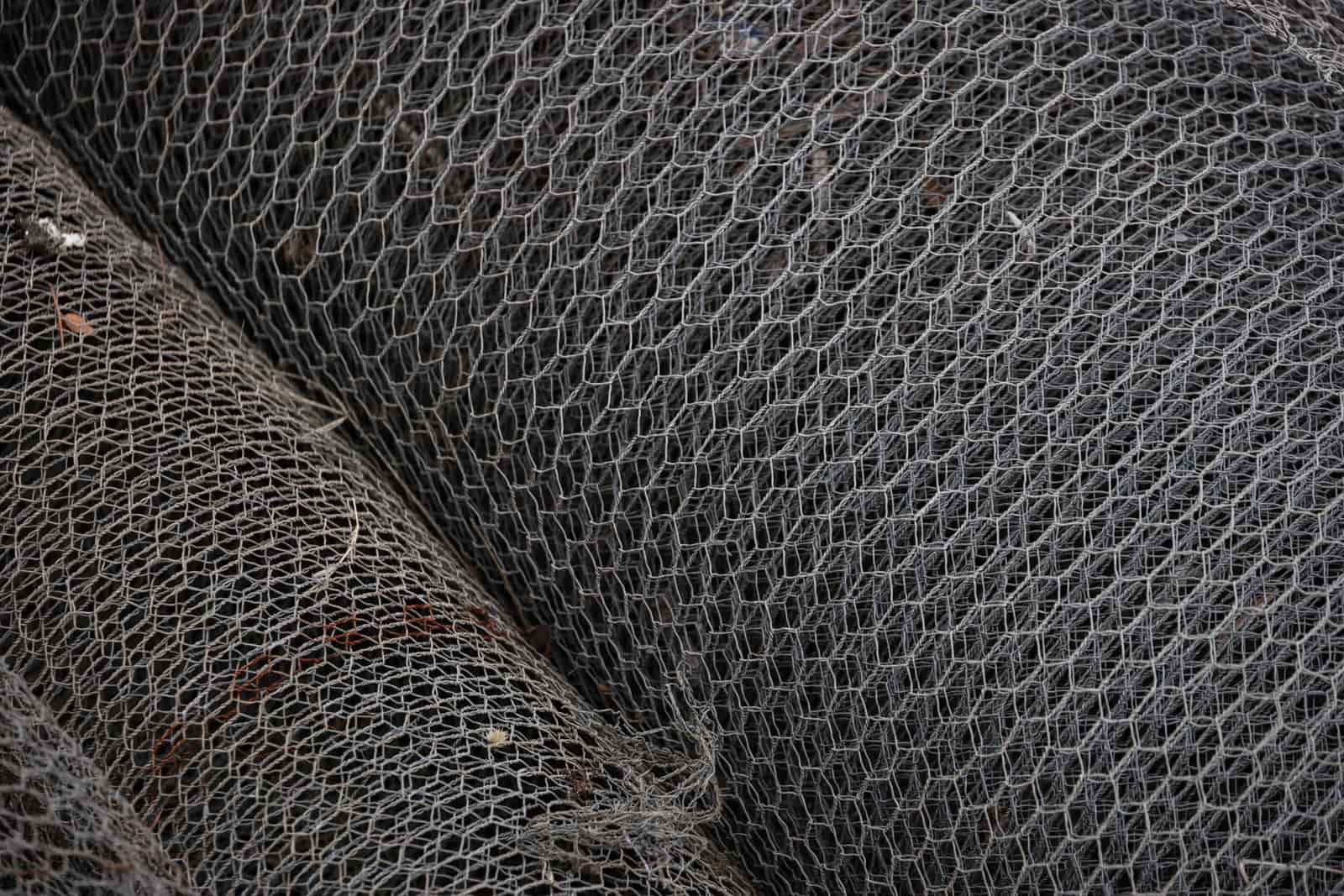
Hardware cloth against chicken wire
Why hexagonal chicken wire fails, what gauge and aperture to buy instead, and how many feet a typical coop actually needs.