Chicken run flooring, and what actually fixes mud
The honest answer to a bare, wet run is a load of coarse wood chips. The products worth buying are the ones that fix the patches chips cannot.
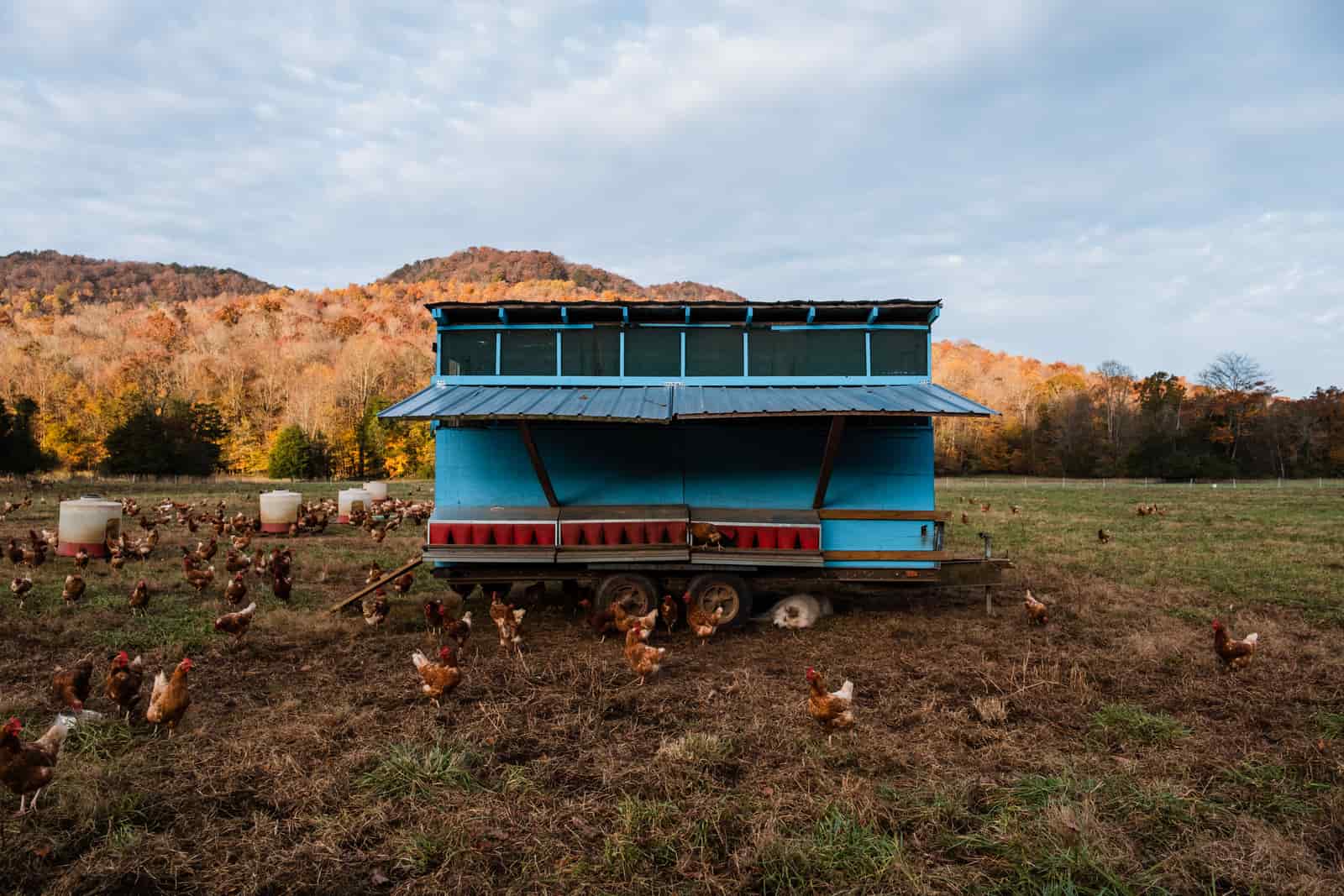
We have not handled these coops, and we do not pretend to have. Here is what we did instead. Links to Amazon earn us a commission at no extra cost to you - disclosure.
| # | Coop | Best for | Honest count | Price |
|---|---|---|---|---|
| 1 | 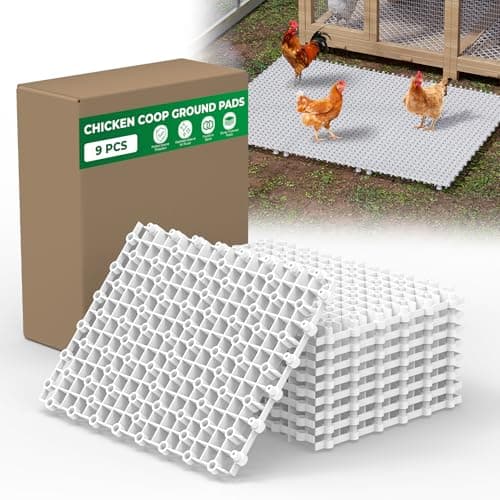 Forestchill Chicken Coop Ground Pads, 9 Pcs InterlockingTop pickInterlocking plastic pads on 1.5in risers with drainage holes - a real fix for a small wet area, and priced per square foot like a luxury. | A permanently wet patch, not a whole run | not published | |
| 2 | 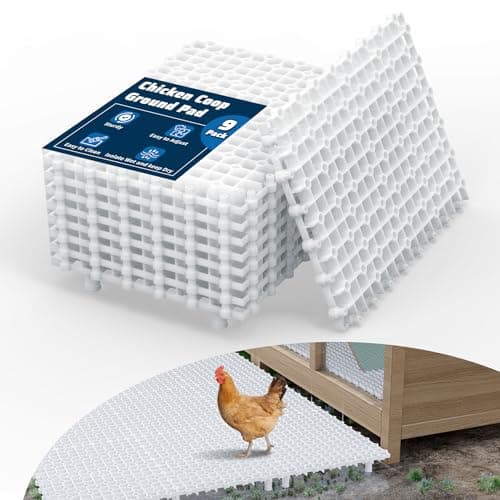 Pearwow Chicken Coop Ground Pads, 9 PackThe same raised-pad idea from a different maker, at the same money - useful mainly as an alternative when one is out of stock. | The same job, a second source | not published | |
| 3 | 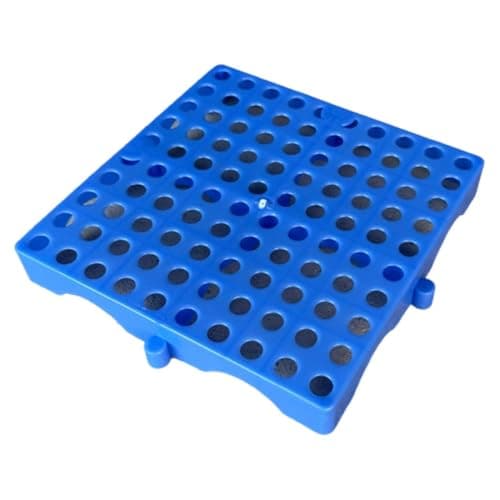 Generic Poultry Coop Floor Mat, Interlocking DrainageAn interlocking anti-slip drainage mat at pocket-money prices - worth trying on one bad patch before committing to a pad system. | The cheapest way to test whether pads help at all | not published | |
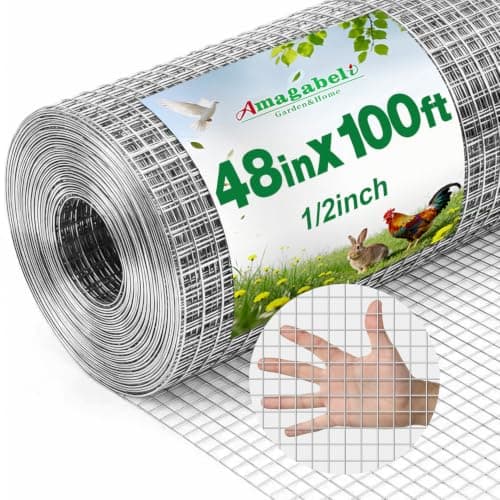
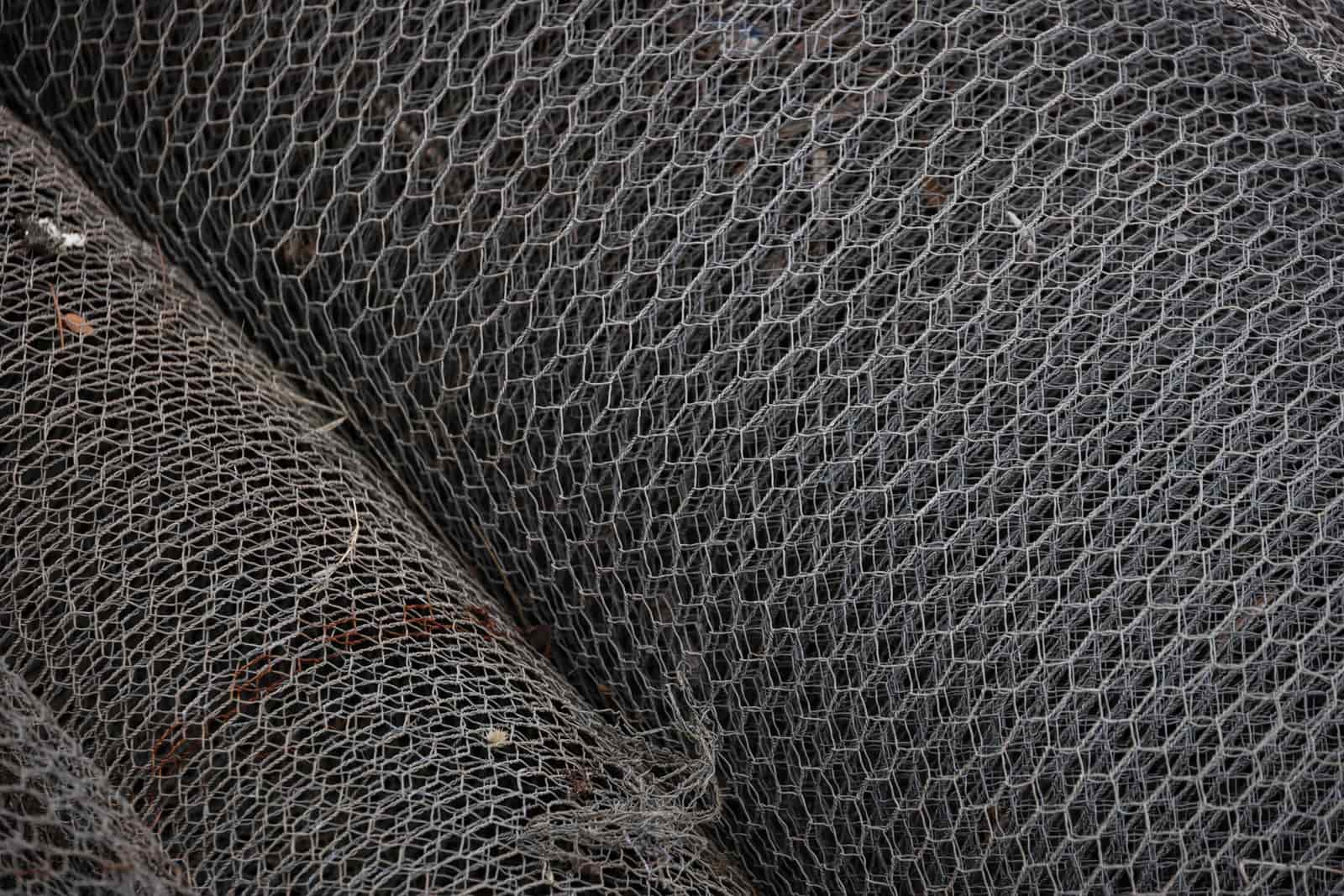
| 4 | 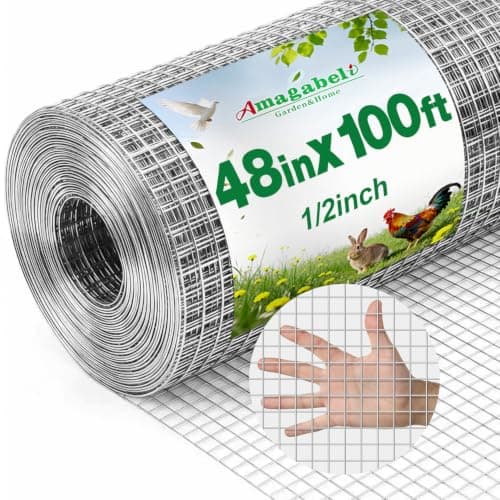 Amagabeli 1/2" Hardware Cloth, 48in x 100ftHalf-inch aperture, 19 gauge, hot-dipped galvanized after welding. This is the specification that actually keeps raccoons out. | The single most important predator purchase | not published |
A run goes bare within weeks of the birds arriving. The grass is scratched out, the soil compacts, and then it rains. From that point the run is mud, the mud gets tracked into the coop on feet, and the litter you were keeping dry stops being dry.
That is the problem people are shopping to solve, and it is worth being blunt about it before recommending anything: most of the fix is not a product. It is drainage, a cover, and a deep layer of something coarse.
How we judged
- Does it drain, or does it hold water? Anything that traps moisture underneath makes the problem worse, not better.
- Cost per square foot at run scale. A run is 30 to 130 square feet. A product priced for a doorway is not flooring.
- Can the birds still scratch? Scratching is most of what a run is for. A surface that removes it costs the flock something real.
- Does it survive being hosed, or is it consumed? Bedding is a recurring cost; a pad is a one-off.
- Published coverage. A listing that does not say what area it covers cannot be planned from, and we mark that down.
The answer that is not a product
Coarse wood chips - arborist chips, not fine bark or sawdust. They drain, they resist compaction, birds scratch through them happily, and they compost down into something you can put on a garden. A load delivered by a tree service or bought by the cubic yard costs a fraction of anything shipped in a box.
A cover does more than flooring does
The single most effective thing you can do to a muddy run is stop rain landing in it. A roofed run stays workable through a wet week where an open one does not, and it also excludes the daytime predator a locked coop does nothing about. If you are choosing between spending on flooring and spending on a cover, the cover wins - see hawks, owls and the daylight problem and coops for wet climates.
What to put down, by problem
| The problem | What fixes it | Roughly what it costs |
|---|---|---|
| Whole run is bare and muddy | Deep coarse wood chips, topped up yearly | Cheapest per sq ft by a wide margin |
| One corner never dries | Raised interlocking pads with drainage | Reasonable for a few sq ft, absurd for a run |
| Mud right at the pop door | Pads or a paving slab at the threshold | Small |
| Under the waterer stays wet | Pads, plus moving the waterer off the floor | Small |
| Something is digging in | Half-inch hardware cloth apron at the perimeter | Moderate, and non-negotiable |
| Run floods after rain | Drainage and regrading, not a surface | Varies - but no product substitutes |
| Parasite pressure on tired ground | Move the birds, or strip and replace the top layer | Time rather than money |
What we would not put in a run
- Sand, in a wet climate. It drains well in dry ground and sets into a cold, sour slab where the water table is high. Our bedding page covers where sand does work.
- Straw, on a run floor. It mats, holds water, and goes anaerobic underneath.
- Rubber matting across the whole floor. It is easy to hose and it removes scratching entirely, which is most of the point of a run.
- Landscape fabric under chips. It clogs, then perches water on top of itself and makes the drainage worse.
- Bare concrete. Hoses clean, gives nothing to scratch, and is brutal on feet in cold weather.
The products worth buying
Top pick · A permanently wet patch, not a whole run
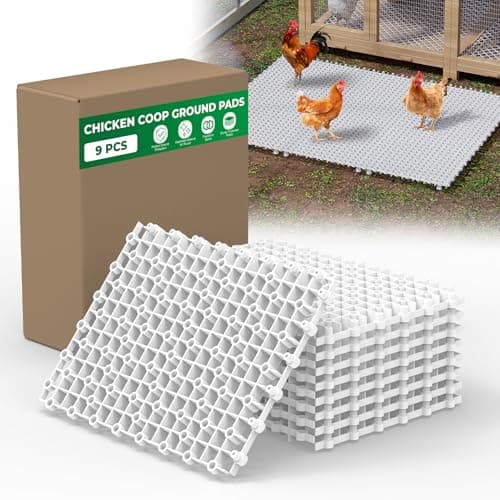
Forestchill Chicken Coop Ground Pads, 9 Pcs Interlocking
Interlocking plastic pads on 1.5in risers with drainage holes - a real fix for a small wet area, and priced per square foot like a luxury.
What the numbers say
The manufacturer does not publish the dimensions this calculation needs, so we do not print a number.
Figures from Forestchill published specifications (Amazon listing) · Up to 30"L x 22.5"W connected (9 pads) · Plastic with risers
The listing states 1.5 inches of clearance above the ground and drainage holes through the pads. That is the mechanism: birds stand above standing water rather than in it.
Read the coverage figure carefully. Nine pads connect to a maximum of 30 by 22.5 inches - about 4.7 square feet. A 10 by 13 foot run is 128 square feet, so flooring one entirely would take roughly 27 packs.
Used as intended - the doorway, under the waterer, the corner that never dries - it is a sensible purchase. Used as run flooring it is an expensive mistake.
Good
- 1.5in risers genuinely lift birds clear of standing water
- Drainage holes rather than a solid tray
- Rinses clean instead of needing replacing
Not so good
- Covers about 4.7 sq ft per pack - tiny relative to a run
- Plastic underfoot is not the ground chickens want to scratch
- Cost per square foot is far above wood chips
Skip this if: you are trying to floor a whole run. Coarse wood chips bought by volume cost a fraction of this per square foot and let the birds scratch.
#ad · how this is funded · price as of September 13, 2026
Pick 2 · The same job, a second source
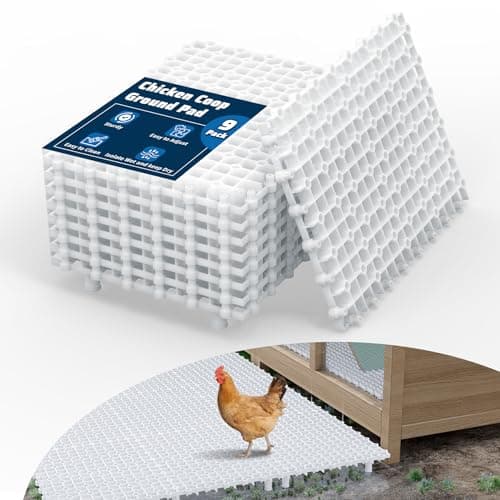
Pearwow Chicken Coop Ground Pads, 9 Pack
The same raised-pad idea from a different maker, at the same money - useful mainly as an alternative when one is out of stock.
What the numbers say
The manufacturer does not publish the dimensions this calculation needs, so we do not print a number.
Figures from Pearwow published specifications (Amazon listing) · Plastic
The listing's stated purpose is raising birds above ground water and moisture, and it describes rinsing clean with water. Functionally this is the same product class as the Forestchill pads.
The listing does not publish a connected coverage figure, so we do not print one. Assume a similar order of magnitude to the other nine-pack and plan on it covering a doorway or a wet corner rather than a run.
There is no meaningful editorial daylight between the two. Buy whichever is in stock and cheaper on the day.
Good
- Raises birds clear of ground moisture
- Rinses clean rather than being consumed
- Weatherproof plastic
Not so good
- No published coverage area - you cannot plan from the listing
- Same per-square-foot economics as any pad system
- Plastic is not scratchable ground
Skip this if: you need to know exactly what area you are covering before you buy. The Forestchill pack publishes its connected size and this one does not.
#ad · how this is funded · price as of September 13, 2026
Pick 3 · The cheapest way to test whether pads help at all
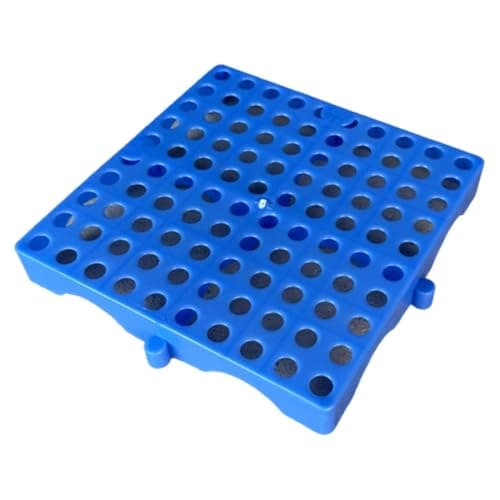
Generic Poultry Coop Floor Mat, Interlocking Drainage
An interlocking anti-slip drainage mat at pocket-money prices - worth trying on one bad patch before committing to a pad system.
What the numbers say
The manufacturer does not publish the dimensions this calculation needs, so we do not print a number.
Figures from Generic published specifications (Amazon listing) · Plastic
The listing describes an interlocking format with a textured anti-slip surface and a drainage design. It is the same idea as the nine-packs above at a fraction of the outlay.
It is sold under a generic brand with no published coverage dimensions, which is the usual pattern at this price and the reason we rank it last rather than first.
Its honest use is diagnostic. Put it on the patch that never dries, see whether raising the birds off it actually helps your problem, then buy a proper quantity of whatever worked.
Good
- Costs less than a bag of feed
- Interlocking, so a trial piece extends later
- Textured surface rather than slick plastic
Not so good
- Generic listing with no coverage dimensions published
- No brand history, so it may not be there next season
- Far too small to floor anything on its own
Skip this if: you already know pads work for you and want to cover a real area. Buy a nine-pack with published dimensions instead.
#ad · how this is funded · price as of September 13, 2026
Pick 4 · The single most important predator purchase
Amagabeli 1/2" Hardware Cloth, 48in x 100ft
Half-inch aperture, 19 gauge, hot-dipped galvanized after welding. This is the specification that actually keeps raccoons out.
What the numbers say
The manufacturer does not publish the dimensions this calculation needs, so we do not print a number.
Figures from Amagabeli published specifications (Amazon listing)
Half-inch aperture is the number that matters. A raccoon can reach through 1in mesh and a weasel walks through 1in chicken wire; half-inch stops both.
Galvanized AFTER welding, not before, is the second specification to check. Welding burns the coating off, so mesh galvanized beforehand rusts at every joint - which is exactly where it needs to hold.
19 gauge is the practical minimum for a coop perimeter. Thinner mesh sold as hardware cloth exists and bends open by hand.
Good
- Half-inch aperture excludes raccoons and weasels
- Hot-dipped galvanized after welding, so joints do not rust first
- 48in width covers most run walls in a single run
Not so good
- Cutting it is hard on the hands and on your snips
- 100ft is more than a small coop needs
- Edges are sharp and need capping or folding
Skip this if: only if you already have half-inch hardware cloth. Do not substitute chicken wire - it is a containment material, not a security one.
Note the ranking logic. The Forestchill pack is first because it publishes its connected coverage, so you can work out how many you need before you order - which is the exact information the rest of this category withholds. The hardware cloth is on the list because a run floor and a run perimeter are the same project, and an apron is the one item here nobody should skip.
Questions people actually ask
+What is the best flooring for a chicken run?
+How do I stop my chicken run turning into mud?
+Are plastic chicken coop ground pads worth it?
+Should I put sand in my chicken run?
+Do I need hardware cloth under the run floor?
Sources
Read next
Coop bedding, judged on moisture
Shavings, straw, sand and hemp compared on absorbency and running cost, plus how the deep litter method actually works.
Where to put the coop
The siting order that matters - drainage, sun, wind, access - and the mistakes that no amount of good husbandry fixes.

Chicken coops for wet climates
Coops assessed on what survives persistent rain - shedding roofs, raised floors and materials that do not absorb.

Stopping predators that dig under the run
Why the apron beats a buried perimeter, how to lay one properly, and how much hardware cloth a typical run needs.
Coop gear, ranked by the problem it solves
The gear that fixes what coops arrive without - doors, mesh, roosts, boxes, heat and airflow - in buying order.
Run extensions for a coop you already own
Bolt-on runs ranked by measured area added, with the crucial distinction between what an extension fixes and what it does not.