Automatic chicken coop doors
The one upgrade that changes daily life more than any other, because it does the job you will otherwise eventually forget.
We have not handled these coops, and we do not pretend to have. Here is what we did instead. Links to Amazon earn us a commission at no extra cost to you - disclosure.
| # | Coop | Best for | Honest count | Price |
|---|---|---|---|---|
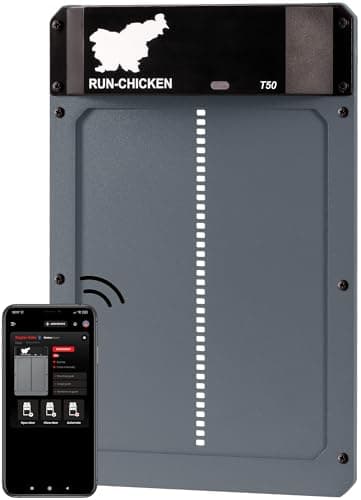
| 1 | 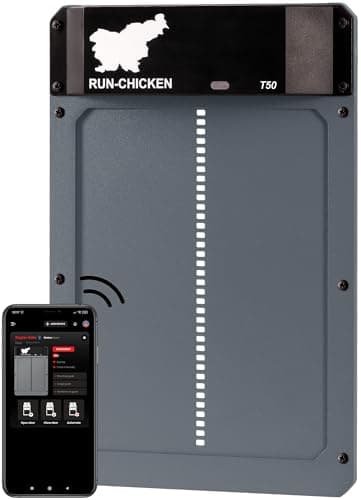 RUN-CHICKEN Door T50 Automatic OpenerTop pickBattery-powered aluminum with app and timer control. The one automatic door here that does not depend on winter sun. | The door that just keeps working | not published | |
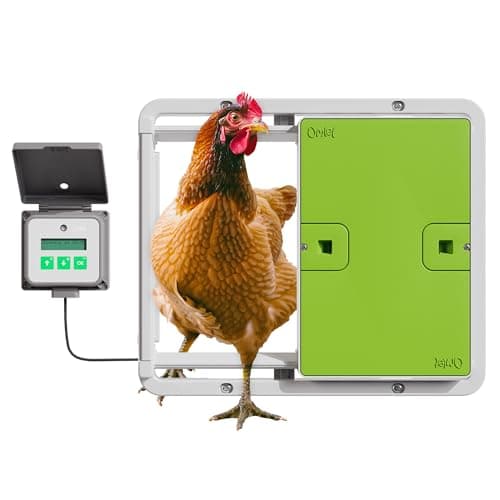
| 2 | 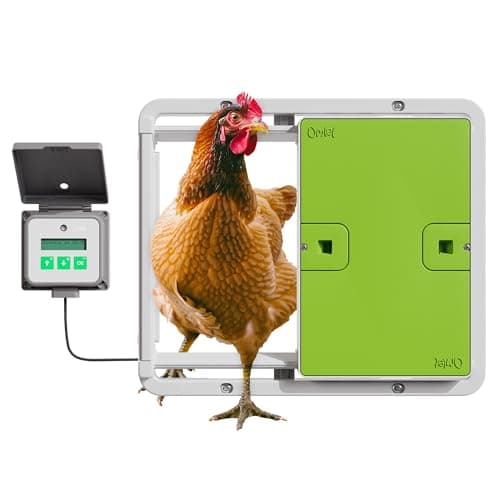 Omlet Automatic Coop Door OpenerThe biggest opening here at 19.25in, with safety sensors fitted - Omlet's door is on Amazon even though its coops are not. | Large openings and built-in safety sensors | not published | |
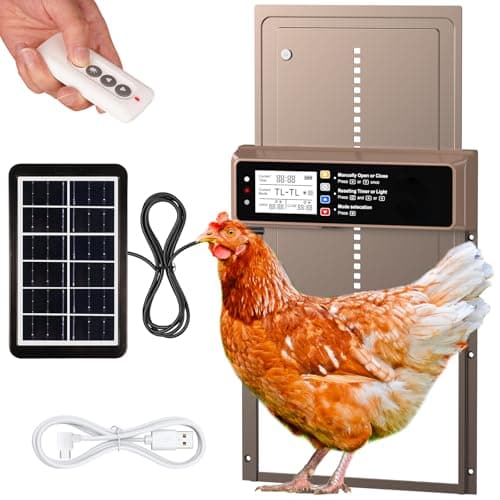
| 3 | 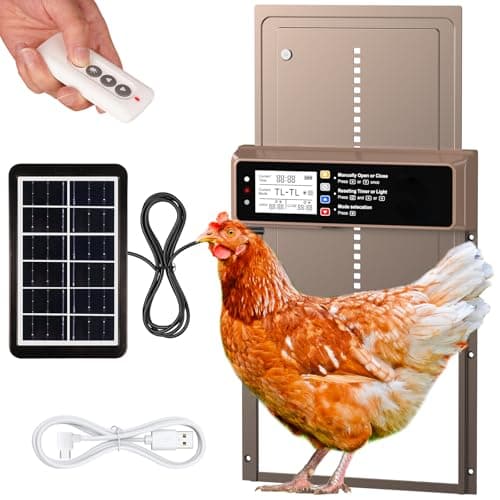 NyPots Solar Automatic Coop DoorSolar with timer and light sensor. Sound in a sunny climate and the wrong choice in a dark winter one. | Coops with no power and good sun | not published | |
| 4 | 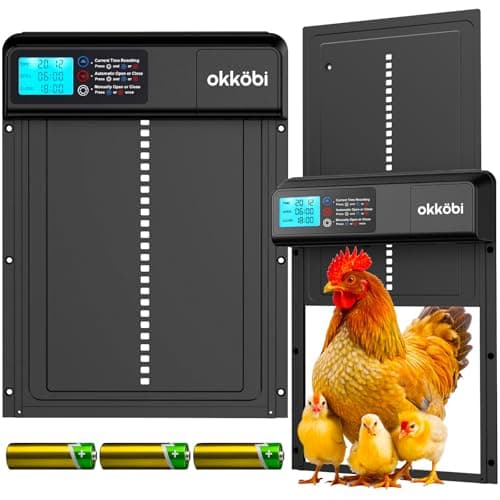 OKKOBI Coop Door LiteAA batteries, an LCD, anti-pinch safety and an 11in opening. The budget door that does not cut the safety corner. | The cheapest sound way in | not published |
Almost every predator that takes an adult bird takes it at night or at the edges of the day. A flock shut inside a properly latched henhouse is out of reach of nearly all of them. That makes closing the pop door at dusk the highest-value routine in the whole hobby - and the one nobody manages every single evening for years.
An automatic door does it every night. That is the entire argument, and it is enough.
How to choose
- Trigger. A light sensor follows the actual season without adjustment, which suits most people. A timer is predictable and needs resetting through the year. Some units offer both.
- Power. Batteries are simplest and need changing, often at the worst time of year. Mains is reliable if you have power at the coop. Solar suits a coop with no power and good sun, and struggles through a run of gray winter days.
- Opening size. Measure your existing pop-door hole first. Fitting a small door to a big hole means blanking off the difference, and fitting a big door to a small hole means cutting.
- Door action. A vertical guillotine seats under its own weight and is hard to lift from outside. A swinging door is easier to force.
- Safety. A door that reverses on obstruction matters if birds crowd the opening at dusk, which some flocks do.
- Cold behavior. Batteries lose capacity in the cold and tracks ice up. In a hard-winter climate, favor a unit with a rated cold range and check the track is clear.
The last bird problem
A light-triggered door closes on a schedule the birds do not read. Most flocks go in before full dusk on their own, and there is usually one bird that does not. Set the sensor threshold late enough for the slowest hen, check the coop for a week after installing, and confirm the door reverses or stops if something is in the way.
The ranked picks
Top pick · The door that just keeps working
RUN-CHICKEN Door T50 Automatic Opener
Battery-powered aluminum with app and timer control. The one automatic door here that does not depend on winter sun.
What the numbers say
The manufacturer does not publish the dimensions this calculation needs, so we do not print a number.
Figures from RUN-CHICKEN published specifications (Amazon listing) · 13.8"L x 9.4"W x 1.3"H · Aluminum
Battery rather than solar is the important choice. A solar door's worst performance and your longest nights arrive in the same week, which is exactly when a door failing open costs you a flock.
Aluminum construction rather than plastic matters at the door itself, because this is the part a raccoon works at.
App and timer control both present, so it works whether or not you want it on your phone.
Good
- Battery power is unaffected by December daylight
- Aluminum door rather than plastic
- Timer and app control both supported
Not so good
- Batteries need replacing on a schedule you must remember
- Costs more than the solar units
- Opening size fixed by the unit
Skip this if: you have no way to check on it. Any automatic door needs an occasional look; a battery one needs its cells thought about before winter.
#ad · how this is funded · price as of October 17, 2026
Pick 2 · Large openings and built-in safety sensors
Omlet Automatic Coop Door Opener
The biggest opening here at 19.25in, with safety sensors fitted - Omlet's door is on Amazon even though its coops are not.
What the numbers say
The manufacturer does not publish the dimensions this calculation needs, so we do not print a number.
Figures from Omlet published specifications (Amazon listing) · 19.25"L x 2.25"W x 16.5"H
At 19.25 inches this is much the largest unit here, which matters if you keep larger birds or want the flock through the door quickly at dawn.
Built-in safety sensors are the feature worth paying for. A door that closes on a slow bird is the failure mode people discover the hard way.
Worth noting that Omlet's coops are sold direct rather than on Amazon, but this door is not - so unlike the Eglu, it is something we can actually link.
Good
- Largest opening of the doors here
- Built-in safety sensors on closing
- Light sensor or timer operation
Not so good
- Needs a coop wall big enough to take it
- More expensive than the generic solar units
- Physically the bulkiest option
Skip this if: your coop wall cannot take a 19in cutout. Measure the flat panel area before ordering - several of the small coops on this site cannot accept it.
#ad · how this is funded · price as of October 17, 2026
Pick 3 · Coops with no power and good sun
NyPots Solar Automatic Coop Door
Solar with timer and light sensor. Sound in a sunny climate and the wrong choice in a dark winter one.
What the numbers say
The manufacturer does not publish the dimensions this calculation needs, so we do not print a number.
Figures from NyPots published specifications (Amazon listing) · 9.6"L x 1.6"W x 13"H · Aluminum alloy and ABS
Solar removes the battery-replacement chore, which is the main reason people pick it.
The trade-off is seasonal and worth stating plainly: the shortest, darkest days are also the days a solar panel harvests least, and they are the days the door matters most.
In the southern half of the country this is a reasonable buy. In a northern winter, choose the battery unit.
Good
- No battery replacement to remember
- Both timer and light-sensor modes
- Aluminum alloy door plate
Not so good
- Winter performance depends on winter sun
- Panel needs clearing of snow and leaves
- ABS housing is the weak point
Skip this if: you are north of roughly the 40th parallel or your coop sits in shade. Buy the battery-powered door instead - see our solar-versus-timer comparison.
#ad · how this is funded · price as of October 17, 2026
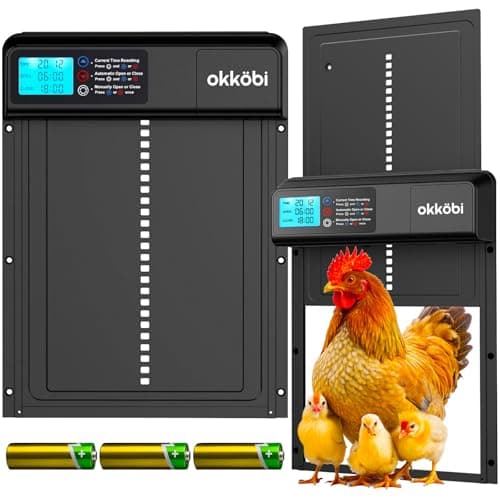
Pick 4 · The cheapest sound way in
OKKOBI Coop Door Lite
AA batteries, an LCD, anti-pinch safety and an 11in opening. The budget door that does not cut the safety corner.
What the numbers say
The manufacturer does not publish the dimensions this calculation needs, so we do not print a number.
Figures from OKKOBI published specifications (Amazon listing) · 9.61"L x 1.77"W x 13"H · Metal and plastic
Anti-pinch safety on a budget door is the specification worth checking for, and this one has it.
Three AA cells rather than a proprietary pack means replacements are trivial to find, which matters more over five years than the initial price does.
An 11 x 9.4in opening suits standard-size layers comfortably.
Good
- Anti-pinch safety at a budget price
- Standard AA cells, no proprietary battery
- Timer and manual modes
Not so good
- Partly plastic where the aluminum doors are not
- Smaller opening than the Omlet
- LCD is small and awkward to read outdoors
Skip this if: you keep large fowl. An 11in opening is fine for standard layers and tight for Brahmas or Jersey Giants.
#ad · how this is funded · price as of October 17, 2026
If one specification decides it for you
- No power at the coop - solar coop doors, on panel placement and what happens through a gray week
- Hard winters - cold-weather coop doors, on what actually fails below freezing
- A large opening or large birds - the Omlet door review, the biggest opening here and the only one with safety sensors
- Torn between the two most cross-shopped doors - RUN-CHICKEN T50 against the Omlet, decided on the measurement that actually settles it
- Still choosing the coop - coops that take an automatic door, because no coop ships with one fitted and small ones often cannot take one
Questions people actually ask
+Are automatic chicken coop doors reliable in winter?
+Should I get a timer or a light sensor coop door?
+Will an automatic door shut a chicken out?
+Do automatic coop doors stop predators?
Sources
Read next
Coop gear, ranked by the problem it solves
The gear that fixes what coops arrive without - doors, mesh, roosts, boxes, heat and airflow - in buying order.
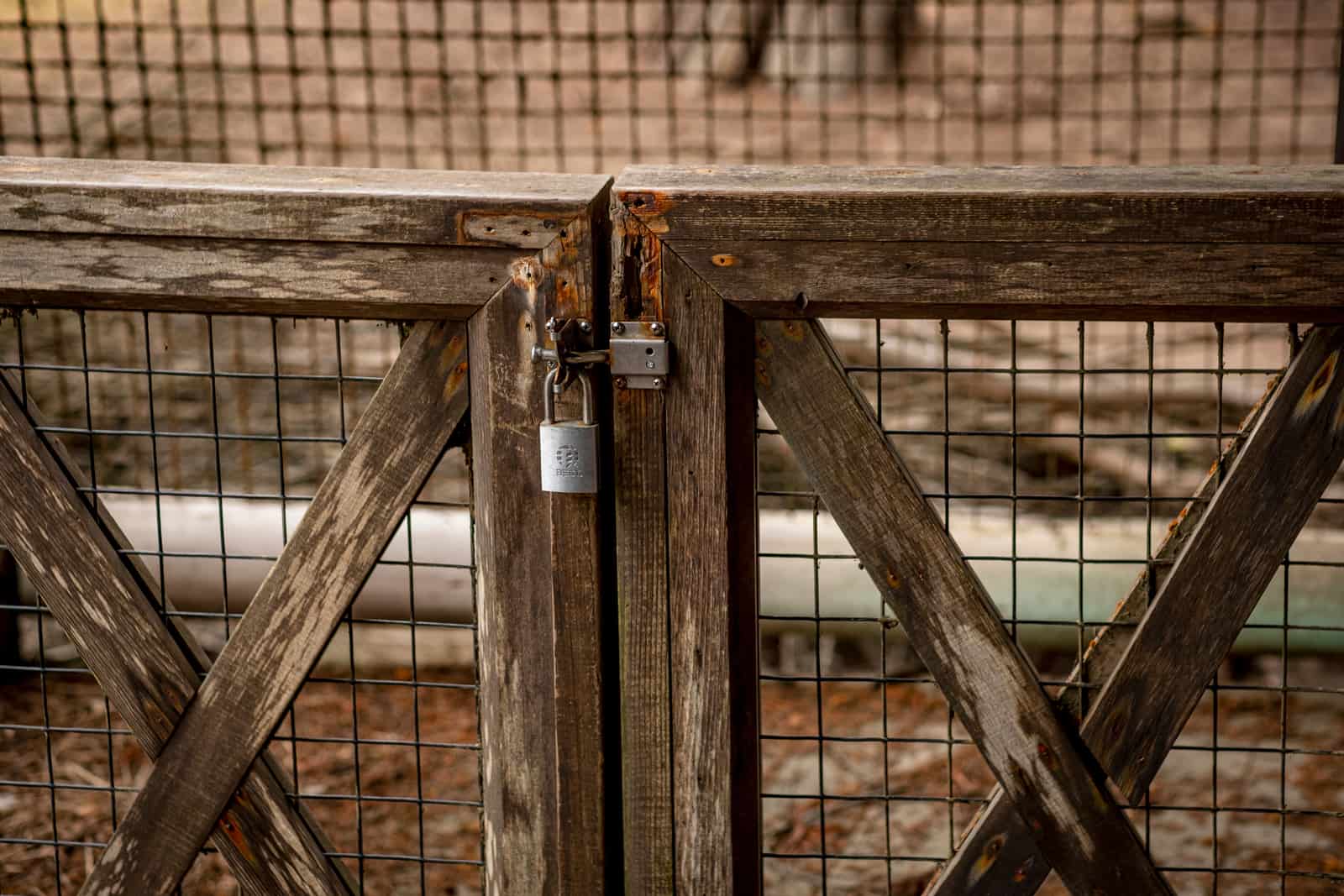
Latches a raccoon cannot open
Why hook-and-eye and spring catches fail, the two-motion principle that works, and where every coop needs a latch it did not ship with.
Raccoon-proofing a chicken coop
What a raccoon can actually do, the three fixes that stop it, and the openings people forget until the morning after.
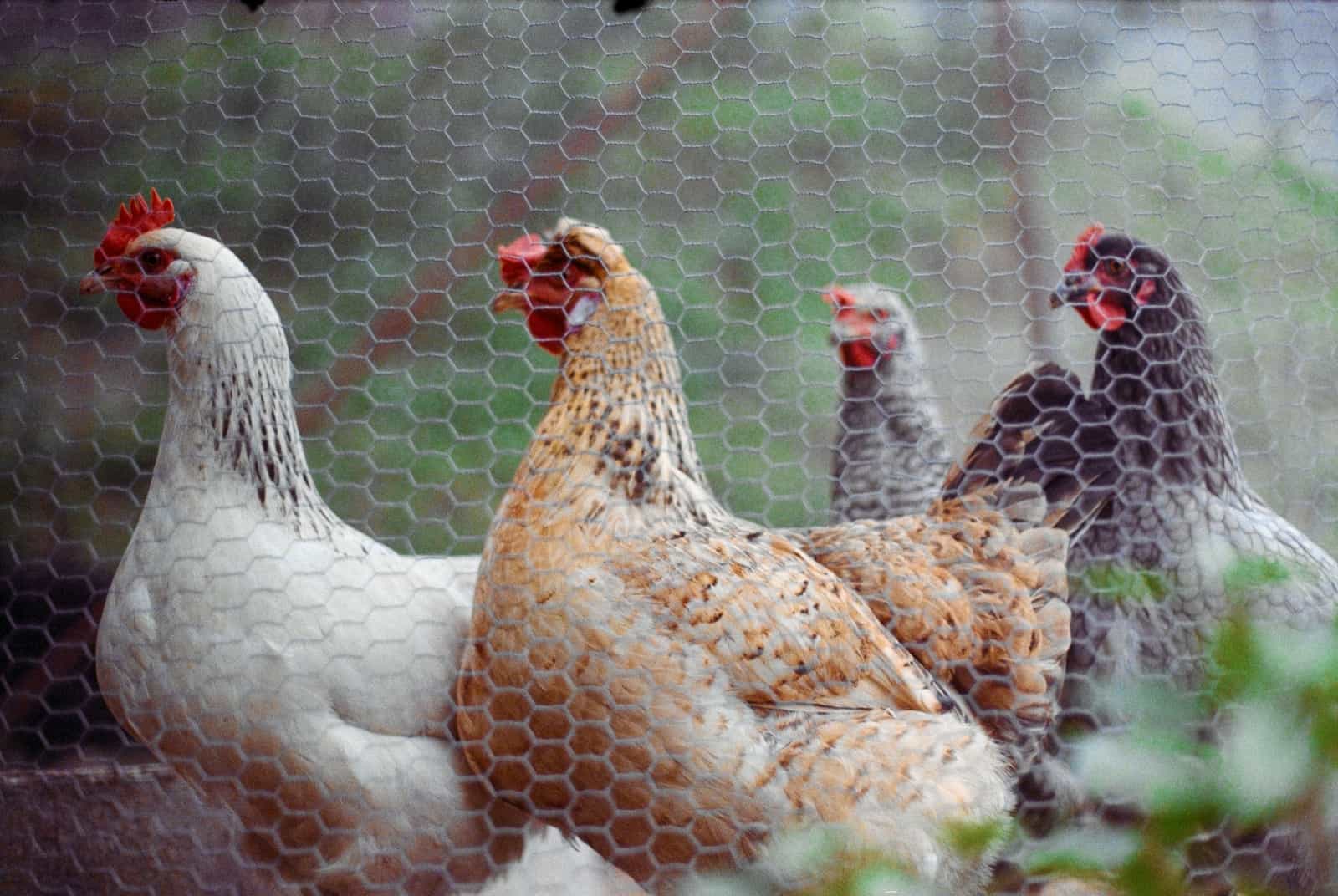
Predator-proofing, as numbers rather than adjectives
The three specifics that decide whether a coop holds - aperture, gauge and latch - with the products that fix what every kit gets wrong.
Predator-proofing a coop, step by step
The full walkthrough: mesh, latches and apron, with a materials list and the openings that get missed.
Roosting bars, and how much bar a flock needs
The published per-bird roost length, why flat beats round, and how to add bar without carpentry.