Roosting bars, and how much bar a flock needs
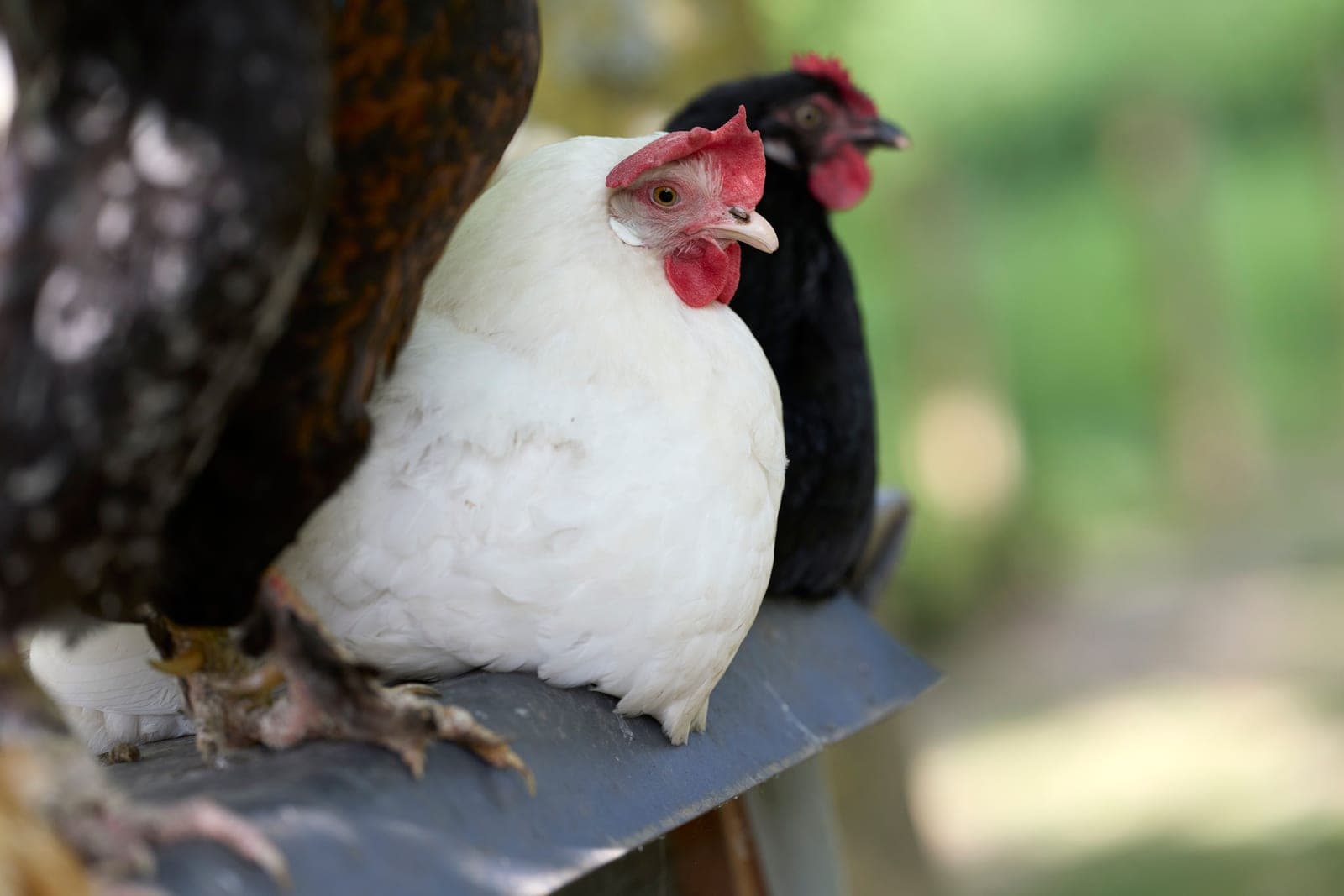
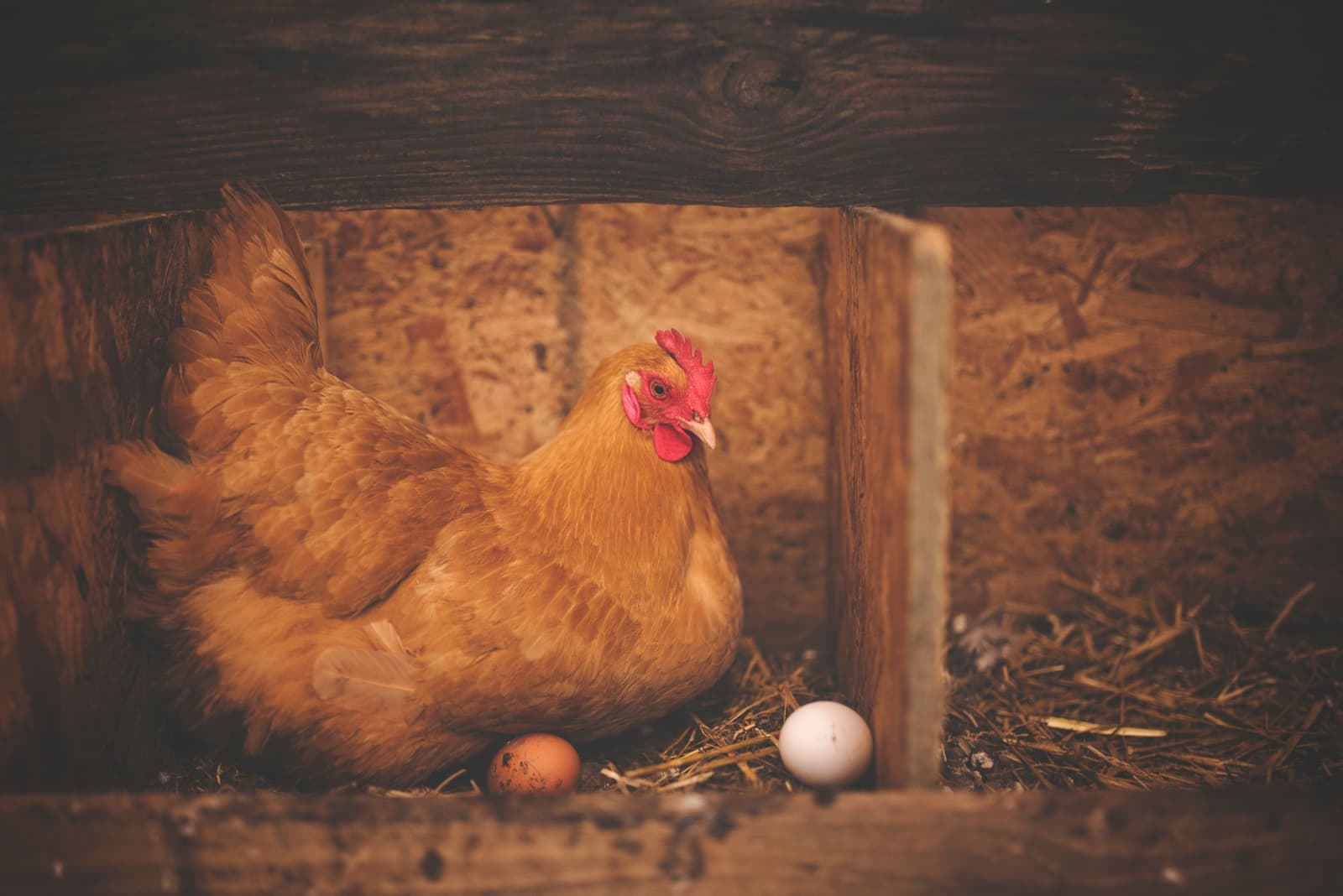
Birds that cannot all fit on the roost sleep in the nest boxes, and that is where dirty eggs come from.
We have not handled these coops, and we do not pretend to have. Here is what we did instead. Links to Amazon earn us a commission at no extra cost to you - disclosure.
| # | Coop | Best for | Honest count | Price |
|---|---|---|---|---|
| 1 | 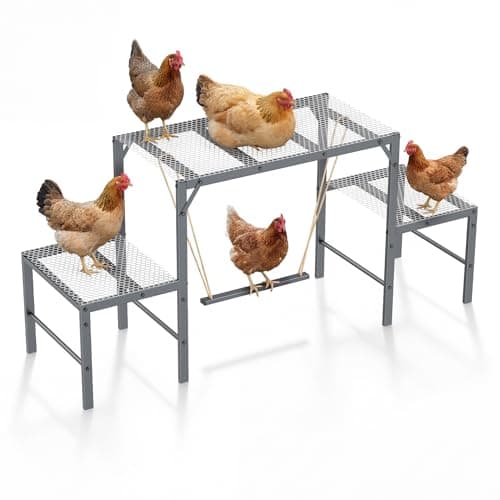 Magicfly Chicken Perch and Roosting BarTop pick57.5in of metal roosting bar. Roost length is the spec people forget, and it is 8in per standard hen. | Adding roost length without carpentry | not published |
Roosting is not optional behavior. Chickens go up to sleep because ground level is where predators are, and a flock without enough bar will find somewhere else elevated - which in a coop means the nest boxes, or the edge of a feeder, or the top of the pop door. Perches also sit on Penn State's published list of ways to redirect feather pecking, ahead of toys - swings and enrichment works through that list in order.
Birds sleeping in nest boxes is the practical consequence, and it produces dirty eggs, soiled bedding in the boxes and more cleaning than the whole problem is worth. Almost every case traces back to too little bar, a bar mounted too low, or a bar the wrong shape.
How much bar
| Bird type | Bar per bird | A flock of 6 needs |
|---|---|---|
| Bantam | 6 in | 36 in |
| Standard laying hen | 8 in | 48 in |
| Large fowl | 10 in | 60 in |
Those are minimums for space, not for warmth. In cold weather birds crowd together on the bar deliberately, so having more length than the minimum does no harm at all - they will use as much or as little as they want on a given night.
Flat beats round
A chicken does not grip a perch the way a songbird does. It squats with its feet flat and covers them with its breast feathers, which is exactly how it keeps its toes from freezing. A wide flat-topped bar - a two-by-four laid flat is the classic - supports that. A narrow dowel or a broom handle does not, and a round bar in a cold climate is a frostbite risk on the toes.
How high, and where
- Higher than the nest boxes, always. Given a choice, chickens sleep in the highest spot available, and if that is a nest box you will be cleaning eggs.
- Not so high that heavy breeds injure themselves getting down. Two to three feet suits most standard birds; add a lower step bar for heavy breeds.
- Not directly over the feeder, the waterer or the nest boxes - everything under a roost gets droppings on it overnight.
- With at least 12 to 15 inches of clearance in front and behind so birds can turn and settle.
- Where you can lift it out. A removable bar makes cleaning and mite inspection far easier, and mites colonize the ends where a bar meets its support.
Adding bar without carpentry
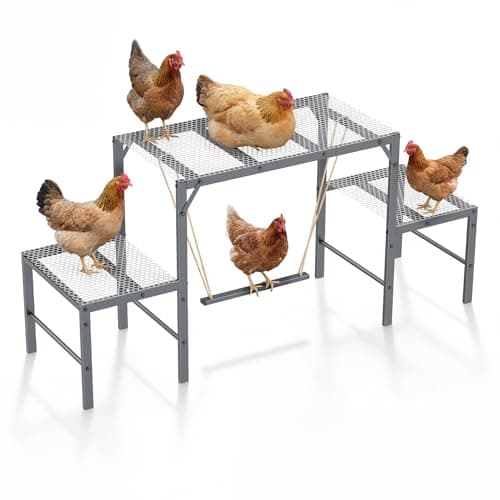
A freestanding perch frame is the simple answer for a coop that is short on roost length or a run that has none. It also gives birds somewhere elevated to spend the day in a run, which reduces boredom pecking. That is the pick below.
Top pick · Adding roost length without carpentry
Magicfly Chicken Perch and Roosting Bar
57.5in of metal roosting bar. Roost length is the spec people forget, and it is 8in per standard hen.
What the numbers say
The manufacturer does not publish the dimensions this calculation needs, so we do not print a number.
Figures from Magicfly published specifications (Amazon listing) · 57.48"L x 16.92"W x 26.96"H · Metal
57.5 inches of bar is roughly seven standard hens at the 8in-per-bird figure our calculator uses.
Roost space is the constraint people discover in winter, when birds huddle and the ones pushed off the bar sleep in the nest boxes - which is how you end up with dirty eggs.
Freestanding, so it works in a coop where you cannot easily fix a bar to the walls.
Good
- Adds real roost length with no carpentry
- Freestanding, so no wall fixing needed
- Metal will not harbor mites the way rough timber does
Not so good
- Takes up floor area you may not have
- Metal bars are colder underfoot than timber
- Not adjustable in height
Skip this if: your coop already has adequate roost length. Work it out first at 8in a bird - our calculator prints the figure.
#ad · how this is funded · price as of October 17, 2026
Questions people actually ask
+How much roosting space does a chicken need?
+What shape should a chicken roost be?
+How high should a chicken roost be?
+Why are my chickens sleeping in the nesting boxes?
Sources
Read next
Coop gear, ranked by the problem it solves
The gear that fixes what coops arrive without - doors, mesh, roosts, boxes, heat and airflow - in buying order.
Nesting boxes, and the six-box three-hen coop
How many boxes a flock needs, why coops oversupply them, and what to do when you genuinely are short.
Roost bar length, height and shape
Per-bird bar length by breed, the flat-versus-round question, mounting height, and how to add bar without carpentry.
A cleaning routine you will actually keep
Daily, weekly and seasonal jobs sized so they get done, plus the mite inspection nobody schedules until it is too late.
Chicken coops for cold climates
Cold-climate coops ranked on the things that matter below freezing - dryness, roof geometry, ventilation and floor area per bird.
The best chicken coops, ranked by what they actually hold
The flagship roundup. Twelve coops ranked on measured floor area against the maker's own bird-count claim.