Climate, ventilation and the season problem
The most common winter fix - sealing the coop up to keep it warm - is what causes the frostbite it was meant to prevent. Moisture is the variable, not temperature.
We have not handled these coops, and we do not pretend to have. Here is what we did instead. Links to Amazon earn us a commission at no extra cost to you - disclosure.
| # | Coop | Best for | Honest count | Price |
|---|---|---|---|---|
| 1 | 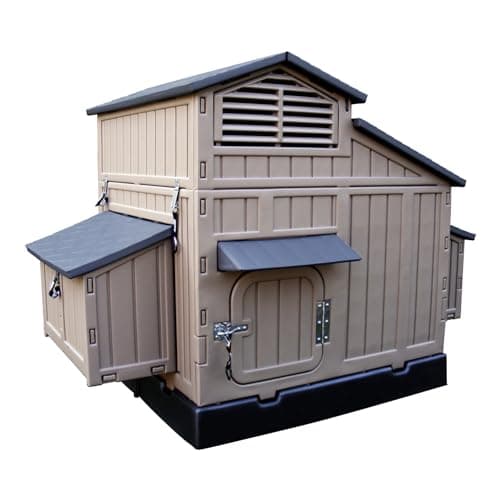 Hatching Time Formex Snap Lock Large Chicken CoopTop pickThe one coop here whose material genuinely earns its price, sized for four hens rather than the six on the box. | Cleaning, and cold that stays out | 4box says 6 | |
| 2 | 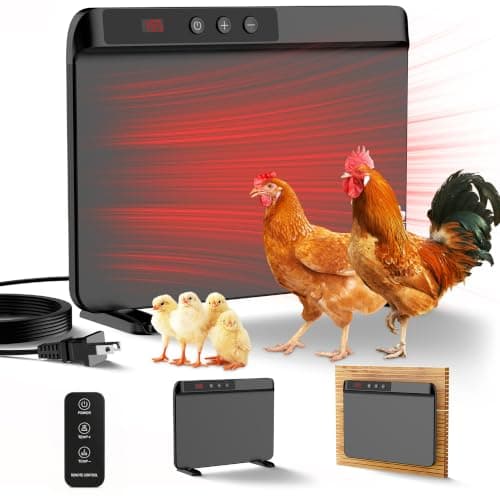 TIMEBAL 200W Radiant Coop PanelA UL-certified flat radiant panel. The right category of coop heater, if you have genuinely established that you need one. | Radiant warmth without a fire risk | not published | |
| 3 | 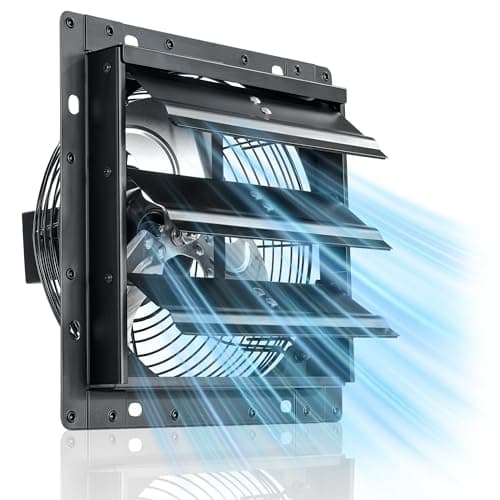 Generic 8in Shutter Exhaust Fan, 760 CFM760 CFM through an 8in shuttered opening. For hot climates this does more for the flock than any heater ever will. | Hot-climate summer ventilation | not published |
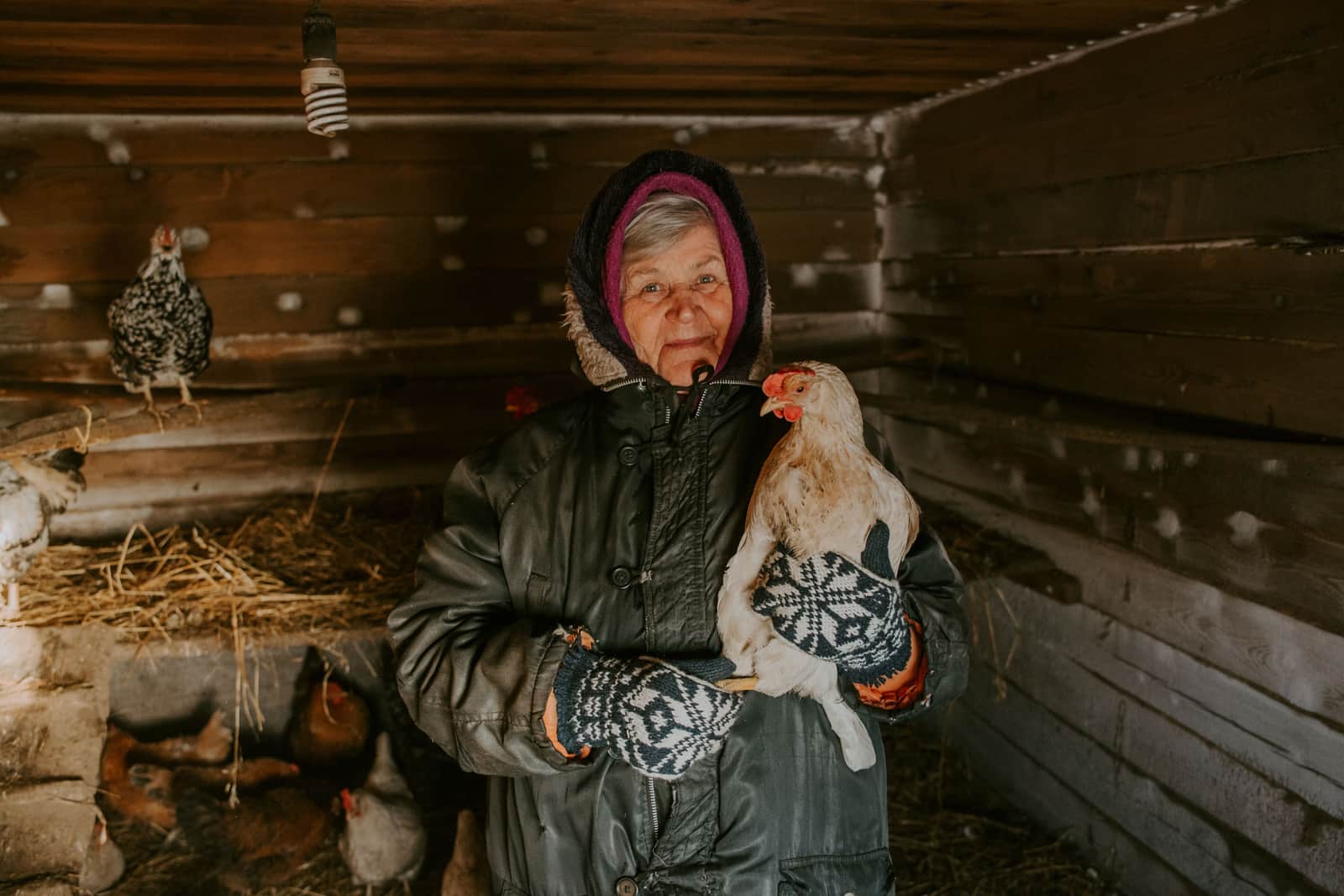
Most coop-climate advice is upside down. It treats a chicken like a person who is cold, and prescribes sealing gaps, adding insulation and putting in a heater. Each of those makes the actual failure mode worse.
A hen wears a down jacket she grew herself and roosts with her feet under her body. She is well equipped for cold air. What she is not equipped for is standing in a humid box overnight while moisture condenses on her comb. That is where frostbite comes from, and the moisture comes from her - from droppings and from breath - which means the only way out of the coop is ventilation.
The three variables, in order
- Moisture. Droppings and respiration release water continuously into an enclosed coop. It has to leave, or it condenses on birds and on timber.
- Air movement at bird height. A draft blowing across roosting birds strips warmth and is the thing to avoid. Ventilation above their heads is not a draft.
- Temperature. Genuinely last. Standard laying breeds tolerate serious cold, and a heater is far more likely to cause a problem than solve one.
Winter
The winter job is to get moisture out while keeping wind off the birds. That means keeping vents open - not closing them - keeping bedding dry and deep, and blocking drafts at roost level only. A coop with frost on the inside walls in the morning is telling you it needs more ventilation, not less.
Heaters are the other winter question, and the honest answer is that most flocks in most of the US do not need one. Where one is genuinely useful, a flat radiant panel is a different proposition from a heat lamp: much lower wattage, no bulb to shatter and no exposed element. The full case is on cold-climate coops, and the panels themselves are in coop heaters.
Summer
In heat everything reverses. Chickens cannot sweat; they lose heat by panting and through their combs, wattles and unfeathered legs. A hot coop with poor airflow is far more dangerous than a cold one, and heat stress kills faster than cold does. Shade, moving air and constant cool water are the whole of the intervention. See hot-climate coops.
Material matters less than you would think
Wood, plastic and steel all end up at close to ambient temperature in a coop this size overnight, because the birds themselves are the only meaningful heat source and the air changes several times an hour by design. What material does change is condensation behavior and how easy a coop is to keep dry. Plastic against wood in cold weather is the comparison.
Gear that earns its place
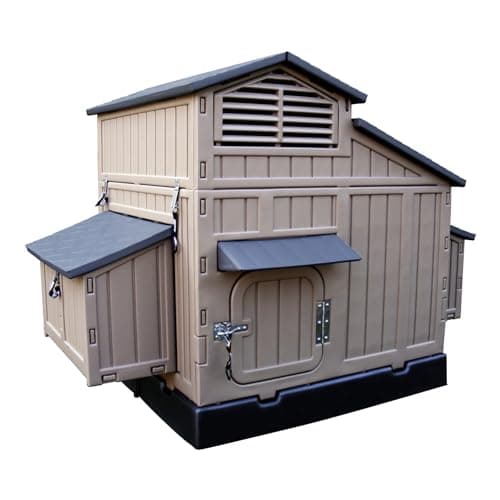
Top pick · Cleaning, and cold that stays out
Hatching Time Formex Snap Lock Large Chicken Coop
The one coop here whose material genuinely earns its price, sized for four hens rather than the six on the box.
What the numbers say
64in x 39in = 17.3 sq ft of enclosed henhouse floor. At 4 sq ft per standard hen that is 4 birds, against a claim of 6.
Figures from Hatching Time published specifications (Amazon listing) · 64"L x 39"W x 42"H · Double-walled polyethylene
This is a standalone henhouse with no attached run, so the published footprint is all enclosed floor. That makes it one of the few coops on this site where the generous reading and the honest reading are the same number.
17.3 sq ft supports four standard hens at the 4 sq ft figure. The listing says four to six. Four is right; six is a winter of pecked backs.
Double-walled polyethylene is the reason to buy it. There is no end grain to rot, no seam for mites to colonize, and it hoses out in minutes - the single biggest practical difference between a coop you keep clean and one you avoid.
Good
- Whole footprint is enclosed floor, not run
- Double-walled plastic will not rot, absorb, or harbor mites the way fir does
- Panels unclip for cleaning without tools
Not so good
- Costs more than the wooden coops it outlasts
- No run included, so budget for one
- Plastic walls hold no insulation value on their own
Skip this if: you want a coop and run in one purchase. This is a henhouse only, and pairing it with a run pushes the total past most wooden coop-plus-run kits.
#ad · how this is funded · price as of October 17, 2026
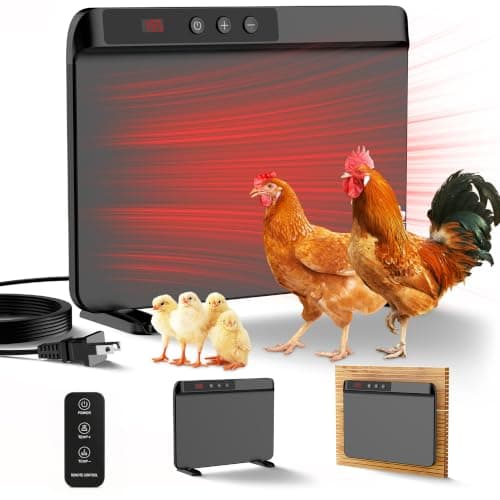
Pick 2 · Radiant warmth without a fire risk
TIMEBAL 200W Radiant Coop Panel
A UL-certified flat radiant panel. The right category of coop heater, if you have genuinely established that you need one.
What the numbers say
The manufacturer does not publish the dimensions this calculation needs, so we do not print a number.
Figures from TIMEBAL published specifications (Amazon listing) · 15.9"L x 5.5"W x 12.4"H · ABS
Flat radiant panels warm the birds near them rather than heating the air, which is the correct approach in a coop that must stay ventilated.
UL certification is the specification to insist on. Coop fires are overwhelmingly caused by heat lamps and uncertified units, and a coop is full of dust and dry bedding.
Most flocks in most US climates do not need supplemental heat at all. Cold-hardy breeds handle hard frost; what kills them is damp and draft, not temperature.
Good
- UL certified, which heat lamps typically are not
- Radiant rather than convective, so ventilation is not fighting it
- Adjustable mounting
Not so good
- Needs mains power run to the coop safely
- Most flocks do not need it
- ABS housing collects dust and needs periodic cleaning
Skip this if: you have not first fixed ventilation. Adding heat to a damp, poorly ventilated coop makes frostbite more likely, not less - read our ventilation guide before buying any heater.
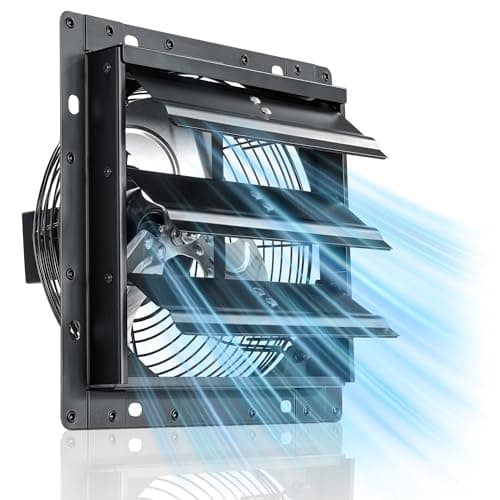
Pick 3 · Hot-climate summer ventilation
Generic 8in Shutter Exhaust Fan, 760 CFM
760 CFM through an 8in shuttered opening. For hot climates this does more for the flock than any heater ever will.
What the numbers say
The manufacturer does not publish the dimensions this calculation needs, so we do not print a number.
Figures from Generic published specifications (Amazon listing)
Heat kills far more backyard birds than cold does. A fan is the hot-climate equivalent of a coop heater, and it is more often the right purchase.
The shutter matters: it closes when the fan is off, so the same opening is not a winter draft.
760 CFM is generous for a backyard coop, which means it can run at lower speed and quieter for the same effect.
Good
- Shutter closes off the opening when not running
- Generous airflow for a backyard-sized coop
- Plug-and-play rather than hard-wired
Not so good
- Needs mains power at the coop
- Cutting an 8in opening is irreversible
- Dust needs clearing off the blades periodically
Skip this if: your summers are mild or your coop is well shaded and cross-ventilated. Passive ventilation solves most cases without a fan.
#ad · how this is funded · price as of October 17, 2026
Read next
- Ventilation, not insulation - the vent area figure and where to put it
- Cold-climate coops - what actually helps below freezing
- Hot-climate coops - shade, airflow and water
- Coops for wet climates - persistent rain, mud and what rots first
- Plastic against wood in cold weather
Questions people actually ask
+Do chickens need a heated coop in winter?
+How cold is too cold for chickens?
+Should I insulate my chicken coop?
+What causes frostbite in chickens?
+How do I keep chickens cool in summer?
Sources
Read next

Ventilation, not insulation
Why sealing a coop causes frostbite, where vents belong, and how to tell whether yours has enough.
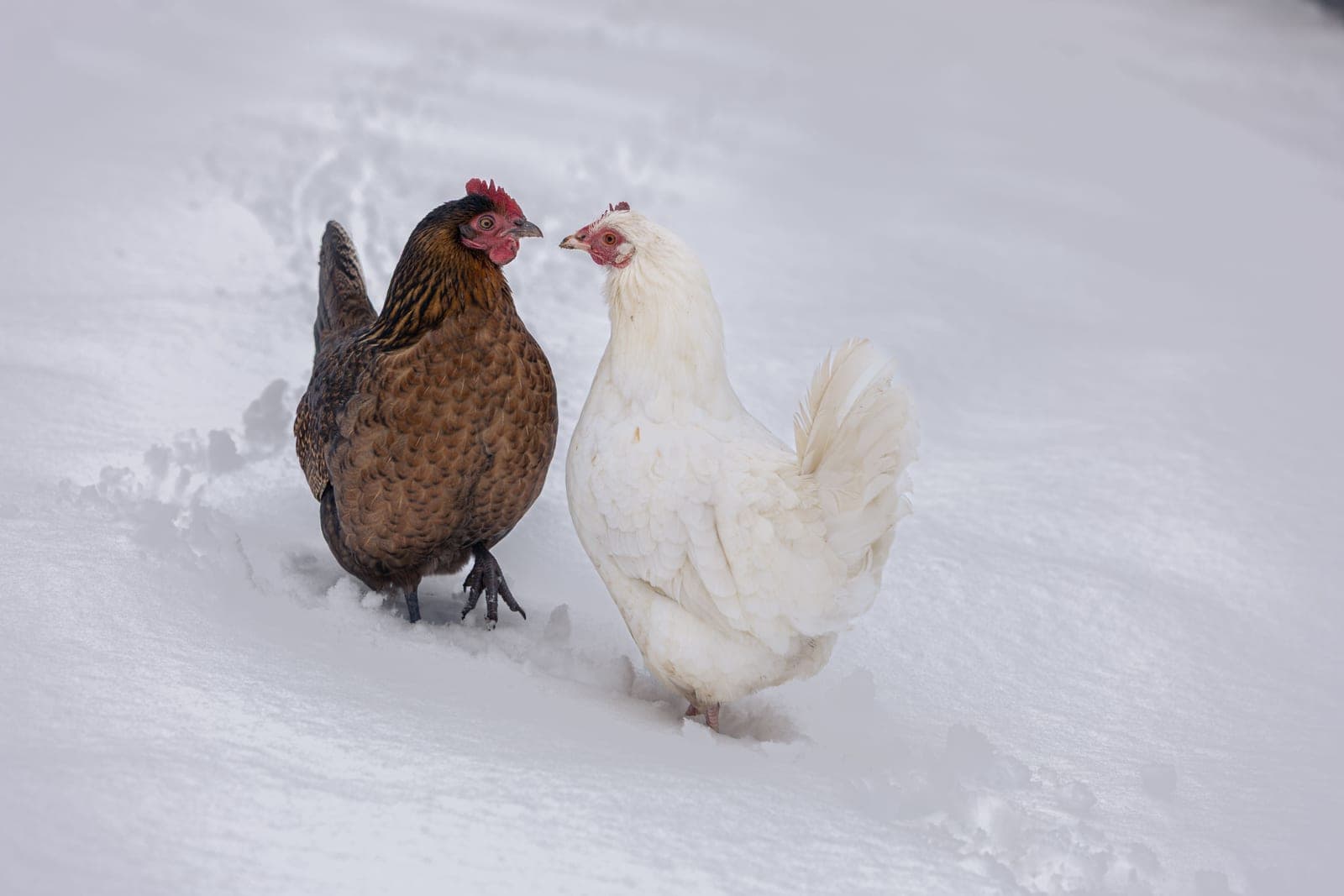
Chicken coops for cold climates
Cold-climate coops ranked on the things that matter below freezing - dryness, roof geometry, ventilation and floor area per bird.
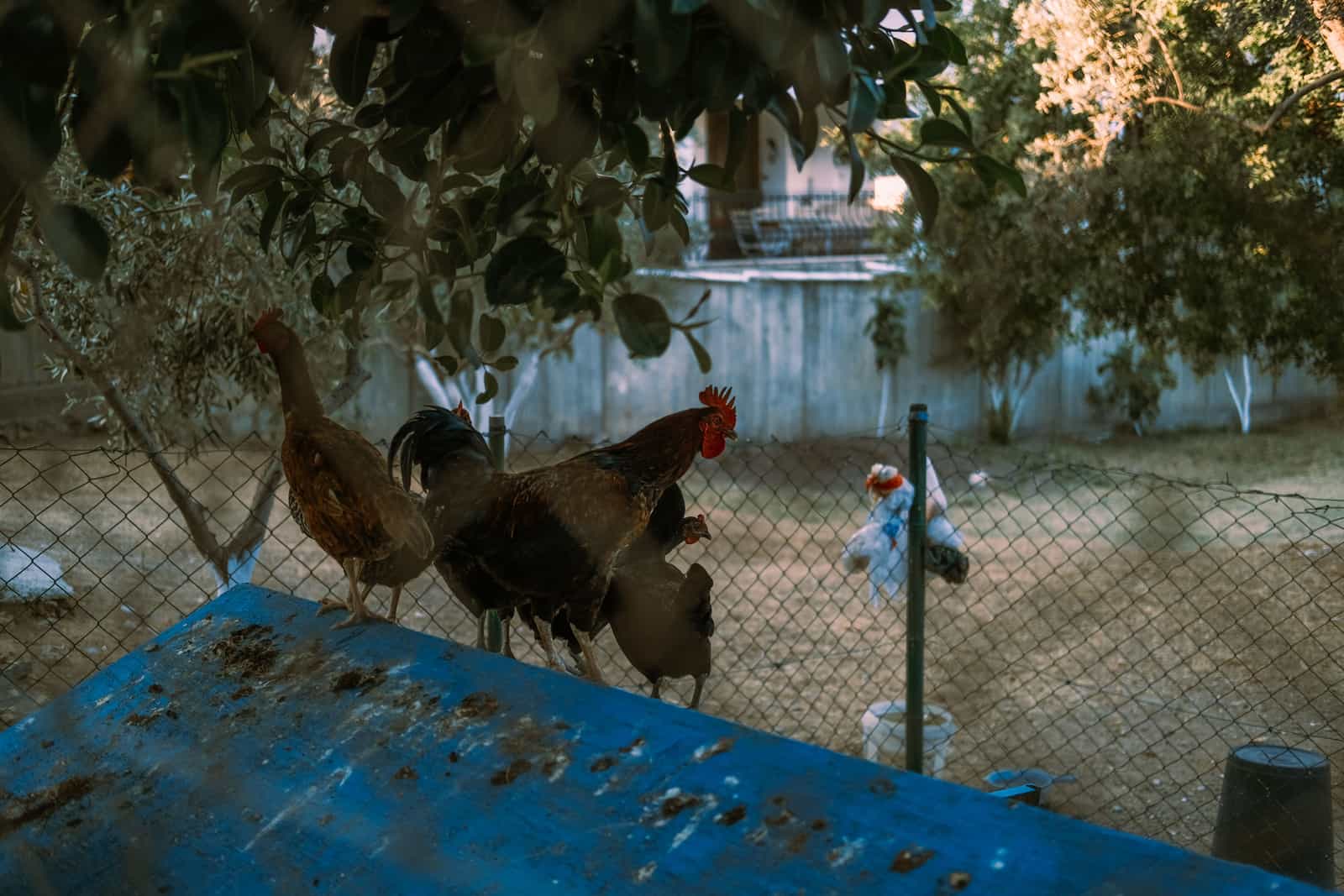
Chicken coops for hot climates
Coops and gear for genuine heat, ranked on airflow and shade rather than on how well they seal.
Plastic against wood, in the cold
A material comparison judged on condensation, cleaning and mite resistance rather than on an insulation value neither material really has.
Coop heaters, and whether you need one
Flat radiant panels compared, with an honest answer first on whether heat is the right intervention at all.
Coop fans and ventilation hardware
Vent placement, how much opening a coop needs, and when a powered shutter fan earns its wiring.