Mobile chicken coops and tractors
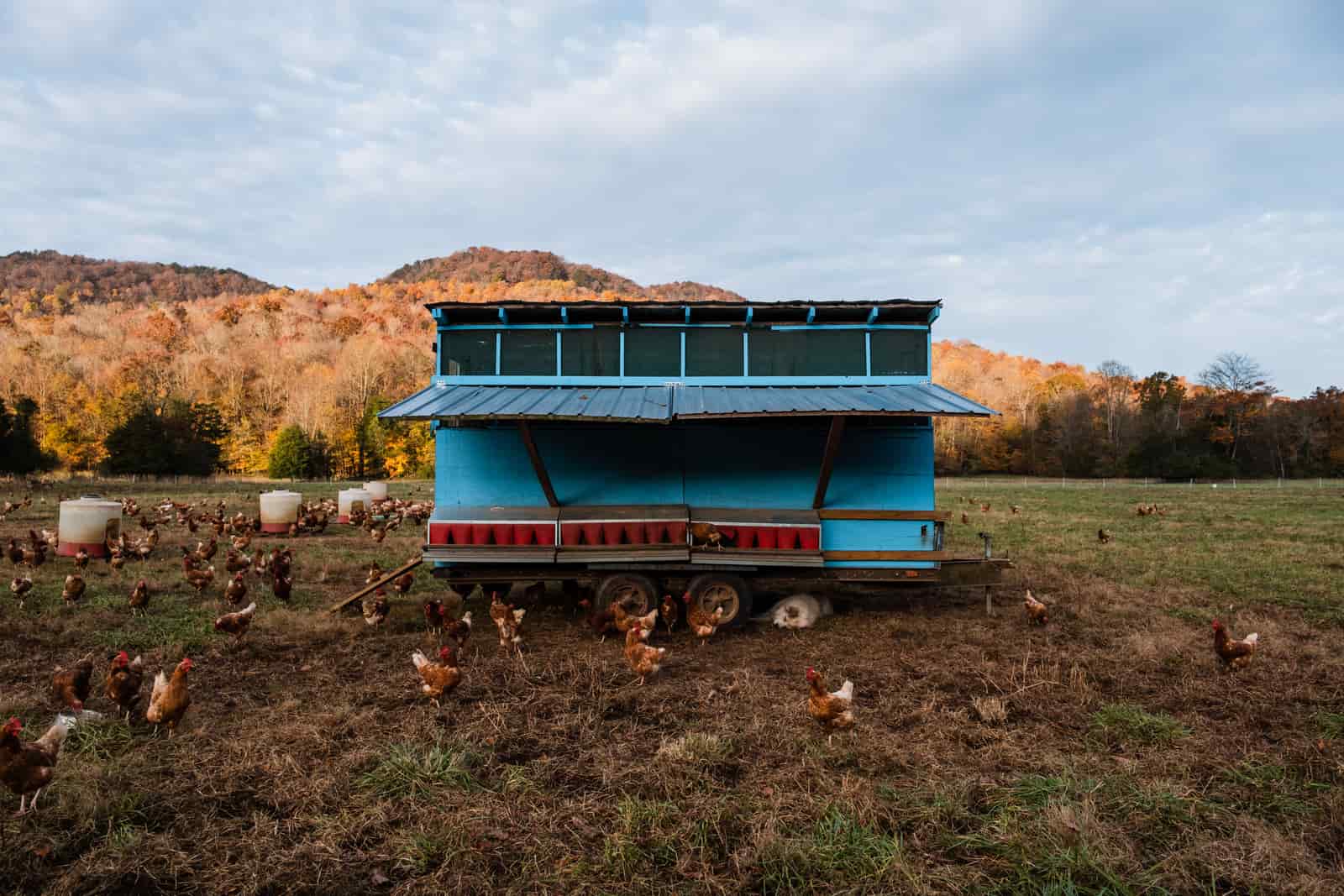
A tractor trades floor area for fresh ground. That is a real trade with a real ceiling: everything one person can move is under about 21 square feet.
We have not handled these coops, and we do not pretend to have. Here is what we did instead. Links to Amazon earn us a commission at no extra cost to you - disclosure.
| # | Coop | Best for | Honest count | Price |
|---|---|---|---|---|
| 1 | 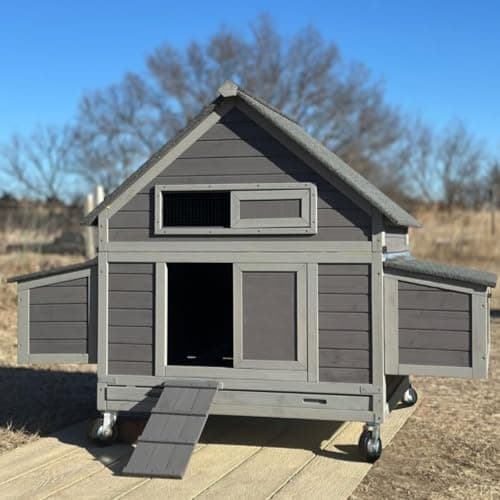 GUTINNEEN Mobile Coop on WheelsTop pick18.7 sq ft against a claim of eight. Four hens, and the best depth of any tractor here. | Four hens on the move | 4box says 8 | |
| 2 | 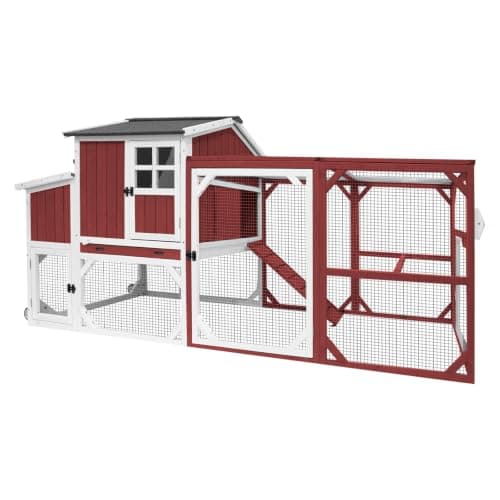 Pawbuilt 95.3" Coop with Run and Wheels20.8 sq ft against a claim of six, so five hens - and the wheels mean the grass underneath survives. | Moving the flock around the yard | 5box says 6 | Check price#ad |
| 3 | 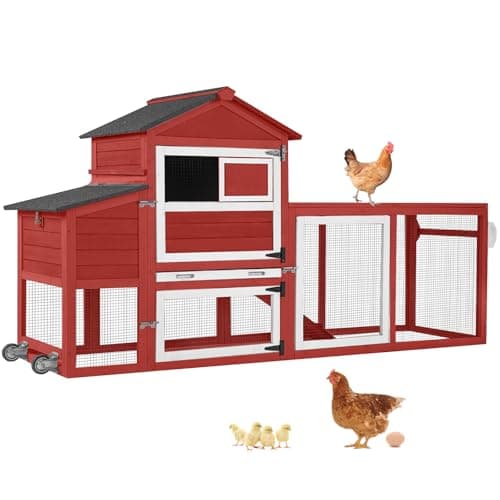 Aivituvin Mobile Coop with Wheels14.9 sq ft against a claim of six. Three hens, but it moves - which is worth more than the two phantom birds. | A movable three-hen setup | 3box says 6 | |
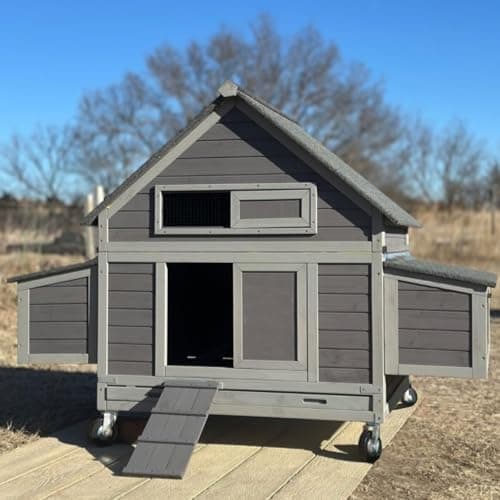
| 4 | 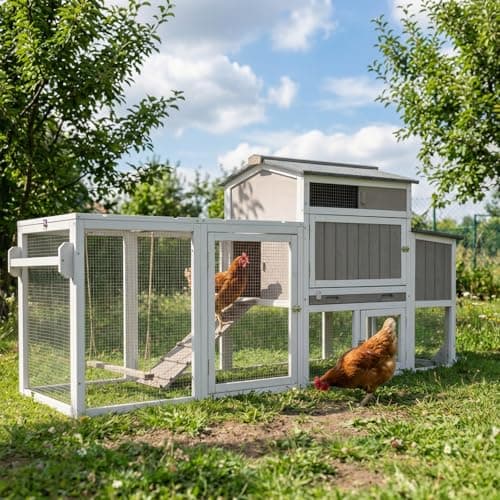 PetsCosset Mobile Chicken Tractor13.8 sq ft against a claim of six. A competent tractor sized for three, with roosting bars already fitted. | Rotating three hens over fresh ground | 3box says 6 | |
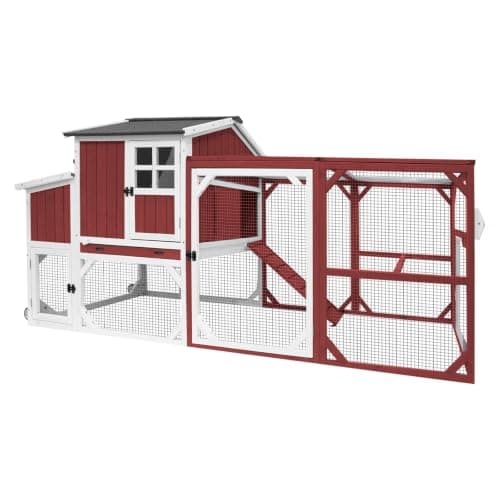
| 5 | 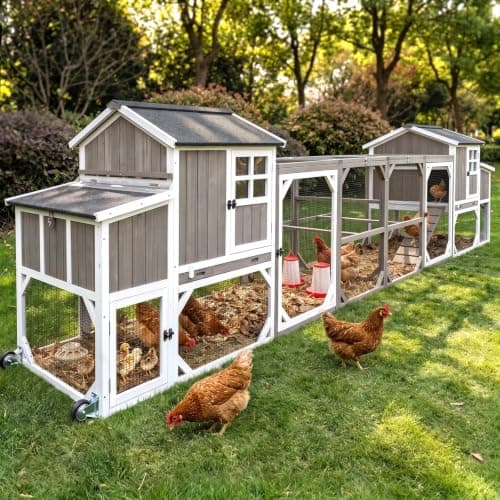 Pawbuilt 190.6" Double Coop with Run and Wheels41.7 sq ft over nearly sixteen feet of yard - ten hens, not the twelve claimed, and it buys that area the expensive way. | Length when you cannot spare width | 10box says 12 | Check price#ad |
The argument for a tractor is not space, it is ground. Moving a small flock every few days spreads manure instead of concentrating it, keeps grass from going bare and muddy, and interrupts the internal-parasite cycle by taking birds off ground they have just contaminated. Nothing else in coop design does that.
The argument against is arithmetic. A tractor has to be light enough for one adult to move alone, which caps the structure, which caps the floor. Every model measured here is between 13 and 21 square feet whole-unit, run included. That is three or four standard hens at published guidance, and the listings claim six or eight.
How often to move it
Every two to four days for three or four birds on established grass, and daily if the ground is soft or the flock is at the top of the range. The signal is the ground itself: move before the grass is scratched down to soil, not after. Once you are looking at bare earth, the ground needs weeks to recover and the parasite benefit has already gone.
What to check before you buy
- Wheel size. Small hard casters are fine on paving and useless on turf. Larger wheels with a lift handle are what makes a coop genuinely one-person movable.
- Whether you need a tractor at all. A wheel kit bolts wheels to the coop you already own, which sidesteps the three-or-four-bird ceiling this format has.
- Where the wheels sit. Two wheels plus a lift point is the workable pattern; four fixed wheels make a coop roll downhill on its own.
- Ground clearance. The floor of a tractor sits on grass, and any gap under the frame is an invitation to something that digs.
- Weight against your terrain. A 90-pound coop on flat lawn is easy. The same coop on a wet slope is a two-person job.
- Whether the run floor is open. Open is the point - birds need to reach the grass - but it means nothing is between them and the soil at night unless the henhouse section latches shut properly.
The ranked picks
Top pick · Four hens on the move
GUTINNEEN Mobile Coop on Wheels
18.7 sq ft against a claim of eight. Four hens, and the best depth of any tractor here.
What the numbers say
67.3in x 40in = 18.7 sq ft of whole-unit footprint, which includes the attached run and is therefore generous. At 4 sq ft per standard hen that is 4 birds, against a claim of 8.
Figures from GUTINNEEN published specifications (Amazon listing) · 67.3"L x 40"W x 49.75"H · Wood
18.7 sq ft supports four standard hens. The claim is six to eight.
At 40 inches this is by some margin the deepest mobile coop in the research pass, and it is why it holds four birds in only 67in of length while the 82in Aivituvin holds three.
Six nesting boxes for four hens is again more than the one-per-four guidance calls for.
Good
- 40in depth is the best of any tractor here
- More floor in less length than its wheeled rivals
- Weatherproof build with a proper roof
Not so good
- Eight is double the honest count
- Six nest boxes for four hens
- Heavier to move than the narrow tractors
Skip this if: you need to move it daily on your own. The extra depth that makes it good is also what makes it heavy.
#ad · how this is funded · price as of October 17, 2026
Pick 2 · Moving the flock around the yard
Pawbuilt 95.3" Coop with Run and Wheels
20.8 sq ft against a claim of six, so five hens - and the wheels mean the grass underneath survives.
What the numbers say
95.3in x 31.5in = 20.8 sq ft of whole-unit footprint, which includes the attached run and is therefore generous. At 4 sq ft per standard hen that is 5 birds, against a claim of 6.
Figures from Pawbuilt published specifications (Amazon listing) · 95.3"L x 31.5"W x 44.9"H · Asphalt, fir, metal and wood
20.8 sq ft is five standard hens against a claim of three to six. The bottom of the range is comfortable; the top is one bird optimistic.
The three-compartment nesting box is more than five hens need. One box per four birds is the published guidance.
The wheels are the point. A stationary run of this size turns to bare mud within a season; a moved one does not.
Good
- Wheels genuinely work at this size and weight
- Pull-out tray under the house end
- Comfortable at the middle of its claimed range
Not so good
- Six is one past the floor area
- 31.5in depth is narrow for the length
- Asphalt roof adds weight to something meant to move
Skip this if: the ground is uneven or sloped. Wheeled coops need reasonably flat ground, otherwise the frame racks and the doors stop closing square.
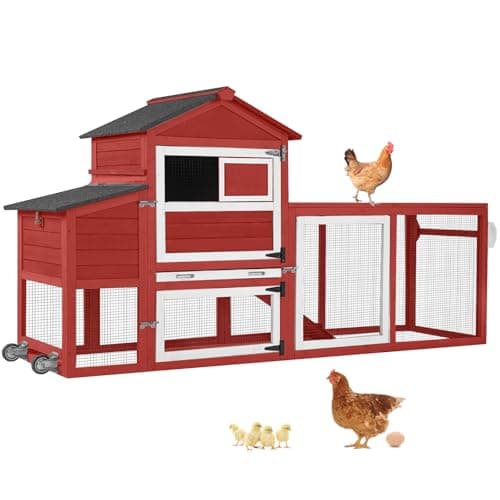
Pick 3 · A movable three-hen setup
Aivituvin Mobile Coop with Wheels
14.9 sq ft against a claim of six. Three hens, but it moves - which is worth more than the two phantom birds.
What the numbers say
82.4in x 26in = 14.9 sq ft of whole-unit footprint, which includes the attached run and is therefore generous. At 4 sq ft per standard hen that is 3 birds, against a claim of 6.
Figures from Aivituvin published specifications (Amazon listing) · 82.4"L x 26"W x 44"H · Fir with asphalt roof
14.9 sq ft is three standard hens against a claim of four to six.
The wheels change the calculation in a way floor area does not capture. A three-hen coop moved weekly keeps grass under it; a six-hen coop parked permanently produces mud and the parasite load that comes with it.
The expandable run section is genuinely useful, though the published footprint is what it is with the run in place.
Good
- Wheels make weekly repositioning realistic
- Expandable run section
- Leak-resistant asphalt roof
Not so good
- Six is double the honest count
- 26in depth is narrow
- Wheeled coops need flat ground to stay square
Skip this if: the coop will live in one place permanently. You are paying for mobility you will not use, and a static coop of the same money is bigger.
#ad · how this is funded · price as of October 17, 2026
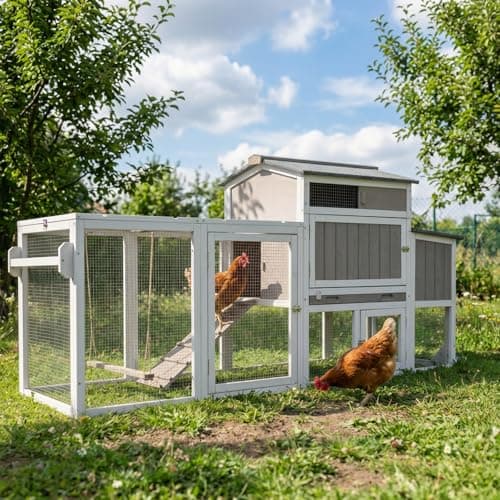
Pick 4 · Rotating three hens over fresh ground
PetsCosset Mobile Chicken Tractor
13.8 sq ft against a claim of six. A competent tractor sized for three, with roosting bars already fitted.
What the numbers say
77.41in x 25.6in = 13.8 sq ft of whole-unit footprint, which includes the attached run and is therefore generous. At 4 sq ft per standard hen that is 3 birds, against a claim of 6.
Figures from PetsCosset published specifications (Amazon listing) · 77.41"L x 25.6"W x 39.4"H · Fir
13.8 sq ft is three standard hens against a claim of four to six.
Roosting bars and a nesting box come fitted, which is not universal at this price and saves a fiddly retrofit.
A tractor is the one format where a small floor is defensible: the birds are on fresh ground constantly, so the fixed floor matters less than it would in a static coop.
Good
- Roost bars and nest box fitted as standard
- Light enough to move single-handed
- Pull-out tray for cleaning
Not so good
- Six is double the honest count
- 25.6in depth is narrow even for a tractor
- Fir frame needs checking for racking after repeated moves
Skip this if: you cannot commit to moving it. An unmoved tractor is just a small coop, and this one is small.
#ad · how this is funded · price as of October 17, 2026
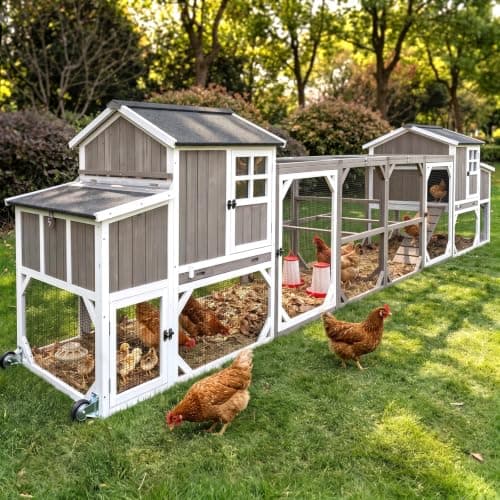
Pick 5 · Length when you cannot spare width
Pawbuilt 190.6" Double Coop with Run and Wheels
41.7 sq ft over nearly sixteen feet of yard - ten hens, not the twelve claimed, and it buys that area the expensive way.
What the numbers say
190.6in x 31.5in = 41.7 sq ft of whole-unit footprint, which includes the attached run and is therefore generous. At 4 sq ft per standard hen that is 10 birds, against a claim of 12.
Figures from Pawbuilt published specifications (Amazon listing) · 190.6"L x 31.5"W x 44.9"H · Asphalt, fir, metal and wood
41.7 sq ft supports ten standard hens against a claim of eight to twelve. The bottom of the range is fine; the top is two birds optimistic.
This is the clearest illustration of why length is a poor proxy for capacity. At 190.6in it is the longest unit on this site, and it holds fewer birds than the AECOJOY that is less than half its length - because it is only 31.5in deep.
The wheels are genuinely useful at this length, and moving it regularly is the only way that much footprint does not kill the grass under it.
Good
- Wheels make a 16ft unit repositionable
- Fits along a fence line where a square coop will not
- Symmetric layout gives two separate house sections
Not so good
- Twelve is two birds past the floor area
- 31.5in depth wastes most of the length
- Nearly 16ft long - the longest footprint here by far
Skip this if: you have square yard space available. You are paying for 16 feet of ground to get less floor than an 84in coop delivers.
The measured figures
| Coop | Published size | Floor area | Maker says | Arithmetic says |
|---|---|---|---|---|
| GUTINNEEN Mobile Coop on Wheels | 67.3"L x 40"W x 49.75"H | 18.7 sq ft | 8 hens | 4 hens |
| Pawbuilt 95.3" Coop with Run and Wheels | 95.3"L x 31.5"W x 44.9"H | 20.8 sq ft | 6 hens | 5 hens |
| Aivituvin Mobile Coop with Wheels | 82.4"L x 26"W x 44"H | 14.9 sq ft | 6 hens | 3 hens |
| PetsCosset Mobile Chicken Tractor | 77.41"L x 25.6"W x 39.4"H | 13.8 sq ft | 6 hens | 3 hens |
| Pawbuilt 190.6" Double Coop with Run and Wheels | 190.6"L x 31.5"W x 44.9"H | 41.7 sq ft | 12 hens | 10 hens |
Floor area is the maker’s published footprint. Where a unit includes an attached run that figure spans the run too, which makes it a generous reading - the enclosed roosting floor is smaller still. How we work these out.
Questions people actually ask
+How many chickens fit in a chicken tractor?
+How often should I move a chicken tractor?
+Are chicken tractors good in winter?
+Do mobile coops need a floor?
Sources
Read next
Chicken coops for 4 chickens
Four hens need 16 sq ft. The coops whose published dimensions genuinely reach it, ranked.
Chicken coops for 6 chickens
Six hens need 24 sq ft. Coops sold for six average 13. The ones that genuinely fit, ranked.
Coop types, and what each format actually gives you
Five formats compared on measured floor area, security ceiling and lifespan, with the picks that survive their own spec sheet.

Stopping predators that dig under the run
Why the apron beats a buried perimeter, how to lay one properly, and how much hardware cloth a typical run needs.
Where to put the coop
The siting order that matters - drainage, sun, wind, access - and the mistakes that no amount of good husbandry fixes.
Coop wheel kits, and the gap underneath
Retrofit caster and lift kits judged on load rating, wheel size and whether the coop returns to the ground between moves.