Coop types, and what each format actually gives you
A wooden kit, a bolted steel walk-in and a wheeled tractor are three different products sharing one category name. The format decides your ceiling on space, on security and on how long the thing lasts.
We have not handled these coops, and we do not pretend to have. Here is what we did instead. Links to Amazon earn us a commission at no extra cost to you - disclosure.
| # | Coop | Best for | Honest count | Price |
|---|---|---|---|---|
| 1 | 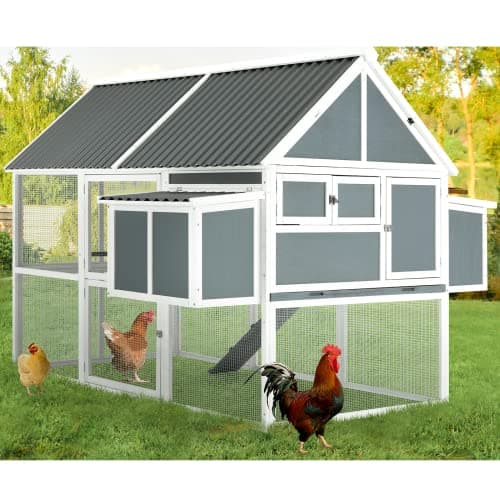 AECOJOY 84" Large Chicken CoopTop pick40.3 sq ft against a claim of ten. The numbers land exactly where the box says they do, which is rarer here than it should be. | Ten hens, claim and arithmetic agreeing | 10box says 10 | |
| 2 | 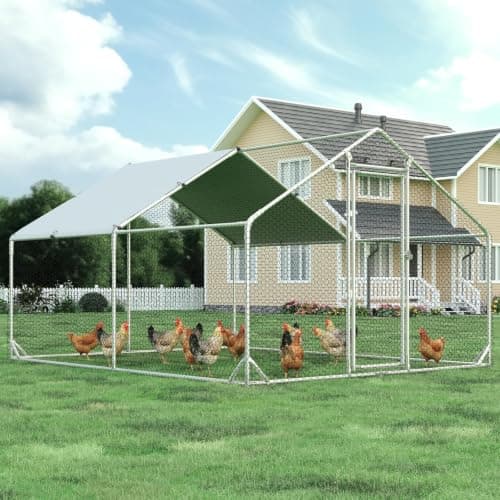 4ever2buy Metal Chicken Coop, 10x13 FT Walk-In Run128.4 sq ft of walk-in enclosure wrapped in galvanized hardware cloth - the largest ground area on this site, and a cover included. | A genuine walk-in enclosure | 32box says 15 | |
| 3 | 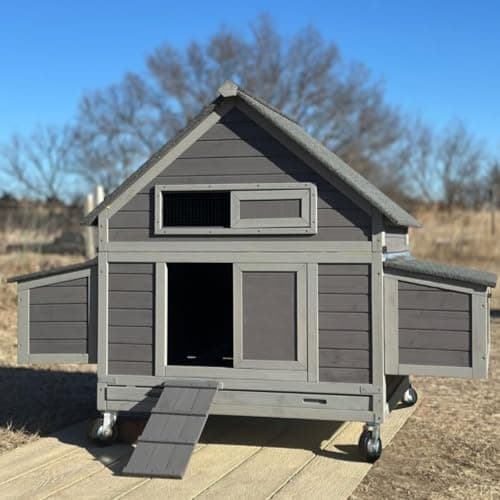 GUTINNEEN Mobile Coop on Wheels18.7 sq ft against a claim of eight. Four hens, and the best depth of any tractor here. | Four hens on the move | 4box says 8 |
Most coop advice treats the category as one product with different price tags. It is not. The five formats below have different failure modes, different lifespans, and - the part that matters most for sizing - they measure differently. A published footprint means one thing on a standalone plastic henhouse and something else entirely on a wooden kit whose footprint is two-thirds open run.
That distinction is why we compute every capacity figure from the maker's own published dimensions and record which measurement it came from. On our arithmetic, a whole-unit footprint is a deliberately generous upper bound. On a bare metal run it is not a coop measurement at all.
The five formats
| Format | Measured area here | Realistic lifespan | Security ceiling | Best for |
|---|---|---|---|---|
| Wooden coop with attached run | 12-52 sq ft whole-unit | 3-6 seasons untreated fir | Good, once the mesh is replaced | Most backyard flocks up to about ten |
| Metal walk-in run | 31-128 sq ft | 10+ seasons galvanized | Highest, if the base is skirted | Large flocks, and anyone tired of rot |
| Mobile tractor | 13-21 sq ft whole-unit | 3-5 seasons | Lowest - it cannot be anchored | Rotating three or four birds over grass |
| Standalone plastic henhouse | 11-17 sq ft enclosed | 10+ seasons | Good, and mite-resistant | Cleaning, cold, and long ownership |
| Walk-in wooden coop | 41-47 sq ft whole-unit | 4-7 seasons | Good | Access without crawling |
Wooden coop with an attached run
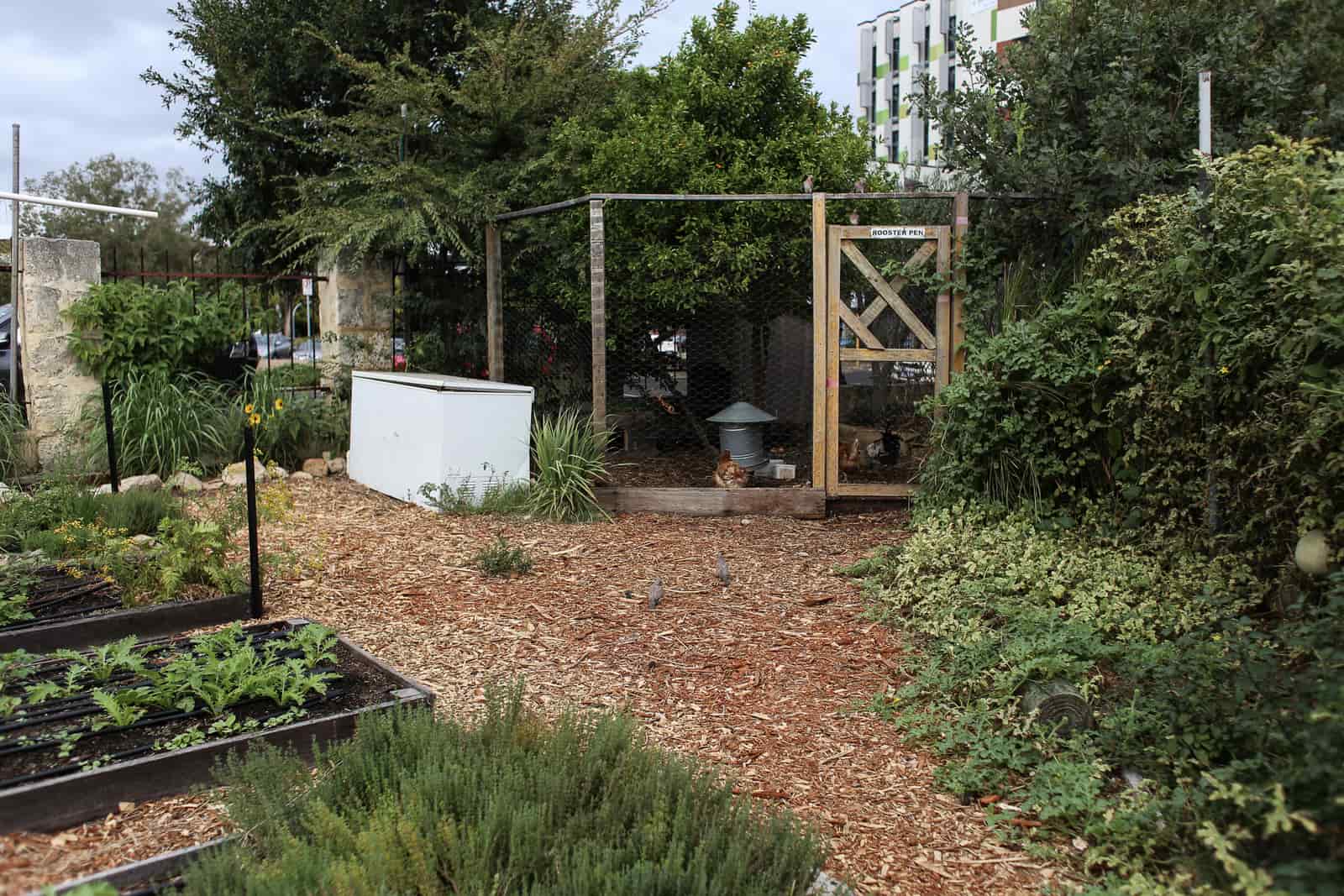
This is the default listing and the format most people buy first. You get a raised henhouse, a ramp, one or more nest boxes and a wire run underneath or beside it, all in one purchase. The economics are genuinely good: the AECOJOY 84in measures 40.3 sq ft whole-unit and is one of a small number of coops whose claim and arithmetic agree, which is why it heads the ten-bird roundup.
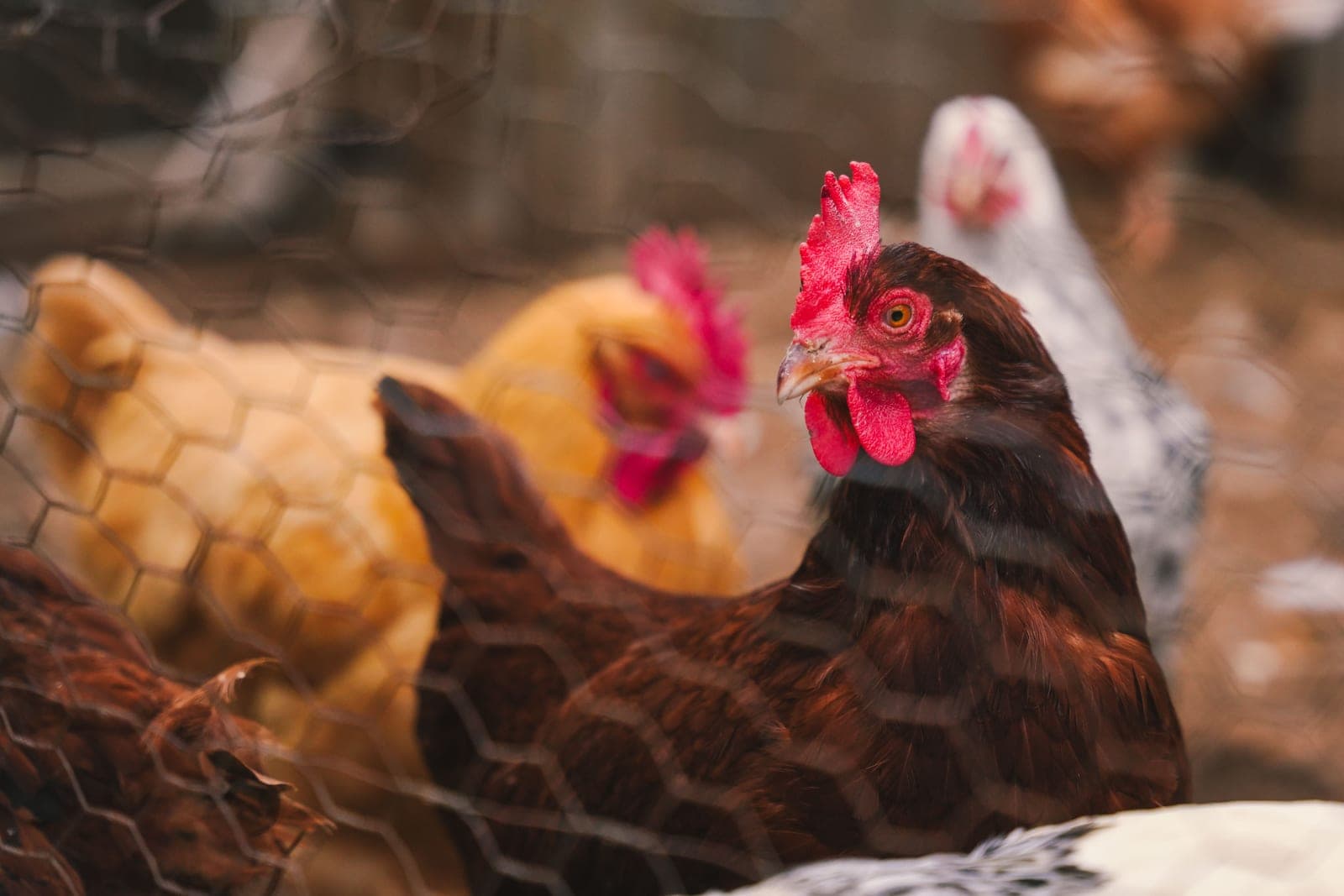
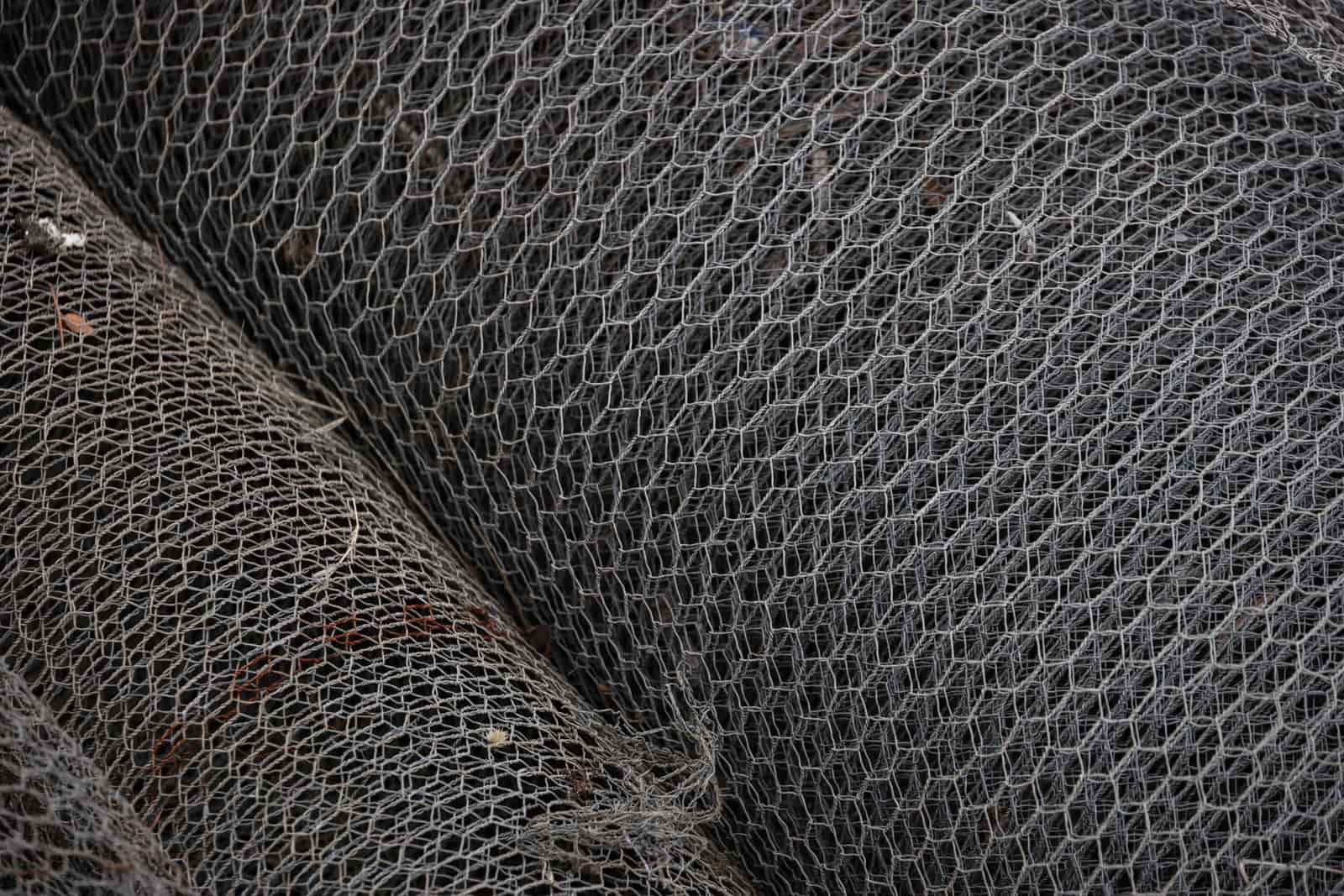
Two problems recur across every brand in this format. The wire supplied is chicken wire or a light welded mesh, which stops chickens leaving and does nothing about a raccoon. And the timber is untreated fir, which absorbs droppings and moisture and starts to soften at the base within a few seasons. Both are fixable, and both cost money the listing price does not include. See hardware cloth against chicken wire for the first and wooden coops for the second.
Metal walk-in runs
A galvanized steel walk-in is the largest usable area per dollar in the category by a wide margin. The 4ever2buy 10x13 measures 128.4 sq ft, which is more than double the biggest wooden kit here, and it will still be standing when every fir coop on this site has been replaced twice.
Mobile coops and tractors
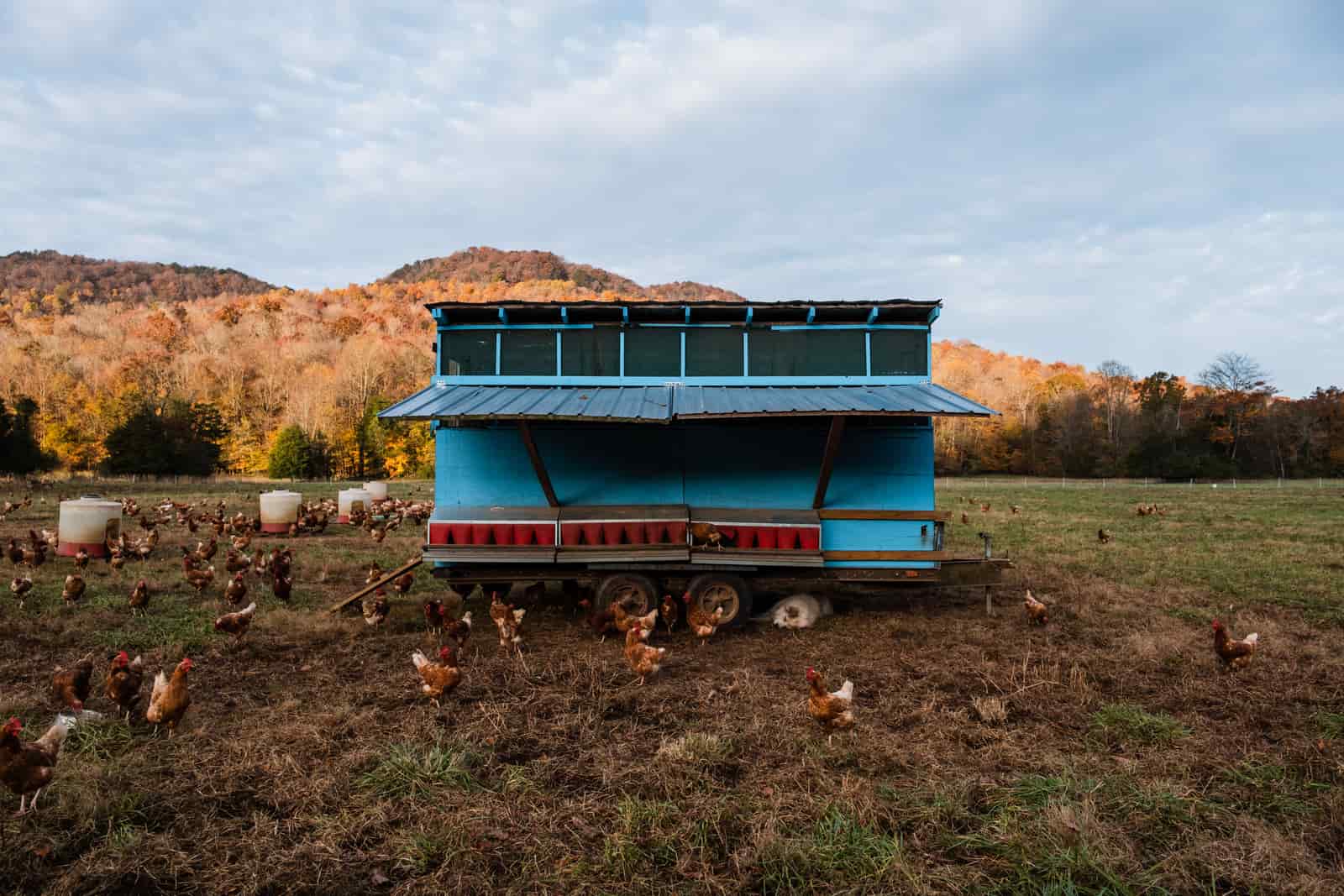
A tractor moves the flock onto fresh ground every few days, which is the best thing you can do for pasture and for parasite pressure. The cost is floor area: every model here is between 13 and 21 sq ft whole-unit, because anything heavier stops being movable by one person. Three or four hens is the honest ceiling whatever the listing says, and mobile coops and tractors has the measured figures. If you are deciding between the format and a fixed coop rather than between tractors, chicken tractor against a stationary coop is the head-to-head.
Standalone plastic henhouses
Double-walled polyethylene costs more than fir and is the only material here that does not rot, absorb, or give red mite anywhere to hide. It is also the only format where the published footprint is entirely enclosed floor, which makes the arithmetic honest by construction rather than by our correction. Plastic chicken coops covers the format and why the category is so small, and the Formex against the Aivituvin is the direct comparison.
Walk-in wooden coops
A wooden walk-in is the compromise: standing access for cleaning and egg collection, without the henhouse-shaped hole a bare metal run leaves you with. The TRYKERPET is the example at 47.4 sq ft against a claim of 10 to 12 birds - one of the closer claims in the category, and the arithmetic supports 11. Walk-in coops covers the format properly.
How to choose between them
- Start from the flock, not the format. Work out your floor, run, roost and box numbers first.
- If the answer is more than about 40 sq ft of coop floor, no wooden kit on the market does it in one purchase. Go metal walk-in with a henhouse inside, or plan on two coops.
- If you want to move the birds around the yard, accept three or four hens and buy a tractor. Do not buy a heavy coop and hope.
- If you intend to keep chickens for a decade, price plastic or galvanized steel against buying fir twice.
- Whatever you choose, budget separately for half-inch hardware cloth. No coop in this category ships with mesh that stops a determined raccoon.
One pick per format
Three coops that represent their format at its best, with the full arithmetic for each.
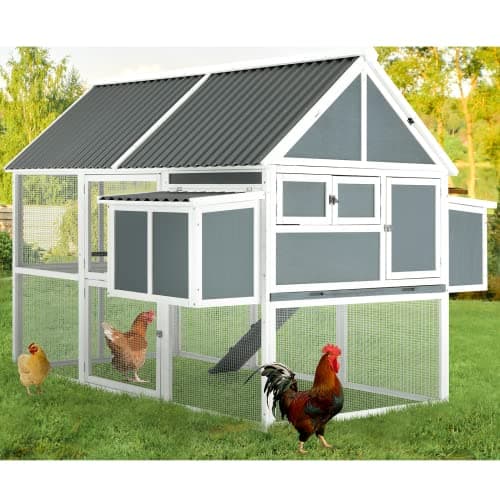
Top pick · Ten hens, claim and arithmetic agreeing
AECOJOY 84" Large Chicken Coop
40.3 sq ft against a claim of ten. The numbers land exactly where the box says they do, which is rarer here than it should be.
What the numbers say
84in x 69in = 40.3 sq ft of whole-unit footprint, which includes the attached run and is therefore generous. At 4 sq ft per standard hen that is 10 birds, against a claim of 10.
Figures from AECOJOY published specifications (Amazon listing) · 84"L x 69"W x 60"H · Wood
84 x 69 inches is 40.3 sq ft, which is exactly ten standard hens at the published 4 sq ft figure. AECOJOY claims eight to ten.
The 69in depth is what makes it work. Most coops in this class buy their length cheaply and stay narrow, which produces a corridor rather than a floor.
It is a square-ish footprint rather than a long thin one, so the usable area is genuinely usable - birds distribute across it instead of queueing down it.
Good
- Claim and arithmetic agree at ten hens
- 69in depth gives a floor rather than a corridor
- Two nesting boxes, which is the right count for ten hens on the published ratio
Not so good
- No margin - ten is the ceiling, not a comfortable number
- Wood construction needs annual attention
- Heavy once assembled and awkward to reposition
Skip this if: you plan to grow past ten birds. It meets its claim exactly, which means it has no room for the two extra chicks you will inevitably bring home.
#ad · how this is funded · price as of October 17, 2026
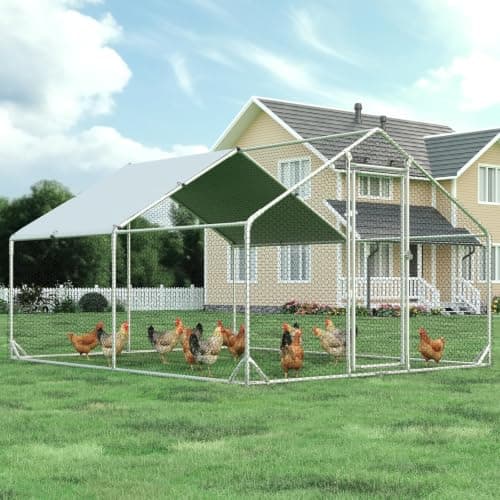
Pick 2 · A genuine walk-in enclosure
4ever2buy Metal Chicken Coop, 10x13 FT Walk-In Run
128.4 sq ft of walk-in enclosure wrapped in galvanized hardware cloth - the largest ground area on this site, and a cover included.
What the numbers say
157.2in x 117.6in = 128.4 sq ft of whole-unit footprint, which includes the attached run and is therefore generous. At 4 sq ft per standard hen that is 32 birds, against a claim of 15.
Figures from 4ever2buy published specifications (Amazon listing) · 157.2"L x 117.6"W x 76.8"H (10 x 13 ft) · Rust-resistant steel frame with galvanized hardware cloth
128.4 sq ft is the largest ground area on this site by a wide margin - more than twice the next biggest.
The listing claims room for 12 to 15 chickens. Read as run space at the published 8 sq ft a bird that is about 16, so the claim is reasonable - which is unusual enough here to say out loud. The bird column in our table divides by the 4 sq ft indoor figure, and that is the wrong measure for an enclosure with no henhouse in it.
Fully wrapped in galvanized hardware cloth rather than chicken wire is the specification that matters. Chicken wire keeps chickens in; hardware cloth keeps raccoons out, and they are not the same job.
A waterproof anti-UV cover is included, which is the detail that keeps the ground under it usable through a wet season.
Good
- Galvanized hardware cloth all round, not chicken wire
- 76.8in height is a true walk-in at 6.4 ft
- Waterproof cover included rather than sold separately
Not so good
- It is a run, not a coop - you still need a henhouse
- 13ft x 10ft needs serious yard space
- The 12-15 bird claim only holds as run space, never as roosting room
Skip this if: you expected a coop. There is no insulated, enclosed house in it, and birds cannot roost in a run overnight safely in most climates.
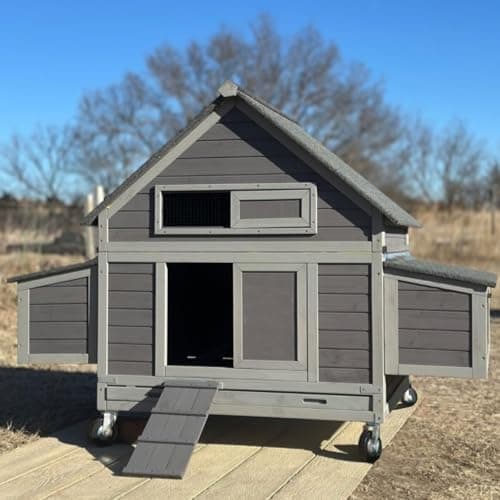
Pick 3 · Four hens on the move
GUTINNEEN Mobile Coop on Wheels
18.7 sq ft against a claim of eight. Four hens, and the best depth of any tractor here.
What the numbers say
67.3in x 40in = 18.7 sq ft of whole-unit footprint, which includes the attached run and is therefore generous. At 4 sq ft per standard hen that is 4 birds, against a claim of 8.
Figures from GUTINNEEN published specifications (Amazon listing) · 67.3"L x 40"W x 49.75"H · Wood
18.7 sq ft supports four standard hens. The claim is six to eight.
At 40 inches this is by some margin the deepest mobile coop in the research pass, and it is why it holds four birds in only 67in of length while the 82in Aivituvin holds three.
Six nesting boxes for four hens is again more than the one-per-four guidance calls for.
Good
- 40in depth is the best of any tractor here
- More floor in less length than its wheeled rivals
- Weatherproof build with a proper roof
Not so good
- Eight is double the honest count
- Six nest boxes for four hens
- Heavier to move than the narrow tractors
Skip this if: you need to move it daily on your own. The extra depth that makes it good is also what makes it heavy.
#ad · how this is funded · price as of October 17, 2026
| Coop | Published size | Floor area | Maker says | Arithmetic says |
|---|---|---|---|---|
| AECOJOY 84" Large Chicken Coop | 84"L x 69"W x 60"H | 40.3 sq ft | 10 hens | 10 hens |
| 4ever2buy Metal Chicken Coop, 10x13 FT Walk-In Run | 157.2"L x 117.6"W x 76.8"H (10 x 13 ft) | 128.4 sq ft | 15 hens | 32 hens |
| GUTINNEEN Mobile Coop on Wheels | 67.3"L x 40"W x 49.75"H | 18.7 sq ft | 8 hens | 4 hens |
Floor area is the maker’s published footprint. Where a unit includes an attached run that figure spans the run too, which makes it a generous reading - the enclosed roosting floor is smaller still. How we work these out.
Questions people actually ask
+Is a metal chicken coop better than a wooden one?
+Do I need a coop and a run, or is one enough?
+How long does a wooden chicken coop last?
+Are mobile chicken tractors worth it?
+Which coop type is the most secure?
Sources
Read next
The best chicken coops with attached runs
Coop-and-run kits ranked on measured whole-unit area, with the run counted honestly rather than sold to you as coop floor.
Walk-in chicken coops that are actually walk-in
Walk-in coops and runs ranked on measured area, with a clear split between enclosures that include a henhouse and those that do not.
Metal chicken coops and runs
Steel runs and enclosures ranked on measured area, with the henhouse gap and the base-security fix stated up front.
Wooden chicken coops, measured and weathered
Wooden coops ranked on measured floor area, with the maintenance cost of untreated fir priced in rather than left out.
Mobile chicken coops and tractors
Wheeled coops and tractors ranked on measured area, with the honest three-to-four-bird ceiling stated rather than buried.
Chicken tractor against a stationary coop
Every tractor in our registry measures three or four hens, and that is not a coincidence - it is what one person can move. The head-to-head.