Automatic coop doors for cold weather
A pop door that works beautifully in October is not the same machine in January. Cold drains batteries, ice jams tracks, and the evening you most need it to close is the evening it fails.
We have not handled these coops, and we do not pretend to have. Here is what we did instead. Links to Amazon earn us a commission at no extra cost to you - disclosure.
| # | Coop | Best for | Honest count | Price |
|---|---|---|---|---|
| 1 | 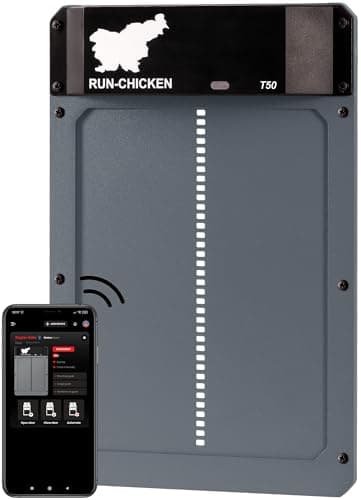 RUN-CHICKEN Door T50 Automatic OpenerTop pickBattery-powered aluminum with app and timer control. The one automatic door here that does not depend on winter sun. | The door that just keeps working | not published | |
| 2 | 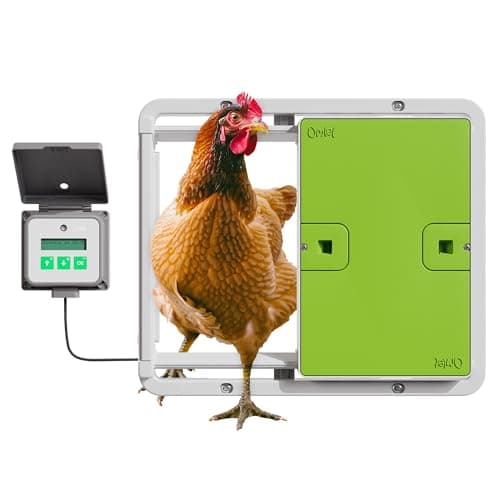 Omlet Automatic Coop Door OpenerThe biggest opening here at 19.25in, with safety sensors fitted - Omlet's door is on Amazon even though its coops are not. | Large openings and built-in safety sensors | not published | |
| 3 | 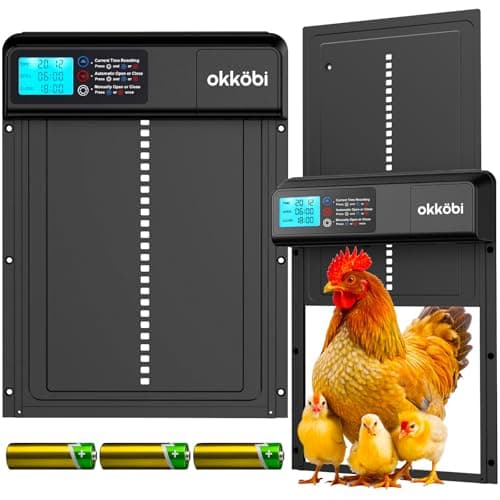 OKKOBI Coop Door LiteAA batteries, an LCD, anti-pinch safety and an 11in opening. The budget door that does not cut the safety corner. | The cheapest sound way in | not published | |
| 4 | 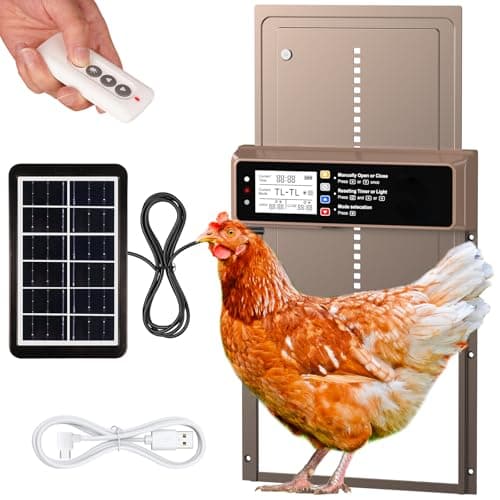 NyPots Solar Automatic Coop DoorSolar with timer and light sensor. Sound in a sunny climate and the wrong choice in a dark winter one. | Coops with no power and good sun | not published |
Winter is when an automatic pop door matters most and performs worst. It gets dark at half past four, you are not home, and the one night the mechanism sticks is the night something finds out.
Nothing in this category is sold on its cold-weather behavior, so this page is about what to look for rather than a marketing feature you can filter on.
What actually breaks in the cold
- Battery capacity. Every battery chemistry delivers less current cold than warm. A door that runs six months on four AA cells in summer does not run six months on them in January.
- Ice in the track. A vertical guillotine door runs in a channel, and a channel collects meltwater that refreezes overnight. This is the most common winter failure and it is a maintenance problem more than a product one.
- Bedding and debris. Shavings kicked into the track do the same thing ice does, and winter coops get more bedding kicked around because the birds are inside more.
- Solar input collapsing. A panel in December produces a fraction of its July output, so the battery does all the work exactly when it is least able to.
- Not knowing. Almost no door tells you it failed. You find out in the morning, or you do not find out at all.
How we judged
- Power source and reserve. Mains is the most reliable; a large rechargeable pack beats small disposable cells; small cells are the weakest option in a hard winter.
- Track geometry and how easily it clears. A door you can wipe out with a gloved hand in ten seconds gets maintained; one you have to dismantle does not.
- Whether both a light sensor and a timer are offered, because a light sensor in a dark winter closes earlier than you may want.
- An obstruction stop, which matters more in winter when birds bunch in the doorway.
- Simplicity. Every additional electronic feature is another thing to fail at minus ten.
The habit that matters more than the product
Check it. For the first week of the first cold snap, walk out after the door should have closed and look. That habit catches an iced track before it costs you a bird, and it is worth more than any feature on this page.
And keep the rest of the coop honest while you are there. A closed pop door is one opening; the main door, nest-box lid and clean-out tray still need two-motion latches, and winter is when a hungry raccoon is most persistent.
Power sources, ranked for a hard winter
| Power | Cold behavior | What goes wrong | Best for |
|---|---|---|---|
| Mains | Unaffected | Only a power cut, and then nothing moves | A coop close enough to run an outdoor-rated circuit |
| Large rechargeable pack | Reduced capacity, long reserve | Runs down faster than the summer figure suggests | Most keepers without power at the coop |
| Small disposable cells | Sharply reduced capacity | Dies mid-winter, usually overnight | Mild climates, or as a deliberate seasonal consumable |
| Solar with battery | Panel output collapses in December | Short days plus cold plus snow on the panel | Sunny winters, or coops with no other option |
Read that table as a ranking rather than a menu. If you can get power to the coop safely, the cold-weather door problem mostly disappears and everything else on this page becomes maintenance. If you cannot, you are choosing how much reserve to carry into the shortest days of the year.
The failure you will not see
Almost no pop door in this category reports its own state. There is no alert, no light on the house wall, nothing that distinguishes a door that closed at four from a door that jammed two inches off the sill. You find out the next morning, and sometimes you find out from the feathers.
That is the argument for a door with a genuinely simple mechanism. Every additional sensor, servo and mode is another component with a low-temperature failure mode, and the sophistication buys you nothing if it cannot tell you it has stopped working. In winter, the door that opens and closes on the same principle a garage door did in 1970 is a reasonable thing to want.
The low-technology answer is also the one that works: put the coop check on the same schedule as the evening it depends on. One look, one week, at the start of the first cold snap, and you will know whether the unit you bought handles your winter.
Winter is not only a door problem
It is worth saying that a pop door is a small part of winter keeping, and fixing it will not rescue a coop that is failing at something more basic. Frostbite comes from moisture, not from the thermometer, and a sealed coop with a beautifully functioning door is a worse coop than a well-vented one with a manual slide.
Get ventilation above head height open all winter, keep the bedding dry, block drafts at roost level only, and keep the water unfrozen. Cold climate coops covers the structural half, and coop ventilation covers the part almost everybody gets backwards.
The ranked picks
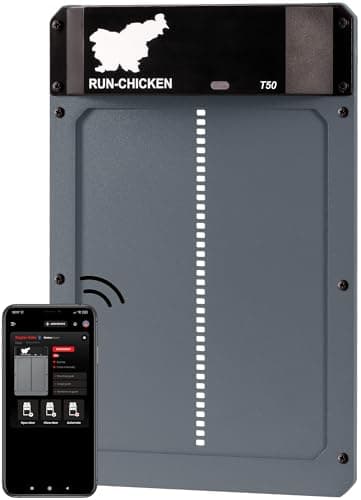
Top pick · The door that just keeps working
RUN-CHICKEN Door T50 Automatic Opener
Battery-powered aluminum with app and timer control. The one automatic door here that does not depend on winter sun.
What the numbers say
The manufacturer does not publish the dimensions this calculation needs, so we do not print a number.
Figures from RUN-CHICKEN published specifications (Amazon listing) · 13.8"L x 9.4"W x 1.3"H · Aluminum
Battery rather than solar is the important choice. A solar door's worst performance and your longest nights arrive in the same week, which is exactly when a door failing open costs you a flock.
Aluminum construction rather than plastic matters at the door itself, because this is the part a raccoon works at.
App and timer control both present, so it works whether or not you want it on your phone.
Good
- Battery power is unaffected by December daylight
- Aluminum door rather than plastic
- Timer and app control both supported
Not so good
- Batteries need replacing on a schedule you must remember
- Costs more than the solar units
- Opening size fixed by the unit
Skip this if: you have no way to check on it. Any automatic door needs an occasional look; a battery one needs its cells thought about before winter.
#ad · how this is funded · price as of September 13, 2026
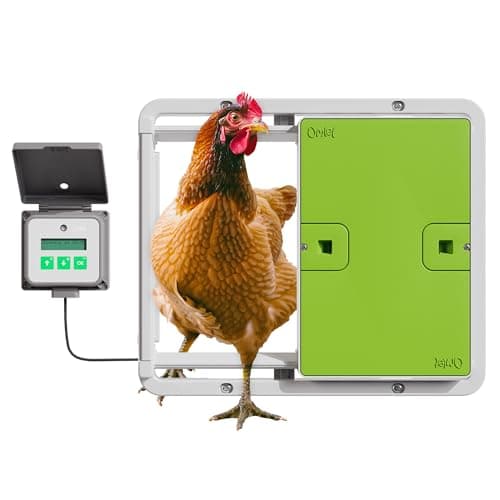
Pick 2 · Large openings and built-in safety sensors
Omlet Automatic Coop Door Opener
The biggest opening here at 19.25in, with safety sensors fitted - Omlet's door is on Amazon even though its coops are not.
What the numbers say
The manufacturer does not publish the dimensions this calculation needs, so we do not print a number.
Figures from Omlet published specifications (Amazon listing) · 19.25"L x 2.25"W x 16.5"H
At 19.25 inches this is much the largest unit here, which matters if you keep larger birds or want the flock through the door quickly at dawn.
Built-in safety sensors are the feature worth paying for. A door that closes on a slow bird is the failure mode people discover the hard way.
Worth noting that Omlet's coops are sold direct rather than on Amazon, but this door is not - so unlike the Eglu, it is something we can actually link.
Good
- Largest opening of the doors here
- Built-in safety sensors on closing
- Light sensor or timer operation
Not so good
- Needs a coop wall big enough to take it
- More expensive than the generic solar units
- Physically the bulkiest option
Skip this if: your coop wall cannot take a 19in cutout. Measure the flat panel area before ordering - several of the small coops on this site cannot accept it.
#ad · how this is funded · price as of September 13, 2026
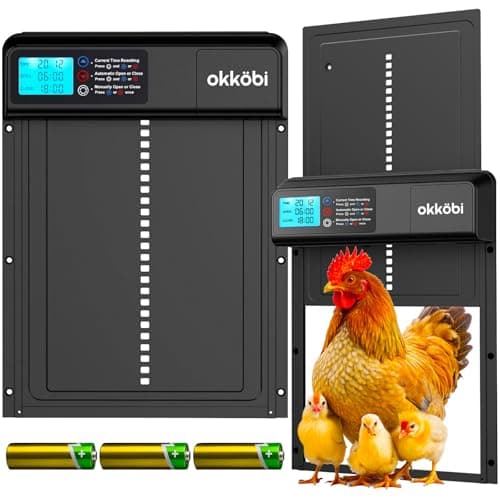
Pick 3 · The cheapest sound way in
OKKOBI Coop Door Lite
AA batteries, an LCD, anti-pinch safety and an 11in opening. The budget door that does not cut the safety corner.
What the numbers say
The manufacturer does not publish the dimensions this calculation needs, so we do not print a number.
Figures from OKKOBI published specifications (Amazon listing) · 9.61"L x 1.77"W x 13"H · Metal and plastic
Anti-pinch safety on a budget door is the specification worth checking for, and this one has it.
Three AA cells rather than a proprietary pack means replacements are trivial to find, which matters more over five years than the initial price does.
An 11 x 9.4in opening suits standard-size layers comfortably.
Good
- Anti-pinch safety at a budget price
- Standard AA cells, no proprietary battery
- Timer and manual modes
Not so good
- Partly plastic where the aluminum doors are not
- Smaller opening than the Omlet
- LCD is small and awkward to read outdoors
Skip this if: you keep large fowl. An 11in opening is fine for standard layers and tight for Brahmas or Jersey Giants.
#ad · how this is funded · price as of September 13, 2026
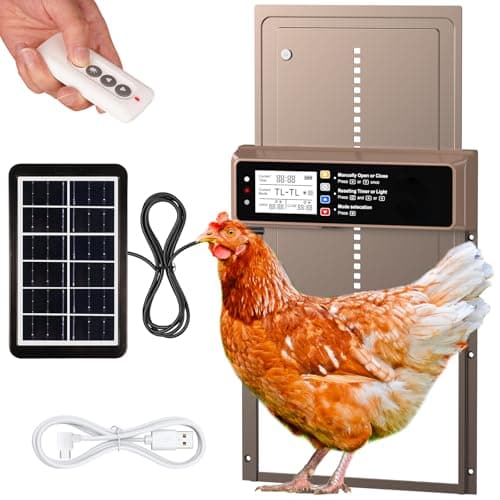
Pick 4 · Coops with no power and good sun
NyPots Solar Automatic Coop Door
Solar with timer and light sensor. Sound in a sunny climate and the wrong choice in a dark winter one.
What the numbers say
The manufacturer does not publish the dimensions this calculation needs, so we do not print a number.
Figures from NyPots published specifications (Amazon listing) · 9.6"L x 1.6"W x 13"H · Aluminum alloy and ABS
Solar removes the battery-replacement chore, which is the main reason people pick it.
The trade-off is seasonal and worth stating plainly: the shortest, darkest days are also the days a solar panel harvests least, and they are the days the door matters most.
In the southern half of the country this is a reasonable buy. In a northern winter, choose the battery unit.
Good
- No battery replacement to remember
- Both timer and light-sensor modes
- Aluminum alloy door plate
Not so good
- Winter performance depends on winter sun
- Panel needs clearing of snow and leaves
- ABS housing is the weak point
Skip this if: you are north of roughly the 40th parallel or your coop sits in shade. Buy the battery-powered door instead - see our solar-versus-timer comparison.
#ad · how this is funded · price as of September 13, 2026
The solar unit is included last deliberately. Solar is the hardest format to trust through a northern winter for exactly the reason set out above, and it is here because for a coop with no power it may be the only option - not because it is the safest choice in cold. Solar coop doors covers that trade in full.
Winterizing the door you already own
- Change the batteries at the start of winter rather than when they die, and use fresh cells rather than the ones from the drawer.
- Wipe the track dry before a freeze and keep bedding swept away from the threshold.
- A smear of dry lubricant in the channel helps; grease collects dust and makes it worse.
- Shelter the mechanism from driving snow with a small hood if the door faces the weather.
- Set the light-sensor threshold later, or switch to a timer, if early winter dusk is shutting birds out.
Questions people actually ask
+Do automatic chicken coop doors work in freezing weather?
+What stops a coop door freezing shut?
+Is a battery or mains coop door better for winter?
+Should I use a timer or a light sensor in winter?
Sources
Read next
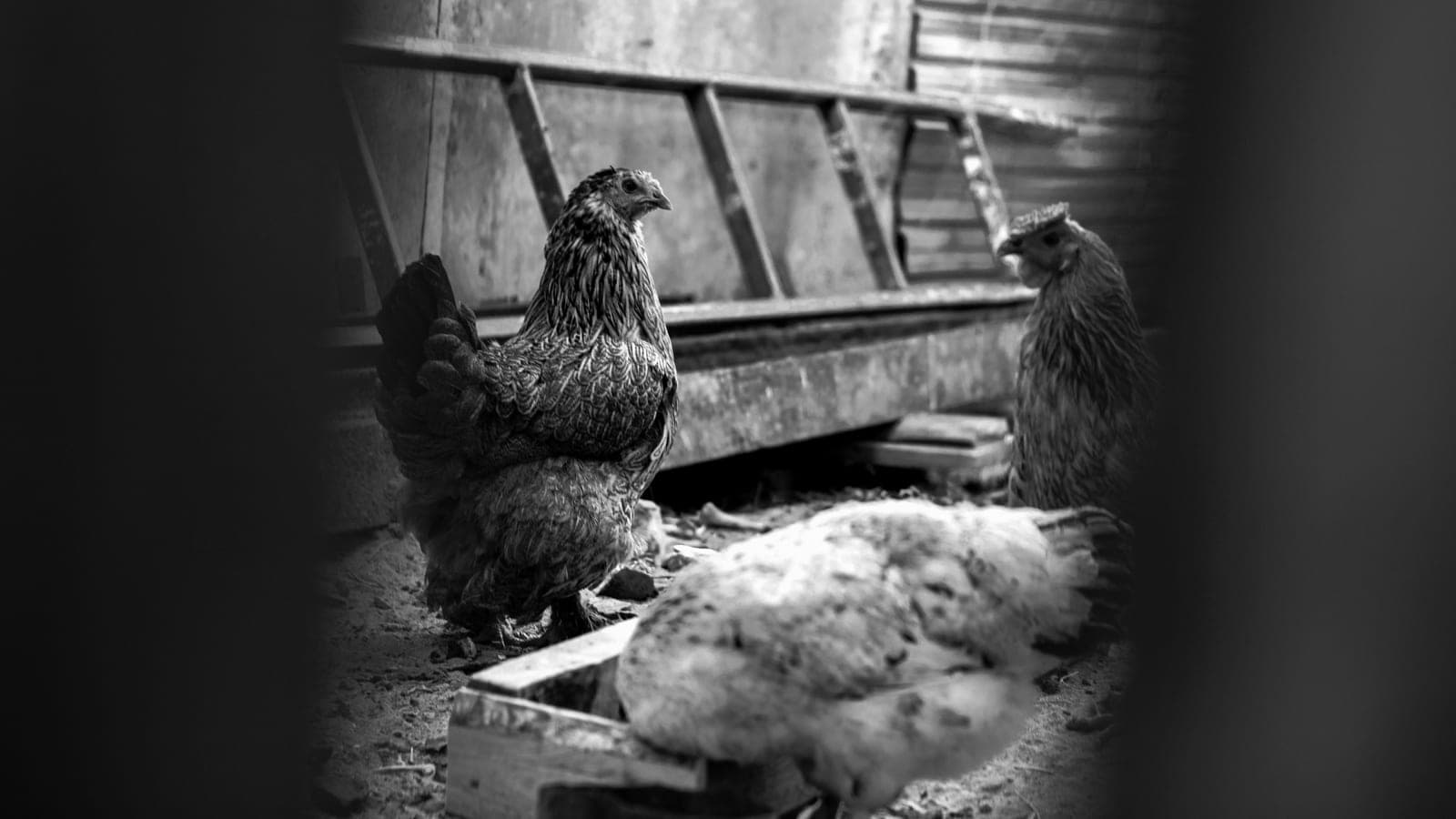
Automatic chicken coop doors
Automatic pop doors compared on trigger, power source, opening size and what happens when it is 10 degrees out.
Solar automatic chicken coop doors
Solar pop doors ranked on opening size, mode range and safety stop - with the gray-week caveat stated plainly.
Chicken coops for cold climates
Cold-climate coops ranked on the things that matter below freezing - dryness, roof geometry, ventilation and floor area per bird.
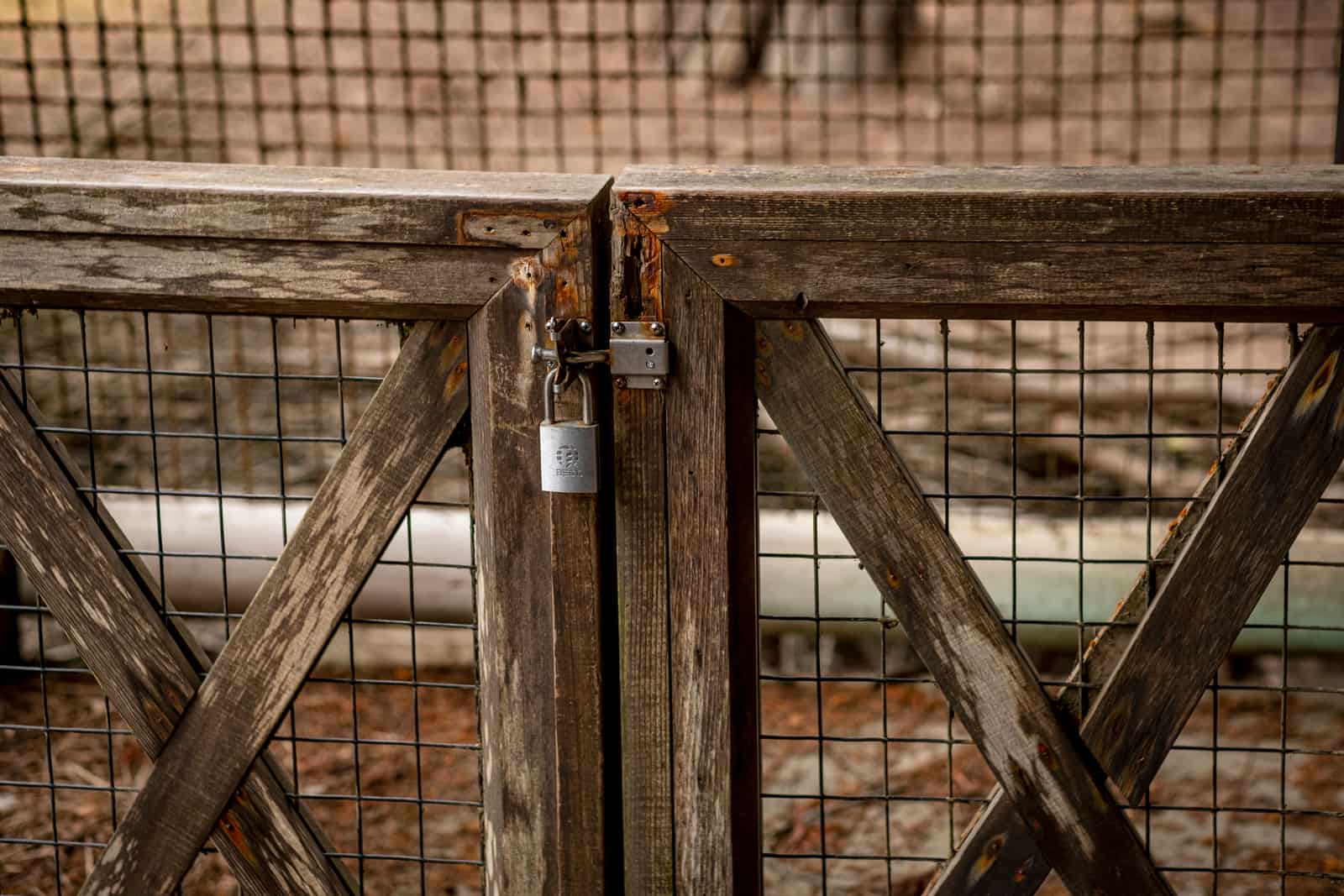
Latches a raccoon cannot open
Why hook-and-eye and spring catches fail, the two-motion principle that works, and where every coop needs a latch it did not ship with.
Coop gear, ranked by the problem it solves
The gear that fixes what coops arrive without - doors, mesh, roosts, boxes, heat and airflow - in buying order.
Omlet Automatic Coop Door Opener
Omlet automatic pop door reviewed on opening size, safety sensors, trigger, power and the cutout it demands.