Chicken coop flooring, and what the bedding sits on
Bedding manages the water. The floor under it decides whether that water reaches your plywood - and the right spec is a loose sheet, never an adhesive one.
We have not handled these coops, and we do not pretend to have. Here is what we did instead. Links to Amazon earn us a commission at no extra cost to you - disclosure.

| # | Coop | Best for | Honest count | Price |
|---|---|---|---|---|
| 1 | 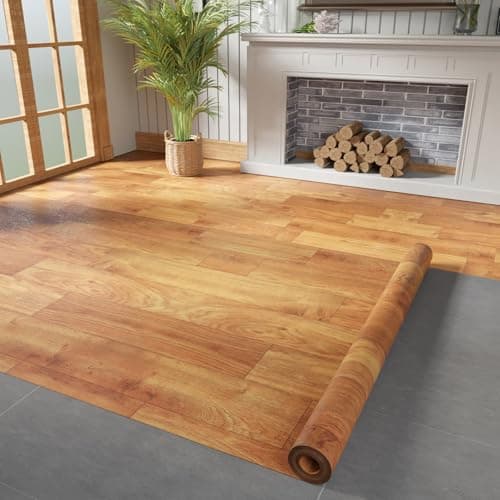 Oxdigi Vinyl Flooring Roll, 107 sq ftTop pickThe only option here that publishes both a removable, no-adhesive backing and enough width to cross a coop floor without a seam. | Covering a whole coop floor in one piece | not published | |
| 2 | 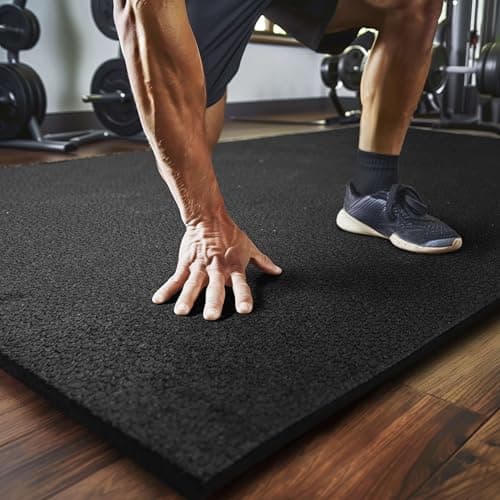 Mohawk Home Heavy Duty Rubber Stall Mat, 3ft x 4ftHalf-inch rubber in a 3ft by 4ft piece - the right thickness and almost exactly the right size for the strip of floor that actually gets wet. | A droppings area under the roost | not published | |
| 3 | 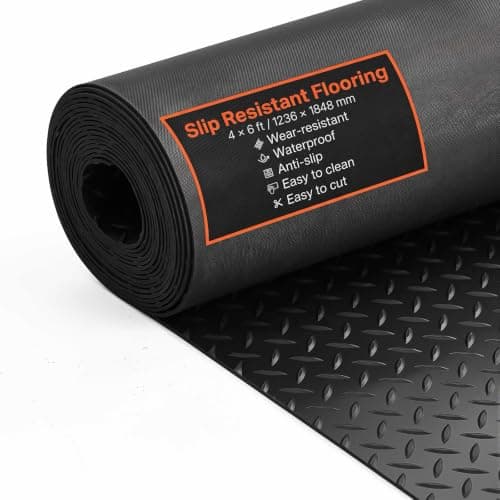 VEVOR Diamond-Plate Rubber Flooring Roll, 4ft x 6ftTwenty-four square feet of 3mm SBR rubber in a roll, which is the cheapest way to get a seamless non-absorbent floor into a mid-size coop. | A rolled rubber floor you can cut to the coop | not published | |
| 4 | 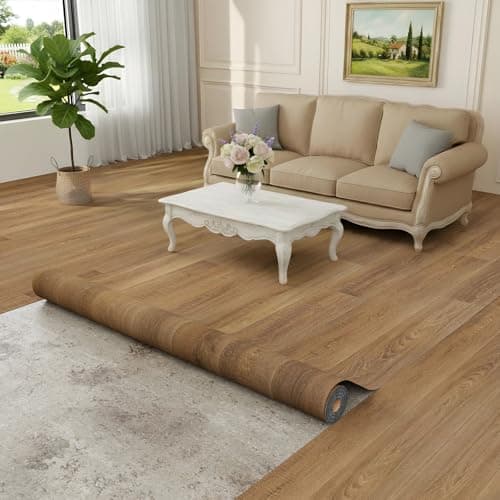 Homease Vinyl Flooring Roll, 39.4in x 118inThirty-two square feet of waterproof sheet for the price of a bag of shavings, with an adhesive backing that is the reason it is cheap and the reason to be careful. | The cheapest sealed floor that will do | not published | |
| 5 | 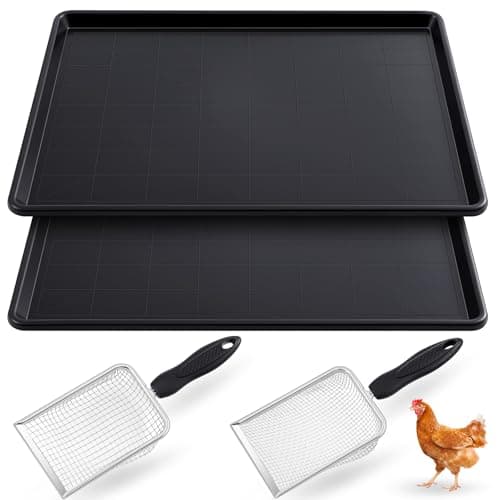 Mifoci Chicken Poop Tray with Mesh Scoopers, 2 PackThe one product on this page actually sold for a coop - a pair of pull-out pans with sifting scoopers, which is a cleaning method rather than a floor. | A coop you want to clean without bending in | not published |
This is the layer nobody lists. Bedding gets compared endlessly, run flooring gets compared for mud, and the surface between the two - what the bedding actually sits on - gets left as whatever plywood the coop shipped with.
Why the floor is a separate decision from the bedding
Droppings are mostly water, a flock produces them all night under the roost, and bedding exists to manage that water. Bedding is good at absorbing it and nothing at stopping it: once the litter caps over or gets deeper than it is dry, the water goes down. What it reaches is the coop floor, and in most coops in this category that is untreated plywood or fir.
That is the same mechanism that takes out a coop's base rail in three to six seasons, working on the floor instead. A sealed floor is the cheapest intervention against it, and it is also what makes a clean-out take ten minutes rather than forty.
How we judged
- Continuous or seamed. One piece across the floor beats tiles or panels, because every seam is a route to the wood underneath.
- Adhesive or loose. A loose-laid sheet lifts out to hose and goes back; a glued sheet fails at the edges in damp and then holds water where it cannot dry.
- Absorbent or not. The point of this layer is that it does not take water up - which rules out anything carpet-like, whatever its drainage claims.
- Published width and area against a real coop floor, from the maker's own dimensions.
- Whether a scraper or shovel will go through it, since that is how a coop actually gets cleaned.
- Whether the listing says anything about poultry at all - and on this page, usually it does not.
The finding: this category barely exists
Four of the five products below are sold for garages, gyms and horse stalls. There is no meaningful market in chicken coop flooring, so the specification that matters has to be read off a listing written for somebody parking a car. We would rather say that plainly than pretend the category is something it is not.
The one exception is the pull-out tray, which is genuinely made for coops - and it is a cleaning method rather than a floor, which is a different purchase with a different job.
The peel-and-stick trap
Adhesive-backed vinyl is cheap, widely recommended for coops and the wrong product. The adhesive is specified for a dry indoor subfloor. On damp plywood under daily droppings it lets go at the seams and edges, and the moment water is under a stuck-down sheet it cannot evaporate - so the covering becomes the thing holding water against the wood it was bought to protect.
If the cheap sheet is what the budget allows, buy it and ignore the backing: lay it loose and tape or trap the perimeter instead. That is how the budget pick below is written up.
What not to use, and why
This list matters more than the picks, because most of it is free advice circulating in the hobby and some of it does active harm.
| Material | Why it fails |
|---|---|
| Newspaper or cardboard | Slick when wet, and it absorbs rather than sheds. eXtension specifically warns against placing young birds on slick surfaces like cardboard, plastic or newspaper |
| Carpet or artificial turf | Absorbs the thing the layer exists to stop, and holds it where it cannot dry |
| Adhesive-backed vinyl, stuck down | The adhesive fails in damp and then seals water against the wood |
| Tiles or interlocking panels | Every join is a route to the floor, and droppings pack into the seams |
| Bare plywood, sealed with paint | Paint is a film on a porous surface; the first scrape breaks it and the water goes in at the scratch |
| Outdoor drainage pads | Designed to let water through, which is the correct behavior outdoors and the wrong one indoors |
That last row is worth separating out, because the products are good and the application is wrong. Interlocking drainage pads are what this site recommends for a muddy run, and a run wants water to leave downward. A coop floor wants water to stay on top where a scraper can reach it.
How to fit it so it lasts
- Measure the enclosed floor, not the whole unit. The covering is for the part the birds roost over.
- Cut it oversize and run it a couple of inches up the walls if the material will take the bend. A flat sheet cut exactly to the floor leaves the wall-to-floor join - which is where water collects - uncovered.
- Trap the edges under the wall line or tape the perimeter. Do not glue it: a covering you cannot lift is a covering you cannot dry under.
- Leave the roost strip accessible, because that is the part you will scrape daily and the part that wears out first.
- Lift it twice a year at the seasonal clean, dry the floor underneath, and put it back. This is the step that makes the whole thing worth doing, and the one a glued floor makes impossible.
Then put the bedding on top of it at the usual depth. The covering changes nothing about how much bedding you use or how often it comes out - coop bedding still decides that.
What to put where
| Problem | What to use | Why |
|---|---|---|
| Plywood floor going soft | Loose-laid vinyl sheet, whole floor | Continuous and non-absorbent, lifts out to dry |
| Droppings concentrated under the roost | Half-inch rubber mat on that strip | Thick enough to lie flat, scrapes clean |
| Awkward or uneven floor | Thin rolled rubber, cut to fit | 3mm follows the floor rather than bridging it |
| Cleaning without going inside | Pull-out tray with a sifting scoop | A method rather than a covering |
| Deep litter across the whole floor | Loose-laid sheet only | A tray works against the method; bedding has to stay in place |
| Mud in the run | Not this page | Outdoors is a drainage problem - see run flooring |
The picks
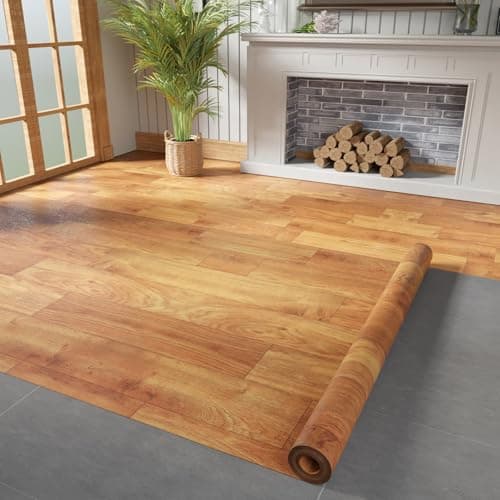
Top pick · Covering a whole coop floor in one piece
Oxdigi Vinyl Flooring Roll, 107 sq ft
The only option here that publishes both a removable, no-adhesive backing and enough width to cross a coop floor without a seam.
What the numbers say
The manufacturer does not publish the dimensions this calculation needs, so we do not print a number.
Figures from Oxdigi published specifications (Amazon listing) · 40in W x 394in L (107 sq ft) · PVC leather-like sheet vinyl, no adhesive backing
40 inches of width is the figure to check against your coop. A henhouse floor narrower than that takes a single piece with no seam for water to find, which is the entire point of covering a floor in the first place.
The listing specifies removable with no adhesive backing, installed with tape. In a coop that is a feature rather than a compromise: a loose-laid sheet lifts out for a hose-down and goes back, where glue fails at the edges within a season of damp.
107 square feet is far more than any coop in this category needs, and the surplus is the point - the offcuts line nest boxes and a droppings area, which is where the wet actually concentrates.
Good
- Removable with no adhesive backing, so it lifts out to clean
- 40in width crosses most henhouse floors without a seam
- One roll covers a coop floor and leaves offcuts for nest boxes
Not so good
- The most expensive way to solve this by some distance
- Sold for kitchens and rentals, so nothing in the listing speaks to poultry
- Loose-laid sheet needs taping or trapping under the walls or birds will scratch an edge up
Skip this if: your coop has a plastic or metal floor already. A moulded polyethylene or galvanized tray is a non-absorbent surface, and adding vinyl on top of it only creates somewhere for water to sit out of sight.
#ad · how this is funded · price as of October 17, 2026
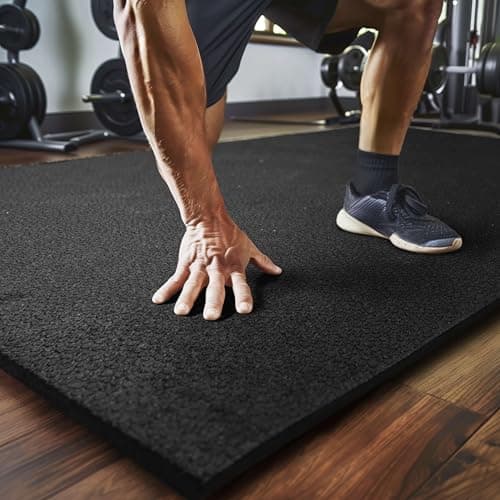
Pick 2 · A droppings area under the roost
Mohawk Home Heavy Duty Rubber Stall Mat, 3ft x 4ft
Half-inch rubber in a 3ft by 4ft piece - the right thickness and almost exactly the right size for the strip of floor that actually gets wet.
What the numbers say
The manufacturer does not publish the dimensions this calculation needs, so we do not print a number.
Figures from Mohawk Home published specifications (Amazon listing) · 36in x 48in x 0.5in thick · Rubber, 1/2in thick, diamond texture
Twelve square feet will not cover a coop floor, and it is not meant to. Droppings concentrate under the roost overnight, so the useful move is a mat on that strip rather than a covering everywhere.
Half an inch of rubber is thick enough to lie flat without curling, which is what separates a stall mat from the thin utility matting sold at the same price. A mat that curls at the edge traps bedding underneath it and defeats the purpose.
The diamond texture is a grip pattern, and it holds a film of droppings in the pattern until it is scraped. That is a real cost of this choice and it is worth knowing before rather than after.
Good
- Half-inch rubber lies flat and does not curl at the edges
- Sized close to a typical under-roost strip rather than a whole floor
- Non-absorbent, so the wet stays on top where you can scrape it
Not so good
- Heavy for its area - this is not a mat you lift out one-handed to hose
- The diamond texture holds droppings in the pattern until scraped
- Twelve square feet is a droppings board, not a floor covering
Skip this if: what you actually want is the whole floor sealed. One mat is a droppings area and buying four of them to tile a floor costs more than a vinyl roll and leaves three seams.
#ad · how this is funded · price as of October 17, 2026
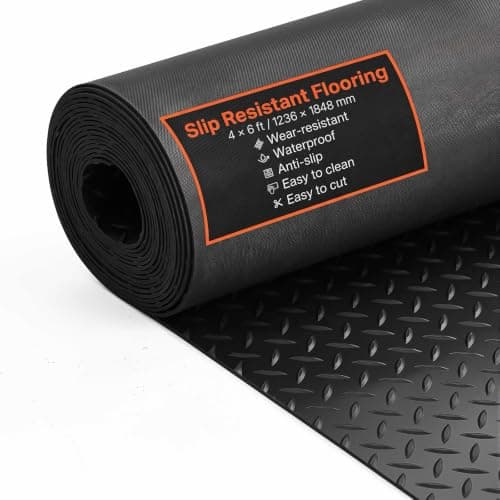
Pick 3 · A rolled rubber floor you can cut to the coop
VEVOR Diamond-Plate Rubber Flooring Roll, 4ft x 6ft
Twenty-four square feet of 3mm SBR rubber in a roll, which is the cheapest way to get a seamless non-absorbent floor into a mid-size coop.
What the numbers say
The manufacturer does not publish the dimensions this calculation needs, so we do not print a number.
Figures from VEVOR published specifications (Amazon listing) · 48in x 72in x 3mm thick · SBR rubber, 3mm thick, diamond plate texture
Twenty-four square feet covers the enclosed floor of most coops in this category with room to trim, and it arrives as one piece rather than tiles - no seams is the specification that matters in a wet coop.
3mm is thin enough to cut with a utility knife and a straight edge, which is the practical difference between this and a half-inch stall mat. It is also thin enough to follow an uneven plywood floor rather than bridging it.
It is sold for garages, under cars and in gyms. Nothing in the listing addresses poultry, ammonia or droppings, so the fit is our reading of a published specification rather than a manufacturer claim.
Good
- One continuous piece - no seams for water to find
- 3mm cuts cleanly with a knife, so it fits an awkward floor
- Cheapest route to a seamless rubber floor at coop sizes
Not so good
- Rolled rubber keeps a curl for weeks and needs weighting at the edges
- New SBR rubber has a strong smell in an enclosed coop until it airs
- Written entirely for garage use - no poultry information at all
Skip this if: your coop floor is larger than about five feet by four, because you will be seaming two pieces and a vinyl roll solves the same problem in one.
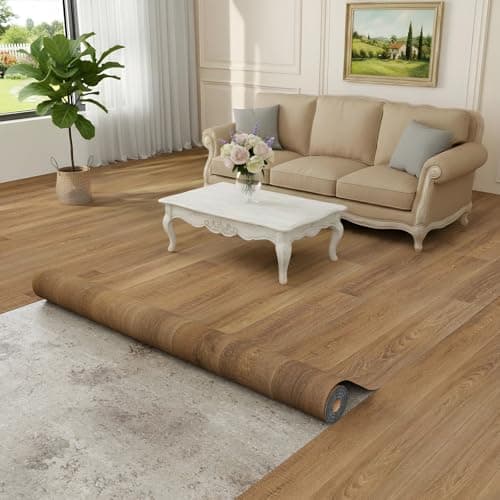
Pick 4 · The cheapest sealed floor that will do
Homease Vinyl Flooring Roll, 39.4in x 118in
Thirty-two square feet of waterproof sheet for the price of a bag of shavings, with an adhesive backing that is the reason it is cheap and the reason to be careful.
What the numbers say
The manufacturer does not publish the dimensions this calculation needs, so we do not print a number.
Figures from Homease published specifications (Amazon listing) · 39.4in W x 118in L (32 sq ft) · PET leather-like vinyl, 0.5mm, peel and stick
39.4 inches of width and 32 square feet is enough for the enclosed floor of a standard coop, and the price is the lowest route to a non-absorbent surface on this page.
The published thickness is 0.5mm. That is a tenth of the rubber options and it will tear where a shovel corner catches it, so this is a covering to be scraped with a flat tool and not dug at.
Peel and stick is the real trade. Adhesive on damp plywood lets go at the seams and edges, and once water is under a stuck-down sheet it cannot dry - which is worse for the floor than no covering at all. If you buy this, lay it loose and tape the perimeter instead of using the backing.
Good
- The cheapest non-absorbent floor covering here by a wide margin
- 32 sq ft covers a standard coop floor
- Thin enough to follow an uneven floor exactly
Not so good
- 0.5mm tears where a shovel edge catches it
- Peel-and-stick adhesive fails in damp and then traps water underneath
- A rental-renovation product with no outdoor or poultry rating of any kind
Skip this if: you clean with a shovel or a scraper rather than a brush. At half a millimetre it will not survive the tool, and a torn covering is a water trap.
#ad · how this is funded · price as of October 17, 2026
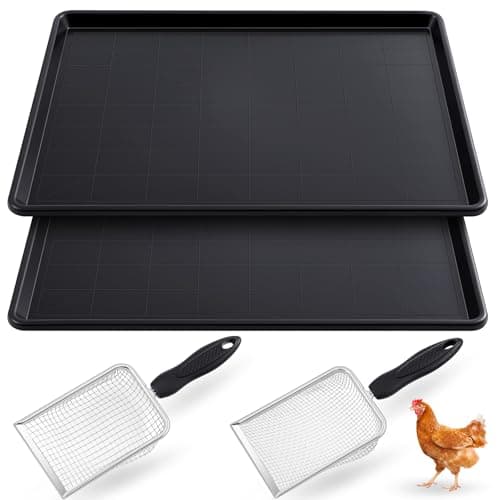
Pick 5 · A coop you want to clean without bending in
Mifoci Chicken Poop Tray with Mesh Scoopers, 2 Pack
The one product on this page actually sold for a coop - a pair of pull-out pans with sifting scoopers, which is a cleaning method rather than a floor.
What the numbers say
The manufacturer does not publish the dimensions this calculation needs, so we do not print a number.
Figures from Mifoci published specifications (Amazon listing) · Plastic trays with steel mesh scoopers
This is the only item here written for poultry, and it is worth saying what that is worth: the listing speaks to droppings and coop cleaning directly rather than leaving you to infer the fit from a garage specification.
The maker does not publish tray dimensions, so we cannot tell you whether a pan fits your coop and we will not estimate it. Measure the opening under your roost before buying - that is the only number that decides this purchase.
A tray plus a sifting scooper is a different approach from a covered floor. It works where droppings concentrate and bedding is shallow, and it does nothing for a deep-litter floor where the whole surface is damp.
Good
- Purpose-made for coops, with the cleaning tool in the box
- A pull-out pan means daily cleaning without going inside the coop
- Sifting scooper separates droppings from reusable bedding
Not so good
- No published tray dimensions, so fit cannot be checked before it arrives
- Two trays cover a droppings area, not a coop floor
- Plastic trays at this price flex when full and need supporting underneath
Skip this if: you run deep litter. The method works by letting bedding compost in place across the whole floor, and a pull-out tray is for the opposite approach.
#ad · how this is funded · price as of October 17, 2026
Prices here span a wide range for products doing broadly the same job, and the expensive one is expensive because of its width and its backing rather than its material. If your coop floor is under four feet across, the rolled rubber does the same thing for a third of the money.
What we did not weigh
We have not laid any of these in a coop. There is no durability test here and no wear rating, because we have no basis for one - every judgment above is from the published specification, and the published specification is the thing you can check too.
We also have no source on whether any of these materials is inert around poultry over years of contact. None of the listings addresses it and no extension service we cite discusses coop floor coverings at all, so that is an open question rather than one we have answered.
Where to go next
- Coop bedding, judged on moisture - the layer that goes on top
- Chicken run flooring - the outdoor problem, which is drainage rather than sealing
- A cleaning routine you will actually keep - where this layer earns its money
- Turning a shed into a chicken coop - the conversion this matters most for
Questions people actually ask
+What is the best flooring for a chicken coop?
+What do you put on the floor of a chicken coop?
+Is peel-and-stick vinyl good for a chicken coop?
+Can you use rubber horse stall mats in a chicken coop?
+Do you need flooring in a chicken coop at all?
+Does a floor covering replace cleaning the coop?
Sources
- Penn State Extension - Small-scale poultry housing
- Penn State Extension - Pest management recommendations for poultry (flies breed in manure at 50-85% moisture; fresh manure is 75-80% moisture; house fly life cycle 10 days at 85F, 21 at 70F, 45 at 60F; spilled feed and broken eggs attract adult flies)
- University of Minnesota Extension - Raising chickens for eggs (3-5 sq ft indoor space per bird; one nest box per 4-5 birds)
Read next
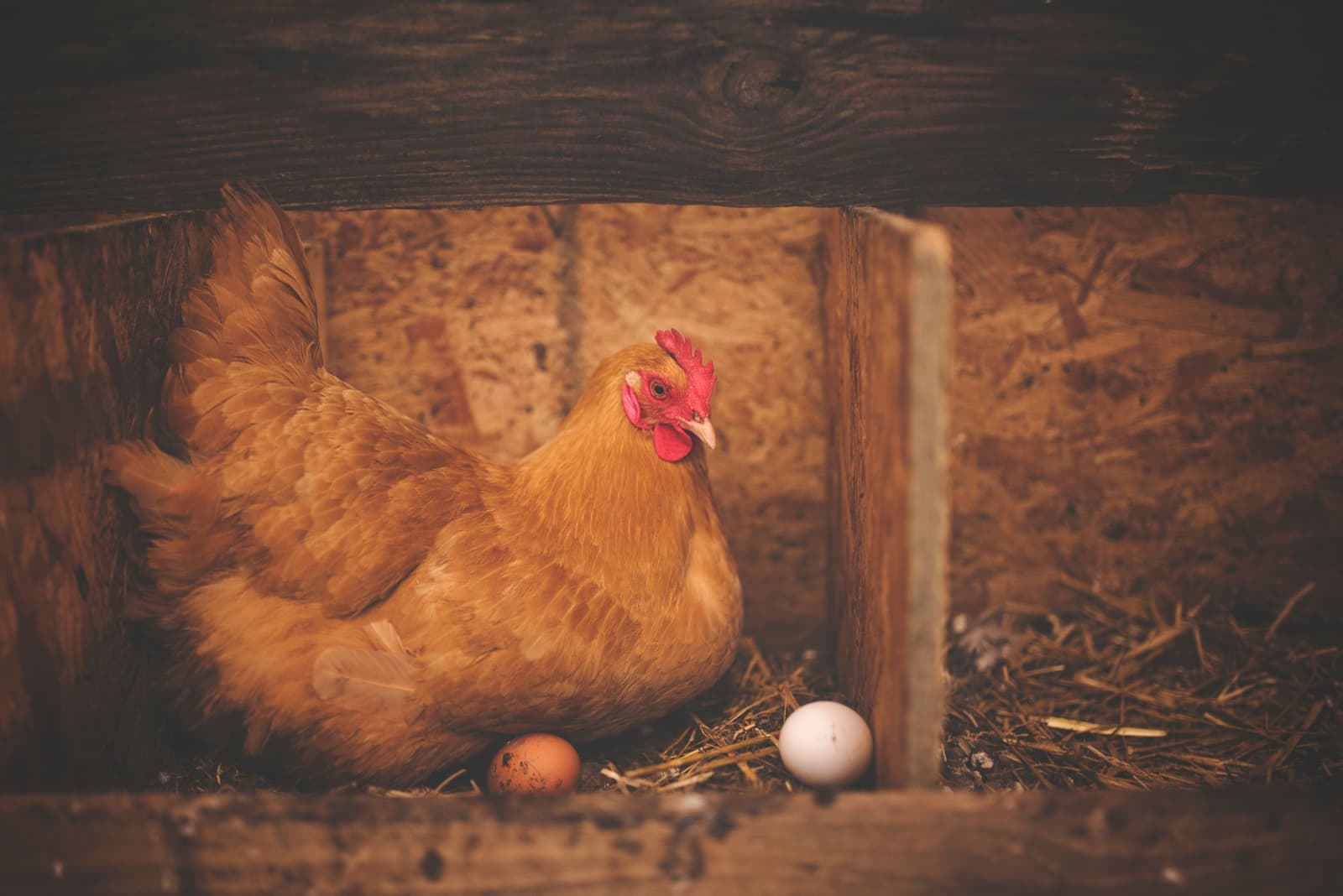
Coop bedding, judged on moisture
Shavings, straw, sand and hemp compared on absorbency and running cost, plus how the deep litter method actually works.

Chicken run flooring, and what actually fixes mud
Run flooring judged on drainage and cost per square foot - including why the cheapest answer is not a shipped product.
A cleaning routine you will actually keep
Daily, weekly and seasonal jobs sized so they get done, plus the mite inspection nobody schedules until it is too late.

Turning a shed into a chicken coop
A 6x8 shed holds twelve hens on the published figures, which no kit coop in this category comes near. The five buys that convert it.
Coop gear, ranked by the problem it solves
The gear that fixes what coops arrive without - doors, mesh, roosts, boxes, heat and airflow - in buying order.
Is pressure-treated wood safe for a chicken coop?
Residential treated lumber has been copper-based since the end of 2003. No kit coop uses it, which makes rot a question about material and elevation instead.