Coop fans and ventilation hardware
Vent area is the cheapest thing you can add to a coop and the thing most coops have least of.
We have not handled these coops, and we do not pretend to have. Here is what we did instead. Links to Amazon earn us a commission at no extra cost to you - disclosure.

| # | Coop | Best for | Honest count | Price |
|---|---|---|---|---|
| 1 | 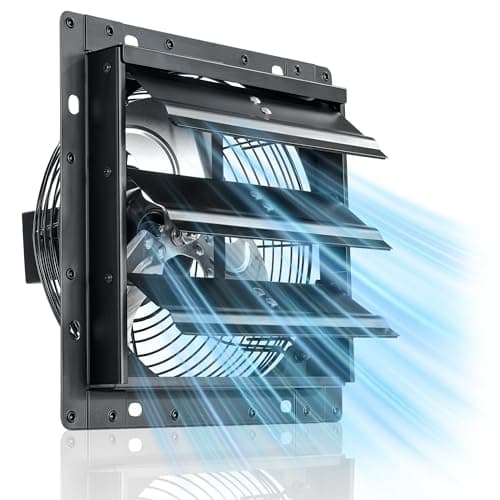 Generic 8in Shutter Exhaust Fan, 760 CFMTop pick760 CFM through an 8in shuttered opening. For hot climates this does more for the flock than any heater ever will. | Hot-climate summer ventilation | not published |
Ventilation is the least photogenic part of a coop and it decides more outcomes than anything except space. It moves the moisture from droppings and breath out of the building, which is what prevents winter frostbite, and it moves heat out in summer, which is what prevents heat stress. Both jobs need openings, and most coops in this category have too few.
Where the vents go
High. Above roost height, near the eaves or the top of the walls. Warm, moist air rises, and a vent up there lets it leave without pulling cold air across birds at roost level. Vents on more than one wall are better than one, because air needs somewhere to come in as well as somewhere to go out.
The corollary is the one people get wrong: openings at roost height are drafts, not ventilation. In winter, block those and leave the high ones alone. Full detail in ventilation, not insulation.
Cover every opening
A bigger vent is a bigger hole, and the answer to that is half-inch hardware cloth rather than a smaller vent. Stapled properly into framing every few inches, a meshed vent gives you unrestricted airflow and excludes everything from raccoons to rats. Cutting a large opening and covering it well beats leaving a small one uncovered.
When a powered fan makes sense
In a genuinely hot climate, an enclosed henhouse can hold the day's heat well into the evening, which is exactly when the birds go in to roost. A shutter exhaust fan pulls that air out and draws cooler outside air through the low openings. That is a real improvement on the hottest nights of the year and does nothing useful in a mild climate, where placed vents alone are enough.
- Mount high on the wall opposite the main inlet, so the air path crosses the coop.
- Shutter housings close when the fan is off, which stops it becoming a winter draft.
- Run power on a GFCI-protected outdoor-rated circuit, with cords out of reach.
- Clean the blades and shutter each season - coop dust is relentless and a caked shutter stops closing.
- A thermostat or timer stops it running all night when the temperature has already dropped.
What to buy
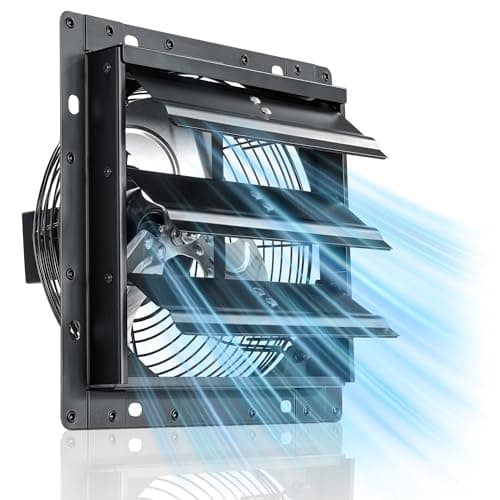
Top pick · Hot-climate summer ventilation
Generic 8in Shutter Exhaust Fan, 760 CFM
760 CFM through an 8in shuttered opening. For hot climates this does more for the flock than any heater ever will.
What the numbers say
The manufacturer does not publish the dimensions this calculation needs, so we do not print a number.
Figures from Generic published specifications (Amazon listing)
Heat kills far more backyard birds than cold does. A fan is the hot-climate equivalent of a coop heater, and it is more often the right purchase.
The shutter matters: it closes when the fan is off, so the same opening is not a winter draft.
760 CFM is generous for a backyard coop, which means it can run at lower speed and quieter for the same effect.
Good
- Shutter closes off the opening when not running
- Generous airflow for a backyard-sized coop
- Plug-and-play rather than hard-wired
Not so good
- Needs mains power at the coop
- Cutting an 8in opening is irreversible
- Dust needs clearing off the blades periodically
Skip this if: your summers are mild or your coop is well shaded and cross-ventilated. Passive ventilation solves most cases without a fan.
#ad · how this is funded · price as of October 17, 2026
Questions people actually ask
+How much ventilation does a chicken coop need?
+Where should coop vents be placed?
+Do I need a fan in my chicken coop?
+Should coop vents be closed in winter?
Sources
Read next
Ventilation, not insulation
Why sealing a coop causes frostbite, where vents belong, and how to tell whether yours has enough.
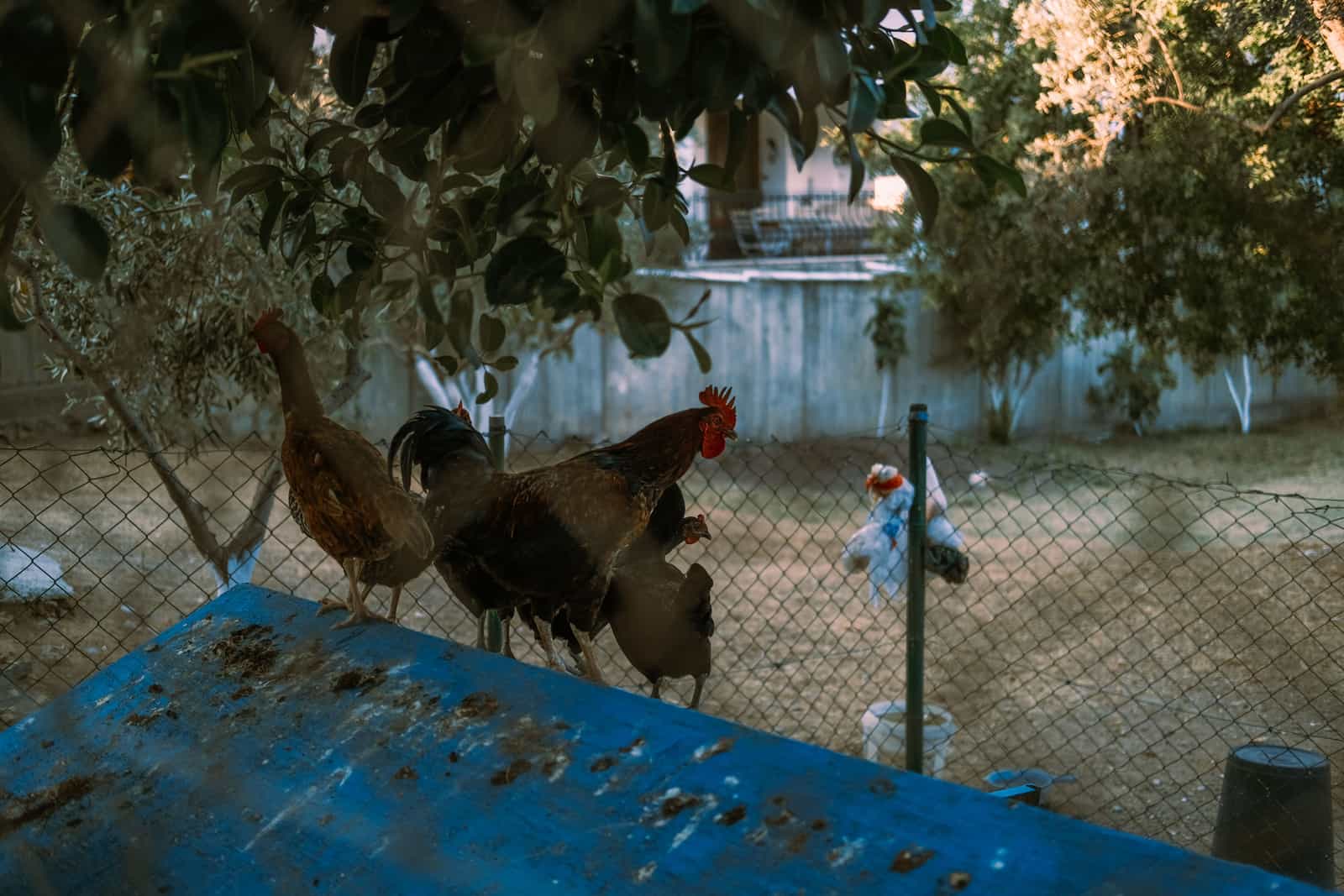
Chicken coops for hot climates
Coops and gear for genuine heat, ranked on airflow and shade rather than on how well they seal.
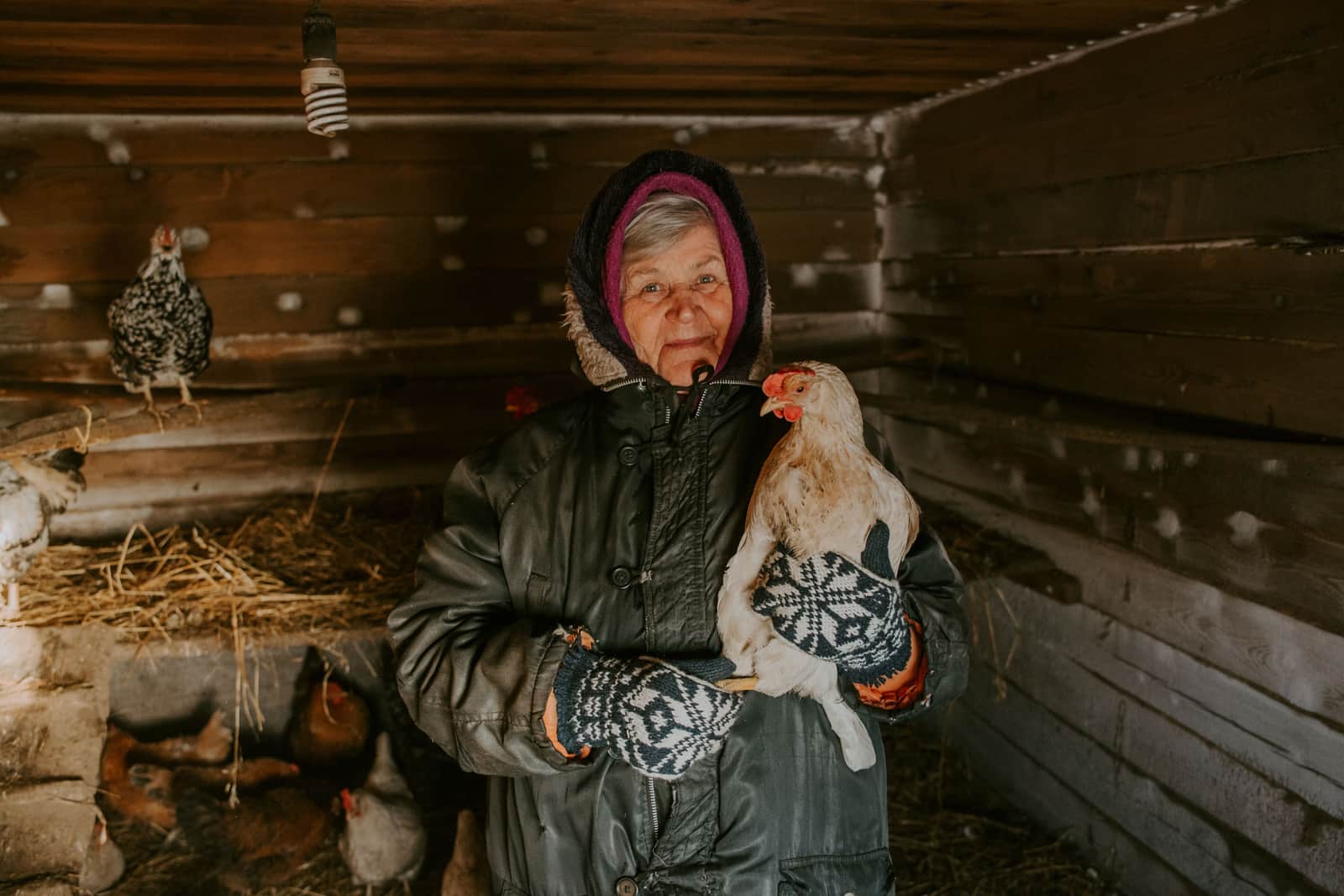
Climate, ventilation and the season problem
Why moisture rather than cold decides winter outcomes, what changes in heat, and the coops and gear that suit each climate.
Coop gear, ranked by the problem it solves
The gear that fixes what coops arrive without - doors, mesh, roosts, boxes, heat and airflow - in buying order.
Chicken coops for cold climates
Cold-climate coops ranked on the things that matter below freezing - dryness, roof geometry, ventilation and floor area per bird.
A cleaning routine you will actually keep
Daily, weekly and seasonal jobs sized so they get done, plus the mite inspection nobody schedules until it is too late.