Chicken feeders, ranked on waste and rodents
A feeder has two jobs the listing never mentions: keep the feed off the ground, and keep the rats out of it. Almost every complaint about feeders is one of those two.
We have not handled these coops, and we do not pretend to have. Here is what we did instead. Links to Amazon earn us a commission at no extra cost to you - disclosure.
| # | Coop | Best for | Honest count | Price |
|---|---|---|---|---|
| 1 | 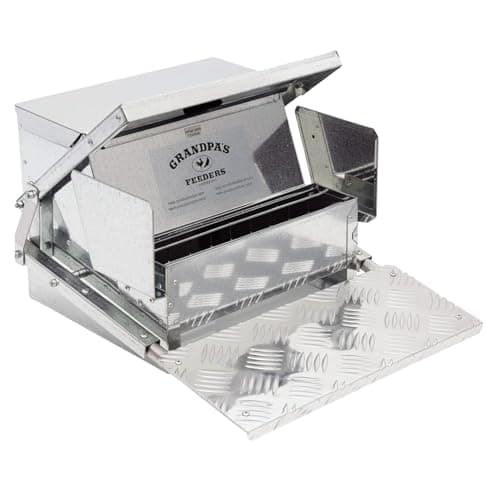 Grandpa's Feeders Automatic Chicken Feeder, 20 lbs TreadleTop pickThe benchmark treadle feeder, and the rare product on this site whose published bird-count claim is conservative rather than inflated. | Rodents, and a claim that survives checking | not published | |
| 2 | 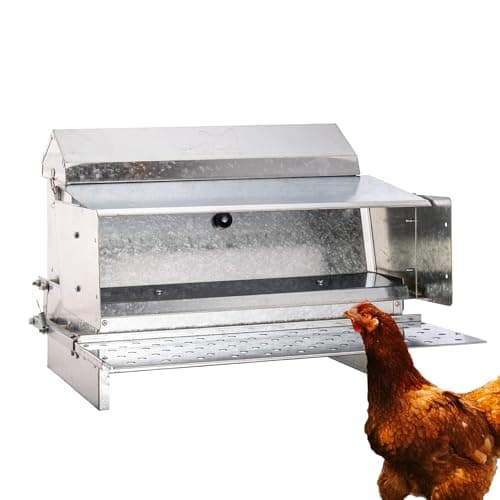 RentACoop Automatic Treadle Chicken Feeder, 25 lbA 25 pound treadle with a detachable step weight, so lighter birds can trigger it - the fix for the one thing treadle feeders reliably get wrong. | A treadle a bantam can actually open | not published | |
| 3 | 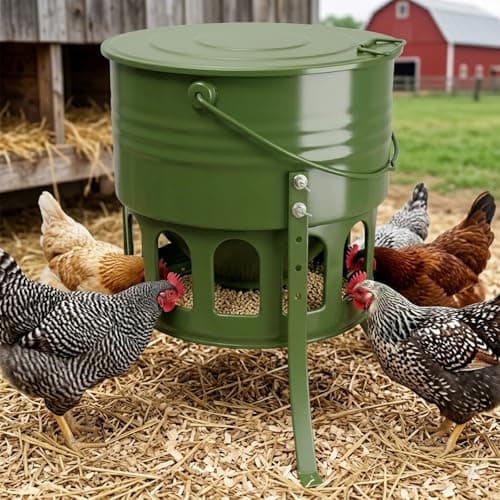 kingump Metal Chicken Feeder, 20LB with 12 Ports and Tripod StandTwelve ports and a stand with four height settings - the only feeder here that lets you actually meet the published rule about feeder lip height. | Simultaneous access, at the right height | not published | |
| 4 | 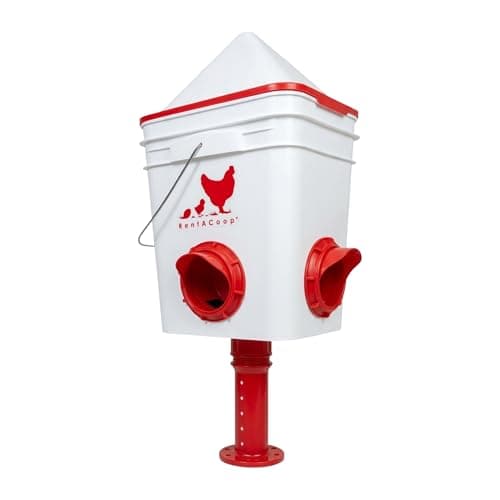 RentACoop 25lb Chicken Feeder with 4 Large Ports, Center PlacementFour large ports with sliding covers - so it works as an open gravity feeder by day and shuts like a bin after dark. | A port feeder you can close at night | not published | |
| 5 | 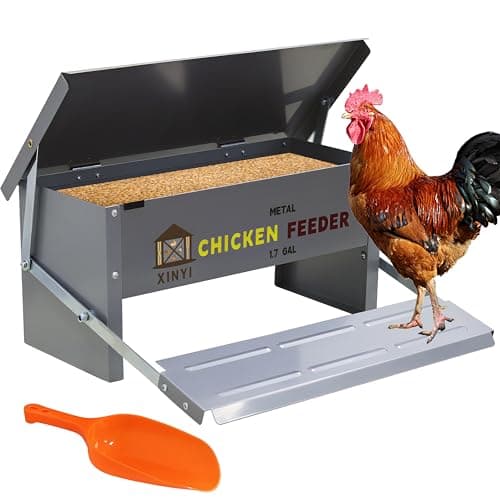 XINYI Chicken Treadle Feeder, 12 Lbs MetalA 12 pound galvanized treadle that publishes its trigger weight - 400 grams - which is the one number a treadle buyer actually needs and almost nobody prints. | Trying a treadle without the benchmark price | not published | |
| 6 | 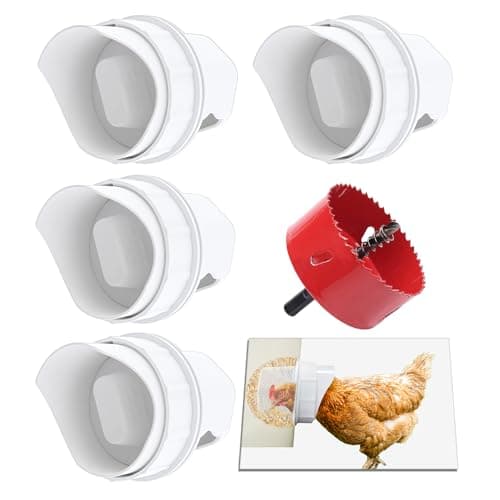 Suplklz DIY Chicken Feeder Port Kit, 4 Ports with Hole SawFour rain-proof gravity ports and the 80mm hole saw to fit them. The cheapest route to an enclosed feeder by a very wide margin. | Converting a bucket you already own | not published |
Nobody researches feeders before buying their first one. A coop arrives, there are birds in it by the weekend, and a plastic hanging feeder gets bought in the same trip as the feed. That works, and then a few months later two problems show up together.
The first is that a meaningful share of the feed is on the ground rather than in the birds. The second is that something is eating it overnight. Both are solvable, and which solution you need depends on which problem you actually have.
The published numbers
Feeders are unusually well served by published guidance, and three figures from Penn State Extension's laying-flock guide do most of the work.
- 3 inches of feeder space per bird. Six hens want 18 inches of trough. This is a figure for open troughs, where birds eat shoulder to shoulder - it does not translate directly to ports or treadles, which is covered below.
- The lip of the feeder level with the birds' back height. Too low and they stand in it; too high and the smaller birds cannot reach. This is the single most common setup error and it costs feed daily.
- Fill a trough only one-third to one-half full. Penn State states this specifically to prevent feed wastage - and it is the instruction nobody follows, because a feeder that holds 20 pounds feels like it should have 20 pounds in it.
Sizing it, with the feed figure
That arithmetic is also how you check a manufacturer's claim, which on this site is never taken at face value. One feeder below is sold as feeding 6 chickens for up to 10 days - that is 15 pounds of feed against a 20 pound capacity, so the claim is conservative and it holds. After a year of measuring coop capacity claims that fail, it is worth saying when one does not.
Where the feed actually goes
Feed waste is not mysterious. It has three named causes and each has a different fix.
| Cause | What it looks like | The fix |
|---|---|---|
| Billing out | Birds rake feed sideways out of the trough with their beaks | A grill or grate over the trough, or a deep port |
| Wrong height | Feed scratched out from a trough at foot level | Raise the lip to the birds' back height |
| Weather | Caked, wet feed that has to be thrown away | A covered or enclosed feeder, under shelter |
Feed form matters too. Alabama Extension notes that adult birds eating crumbles tend to waste more feed than birds eating pellets, which is a free change - the same nutrition in a shape that is harder to flick out of a trough.
The rodent half of the problem
An open feeder is a food source that stays out all night in a structure you have deliberately made warm and sheltered. University of Minnesota Extension names house mice and Norway rats as the specific concern with backyard flocks, and links the problem to cleanliness - specifically, removing soiled bedding and wet feed.
This is worth taking seriously beyond the cost of the feed. Rodents contaminate what they do not eat, they bring lice and mites into the coop, and once a population is established around a reliable food source it does not leave voluntarily.
There are exactly two hardware answers: a feeder that closes when no bird is standing on it, or a feeder whose ports you shut manually at dusk. Everything else - hanging it higher, using a smaller feeder, sweeping up - helps at the margin and does not solve it.
How we judged
- Whether it closes to rodents, and whether closing it requires you to remember something every night.
- What it does about billing out - a grate, a deep port or a guard, rather than a claim of being no-waste.
- Height adjustment, because the published lip-height rule is not a one-time setting when you have growing pullets.
- Capacity against the published 0.25 lb per hen per day, worked openly rather than repeated off the box.
- Trigger weight on treadle feeders. This is the specification that decides whether your lightest bird can eat, and most listings do not print it.
- Footprint. A feeder sits on coop floor, and floor area is the thing this site spends most of its time defending.
Treadle against port, honestly
| Treadle | Port | |
|---|---|---|
| Rodents | Closed whenever no bird is standing on it | Open unless it has covers and you slide them |
| Simultaneous access | One station - birds eat in shifts | One station per port, so 4 to 12 at once |
| Light birds | May not weigh enough to trigger it | No threshold - any bird can use a port |
| Training | Days, and some birds resist it | Minimal - the feed is visible in the port |
| Price | Highest in the category | Mid-range, or very low as a DIY kit |
| Footprint | Large, and it must sit on the floor | Compact, and often hangable |
The honest summary is that a treadle solves rodents properly and costs you simultaneous access, a training period and floor space. A port feeder solves waste and weather, keeps every bird fed at once, and leaves the overnight problem to you.
If rats are already a problem, buy the treadle. If they are not, a port feeder is the better daily experience and considerably cheaper - and you can shut a covered one at dusk on the nights it matters.
The ranked picks
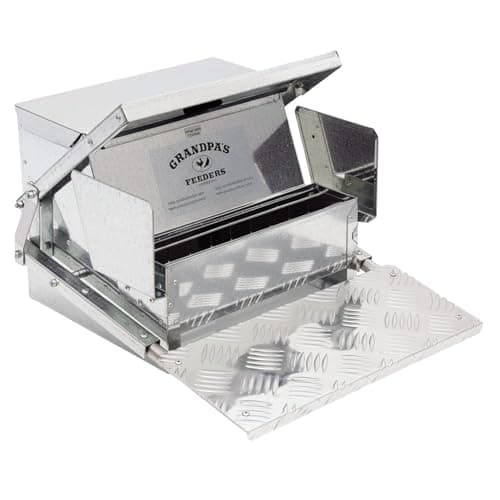
Top pick · Rodents, and a claim that survives checking
Grandpa's Feeders Automatic Chicken Feeder, 20 lbs Treadle
The benchmark treadle feeder, and the rare product on this site whose published bird-count claim is conservative rather than inflated.
What the numbers say
The manufacturer does not publish the dimensions this calculation needs, so we do not print a number.
Figures from Grandpa's Feeders published specifications (Amazon listing) · 17"L x 15"W x 12"H, 20 lb capacity · Galvanized steel
The listing claims it feeds 6 chickens for up to 10 days. Run that against the published feed figure - roughly 0.25 pounds per laying hen per day - and six birds for ten days is 15 pounds against a 20 pound capacity. The claim is not only plausible, it leaves headroom. We almost never get to write that sentence.
The lid only opens when a bird stands on the treadle, which is the entire rodent argument. Feed left in an open trough overnight is a standing invitation, and University of Minnesota Extension names house mice and Norway rats as the specific problem.
An anti-flick grill sits in the trough to stop birds raking feed onto the ground. Billing out is where most feed waste actually goes, and a grill addresses it directly rather than by exhortation.
Side guards stop birds feeding from the sides. That sounds like a detail and is not - side access is how birds get pecked at a feeder and how feed gets scattered.
Good
- Published claim of 6 chickens for 10 days checks out against the feed arithmetic
- Lid closes when no bird is standing on it - rodents and wild birds shut out
- Anti-flick grill addresses billing out, the main source of waste
- Galvanized steel, and a brand that has been doing this for decades
Not so good
- Comfortably the most expensive feeder here
- Birds must be trained to the treadle, which takes days and patience
- Light birds and bantams may not weigh enough to trigger it
- One trough means one feeding station, not the 3 inches per bird a trough figure assumes
Skip this if: your flock is mostly bantams or young pullets. A treadle needs a bird heavy enough to work it, and a feeder your smallest birds cannot open is a feeder that starves the bottom of the pecking order.
#ad · how this is funded · price as of September 14, 2026
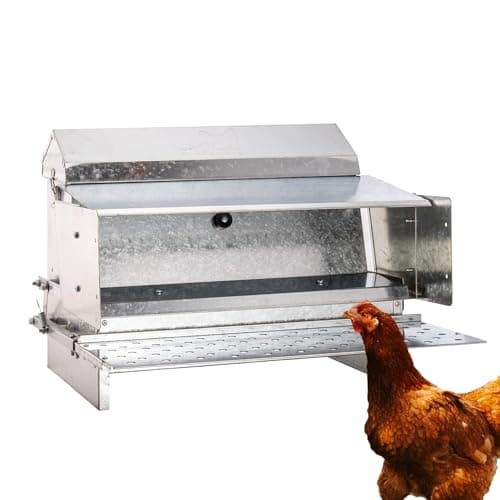
Pick 2 · A treadle a bantam can actually open
RentACoop Automatic Treadle Chicken Feeder, 25 lb
A 25 pound treadle with a detachable step weight, so lighter birds can trigger it - the fix for the one thing treadle feeders reliably get wrong.
What the numbers say
The manufacturer does not publish the dimensions this calculation needs, so we do not print a number.
Figures from RentACoop published specifications (Amazon listing) · 21"L x 18.5"W x 14"H, 25 lb capacity · Galvanized metal with stainless-steel hardware
The detachable step weight is the specification that matters. Every treadle feeder has a threshold a bird must exceed, and the usual failure is a flock of silkies or young pullets standing next to a feeder they cannot open. Making that threshold adjustable is the right answer.
The step also locks shut overnight, which turns a feed-on-demand feeder into a closed container at exactly the hours rodents are working.
A grate in the trough stops billing out, and an adjustable internal feed-flow plate lets you restrict how much feed sits exposed at once - which is the mechanical version of Penn State's advice to fill a trough only a third to a half full.
The box includes two blinders, a rain cover and an anti-roost lid. The anti-roost part is not decorative: anything flat at bird height in a coop becomes a perch, and a perch over a feeder means droppings in the feed.
Good
- Detachable step weight so bantams and light birds can trigger it
- Treadle locks shut overnight, closing the feeder to rodents entirely
- Adjustable feed-flow plate controls how much feed is exposed
- Ships with rain cover, anti-roost lid and blinders rather than selling them separately
Not so good
- Still expensive, even sitting below the category benchmark
- The largest footprint here at 21 by 18.5 inches - it needs real floor space
- Training period applies the same as any treadle
- Galvanized metal in a wet run will eventually show wear at the hinge
Skip this if: your coop floor is tight. Twenty-one inches by eighteen and a half is a meaningful share of a small coop's measured floor, and floor area is the thing this site spends most of its time telling people not to give away.
#ad · how this is funded · price as of September 14, 2026
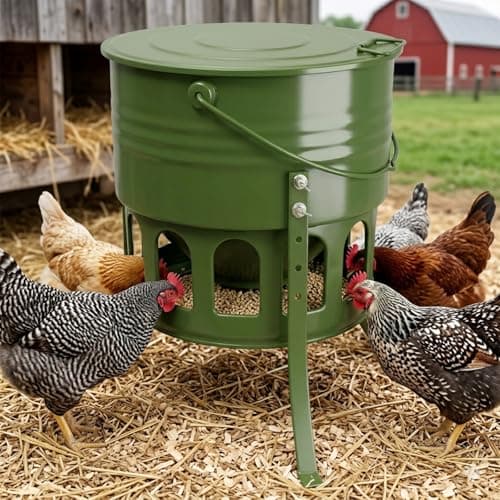
Pick 3 · Simultaneous access, at the right height
kingump Metal Chicken Feeder, 20LB with 12 Ports and Tripod Stand
Twelve ports and a stand with four height settings - the only feeder here that lets you actually meet the published rule about feeder lip height.
What the numbers say
The manufacturer does not publish the dimensions this calculation needs, so we do not print a number.
Figures from kingump published specifications (Amazon listing) · 13"L x 13"W x 7.6"H, 20 lb capacity · Metal with a reinforced tripod stand
Penn State Extension says the lip of the feeder should be level with the birds' back height. Four adjustable stand settings is how you comply with that as pullets grow, and it is the reason this pick is here rather than a cheaper fixed-height port feeder.
Twelve ports means twelve birds can eat at once. The listing claims 10+ hens without crowding, which is the maker's number - but the underlying point is sound, because deep ports trade the queue problem away rather than the waste problem.
A deep-port gravity design keeps feed enclosed until a bird puts its head in, which is the port-feeder equivalent of what a treadle does for rodents during the day. It does not close at night, though, and that is the real difference.
A tripod stand rather than a hanging chain matters in a run with no beam to hang from - and a tipped feeder empties itself into the bedding, which is the most expensive five seconds in chicken keeping.
Good
- Four adjustable heights - the only pick here that tracks the published lip-height rule
- Twelve ports, so no queue at the feeder even with a large flock
- Deep-port gravity design keeps feed enclosed and off the ground
- Free-standing tripod, so no beam or hanging point needed
Not so good
- Ports do not close, so it is not rodent-proof overnight
- 20 lb sitting on a tripod is top-heavy until it is weighted or staked
- Generic brand with no published gauge or coating specification
- Twelve ports is more than a small flock will ever use at once
Skip this if: rats are your actual problem. A port feeder controls waste and weather but stays open all night, and no amount of port depth substitutes for a lid that shuts.
#ad · how this is funded · price as of September 14, 2026
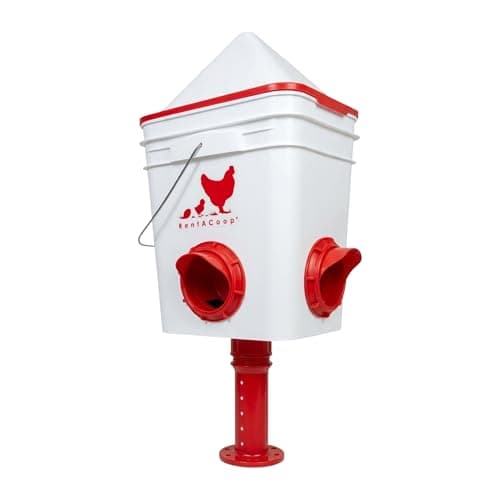
Pick 4 · A port feeder you can close at night
RentACoop 25lb Chicken Feeder with 4 Large Ports, Center Placement
Four large ports with sliding covers - so it works as an open gravity feeder by day and shuts like a bin after dark.
What the numbers say
The manufacturer does not publish the dimensions this calculation needs, so we do not print a number.
Figures from RentACoop published specifications (Amazon listing) · 14.29"L x 12.01"W x 10.94"H, 25 lb capacity · Plastic body with an adjustable stand
The sliding port covers are the feature that closes the gap between a port feeder and a treadle. Open by day, shut at dusk, and the overnight rodent window closes - for the price of remembering to do it, which is the same deal as a manual pop door.
An interior food diverter pushes feed toward the ports as the level drops. Without one, the last few pounds in any gravity feeder sit in the middle of the bucket and go stale while the birds stare at empty ports.
Twenty-five pounds against the published 0.25 pounds per hen per day is roughly sixteen days for six birds, which is the longest unattended run of any pick here.
It ships with an anti-roost cone and an adjustable stand, and comes configured for center placement rather than being bolted to a wall - useful in a run, less so in a coop where floor area is scarce.
Good
- Sliding port covers close the feeder to pests overnight
- 25 lb capacity - the longest interval between refills here
- Interior diverter keeps feed reaching the ports as the level drops
- Anti-roost cone and adjustable stand included
Not so good
- The covers only work if you actually slide them, every night
- Four ports, so a larger flock queues at feeding time
- Plastic body rather than the galvanized steel of the treadle picks
- Center placement needs floor space a small coop may not have
Skip this if: you want the pest problem solved without a nightly habit. The covers are effective and entirely manual - if the reason you are shopping is that you forget things at dusk, buy a treadle instead.
#ad · how this is funded · price as of September 14, 2026
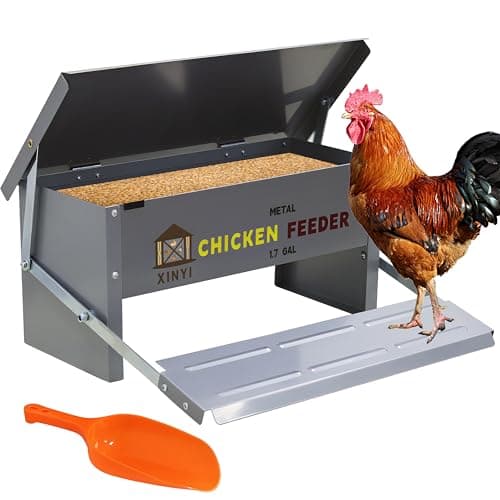
Pick 5 · Trying a treadle without the benchmark price
XINYI Chicken Treadle Feeder, 12 Lbs Metal
A 12 pound galvanized treadle that publishes its trigger weight - 400 grams - which is the one number a treadle buyer actually needs and almost nobody prints.
What the numbers say
The manufacturer does not publish the dimensions this calculation needs, so we do not print a number.
Figures from XINYI published specifications (Amazon listing) · 16.1"L x 6.5"W x 7.5"H, 1.7 gallon / 12 lb capacity · Galvanized steel
The listing states that a chicken over 400 grams - about 0.88 pounds - can open the cover by standing on the treadle. That is a published, checkable threshold, and it is low enough that bantams and grown pullets clear it comfortably.
Twelve pounds against the published 0.25 pounds per hen per day is about eight days for six birds, before any allowance for spillage. That is a real week of feed in a feeder costing a fraction of the benchmark.
At 6.5 inches wide this is much the narrowest feeder here, which is exactly why it suits a small coop where floor area is already the binding constraint.
The trade for the price is build. Galvanized steel is galvanized steel, but a light-gauge treadle mechanism has more to go wrong over years than a heavy one, and this is a newer listing without a decades-long track record behind it.
Good
- Publishes its trigger weight - 400g - so you can check it against your birds
- Narrowest footprint here at 6.5 inches wide
- Galvanized steel with a weatherproof lid at an entry price
- Low trigger weight suits bantams, silkies and growing pullets
Not so good
- 12 pounds is the smallest capacity here - more frequent refills
- Lighter build than the established treadle brands
- No published anti-flick grill, so billing out is less controlled
- Newer listing with no long-term track record
Skip this if: you keep more than about six birds. Twelve pounds and a single narrow trough runs out fast with a larger flock, and you will be refilling often enough to lose the convenience you bought it for.
#ad · how this is funded · price as of September 14, 2026
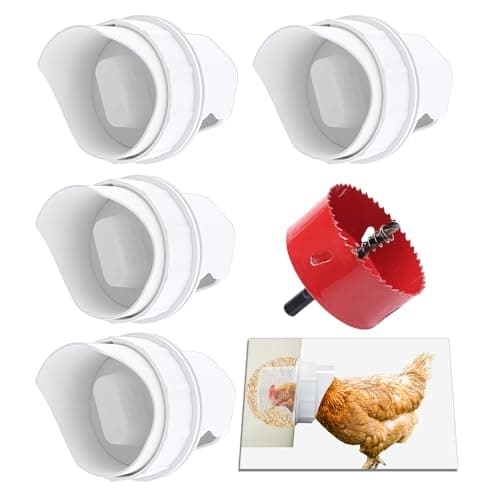
Pick 6 · Converting a bucket you already own
Suplklz DIY Chicken Feeder Port Kit, 4 Ports with Hole Saw
Four rain-proof gravity ports and the 80mm hole saw to fit them. The cheapest route to an enclosed feeder by a very wide margin.
What the numbers say
The manufacturer does not publish the dimensions this calculation needs, so we do not print a number.
Figures from Suplklz published specifications (Amazon listing) · 4 ports; includes a 3.15in / 80mm hole saw · Plastic, with a steel hole saw
Including the hole saw is the whole reason to pick this kit over a cheaper bag of ports. An 80mm hole saw costs about what the kit does on its own, and a port that does not match the hole you cut leaks feed.
A food-grade bucket plus four of these is an enclosed, rain-proof gravity feeder for a fraction of a finished one - and you choose the capacity, because you choose the bucket.
Ports are covered and sealed against rain, which is the failure people discover with an open trough in a wet run: wet feed cakes, goes moldy and gets thrown away, and University of Minnesota Extension specifically names removing wet feed as part of keeping rodents down.
This is the same argument as the nipple kit on our waterers page, and it has the same catch - it is a project, and nothing arrives working.
Good
- The cheapest enclosed feeder by a wide margin
- Hole saw included, so the port and the hole actually match
- You pick the capacity by picking the bucket
- Rain-proof covered ports keep feed dry
Not so good
- You supply the bucket, the drill and the afternoon
- Four ports, and no stand or anti-roost cone in the box
- Nothing closes at night - open to rodents like any port feeder
- A DIY bucket tips more easily than a purpose-built stand
Skip this if: you want it working today. It is a genuinely simple build, but it is still measuring, cutting and sealing before a bird eats from it - and a finished feeder arrives assembled.
What we did not weigh
We have not handled any of these feeders. What is above is the published specification, the published extension guidance and the arithmetic between them - which you can check yourself with the same two numbers we used.
Where a maker states a flock size or a number of days, we say whose number it is. One of them survives the arithmetic, which is unusual enough to be worth naming; another claims 10 or more hens can feed at once, and that is the maker's figure rather than a published one.
Where to go next
- Chicken waterers - the other thing no coop includes, and the 12-hour rule
- Coop gear in buying order - where a feeder sits against mesh, latches and roost bar
- A cleaning routine that gets done - including the wet-feed habit that keeps rodents down
- Coops for silkies and bantams - where treadle trigger weight matters most
Questions people actually ask
+What is the best chicken feeder?
+How much feeder space do chickens need?
+How much feed does a chicken eat per day?
+How do I stop chickens wasting feed?
+How do I keep rats out of chicken feed?
+Are treadle feeders worth it?
+Will bantams be able to use a treadle feeder?
+Should a chicken feeder be inside or outside the coop?
Sources
- Penn State Extension - Management requirements for laying flocks (3 inches of feeder space per bird; feeder lip level with the birds' back height; trough filled only one-third to one-half full to prevent wastage; at least 5 gallons of water per 100 birds daily; 1 inch of water space per bird; never more than 12 hours without water)
- Alabama Cooperative Extension - Feeding the laying hen (a laying hen eats 100-150 grams, roughly 0.25 lb, of feed per day; crumbles are wasted more than pellets)
- University of Minnesota Extension - Common concerns with backyard or urban poultry keeping (remove wet feed and soiled bedding; cleanliness reduces house mice and Norway rats)
- Penn State Extension - Small-scale poultry housing
Read next
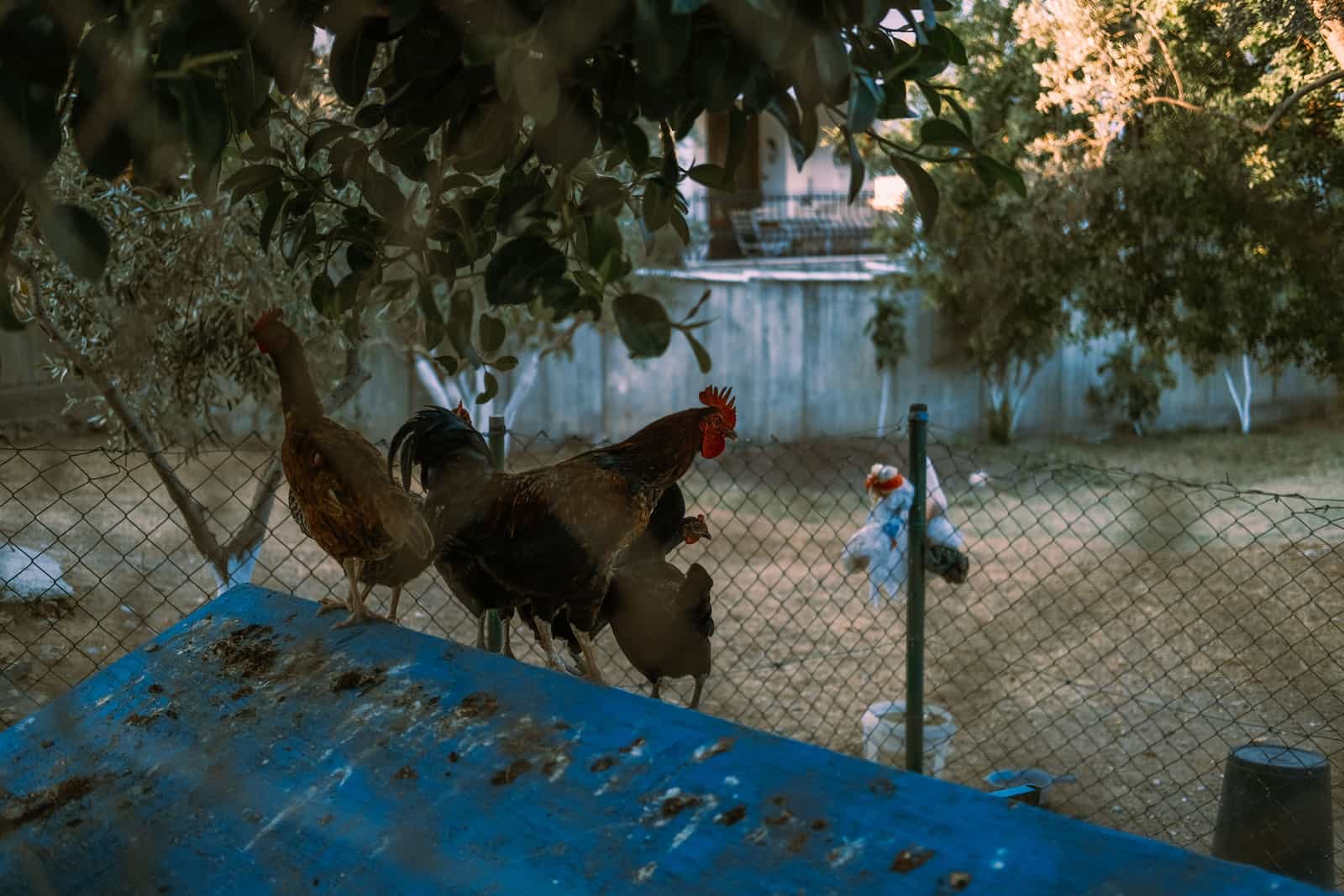
Chicken waterers, ranked on the published numbers
Heated, nipple and open waterers measured against the published 5 gallons per 100 birds daily, 1 inch of water space per bird, and the 12-hour rule.
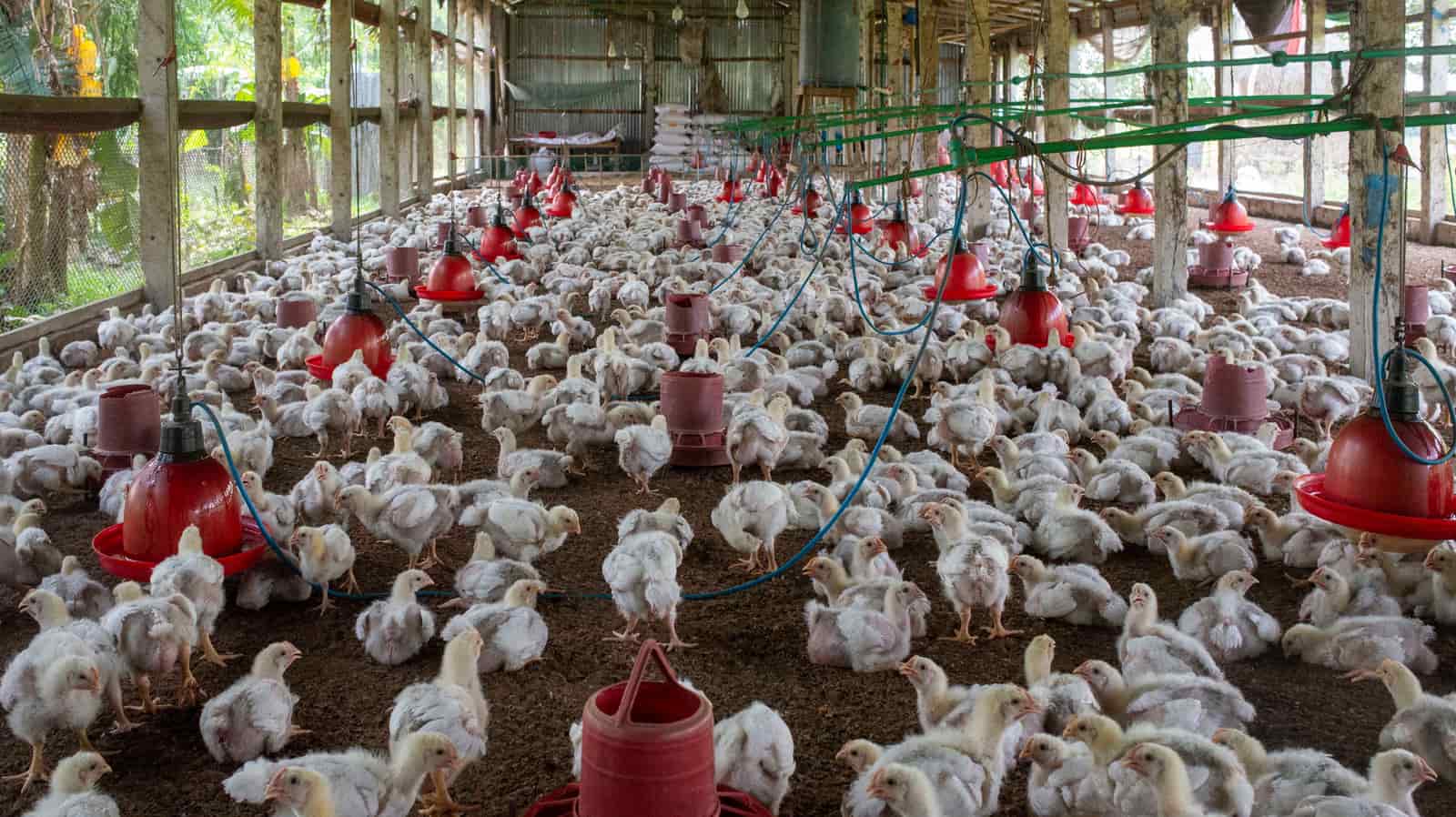
Coop gear, ranked by the problem it solves
The gear that fixes what coops arrive without - doors, mesh, roosts, boxes, heat and airflow - in buying order.
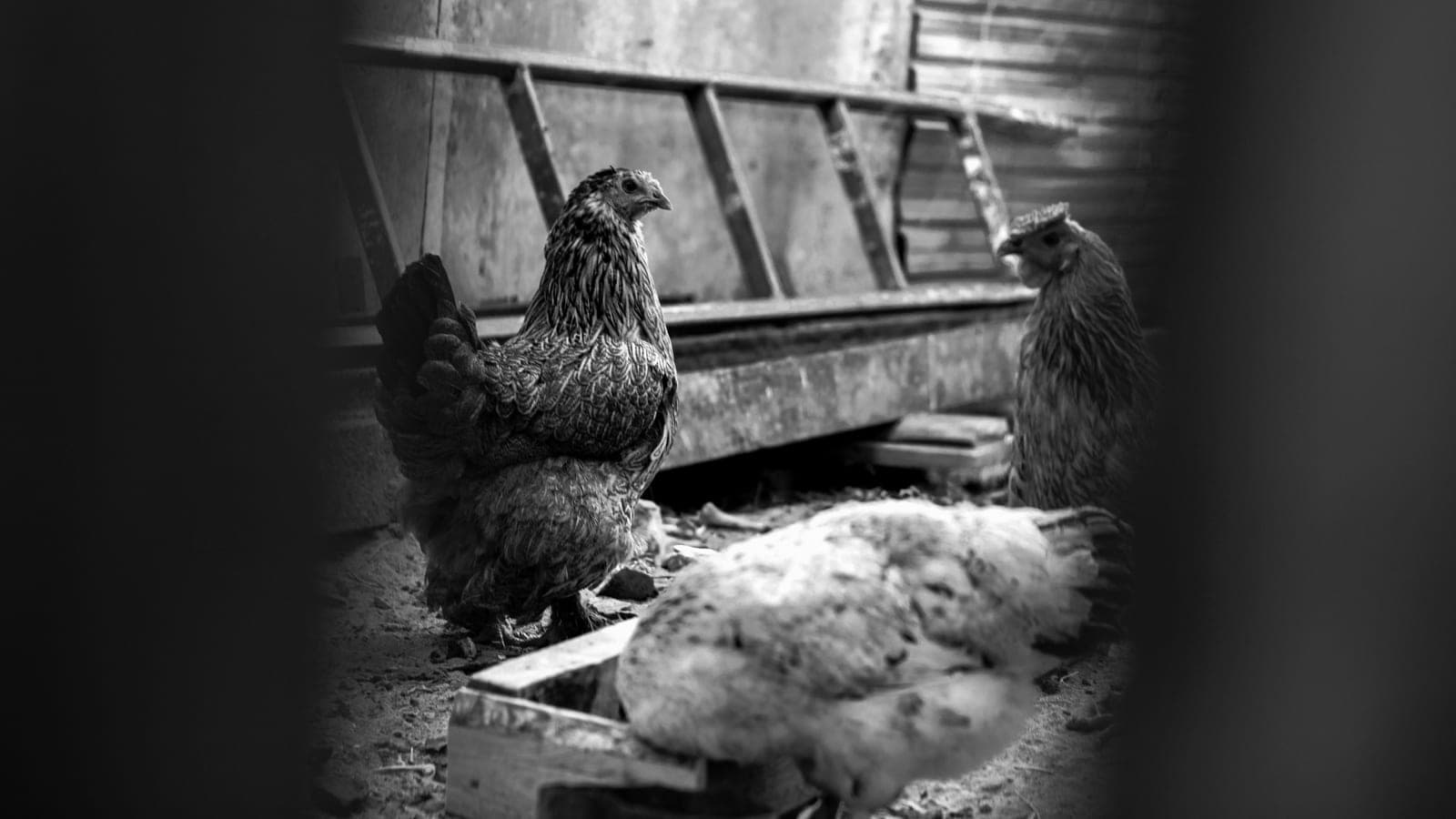
A cleaning routine you will actually keep
Daily, weekly and seasonal jobs sized so they get done, plus the mite inspection nobody schedules until it is too late.
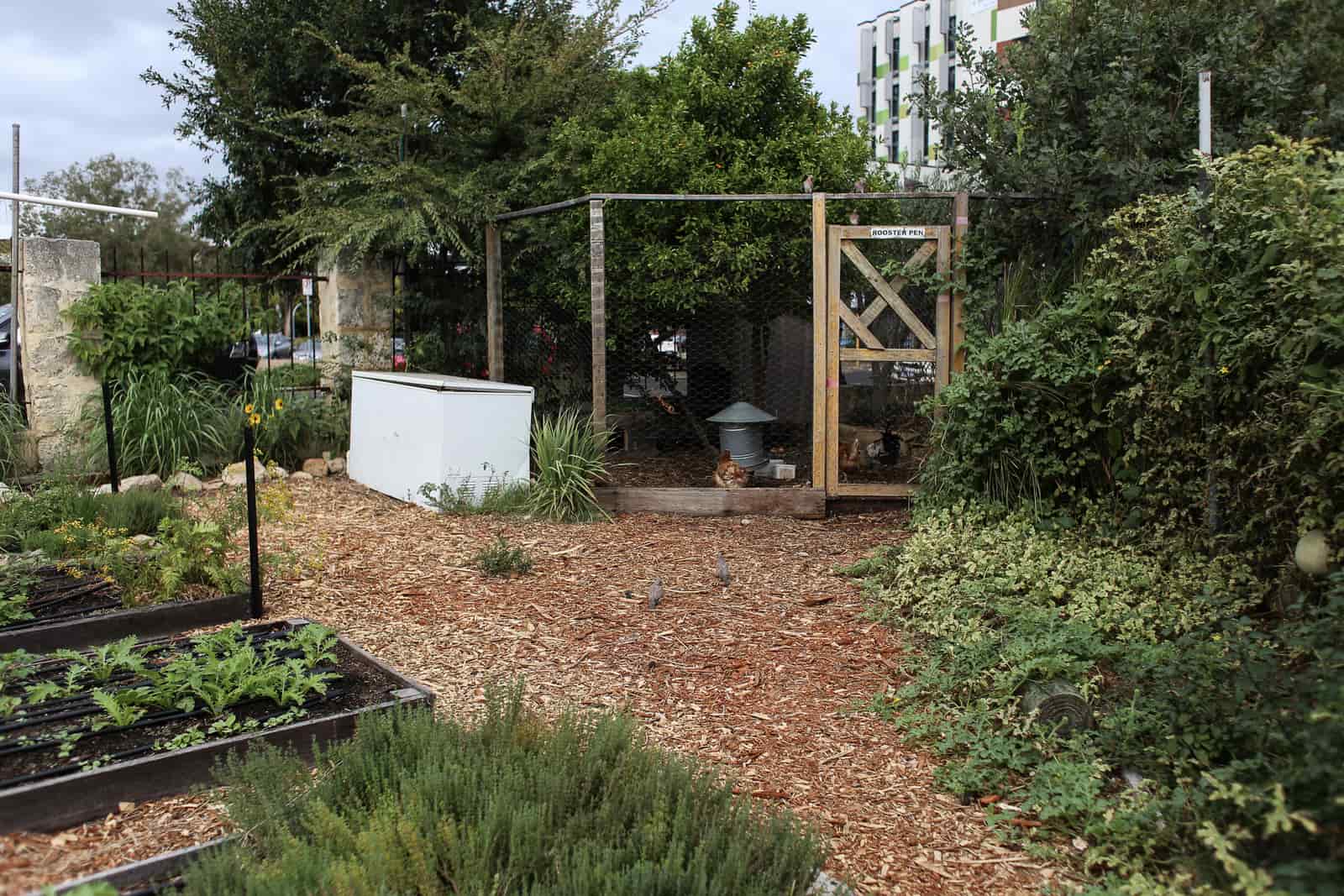
Chicken coops for silkies and bantams
Six small coops measured against the published bantam figures, with roost height and dryness treated as the deciding factors rather than floor area alone.
What a coop listing means by holds 6 chickens
How listing bird counts are constructed, the four ways they drift, and a thirty-second check that works on any product page.
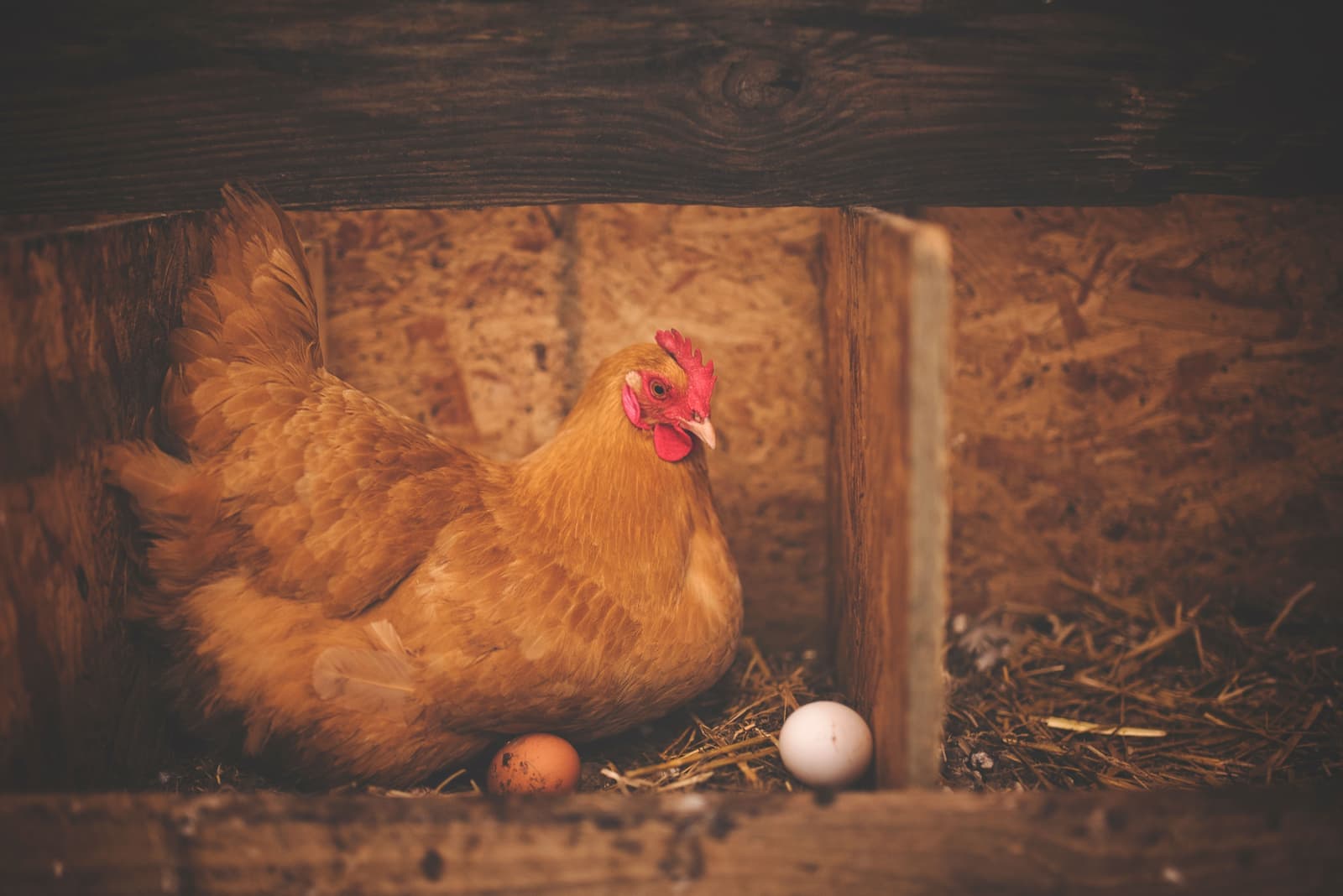
Coop bedding, judged on moisture
Shavings, straw, sand and hemp compared on absorbency and running cost, plus how the deep litter method actually works.