Can you use a chicken coop for ducks?
Yes, if you buy on floor area and on a material you can hose - the wet manure is the whole of the problem, and timber is the wrong answer.
We have not handled these coops, and we do not pretend to have. Here is what we did instead. Links to Amazon earn us a commission at no extra cost to you - disclosure.
| # | Coop | Best for | Honest count | Price |
|---|---|---|---|---|
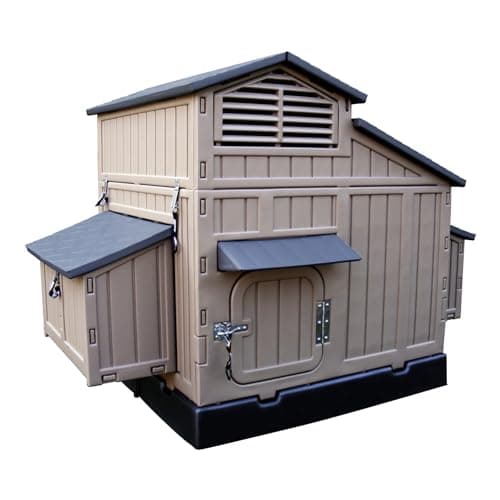
| 1 | 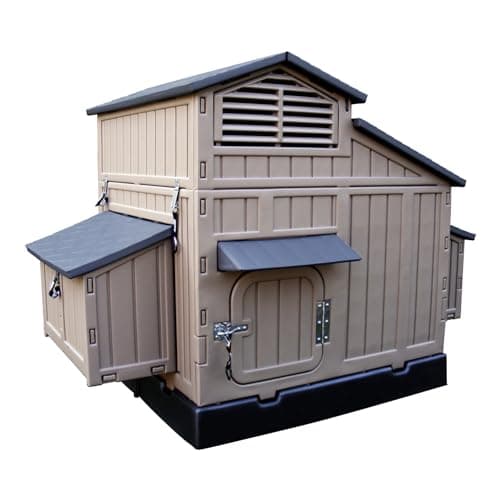 Hatching Time Formex Snap Lock Large Chicken CoopTop pickThe one coop here whose material genuinely earns its price, sized for four hens rather than the six on the box. | Cleaning, and cold that stays out | 4box says 6 | |
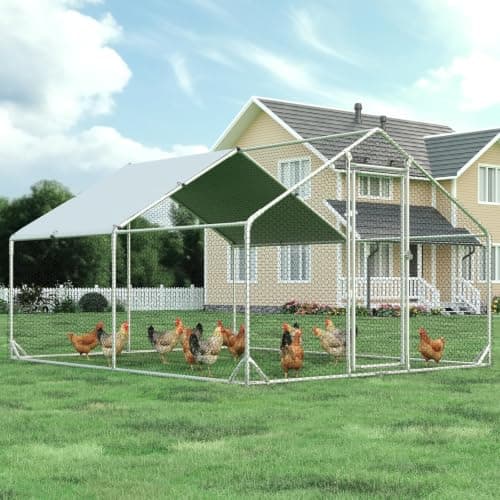
| 2 | 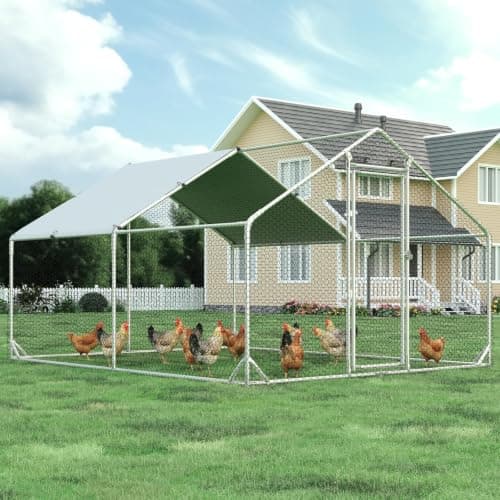 4ever2buy Metal Chicken Coop, 10x13 FT Walk-In Run128.4 sq ft of walk-in enclosure wrapped in galvanized hardware cloth - the largest ground area on this site, and a cover included. | A genuine walk-in enclosure | 32box says 15 | |
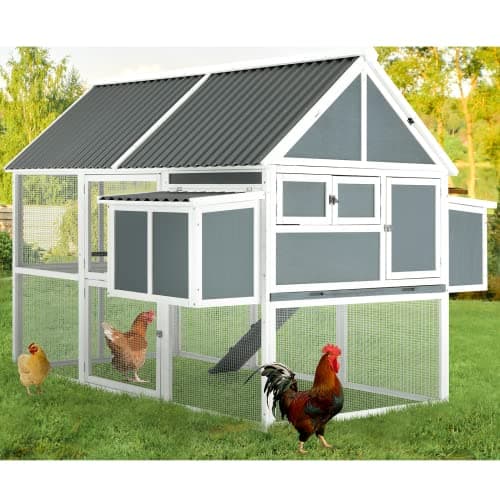
| 3 | 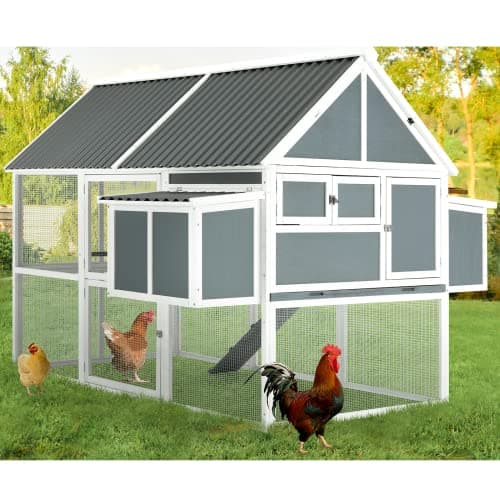 AECOJOY 84" Large Chicken Coop40.3 sq ft against a claim of ten. The numbers land exactly where the box says they do, which is rarer here than it should be. | Ten hens, claim and arithmetic agreeing | 10box says 10 | |
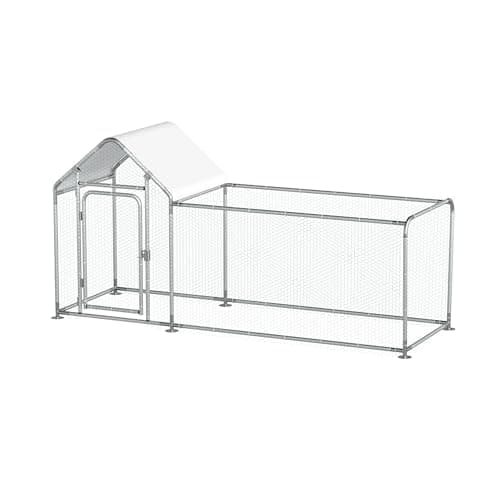
| 4 | 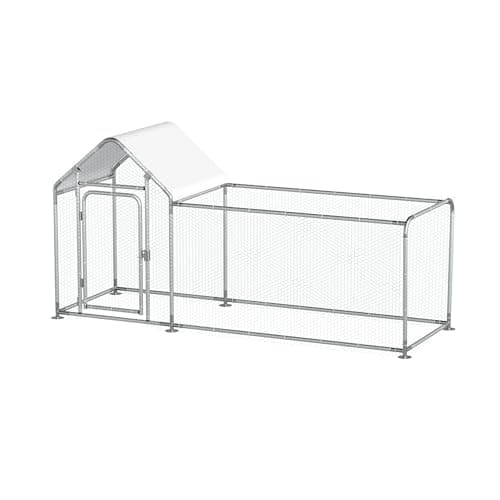 GOJOOASIS Outdoor Large Metal Chicken Coop Run, 118in32.4 sq ft of galvanized steel run, and a maker that publishes no bird count at all - which counts in its favor here. | A metal run that will not rot | 8no claim made | |
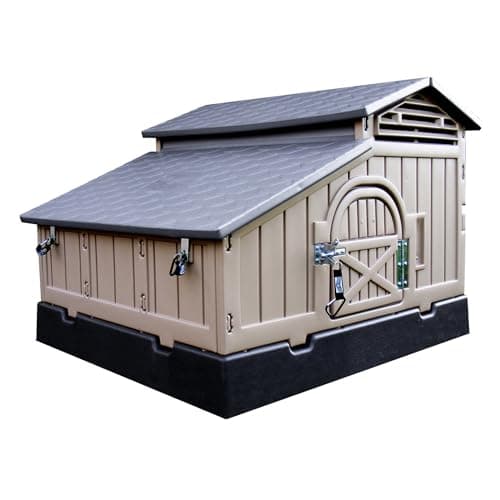
| 5 | 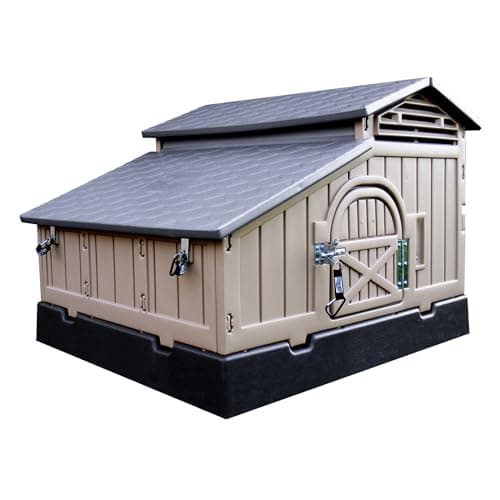 Hatching Time SnapLock Formex Standard CoopSame material logic as its bigger sibling, but the claim of four hens is the most overstated on this page relative to its size. | Two hens, or a bantam trio | 2box says 4 |
This is one of the most asked questions in the category and the honest answer is more specific than yes. A chicken coop is a dry box with a door, and ducks will use one. What changes is how much of it you need and what it has to be made of.
The space figure, and why it is not the hen figure
eXtension publishes 5 square feet of indoor space per adult duck, against 3 to 4 for a laying hen. Penn State Extension's own housing table is more generous still in relative terms: 3 square feet inside per duck against 1.5 for a laying hen, and 15 square feet of outside run per duck against 8. On both sources a duck needs roughly twice what a hen needs.
We use the eXtension figure of 5 square feet on this page, which is the conservative end. eXtension's meat-duck guide gives a floor of at least 4 square feet per duck, so the published range is 3 to 5 depending which article you read - and eXtension says of its own numbers that there is very little peer-reviewed research behind backyard space allowances.
The real problem is water, not space
eXtension's duck guide is direct about it: ducks drink a lot of water, which produces very wet manure that needs daily cleaning. It specifies litter at least 3 to 4 inches deep, with all the caked litter removed every day and the rest changed weekly depending on how damp it is.
Read that against what a wooden kit coop is. Untreated fir gives three to six seasons in a chicken coop, base rail first. Put a flock that soaks its bedding daily into that same box and you are shortening a number that was already short. This is the single reason the picks below are weighted to plastic and metal.
What the published sources will not tell you
Neither extension source we use here addresses roosts, perches or nest boxes for ducks. We are not going to fill that gap with a guess. What we can tell you is that the roost figure this site uses - 8 inches of bar per standard bird - is published for chickens, so the roost bar in a coop you buy for ducks is floor area you are not using rather than a feature.
The same goes for a ramp. We have not measured how ducks use the ramps these coops ship with, so we do not claim to know. What we would do is buy a coop whose enclosed floor sits at ground level, which is one more reason the metal walk-in runs score well here.
Every coop we recommend, counted as ducks
| Coop | Published floor | Hens at 4 sq ft | Ducks at 5 sq ft | Ducks at Penn State's 3 sq ft |
|---|---|---|---|---|
| Formex Snap Lock Large | 17.3 sq ft henhouse | 4 | 3 | 5 |
| Formex Snap Lock Standard | 11.4 sq ft henhouse | 2 | 2 | 3 |
| AECOJOY 84in Large | 40.3 sq ft whole-unit | 10 | 8 | 13 |
| GOJOOASIS 118in metal run | 32.4 sq ft whole-unit | 8 | 6 | 10 |
| 4ever2buy 10x13 metal walk-in | 128.4 sq ft whole-unit | 32 | 25 | 42 |
Read the two duck columns as a range rather than a disagreement. eXtension's 5 square feet is the cautious figure and Penn State's 3 is the permissive one, and we would buy on the cautious one - partly because the consequence of being wrong is wet litter rather than a bit less room, and wet litter is the thing that ends a timber coop.
What changes about the gear, not just the coop
The waterer is the item that changes most, and eXtension is specific about why: because ducks splash, a waterer should limit spillage. An open font in a duck house is a continuous source of the exact problem the litter is already struggling with. A closed bucket with horizontal nipples does not spill, and a wire-covered platform under any waterer keeps the splash off the bedding.
- Waterer: closed and nipple-fed rather than an open font, and stood on something that drains.
- Bedding: eXtension specifies at least 3 to 4 inches, with the caked layer out every day - budget for roughly twice the bedding a hen flock uses.
- Ventilation: eXtension notes that in hot humid weather poor airflow causes high mortality in ducks, and that fans blowing air past the birds greatly reduce it. That moves a vent or a fan from optional to primary.
- Nest boxes: the coop's boxes are mounted at hen height. Nothing we cite publishes a duck nest specification, so treat the boxes as floor area rather than as a feature you are paying for.
None of that is exotic and none of it is duck-specific equipment. It is the same gear this site already covers, chosen differently - chicken waterers on the closed-versus-open question, and coop fans and ventilation hardware for the airflow.
Can ducks and chickens share the coop?
Penn State Extension's guidance for small laying flocks contains one unambiguous line on this: never mix different species in the same flock. That is a biosecurity position rather than a comment on temperament, and it is the published answer to a question this site gets asked constantly.
If you keep both anyway - and plenty of people do - the practical consequence is that you need two lots of floor area rather than one shared number, because the duck figure and the hen figure do not average out. Buy for the sum.
How we judged these picks
- Enclosed floor area divided by 5 square feet per duck, from the maker's own published dimensions.
- Whether the material survives bedding that is wet every day - polyethylene and galvanized steel first, timber last.
- Whether the floor can be hosed, scraped or lifted out, because caked litter has to come out daily.
- Ventilation, because eXtension notes that poor airflow in hot humid weather causes high mortality in ducks.
- Ground-level access to the enclosed floor where the maker publishes enough to tell.
The coops that work for ducks
Top pick · Cleaning, and cold that stays out
Hatching Time Formex Snap Lock Large Chicken Coop
The one coop here whose material genuinely earns its price, sized for four hens rather than the six on the box.
What the numbers say
64in x 39in = 17.3 sq ft of enclosed henhouse floor. At 4 sq ft per standard hen that is 4 birds, against a claim of 6.
Figures from Hatching Time published specifications (Amazon listing) · 64"L x 39"W x 42"H · Double-walled polyethylene
This is a standalone henhouse with no attached run, so the published footprint is all enclosed floor. That makes it one of the few coops on this site where the generous reading and the honest reading are the same number.
17.3 sq ft supports four standard hens at the 4 sq ft figure. The listing says four to six. Four is right; six is a winter of pecked backs.
Double-walled polyethylene is the reason to buy it. There is no end grain to rot, no seam for mites to colonize, and it hoses out in minutes - the single biggest practical difference between a coop you keep clean and one you avoid.
Good
- Whole footprint is enclosed floor, not run
- Double-walled plastic will not rot, absorb, or harbor mites the way fir does
- Panels unclip for cleaning without tools
Not so good
- Costs more than the wooden coops it outlasts
- No run included, so budget for one
- Plastic walls hold no insulation value on their own
Skip this if: you want a coop and run in one purchase. This is a henhouse only, and pairing it with a run pushes the total past most wooden coop-plus-run kits.
#ad · how this is funded · price as of October 17, 2026
Pick 2 · A genuine walk-in enclosure
4ever2buy Metal Chicken Coop, 10x13 FT Walk-In Run
128.4 sq ft of walk-in enclosure wrapped in galvanized hardware cloth - the largest ground area on this site, and a cover included.
What the numbers say
157.2in x 117.6in = 128.4 sq ft of whole-unit footprint, which includes the attached run and is therefore generous. At 4 sq ft per standard hen that is 32 birds, against a claim of 15.
Figures from 4ever2buy published specifications (Amazon listing) · 157.2"L x 117.6"W x 76.8"H (10 x 13 ft) · Rust-resistant steel frame with galvanized hardware cloth
128.4 sq ft is the largest ground area on this site by a wide margin - more than twice the next biggest.
The listing claims room for 12 to 15 chickens. Read as run space at the published 8 sq ft a bird that is about 16, so the claim is reasonable - which is unusual enough here to say out loud. The bird column in our table divides by the 4 sq ft indoor figure, and that is the wrong measure for an enclosure with no henhouse in it.
Fully wrapped in galvanized hardware cloth rather than chicken wire is the specification that matters. Chicken wire keeps chickens in; hardware cloth keeps raccoons out, and they are not the same job.
A waterproof anti-UV cover is included, which is the detail that keeps the ground under it usable through a wet season.
Good
- Galvanized hardware cloth all round, not chicken wire
- 76.8in height is a true walk-in at 6.4 ft
- Waterproof cover included rather than sold separately
Not so good
- It is a run, not a coop - you still need a henhouse
- 13ft x 10ft needs serious yard space
- The 12-15 bird claim only holds as run space, never as roosting room
Skip this if: you expected a coop. There is no insulated, enclosed house in it, and birds cannot roost in a run overnight safely in most climates.
Pick 3 · Ten hens, claim and arithmetic agreeing
AECOJOY 84" Large Chicken Coop
40.3 sq ft against a claim of ten. The numbers land exactly where the box says they do, which is rarer here than it should be.
What the numbers say
84in x 69in = 40.3 sq ft of whole-unit footprint, which includes the attached run and is therefore generous. At 4 sq ft per standard hen that is 10 birds, against a claim of 10.
Figures from AECOJOY published specifications (Amazon listing) · 84"L x 69"W x 60"H · Wood
84 x 69 inches is 40.3 sq ft, which is exactly ten standard hens at the published 4 sq ft figure. AECOJOY claims eight to ten.
The 69in depth is what makes it work. Most coops in this class buy their length cheaply and stay narrow, which produces a corridor rather than a floor.
It is a square-ish footprint rather than a long thin one, so the usable area is genuinely usable - birds distribute across it instead of queueing down it.
Good
- Claim and arithmetic agree at ten hens
- 69in depth gives a floor rather than a corridor
- Two nesting boxes, which is the right count for ten hens on the published ratio
Not so good
- No margin - ten is the ceiling, not a comfortable number
- Wood construction needs annual attention
- Heavy once assembled and awkward to reposition
Skip this if: you plan to grow past ten birds. It meets its claim exactly, which means it has no room for the two extra chicks you will inevitably bring home.
#ad · how this is funded · price as of October 17, 2026
Pick 4 · A metal run that will not rot
GOJOOASIS Outdoor Large Metal Chicken Coop Run, 118in
32.4 sq ft of galvanized steel run, and a maker that publishes no bird count at all - which counts in its favor here.
What the numbers say
118in x 39.5in = 32.4 sq ft of whole-unit footprint, which includes the attached run and is therefore generous. At 4 sq ft per standard hen that is 8 birds. The maker publishes no bird count of its own to compare against.
Figures from GOJOOASIS published specifications (Amazon listing) · 118"L x 39.5"W x 59"H · Galvanized steel frame with a UV and water-resistant cover
118 by 39.5 inches is 32.4 square feet, which is eight standard hens on the published 4 square feet a bird. The listing states no bird count of its own, so there is no claim here to fail - and on this site that is a point in a maker's favor rather than an omission.
Read the shape rather than the headline area. Thirty-nine inches of width is narrow, so the usable space is a long corridor rather than a yard, and birds use length less efficiently than they use breadth.
At 59 inches high it is a stoop rather than the crawl the older 39-inch version demanded, but it is still under five feet. Call it head-down access rather than walk-in, whatever the category name suggests.
What you are buying is the frame. Galvanized steel does not rot, hosts no mites in its end grain and needs no re-treating, which is the right material for a structure that lives outdoors permanently.
Good
- Publishes no bird count, so there is no inflated claim to correct
- Galvanized steel frame will outlast any fir coop here
- 59in height is a genuine improvement on the older 39in version
- Long enough to give birds real running distance
Not so good
- A run, not a coop - there is no henhouse and roosting is still unsolved
- 39.5in width makes it a corridor rather than a yard
- Still under five feet, so not walk-in in the sense the name implies
- The cover is the weak point and will need replacing before the frame does
Skip this if: you need somewhere for the birds to sleep. This is outdoor space and predator exclusion only - there is no insulated house in it, and the per-bird floor guidance applies to enclosed roosting space you still have to provide.
Pick 5 · Two hens, or a bantam trio
Hatching Time SnapLock Formex Standard Coop
Same material logic as its bigger sibling, but the claim of four hens is the most overstated on this page relative to its size.
What the numbers say
39in x 42in = 11.4 sq ft of enclosed henhouse floor. At 4 sq ft per standard hen that is 2 birds, against a claim of 4.
Figures from Hatching Time published specifications (Amazon listing) · 39"L x 42"W x 29"H · Lightweight double-walled polyethylene
11.4 sq ft of enclosed floor is two standard hens. The listing says four.
For bantams, where the published guidance is nearer 2 sq ft a bird, four is defensible. For standard-size layers it is not, and the listing does not draw that distinction.
The material is the same double-walled polyethylene that makes the larger Snap Lock worth owning. The problem here is arithmetic, not build quality.
Good
- Genuinely easy to clean and impossible to rot
- Small enough for a courtyard or a side return
- Honest fit for a bantam trio
Not so good
- Two standard hens, not the four claimed
- Low roof height limits where you can put roost bars
- Run sold separately
Skip this if: you keep standard-size layers and want more than two. Buy the larger Snap Lock instead - the price step is smaller than the space step.
#ad · how this is funded · price as of October 17, 2026
Two of these five are metal walk-in runs rather than coops, and that is the honest shape of this answer: past about four ducks, nothing sold as a chicken coop has the floor area, and the category that does is the walk-in run.
Measured against the claims
| Coop | Published size | Floor area | Maker says | Arithmetic says |
|---|---|---|---|---|
| Hatching Time Formex Snap Lock Large Chicken Coop | 64"L x 39"W x 42"H | 17.3 sq ft | 6 hens | 4 hens |
| 4ever2buy Metal Chicken Coop, 10x13 FT Walk-In Run | 157.2"L x 117.6"W x 76.8"H (10 x 13 ft) | 128.4 sq ft | 15 hens | 32 hens |
| AECOJOY 84" Large Chicken Coop | 84"L x 69"W x 60"H | 40.3 sq ft | 10 hens | 10 hens |
| GOJOOASIS Outdoor Large Metal Chicken Coop Run, 118in | 118"L x 39.5"W x 59"H | 32.4 sq ft | no claim | 8 hens |
| Hatching Time SnapLock Formex Standard Coop | 39"L x 42"W x 29"H | 11.4 sq ft | 4 hens | 2 hens |
Floor area is the maker’s published footprint. Where a unit includes an attached run that figure spans the run too, which makes it a generous reading - the enclosed roosting floor is smaller still. How we work these out.
The bird counts in that table are hens at 4 square feet, which is the figure every capacity number on this site runs on. For ducks, divide the square-footage column by 5 instead - or by 3 if you are using Penn State's table rather than eXtension's.
Where to go next
- Plastic chicken coops - the material that answers the wet-litter problem
- Metal chicken coops and runs - where the floor area is, past four ducks
- Coop bedding, judged on moisture - the moisture argument in full
- A cleaning routine you will actually keep - which matters more with ducks than hens
Questions people actually ask
+How much space do ducks need in a coop?
+Can ducks and chickens live in the same coop?
+Do ducks need a pool or pond in the coop?
+Is a wooden chicken coop bad for ducks?
+Do ducks use roosting bars and nest boxes?
Sources
- eXtension Small and Backyard Poultry - Space allowances in housing (3-4 sq ft indoor / 10 sq ft outdoor per laying hen; 5 sq ft indoor per duck; 6 sq ft indoor and 20 sq ft outdoor per turkey; states there is very little peer-reviewed research on backyard space allowances)
- eXtension Small and Backyard Poultry - Raising meat ducks in small and backyard flocks (at least 4 sq ft per duck in a clean, dry, draft-free shelter; litter at least 3-4 in deep with caked litter removed every day; very wet manure needs daily cleaning; ducks do not need water to swim in)
- Penn State Extension - Small-scale poultry housing
- Penn State Extension - Successfully raising a small flock of laying chickens (never mix different species in the same flock; 2 sq ft of indoor space per bird; 6 inches of roost per bird; 3 inches of feed space per bird; two nests for the first four hens, then one per four more; limit drafts and moisture)
Read next
Plastic chicken coops
Double-walled polyethylene coops measured and assessed - the format with the best material argument and the thinnest choice.
Metal chicken coops and runs
Steel runs and enclosures ranked on measured area, with the henhouse gap and the base-security fix stated up front.
Coop bedding, judged on moisture
Shavings, straw, sand and hemp compared on absorbency and running cost, plus how the deep litter method actually works.
How to choose a chicken coop
The nine checks that decide a coop purchase, in priority order, and the coop we would buy at each flock size once they are applied.
How much space one chicken needs
The per-bird floor figure by breed class and run access, with worked examples and the coops that actually meet it.
A cleaning routine you will actually keep
Daily, weekly and seasonal jobs sized so they get done, plus the mite inspection nobody schedules until it is too late.