A cleaning routine you will actually keep
Five minutes a day and fifteen a week beats a monthly overhaul, because the monthly overhaul is the one that does not happen.
We have not handled these coops, and we do not pretend to have. Here is what we did instead. Links to Amazon earn us a commission at no extra cost to you - disclosure.
| # | Coop | Best for | Honest count | Price |
|---|---|---|---|---|
| 1 | 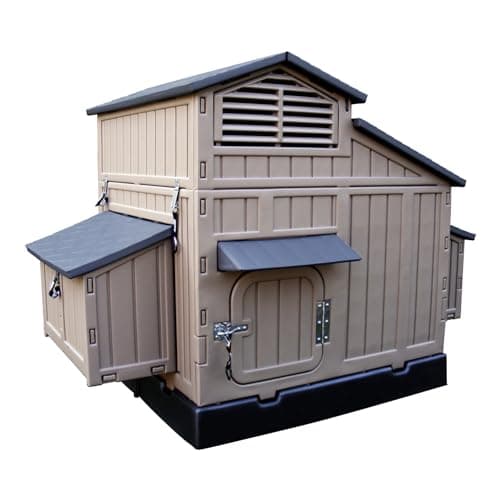 Hatching Time Formex Snap Lock Large Chicken CoopTop pickThe one coop here whose material genuinely earns its price, sized for four hens rather than the six on the box. | Cleaning, and cold that stays out | 4box says 6 | |
| 2 | 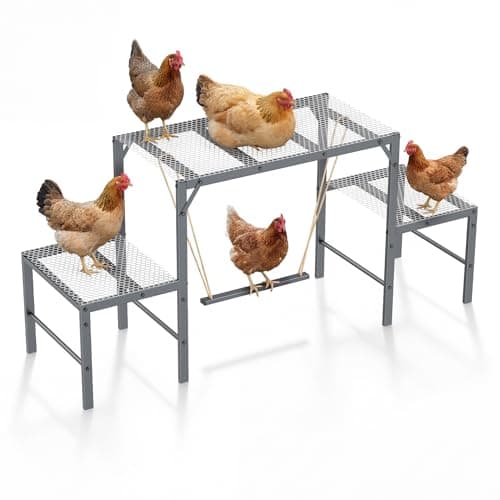 Magicfly Chicken Perch and Roosting Bar57.5in of metal roosting bar. Roost length is the spec people forget, and it is 8in per standard hen. | Adding roost length without carpentry | not published |
Coop cleaning has an unhelpful reputation as a large periodic job. Treated that way it gets postponed, and the postponement is what produces ammonia, capped litter and the mite population nobody noticed. Split into small pieces it is close to trivial, and the small pieces are the ones that actually control moisture.
Daily - about five minutes
- Check and refill water. This is the one that matters most, in every season.
- Collect eggs. Twice a day in hot or freezing weather.
- Glance under the roost. If the litter there is wet or capped, that is the whole diagnostic.
- Look at the birds while they eat. Thirty seconds of watching catches most problems days earlier than anything else.
- Confirm the pop door closed, or that the automatic door did.
Weekly - about fifteen minutes
- Turn the litter with a fork, concentrating under the roost. Scatter a handful of scratch and the birds will finish the job.
- Add fresh bedding wherever it looks compacted or damp. With deep litter you add rather than remove.
- Empty and refill the nest boxes if the bedding is soiled - eggs sit in it, so it needs changing more often than the floor.
- Scrub the waterer properly. A rinse is not the same thing, and biofilm builds up faster than people expect.
- Empty and wipe out the droppings board or tray if you have one.
- Check feed storage is closed and clear any spillage, which is what brings rodents.
Twice a year - an afternoon
- Strip all bedding out. Spring and fall are the usual points, and spring is the more important of the two.
- Scrub surfaces with warm water and a mild detergent, then let the coop dry completely before rebedding. Dry matters more than disinfected.
- Inspect for mite: the ends of roost bars where they meet brackets, the joints, cracks, and under the lip of nest boxes. Look for gray or reddish clusters and fine dust.
- Check the structure - base rails for softness, roof felt edges for lifting, mesh for gaps, latches for loose screws.
- Re-treat timber if it is due, and let it cure fully before the birds go back in.
- Rebed with a full deep layer, 4 to 6 inches.
What to actually clean with
A note on products, because the category is confusing. Almost everything sold as a chicken coop cleaner is an enzyme deodorizer aimed at ammonia; a disinfectant is a separate product for a separate job, and eXtension is explicit that organic material has to be removed first or the disinfectant is inactivated by it. Coop cleaners separates the two and sets out the published sequence.
The feed habit that belongs in the routine
Two weekly jobs worth naming. The first decides whether you get flies: keep the litter dry, because Penn State publishes that flies breed in manure at 50 to 85 percent moisture and drying it below that stops them - flies in the coop has the rest. The second decides whether you have rodents: clear up spilled and wet feed. University of Minnesota Extension links backyard rodent problems directly to soiled bedding and wet feed, and a feeder that closes overnight removes most of the rest of the invitation - chicken feeders covers which formats actually do that.
The mite inspection
Red mite lives in the coop rather than on the birds, comes out at night to feed, and hides in exactly the places you do not look: the ends of perches, the joints of timber, behind nest-box lips. By the time an infestation is obvious it has been established for weeks. Two scheduled inspections a year, at the seasonal clean, catch it far earlier than noticing does.
This is also the strongest practical argument for smooth surfaces. A molded plastic coop and a metal perch simply do not have the cracks and end grain a mite population needs, which is why the picks below are the easiest coops on this site to keep clean. On a coop you already own, the cheapest version of the same move is a sealed floor covering under the bedding - it turns a clean-out into a scrape rather than a scrub.
Easiest to keep clean
Top pick · Cleaning, and cold that stays out
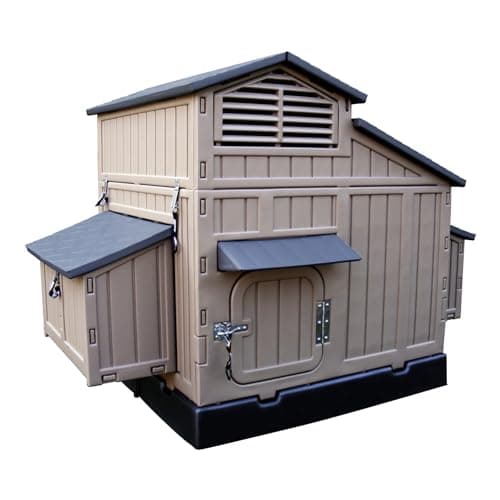
Hatching Time Formex Snap Lock Large Chicken Coop
The one coop here whose material genuinely earns its price, sized for four hens rather than the six on the box.
What the numbers say
64in x 39in = 17.3 sq ft of enclosed henhouse floor. At 4 sq ft per standard hen that is 4 birds, against a claim of 6.
Figures from Hatching Time published specifications (Amazon listing) · 64"L x 39"W x 42"H · Double-walled polyethylene
This is a standalone henhouse with no attached run, so the published footprint is all enclosed floor. That makes it one of the few coops on this site where the generous reading and the honest reading are the same number.
17.3 sq ft supports four standard hens at the 4 sq ft figure. The listing says four to six. Four is right; six is a winter of pecked backs.
Double-walled polyethylene is the reason to buy it. There is no end grain to rot, no seam for mites to colonize, and it hoses out in minutes - the single biggest practical difference between a coop you keep clean and one you avoid.
Good
- Whole footprint is enclosed floor, not run
- Double-walled plastic will not rot, absorb, or harbor mites the way fir does
- Panels unclip for cleaning without tools
Not so good
- Costs more than the wooden coops it outlasts
- No run included, so budget for one
- Plastic walls hold no insulation value on their own
Skip this if: you want a coop and run in one purchase. This is a henhouse only, and pairing it with a run pushes the total past most wooden coop-plus-run kits.
#ad · how this is funded · price as of October 17, 2026
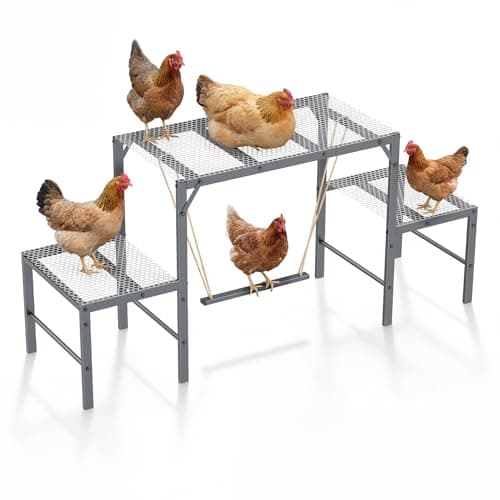
Pick 2 · Adding roost length without carpentry
Magicfly Chicken Perch and Roosting Bar
57.5in of metal roosting bar. Roost length is the spec people forget, and it is 8in per standard hen.
What the numbers say
The manufacturer does not publish the dimensions this calculation needs, so we do not print a number.
Figures from Magicfly published specifications (Amazon listing) · 57.48"L x 16.92"W x 26.96"H · Metal
57.5 inches of bar is roughly seven standard hens at the 8in-per-bird figure our calculator uses.
Roost space is the constraint people discover in winter, when birds huddle and the ones pushed off the bar sleep in the nest boxes - which is how you end up with dirty eggs.
Freestanding, so it works in a coop where you cannot easily fix a bar to the walls.
Good
- Adds real roost length with no carpentry
- Freestanding, so no wall fixing needed
- Metal will not harbor mites the way rough timber does
Not so good
- Takes up floor area you may not have
- Metal bars are colder underfoot than timber
- Not adjustable in height
Skip this if: your coop already has adequate roost length. Work it out first at 8in a bird - our calculator prints the figure.
#ad · how this is funded · price as of October 17, 2026
Questions people actually ask
+How often should you clean a chicken coop?
+What should I use to clean a chicken coop?
+How do I get rid of red mites in a chicken coop?
+Does a droppings board really help?
Sources
Read next
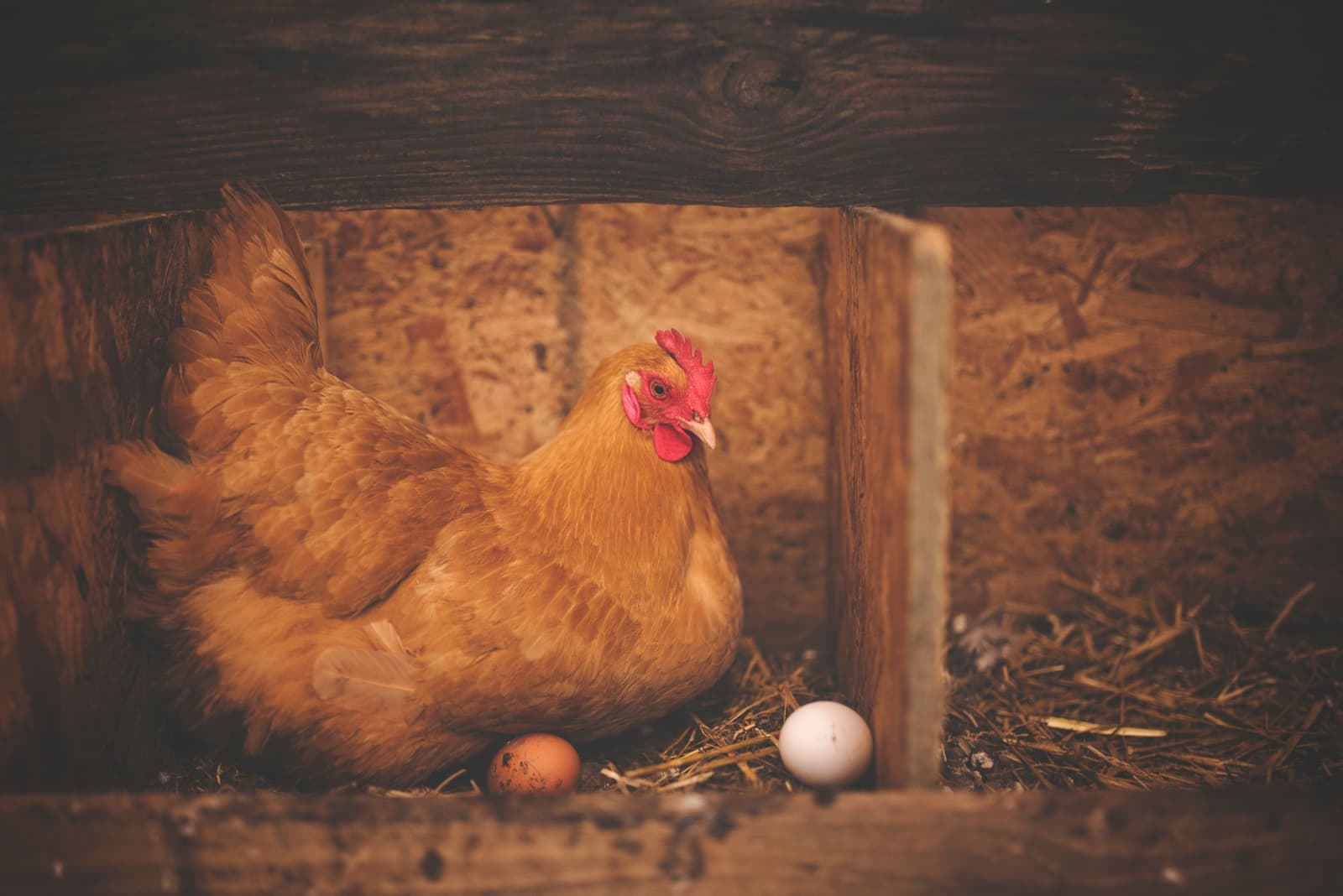
Coop bedding, judged on moisture
Shavings, straw, sand and hemp compared on absorbency and running cost, plus how the deep litter method actually works.
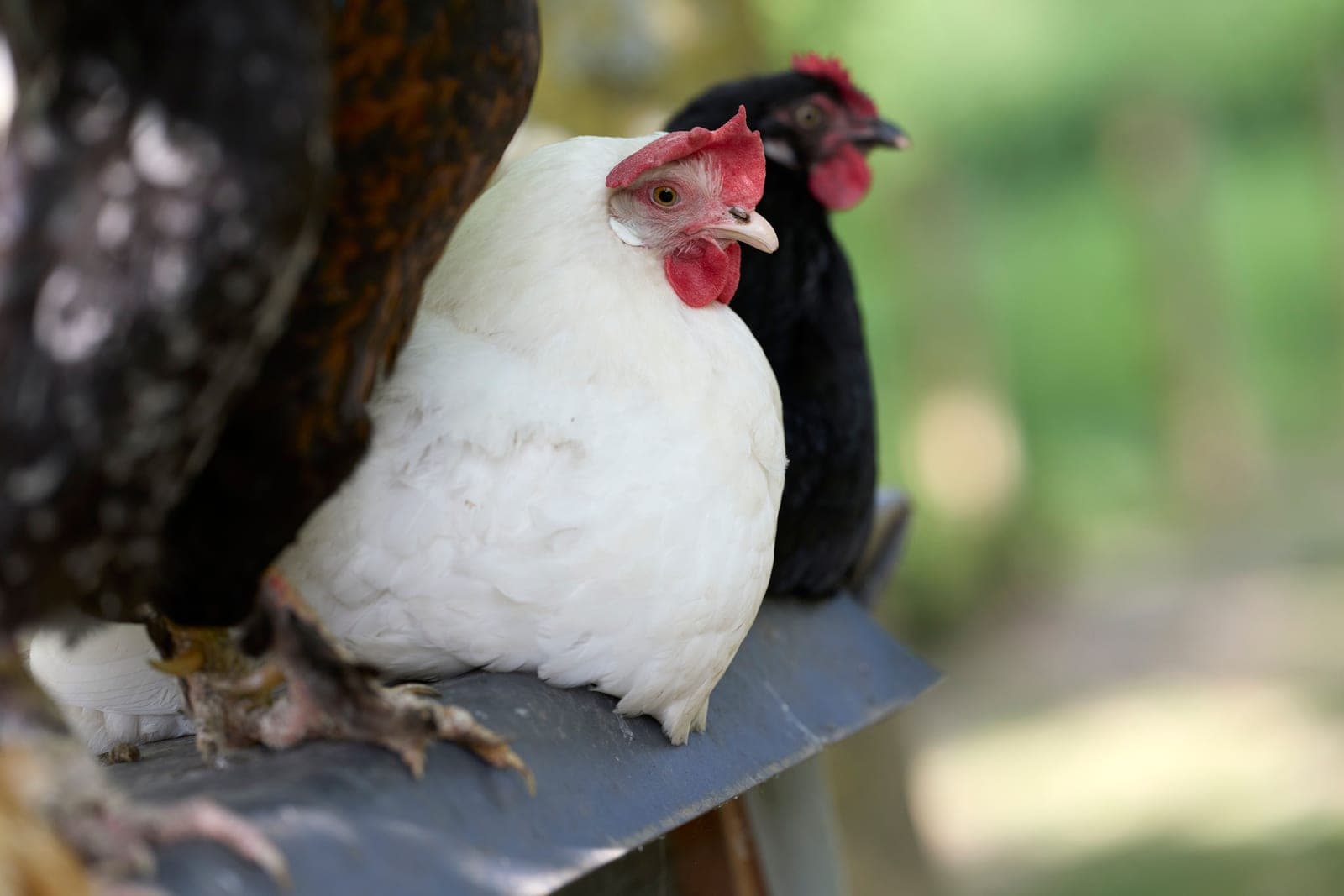
Roost bar length, height and shape
Per-bird bar length by breed, the flat-versus-round question, mounting height, and how to add bar without carpentry.

Ventilation, not insulation
Why sealing a coop causes frostbite, where vents belong, and how to tell whether yours has enough.

Wooden chicken coops, measured and weathered
Wooden coops ranked on measured floor area, with the maintenance cost of untreated fir priced in rather than left out.

Guides, and the arithmetic behind them
The reference library: sizing arithmetic, ventilation, predator-proofing, bedding, cost and the permits nobody checks first.
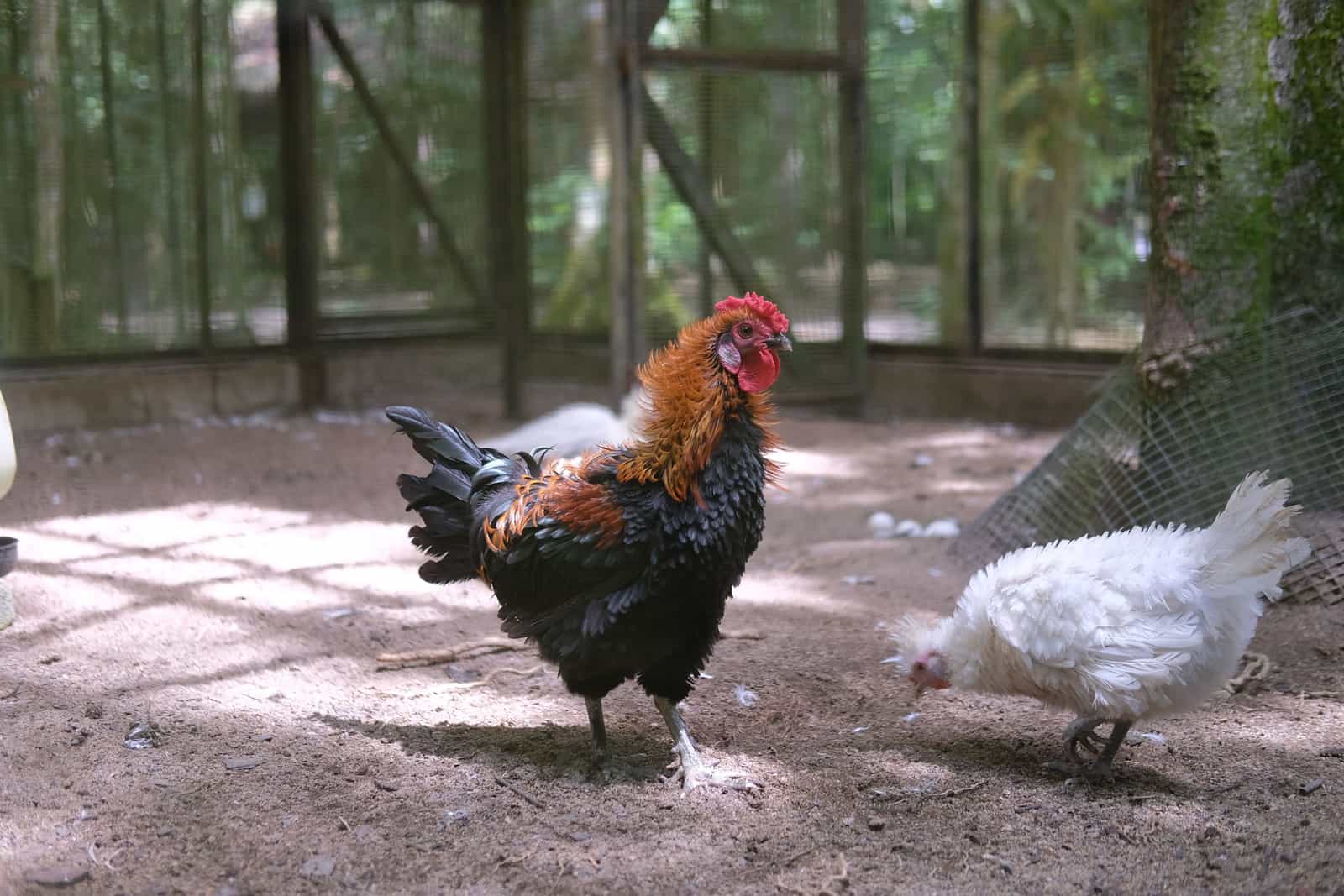
The best chicken coops, ranked by what they actually hold
The flagship roundup. Twelve coops ranked on measured floor area against the maker's own bird-count claim.