How to choose a chicken coop
Nine checks, in the order they actually decide the purchase, each one something you can run on a listing before you buy.
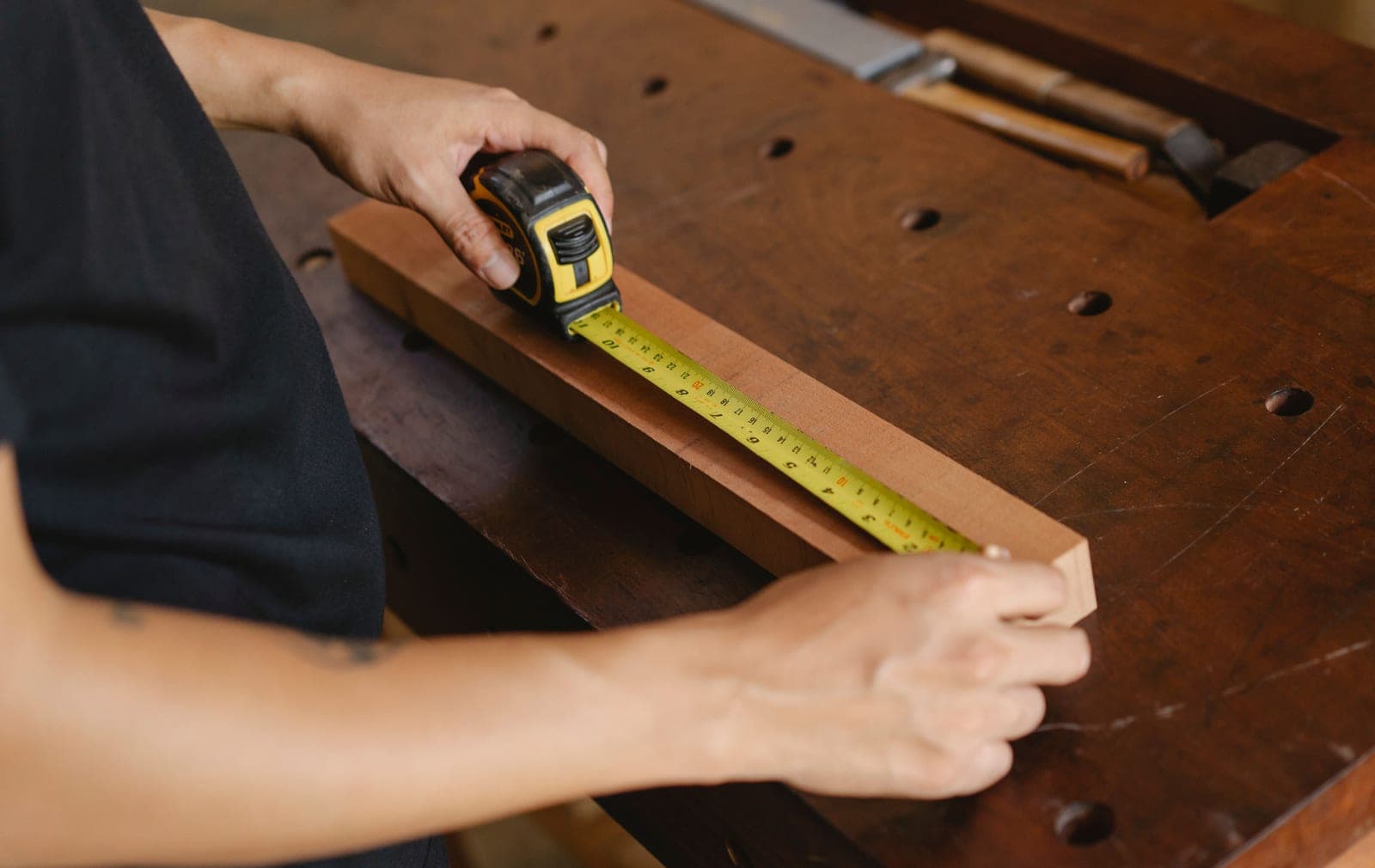
We have not handled these coops, and we do not pretend to have. Here is what we did instead. Links to Amazon earn us a commission at no extra cost to you - disclosure.
| # | Coop | Best for | Honest count | Price |
|---|---|---|---|---|
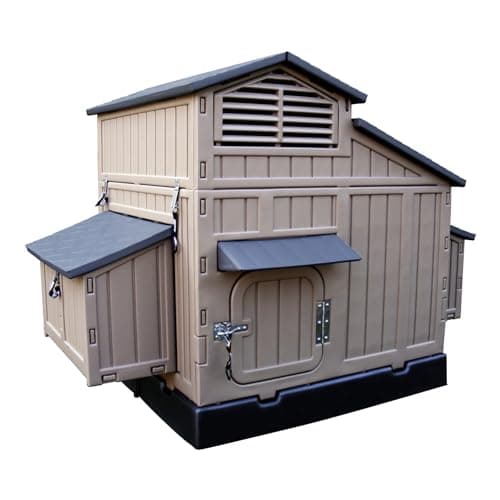
| 1 | 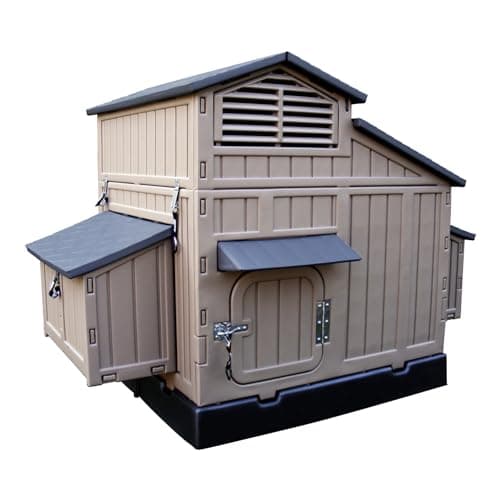 Hatching Time Formex Snap Lock Large Chicken CoopTop pickThe one coop here whose material genuinely earns its price, sized for four hens rather than the six on the box. | Cleaning, and cold that stays out | 4box says 6 | |
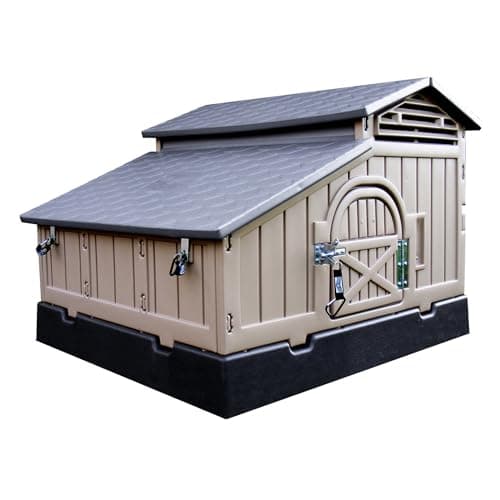
| 2 | 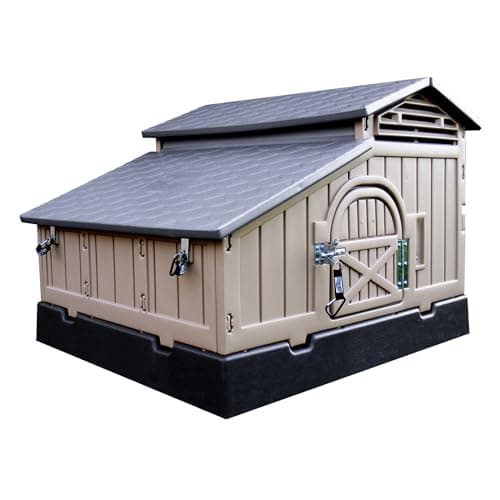 Hatching Time SnapLock Formex Standard CoopSame material logic as its bigger sibling, but the claim of four hens is the most overstated on this page relative to its size. | Two hens, or a bantam trio | 2box says 4 | |
| 3 | 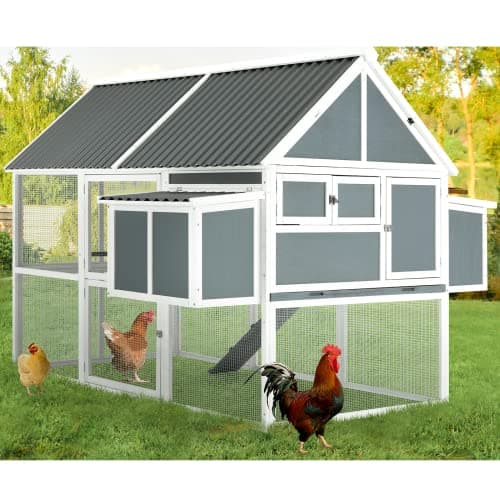 AECOJOY 84" Large Chicken Coop40.3 sq ft against a claim of ten. The numbers land exactly where the box says they do, which is rarer here than it should be. | Ten hens, claim and arithmetic agreeing | 10box says 10 | |
| 4 | 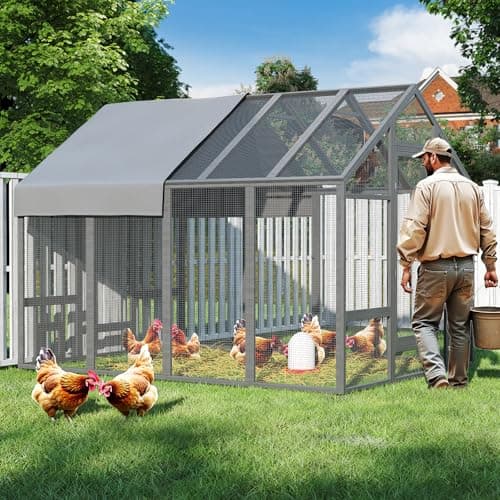 TRYKERPET Walk-In Coop for 10-12 Chickens47.4 sq ft against a claim of twelve, so eleven is the honest number - and you can stand up in it. | Walk-in access without a metal run | 11box says 12 | |
| 5 | 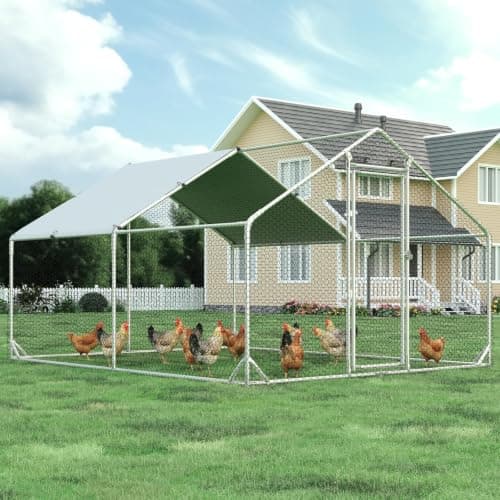 4ever2buy Metal Chicken Coop, 10x13 FT Walk-In Run128.4 sq ft of walk-in enclosure wrapped in galvanized hardware cloth - the largest ground area on this site, and a cover included. | A genuine walk-in enclosure | 32box says 15 |
Every check below is something you can do from the listing, in under a minute, before any money moves. They are in priority order, and the order matters more than the list does: the first two decide whether a coop can work at all, and no amount of being right about the other seven rescues a coop that is too small.
How we judged, before any ranking
- Enclosed floor area against the flock, computed from the maker's own published dimensions rather than read off the listing title.
- Whether the published figure describes the henhouse or the whole unit including an attached run, because one of those is roosting floor and the other is not.
- Mesh aperture, because the material a coop ships with decides whether it is secure on day one.
- Latch mechanism, on the specific question of whether a raccoon can work it.
- Roost bar length per bird, against the published guidance.
- Nest box count against flock size - almost always too many rather than too few.
- Ventilation area and where it sits relative to the birds' heads.
- Material, on rot and on mite harbourage rather than on appearance.
- Cleaning access, because the coop you can clean is the coop that stays clean.
Check 1: the floor area, and the only arithmetic that matters
University of Minnesota Extension publishes 3 to 5 square feet of indoor space per bird for backyard flocks. We use 4 for standard hens throughout this site. Every other decision on this page is cosmetic next to this one, because floor area is the single thing you cannot fix later without buying a second coop.
Check 2: henhouse floor, or whole-unit footprint
This is the check that catches most people, and it is the reason two coops with the same published footprint can be honest and dishonest respectively. A standalone henhouse publishes a footprint that is all enclosed floor. A coop-and-run unit publishes a footprint that spans open run as well - ground the birds cannot roost on, that is not shelter in rain, and that a predator reaches through.
Where a maker publishes only the whole-unit figure, we compute on it anyway and label it generous, because the real roosting floor is a fraction of it. When a coop fails its own claim on that generous basis, it fails decisively.
Check 3: what the mesh actually is
Nearly every kit coop in this category ships with chicken wire, which is a containment material and not a security one. A raccoon reaches through 1in mesh and a weasel walks through it. The specification that works is half-inch hardware cloth, 19 gauge, galvanized after welding rather than before.
Treat the supplied mesh as a cost rather than a feature: assume you will re-mesh the openings, price that in, and then judge the coop on its floor. Hardware cloth against chicken wire has the aperture and gauge numbers.
Check 4: the latches
Hook-and-eye catches and turn buttons are close to universal on kit coops, and a raccoon opens both. What stops one is a latch that needs two distinct motions, or a slide bolt with a hole you can put a carabiner through. This is the cheapest upgrade on the list and the one most often skipped. Latches a raccoon cannot open covers the mechanisms.
Check 5: roost bar length
Penn State Extension publishes 6 inches of roost space per standard bird, with roosts a foot apart and 18 to 24 inches above the floor; we use 8 inches on this site as the conservative figure. Most coops supply well under it, which is how a flock ends up sleeping in the nest boxes. Roost bar is addable in an afternoon, so this is a check that changes your shopping list rather than your coop.
Check 6: nest boxes, and why you have too many
Penn State publishes one 12in by 12in nest per 4 to 5 hens, never fewer than four boxes in a flock, at least 2 feet off the ground and at least 4 feet from the roosts. Kit coops routinely show six boxes on a three-hen coop, because boxes photograph as value. Every box is floor area that is not roosting floor, which is why this check belongs here rather than in the nice-to-have pile.
Check 7: ventilation, and where it sits
Penn State states it plainly: ample air movement without a draft is essential, and dampness or ammonia build-up is the sign there is not enough ventilation for the number of birds in the coop. The position matters as much as the area - vents need to be above the birds when they are roosting, so moist air leaves without blowing across them. A coop whose only openings are at bird height is ventilated on paper and drafty in practice.
Check 8: material, judged on rot and mites
Untreated fir is what most wooden kit coops are, and it gives three to six seasons with the base rail going first. Not one coop in our registry is built from pressure-treated lumber - which makes the treated-wood question moot for anyone buying a kit, and makes elevation and a sealed floor the real defense. Red mite lives in timber seams and not in plastic, which is the quiet argument for a moulded coop that nobody puts in a listing.
Check 9: whether you can clean it
The coop you can clean in ten minutes is the coop that gets cleaned. Look for a door you can reach the far corner through, a floor that comes out or wipes down, and no interior corner you cannot get a scraper into. This check predicts more about how a coop feels in year two than anything else on the list.
The coop we would buy, by flock size
Top pick · Cleaning, and cold that stays out
Hatching Time Formex Snap Lock Large Chicken Coop
The one coop here whose material genuinely earns its price, sized for four hens rather than the six on the box.
What the numbers say
64in x 39in = 17.3 sq ft of enclosed henhouse floor. At 4 sq ft per standard hen that is 4 birds, against a claim of 6.
Figures from Hatching Time published specifications (Amazon listing) · 64"L x 39"W x 42"H · Double-walled polyethylene
This is a standalone henhouse with no attached run, so the published footprint is all enclosed floor. That makes it one of the few coops on this site where the generous reading and the honest reading are the same number.
17.3 sq ft supports four standard hens at the 4 sq ft figure. The listing says four to six. Four is right; six is a winter of pecked backs.
Double-walled polyethylene is the reason to buy it. There is no end grain to rot, no seam for mites to colonize, and it hoses out in minutes - the single biggest practical difference between a coop you keep clean and one you avoid.
Good
- Whole footprint is enclosed floor, not run
- Double-walled plastic will not rot, absorb, or harbor mites the way fir does
- Panels unclip for cleaning without tools
Not so good
- Costs more than the wooden coops it outlasts
- No run included, so budget for one
- Plastic walls hold no insulation value on their own
Skip this if: you want a coop and run in one purchase. This is a henhouse only, and pairing it with a run pushes the total past most wooden coop-plus-run kits.
#ad · how this is funded · price as of October 17, 2026
Pick 2 · Two hens, or a bantam trio
Hatching Time SnapLock Formex Standard Coop
Same material logic as its bigger sibling, but the claim of four hens is the most overstated on this page relative to its size.
What the numbers say
39in x 42in = 11.4 sq ft of enclosed henhouse floor. At 4 sq ft per standard hen that is 2 birds, against a claim of 4.
Figures from Hatching Time published specifications (Amazon listing) · 39"L x 42"W x 29"H · Lightweight double-walled polyethylene
11.4 sq ft of enclosed floor is two standard hens. The listing says four.
For bantams, where the published guidance is nearer 2 sq ft a bird, four is defensible. For standard-size layers it is not, and the listing does not draw that distinction.
The material is the same double-walled polyethylene that makes the larger Snap Lock worth owning. The problem here is arithmetic, not build quality.
Good
- Genuinely easy to clean and impossible to rot
- Small enough for a courtyard or a side return
- Honest fit for a bantam trio
Not so good
- Two standard hens, not the four claimed
- Low roof height limits where you can put roost bars
- Run sold separately
Skip this if: you keep standard-size layers and want more than two. Buy the larger Snap Lock instead - the price step is smaller than the space step.
#ad · how this is funded · price as of October 17, 2026
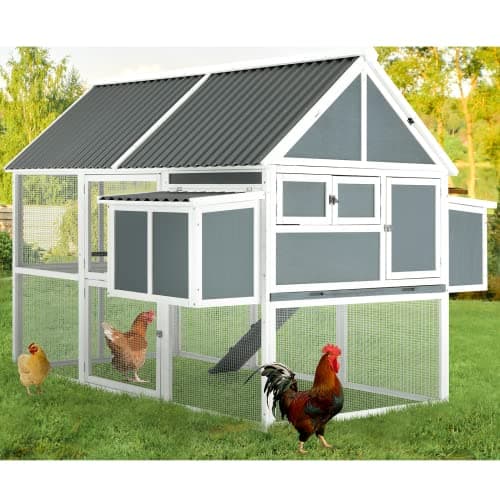
Pick 3 · Ten hens, claim and arithmetic agreeing
AECOJOY 84" Large Chicken Coop
40.3 sq ft against a claim of ten. The numbers land exactly where the box says they do, which is rarer here than it should be.
What the numbers say
84in x 69in = 40.3 sq ft of whole-unit footprint, which includes the attached run and is therefore generous. At 4 sq ft per standard hen that is 10 birds, against a claim of 10.
Figures from AECOJOY published specifications (Amazon listing) · 84"L x 69"W x 60"H · Wood
84 x 69 inches is 40.3 sq ft, which is exactly ten standard hens at the published 4 sq ft figure. AECOJOY claims eight to ten.
The 69in depth is what makes it work. Most coops in this class buy their length cheaply and stay narrow, which produces a corridor rather than a floor.
It is a square-ish footprint rather than a long thin one, so the usable area is genuinely usable - birds distribute across it instead of queueing down it.
Good
- Claim and arithmetic agree at ten hens
- 69in depth gives a floor rather than a corridor
- Two nesting boxes, which is the right count for ten hens on the published ratio
Not so good
- No margin - ten is the ceiling, not a comfortable number
- Wood construction needs annual attention
- Heavy once assembled and awkward to reposition
Skip this if: you plan to grow past ten birds. It meets its claim exactly, which means it has no room for the two extra chicks you will inevitably bring home.
#ad · how this is funded · price as of October 17, 2026
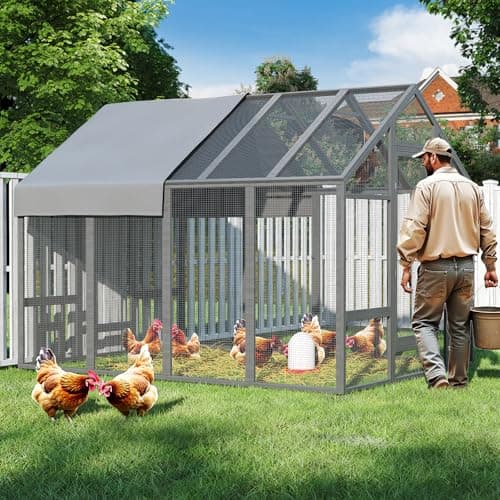
Pick 4 · Walk-in access without a metal run
TRYKERPET Walk-In Coop for 10-12 Chickens
47.4 sq ft against a claim of twelve, so eleven is the honest number - and you can stand up in it.
What the numbers say
96.1in x 71in = 47.4 sq ft of whole-unit footprint, which includes the attached run and is therefore generous. At 4 sq ft per standard hen that is 11 birds, against a claim of 12.
Figures from TRYKERPET published specifications (Amazon listing) · 96.1"L x 71"W x 71"H · Wood
47.4 sq ft is eleven standard hens. The claim is ten to twelve, so it holds the bottom of its range comfortably and misses the top by one.
71 inches of height is the feature. Walk-in access is the single change that makes people actually clean a coop weekly rather than seasonally.
71in depth as well as 71in height means the floor is close to square, so the area is usable rather than nominal.
Good
- Genuine walk-in height at 71in
- Near-square floor, so the area is usable
- Holds the bottom of its claimed range with room
Not so good
- Twelve is one bird past what the floor supports
- Wooden walk-in structures need bracing checked annually
- 8ft x 6ft of ground is a real footprint
Skip this if: you want a coop you can move. Walk-in wooden structures are effectively permanent once built, and repositioning means partial disassembly.
#ad · how this is funded · price as of October 17, 2026
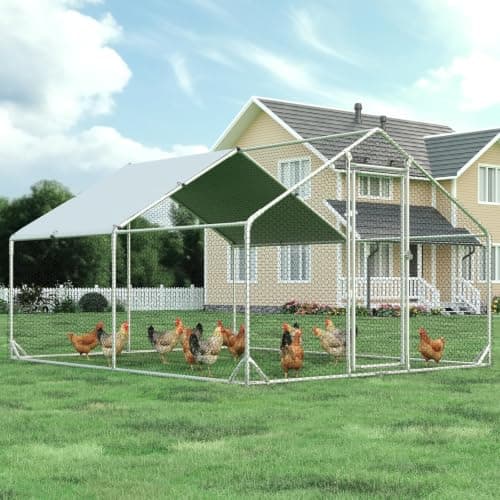
Pick 5 · A genuine walk-in enclosure
4ever2buy Metal Chicken Coop, 10x13 FT Walk-In Run
128.4 sq ft of walk-in enclosure wrapped in galvanized hardware cloth - the largest ground area on this site, and a cover included.
What the numbers say
157.2in x 117.6in = 128.4 sq ft of whole-unit footprint, which includes the attached run and is therefore generous. At 4 sq ft per standard hen that is 32 birds, against a claim of 15.
Figures from 4ever2buy published specifications (Amazon listing) · 157.2"L x 117.6"W x 76.8"H (10 x 13 ft) · Rust-resistant steel frame with galvanized hardware cloth
128.4 sq ft is the largest ground area on this site by a wide margin - more than twice the next biggest.
The listing claims room for 12 to 15 chickens. Read as run space at the published 8 sq ft a bird that is about 16, so the claim is reasonable - which is unusual enough here to say out loud. The bird column in our table divides by the 4 sq ft indoor figure, and that is the wrong measure for an enclosure with no henhouse in it.
Fully wrapped in galvanized hardware cloth rather than chicken wire is the specification that matters. Chicken wire keeps chickens in; hardware cloth keeps raccoons out, and they are not the same job.
A waterproof anti-UV cover is included, which is the detail that keeps the ground under it usable through a wet season.
Good
- Galvanized hardware cloth all round, not chicken wire
- 76.8in height is a true walk-in at 6.4 ft
- Waterproof cover included rather than sold separately
Not so good
- It is a run, not a coop - you still need a henhouse
- 13ft x 10ft needs serious yard space
- The 12-15 bird claim only holds as run space, never as roosting room
Skip this if: you expected a coop. There is no insulated, enclosed house in it, and birds cannot roost in a run overnight safely in most climates.
These are not the five coops that score best on all nine checks - no coop in this category scores well on all nine. They are the coop we would actually buy at five flock sizes after applying the checks in order, which is a different and more useful question.
Measured against the claims
| Coop | Published size | Floor area | Maker says | Arithmetic says |
|---|---|---|---|---|
| Hatching Time Formex Snap Lock Large Chicken Coop | 64"L x 39"W x 42"H | 17.3 sq ft | 6 hens | 4 hens |
| Hatching Time SnapLock Formex Standard Coop | 39"L x 42"W x 29"H | 11.4 sq ft | 4 hens | 2 hens |
| AECOJOY 84" Large Chicken Coop | 84"L x 69"W x 60"H | 40.3 sq ft | 10 hens | 10 hens |
| TRYKERPET Walk-In Coop for 10-12 Chickens | 96.1"L x 71"W x 71"H | 47.4 sq ft | 12 hens | 11 hens |
| 4ever2buy Metal Chicken Coop, 10x13 FT Walk-In Run | 157.2"L x 117.6"W x 76.8"H (10 x 13 ft) | 128.4 sq ft | 15 hens | 32 hens |
Floor area is the maker’s published footprint. Where a unit includes an attached run that figure spans the run too, which makes it a generous reading - the enclosed roosting floor is smaller still. How we work these out.
What we did not weigh, and why
We have not handled any of these coops. There is no build-quality score here, no assembly rating and no customer-service ranking, because we have no basis for one. Everything above is published specification and arithmetic, which is also why you can check all of it yourself.
We also do not carry star ratings or review counts anywhere on this site, so none of this aggregates anyone else's opinion.
Where to go next
- How much space one chicken needs - the sizing figures in full, with the calculator
- What a coop listing means by holds 6 chickens - why the claims drift
- Chicken coop brands, ranked by whether their numbers hold - what brand does and does not predict
- What a coop costs beyond the listing price - the four things that follow the purchase
Questions people actually ask
+What is the most important thing to look for in a chicken coop?
+How do I know if a chicken coop is big enough?
+Are expensive chicken coops better?
+What does a chicken coop not come with?
+Should I buy a bigger coop than I need?
Sources
- University of Minnesota Extension - Raising chickens for eggs (3-5 sq ft indoor space per bird; one nest box per 4-5 birds)
- Penn State Extension - Small-scale poultry housing
- eXtension Small and Backyard Poultry - Space allowances in housing (3-4 sq ft indoor / 10 sq ft outdoor per laying hen; 5 sq ft indoor per duck; 6 sq ft indoor and 20 sq ft outdoor per turkey; states there is very little peer-reviewed research on backyard space allowances)
- Michigan State University Extension - Backyard chickens: housing
Read next
How much space one chicken needs
The per-bird floor figure by breed class and run access, with worked examples and the coops that actually meet it.
What a coop listing means by holds 6 chickens
How listing bird counts are constructed, the four ways they drift, and a thirty-second check that works on any product page.
Chicken coop brands, ranked by whether their numbers hold
What a year of measuring published dimensions says about the brands in this category, and which ones publish figures you can check.
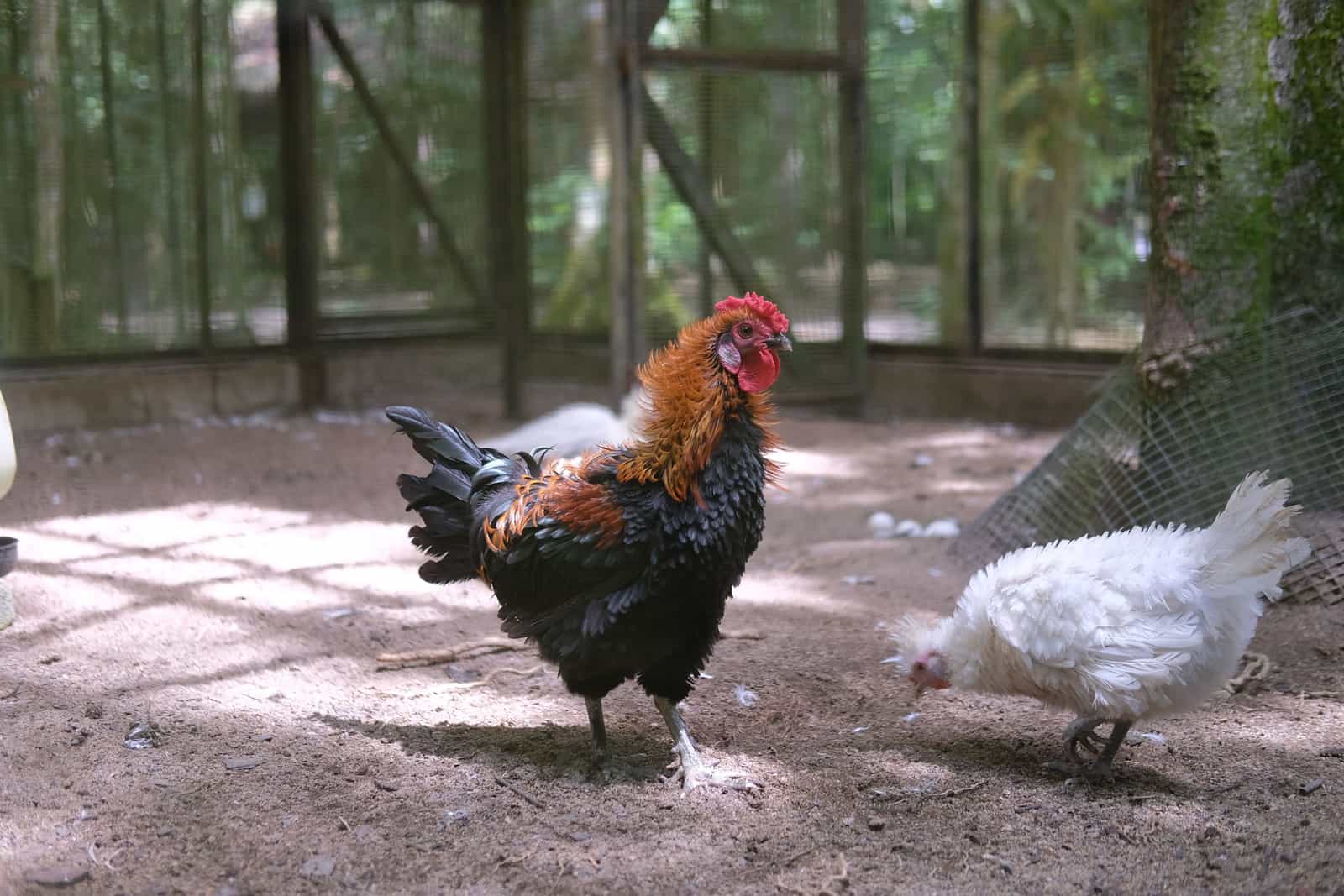
The best chicken coops, ranked by what they actually hold
The flagship roundup. Twelve coops ranked on measured floor area against the maker's own bird-count claim.
What a coop costs, beyond the listing price
The four costs that follow a coop purchase, and why the cheapest coop is usually the expensive one over a decade.