Plastic chicken coops
The material that solves rot, cleaning and red mite in one go, and a category so small you can count the serious options on one hand.
We have not handled these coops, and we do not pretend to have. Here is what we did instead. Links to Amazon earn us a commission at no extra cost to you - disclosure.
| # | Coop | Best for | Honest count | Price |
|---|---|---|---|---|
| 1 | 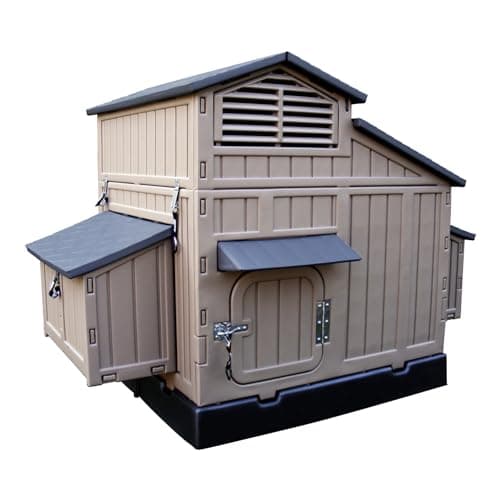 Hatching Time Formex Snap Lock Large Chicken CoopTop pickThe one coop here whose material genuinely earns its price, sized for four hens rather than the six on the box. | Cleaning, and cold that stays out | 4box says 6 | |
| 2 | 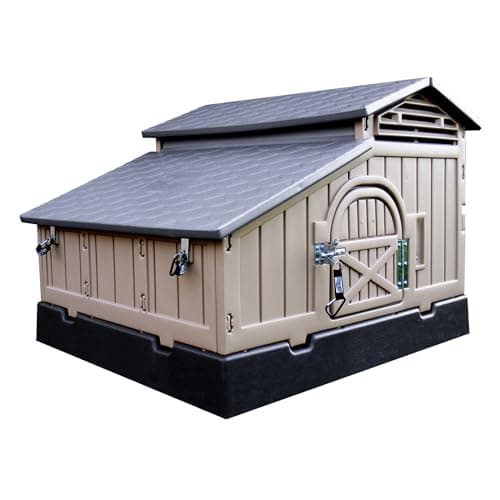 Hatching Time SnapLock Formex Standard CoopSame material logic as its bigger sibling, but the claim of four hens is the most overstated on this page relative to its size. | Two hens, or a bantam trio | 2box says 4 |
The coop-types hub lists five formats and this is the fifth. It is also the shortest page in that set, for a reason worth stating plainly at the top: almost nobody makes a serious plastic chicken coop, and the ones that exist are variations on the same product.
We could pad this page out with molded plastic rabbit hutches relabeled as coops. We would rather tell you the category is thin and explain when the material is worth chasing anyway.
What the material actually solves
Every failure mode of a cheap wooden coop traces back to the timber, and double-walled polyethylene removes all of them at once.
| Failure mode | Untreated fir | Galvanized steel | Double-walled polyethylene |
|---|---|---|---|
| Base rail rots in wet ground | The usual end of the coop, 3-6 seasons | No | No |
| Absorbs droppings and moisture | Yes, especially at cut ends | No | No |
| Red mite harborage in cracks and grain | Yes - the main reason keepers switch | No | No |
| Needs annual treatment | Yes | No | No |
| Hoses out in minutes | No | Frame only | Yes |
| Arrives as a complete henhouse | Yes | No - runs only | Yes |
| Cheap to buy | Yes | Good area per dollar | No |
| Easy to modify | Yes - a saw and screws | Bolt-together | No - molded panels |
That last row is the real trade and it is underrated. Adding a vent, moving a perch or cutting a second pop door is a Saturday afternoon in fir and genuinely awkward in molded plastic. If you like modifying things, buy wood and accept the maintenance.
Red mite is the argument keepers actually care about
Red mite lives in the coop rather than on the birds, colonizes cracks, joints and end grain, comes out at night to feed and is difficult to clear once established. By the time an infestation is visible on the flock it has been in the woodwork for weeks.
A smooth-surfaced plastic coop with panels that unclip does not give it the same harborage, and it lets you actually see and reach every interior surface. That is the single strongest practical case for the material, and it is the one people make after their first infestation rather than before.
The measurement advantage nobody mentions
Both coops on this page are standalone henhouses with no attached run. That sounds like a drawback and it has an unusual side effect: the published footprint is entirely enclosed floor, so the generous whole-unit reading and the honest enclosed reading are the same number.
On almost every wooden coop-and-run kit on this site, the published figure spans open run as well as henhouse, and the real roosting floor is smaller than the number we print. Here it is not. That makes these two the most straightforward capacity figures in the whole registry.
What plastic does not do
- It does not insulate. The walls carry no meaningful insulation value on their own, and in a ventilated coop of this size the birds are the only heat source anyway.
- It does not make a coop secure. The mesh, the latches and the ground line still decide that, exactly as on any other format.
- It does not fix a claim. The smaller of the two coops here is sold for four standard hens and measures two - good material, wrong number.
- It does not come cheap, and at the small end the price premium against a fir coop of similar footprint is proportionally at its largest.
The two worth knowing about
Top pick · Cleaning, and cold that stays out
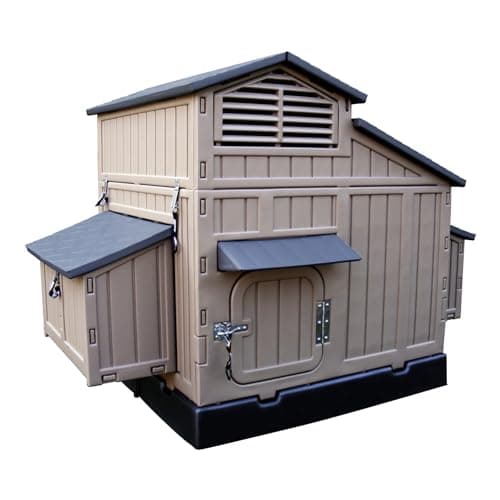
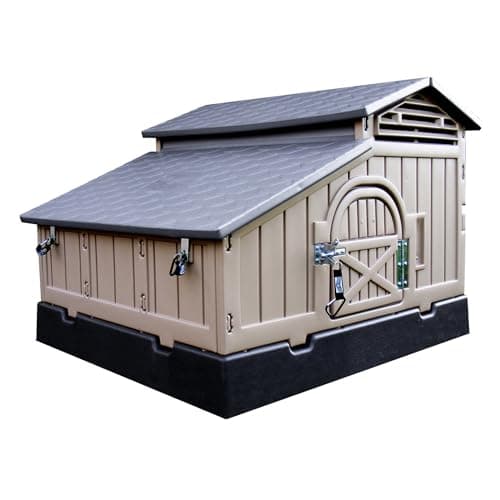
Hatching Time Formex Snap Lock Large Chicken Coop
The one coop here whose material genuinely earns its price, sized for four hens rather than the six on the box.
What the numbers say
64in x 39in = 17.3 sq ft of enclosed henhouse floor. At 4 sq ft per standard hen that is 4 birds, against a claim of 6.
Figures from Hatching Time published specifications (Amazon listing) · 64"L x 39"W x 42"H · Double-walled polyethylene
This is a standalone henhouse with no attached run, so the published footprint is all enclosed floor. That makes it one of the few coops on this site where the generous reading and the honest reading are the same number.
17.3 sq ft supports four standard hens at the 4 sq ft figure. The listing says four to six. Four is right; six is a winter of pecked backs.
Double-walled polyethylene is the reason to buy it. There is no end grain to rot, no seam for mites to colonize, and it hoses out in minutes - the single biggest practical difference between a coop you keep clean and one you avoid.
Good
- Whole footprint is enclosed floor, not run
- Double-walled plastic will not rot, absorb, or harbor mites the way fir does
- Panels unclip for cleaning without tools
Not so good
- Costs more than the wooden coops it outlasts
- No run included, so budget for one
- Plastic walls hold no insulation value on their own
Skip this if: you want a coop and run in one purchase. This is a henhouse only, and pairing it with a run pushes the total past most wooden coop-plus-run kits.
#ad · how this is funded · price as of October 21, 2026
Pick 2 · Two hens, or a bantam trio
Hatching Time SnapLock Formex Standard Coop
Same material logic as its bigger sibling, but the claim of four hens is the most overstated on this page relative to its size.
What the numbers say
39in x 42in = 11.4 sq ft of enclosed henhouse floor. At 4 sq ft per standard hen that is 2 birds, against a claim of 4.
Figures from Hatching Time published specifications (Amazon listing) · 39"L x 42"W x 29"H · Lightweight double-walled polyethylene
11.4 sq ft of enclosed floor is two standard hens. The listing says four.
For bantams, where the published guidance is nearer 2 sq ft a bird, four is defensible. For standard-size layers it is not, and the listing does not draw that distinction.
The material is the same double-walled polyethylene that makes the larger Snap Lock worth owning. The problem here is arithmetic, not build quality.
Good
- Genuinely easy to clean and impossible to rot
- Small enough for a courtyard or a side return
- Honest fit for a bantam trio
Not so good
- Two standard hens, not the four claimed
- Low roof height limits where you can put roost bars
- Run sold separately
Skip this if: you keep standard-size layers and want more than two. Buy the larger Snap Lock instead - the price step is smaller than the space step.
#ad · how this is funded · price as of October 21, 2026
Measured against the claims
| Coop | Published size | Floor area | Maker says | Arithmetic says |
|---|---|---|---|---|
| Hatching Time Formex Snap Lock Large Chicken Coop | 64"L x 39"W x 42"H | 17.3 sq ft | 6 hens | 4 hens |
| Hatching Time SnapLock Formex Standard Coop | 39"L x 42"W x 29"H | 11.4 sq ft | 4 hens | 2 hens |
Floor area is the maker’s published footprint. Where a unit includes an attached run that figure spans the run too, which makes it a generous reading - the enclosed roosting floor is smaller still. How we work these out.
Read next
- Plastic against wood in cold weather - the winter half of the material question
- The Aivituvin against the Formex Snap Lock - the same size class in the other material
- Wooden chicken coops - what you are trading against, and what it costs to keep
- What a coop really costs - where the ten-year arithmetic turns
- Omlet Eglu and Nestera alternatives - the two premium plastic brands that sell direct, measured
Questions people actually ask
+Are plastic chicken coops any good?
+Why are there so few plastic chicken coops?
+Are plastic coops warmer than wooden ones?
+Do plastic chicken coops get red mite?
+Is a plastic coop worth the extra money?
Sources
Read next
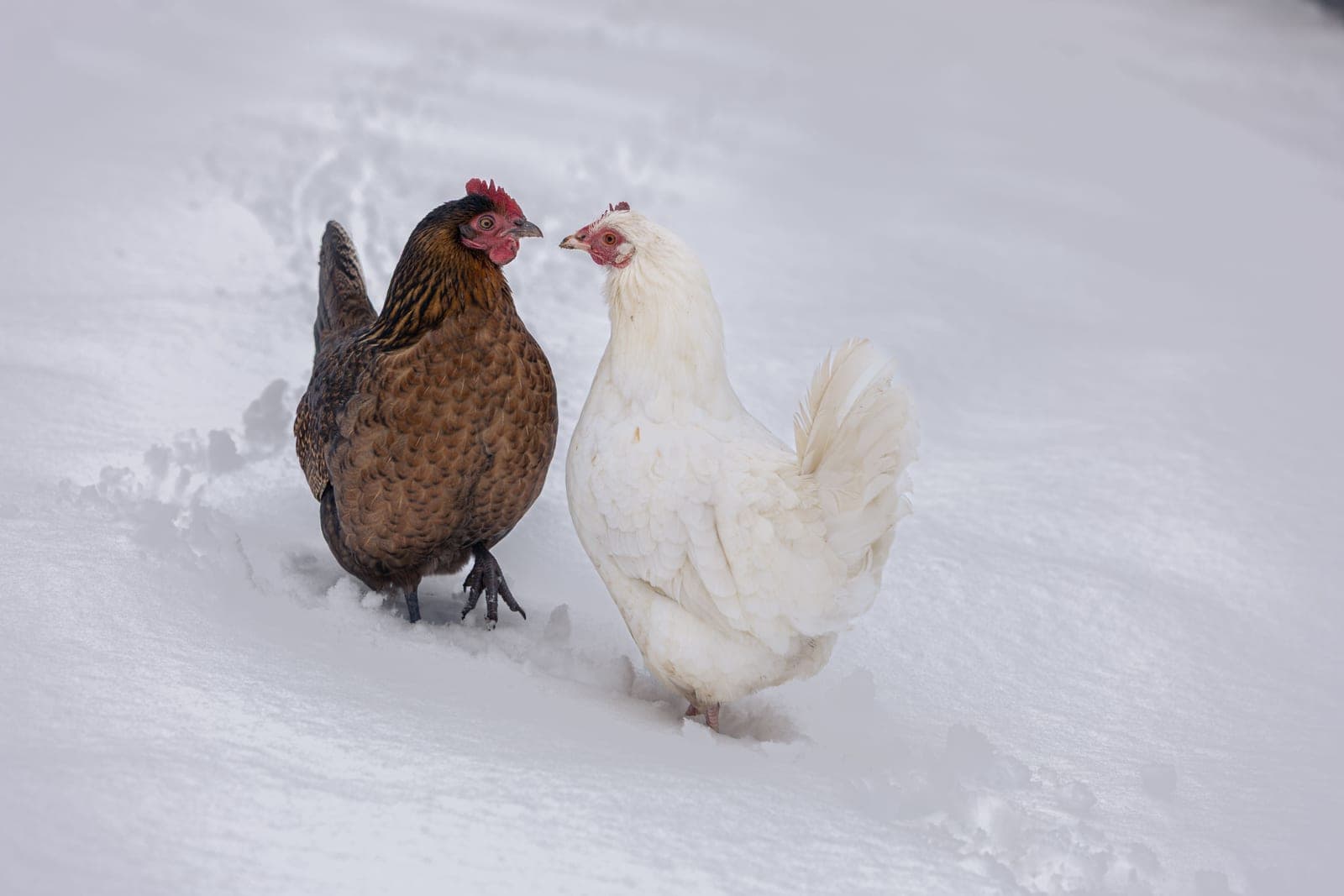
Plastic against wood, in the cold
A material comparison judged on condensation, cleaning and mite resistance rather than on an insulation value neither material really has.
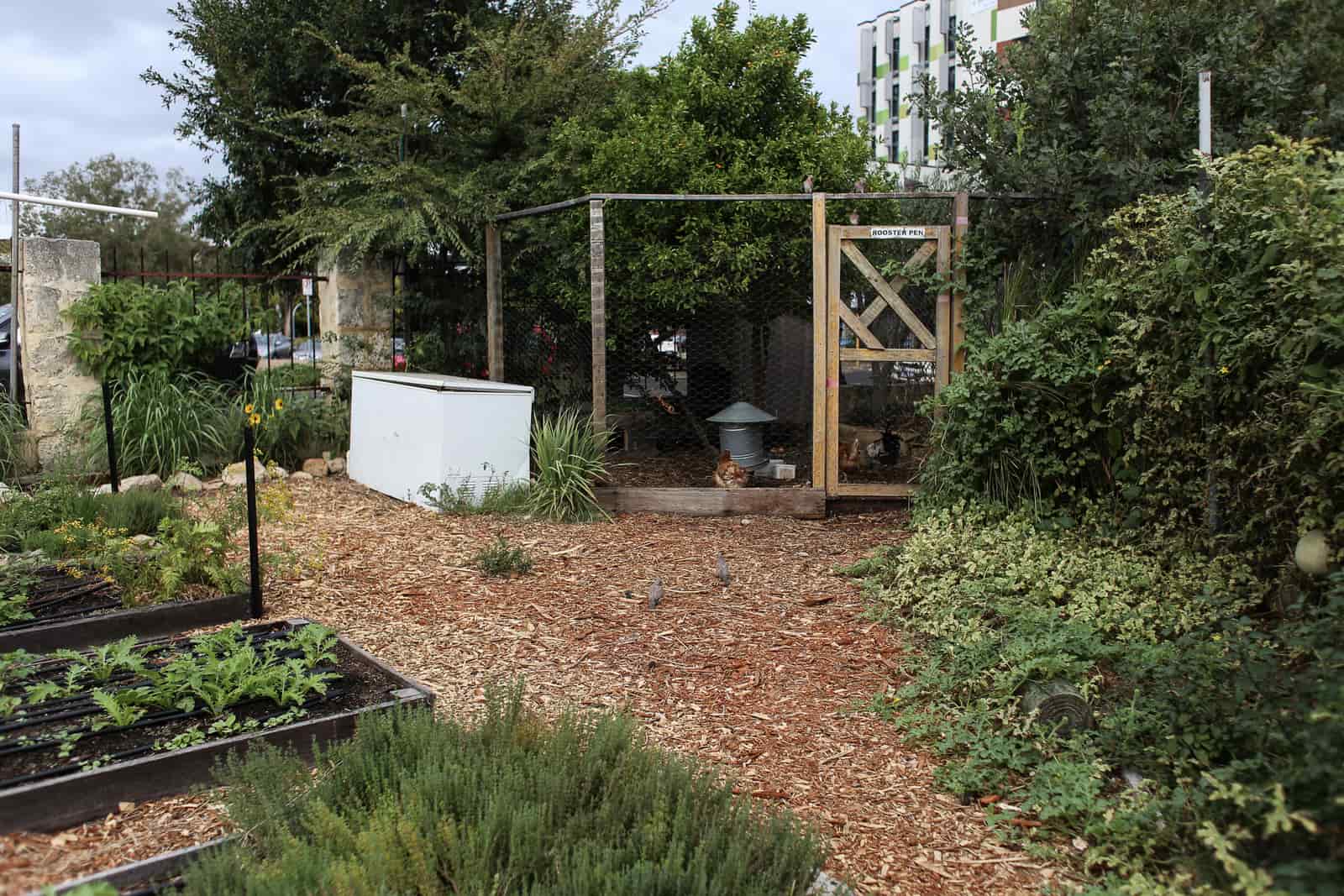
Aivituvin AIR31 against the Formex Snap Lock
Wood against plastic at the small end. One claims nothing, one over-claims - and both hold fewer birds than you think.
Wooden chicken coops, measured and weathered
Wooden coops ranked on measured floor area, with the maintenance cost of untreated fir priced in rather than left out.
Coop types, and what each format actually gives you
Five formats compared on measured floor area, security ceiling and lifespan, with the picks that survive their own spec sheet.
What a coop costs, beyond the listing price
The four costs that follow a coop purchase, and why the cheapest coop is usually the expensive one over a decade.
A cleaning routine you will actually keep
Daily, weekly and seasonal jobs sized so they get done, plus the mite inspection nobody schedules until it is too late.