Hawks, owls and the daylight problem
Every other predator on this site is a nighttime problem solved by shutting a door. Aerial hunters work the hours your birds are out, which makes them the one threat a locked coop does nothing about.
We have not handled these coops, and we do not pretend to have. Here is what we did instead. Links to Amazon earn us a commission at no extra cost to you - disclosure.
| # | Coop | Best for | Honest count | Price |
|---|---|---|---|---|
| 1 | 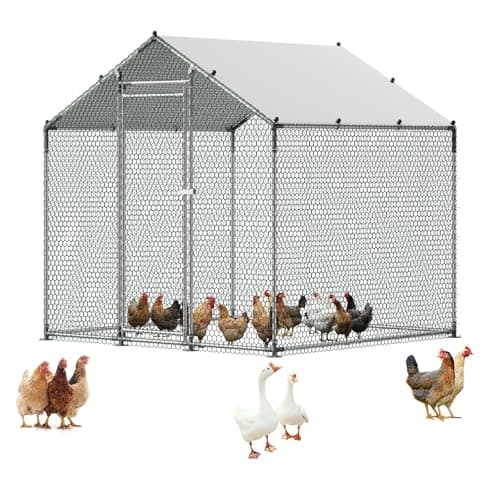 VEVOR Metal Walk-In Run, Spire RoofTop pick43 sq ft under a spire roof - the pitched cover is the reason to pick it over a flat-topped run. | Shedding snow and rain off a run | 10no claim made | |
| 2 | 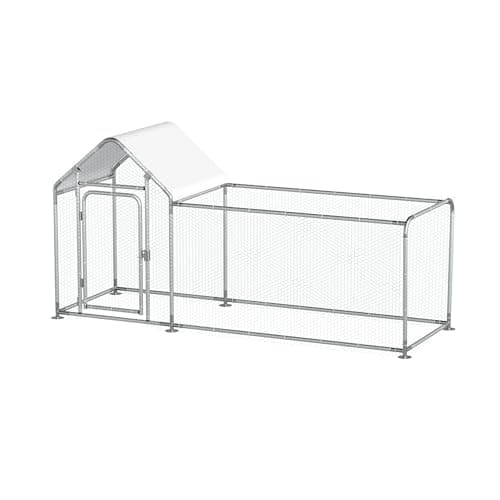 GOJOOASIS Outdoor Large Metal Chicken Coop Run, 118in32.4 sq ft of galvanized steel run, and a maker that publishes no bird count at all - which counts in its favor here. | A metal run that will not rot | 8no claim made | |
| 3 | 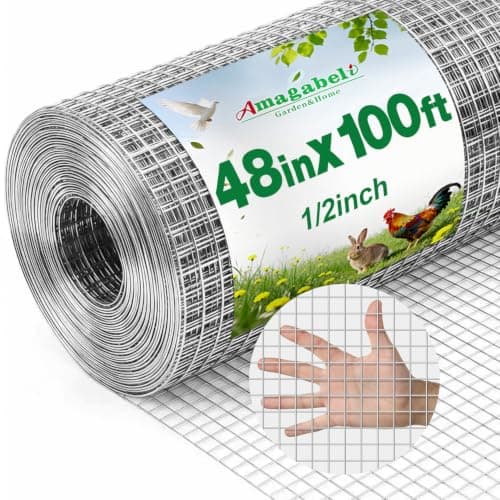 Amagabeli 1/2" Hardware Cloth, 48in x 100ftHalf-inch aperture, 19 gauge, hot-dipped galvanized after welding. This is the specification that actually keeps raccoons out. | The single most important predator purchase | not published |
The rest of this hub is about a door, a latch and a wire apron - the machinery of keeping a coop shut overnight. Aerial predators break that model completely, because they arrive in the middle of the afternoon while the birds are outside doing exactly what you got them to do.
It is also the threat where the folk remedies are thickest and the physical fix is simplest. Cover the run.
Why nothing else transfers
| Ground predators | Hawks and owls | |
|---|---|---|
| When they hunt | Mostly night and dusk | Hawks in daylight; owls at night |
| What stops them | Aperture, latch, ground apron | A roof over the run |
| Does shutting the coop help | Yes - it is the whole defense | Only against owls |
| Is the run enough | Yes, if meshed and skirted | No - an open-topped run is open |
| Warning you get | Usually none until morning | Often visible - birds freeze or bolt for cover |
Owls are the exception that proves the pattern: they hunt at night, so a properly latched coop handles them the way it handles everything else. It is the daytime hunters that need the structural answer.
Cover the run - the options in order
- A solid roof. Best outcome, most cost. It also keeps the run drier, which helps with mud and with litter tracked into the coop, so it is one of the few security upgrades with a second benefit.
- Welded mesh over the top. What the steel walk-in enclosures on this page ship with. Strong, permanent, and it stops climbers as well as fliers.
- Aviary or garden netting. Cheapest by a wide margin and genuinely effective against birds. It sags, it needs re-tensioning, and it does not stop a raccoon that climbs - but for hawks alone it does the job.
- Partial cover plus dense shelter. If a full cover is impossible, cover part of the run and give the flock somewhere to bolt to. A hawk needs an open approach and an open exit.
Cover that is not a roof
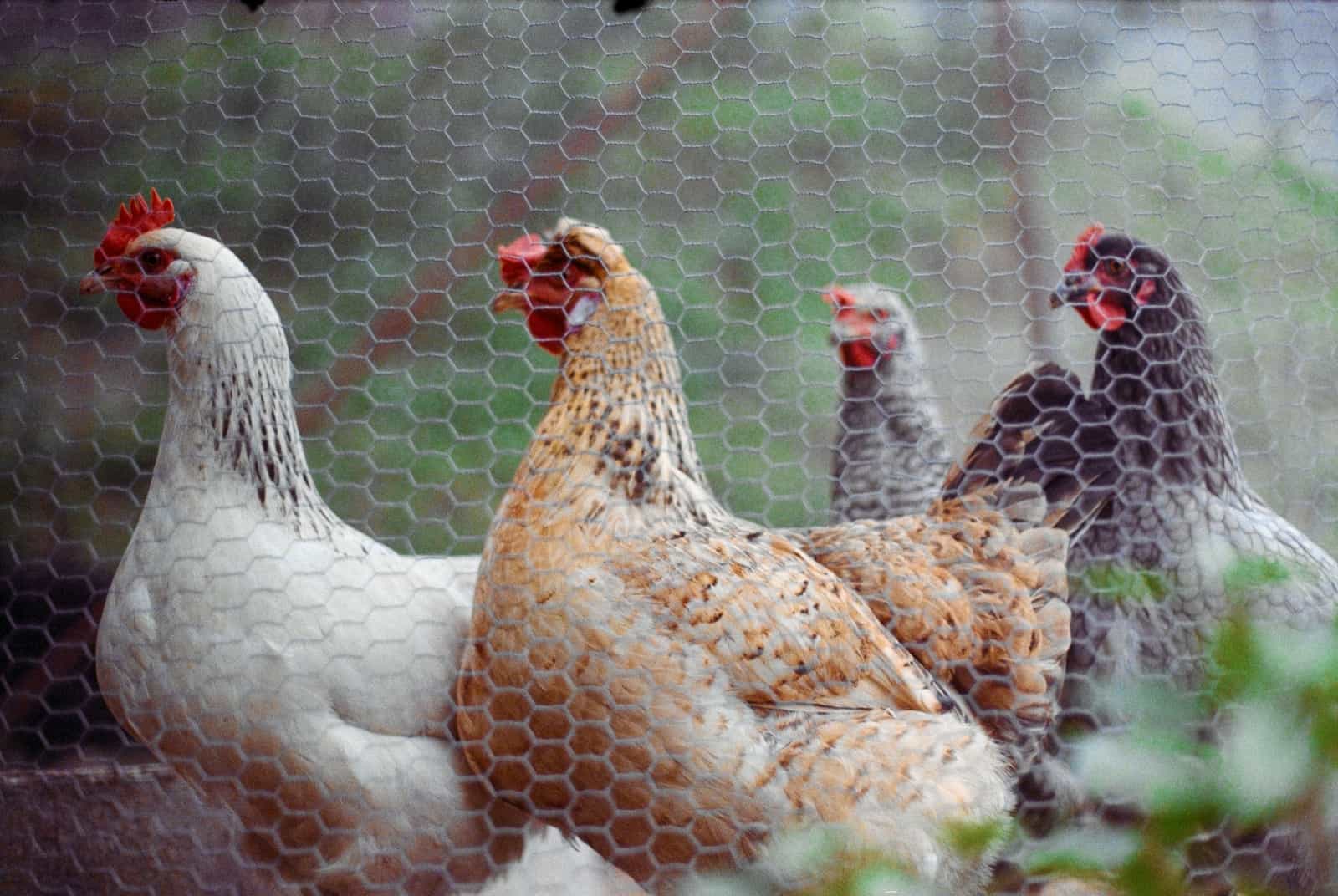
Free-ranging birds cannot be roofed, and the answer there is cover in the landscape sense: shrubs, a low table, a lean-to, anything a bird can get under fast. Flocks with dense cover to bolt into lose far fewer birds than flocks on open lawn, because a hawk's approach depends on an unobstructed line.
A cockerel changes the odds too - the alarm call and the watching behavior are real, and it is the traditional reason for keeping one with a free-ranging flock. Whether you can keep one is usually a zoning question rather than a husbandry one; see permits and zoning.
Why a deterrent light is no help here
Solar predator lights switch on at dusk and off at dawn, which makes them irrelevant to a bird that hunts in daylight. They are sold for coop protection and they address the night shift only - deterrent lights sets out what the published guidance says they do and do not buy you.
What does not work
- Reflective tape, old CDs, scarecrows and plastic owls. All work briefly and stop working once the bird learns nothing follows. Deterrents that depend on novelty have a short half-life.
- Noise makers, for the same reason, and they annoy neighbors long after they have stopped annoying the hawk.
- Anything that involves harming the bird. Hawks, owls and eagles are federally protected in the United States, and killing, trapping or relocating one without a permit is illegal. Exclusion is the legal answer and it is also the one that works.
The picks
Two covered steel enclosures and the mesh you would use to cover a run you already own. All three solve the same problem from different starting points.
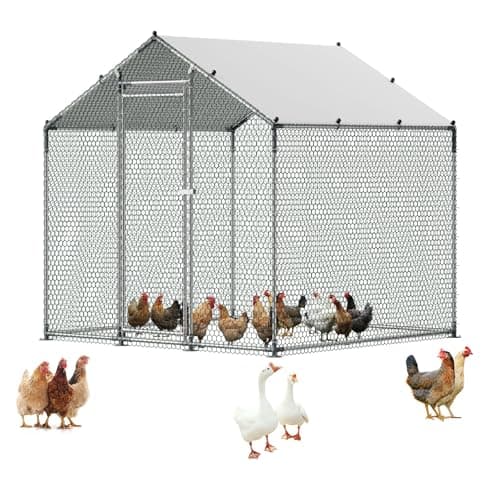
Top pick · Shedding snow and rain off a run
VEVOR Metal Walk-In Run, Spire Roof
43 sq ft under a spire roof - the pitched cover is the reason to pick it over a flat-topped run.
What the numbers say
78.72in x 78.72in = 43 sq ft of whole-unit footprint, which includes the attached run and is therefore generous. At 4 sq ft per standard hen that is 10 birds. The maker publishes no bird count of its own to compare against.
Figures from VEVOR published specifications (Amazon listing) · 78.72"L x 78.72"W x 78.72"H · High-carbon steel
43 sq ft in a perfect square, which is the most efficient shape for a given perimeter of frame.
The spire roof is the differentiator. Flat-covered runs pool water and collapse under wet snow; a pitched cover sheds both.
No bird count is claimed, which is correct for an enclosure.
Good
- Pitched roof sheds snow and standing water
- Square footprint is frame-efficient
- Security lock included
Not so good
- A run, not a coop
- Cover material will degrade before the frame does
- 6.5ft square is smaller than it sounds once a henhouse is inside
Skip this if: you get heavy snow loads. A spire helps, but no fabric-covered run is a substitute for a rigid roof where snow sits.
#ad · how this is funded · price as of October 21, 2026
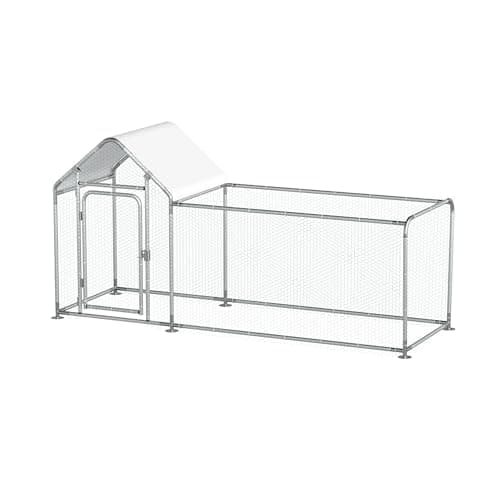
Pick 2 · A metal run that will not rot
GOJOOASIS Outdoor Large Metal Chicken Coop Run, 118in
32.4 sq ft of galvanized steel run, and a maker that publishes no bird count at all - which counts in its favor here.
What the numbers say
118in x 39.5in = 32.4 sq ft of whole-unit footprint, which includes the attached run and is therefore generous. At 4 sq ft per standard hen that is 8 birds. The maker publishes no bird count of its own to compare against.
Figures from GOJOOASIS published specifications (Amazon listing) · 118"L x 39.5"W x 59"H · Galvanized steel frame with a UV and water-resistant cover
118 by 39.5 inches is 32.4 square feet, which is eight standard hens on the published 4 square feet a bird. The listing states no bird count of its own, so there is no claim here to fail - and on this site that is a point in a maker's favor rather than an omission.
Read the shape rather than the headline area. Thirty-nine inches of width is narrow, so the usable space is a long corridor rather than a yard, and birds use length less efficiently than they use breadth.
At 59 inches high it is a stoop rather than the crawl the older 39-inch version demanded, but it is still under five feet. Call it head-down access rather than walk-in, whatever the category name suggests.
What you are buying is the frame. Galvanized steel does not rot, hosts no mites in its end grain and needs no re-treating, which is the right material for a structure that lives outdoors permanently.
Good
- Publishes no bird count, so there is no inflated claim to correct
- Galvanized steel frame will outlast any fir coop here
- 59in height is a genuine improvement on the older 39in version
- Long enough to give birds real running distance
Not so good
- A run, not a coop - there is no henhouse and roosting is still unsolved
- 39.5in width makes it a corridor rather than a yard
- Still under five feet, so not walk-in in the sense the name implies
- The cover is the weak point and will need replacing before the frame does
Skip this if: you need somewhere for the birds to sleep. This is outdoor space and predator exclusion only - there is no insulated house in it, and the per-bird floor guidance applies to enclosed roosting space you still have to provide.
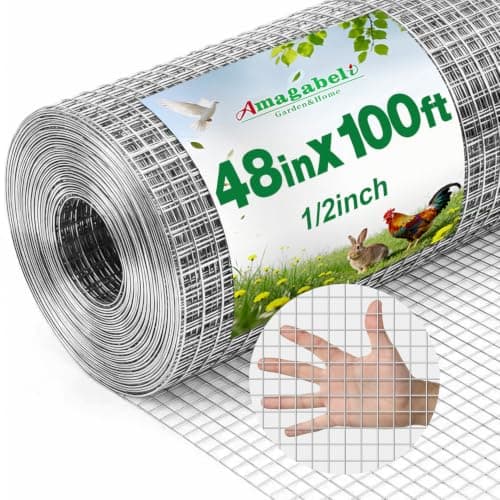
Pick 3 · The single most important predator purchase
Amagabeli 1/2" Hardware Cloth, 48in x 100ft
Half-inch aperture, 19 gauge, hot-dipped galvanized after welding. This is the specification that actually keeps raccoons out.
What the numbers say
The manufacturer does not publish the dimensions this calculation needs, so we do not print a number.
Figures from Amagabeli published specifications (Amazon listing)
Half-inch aperture is the number that matters. A raccoon can reach through 1in mesh and a weasel walks through 1in chicken wire; half-inch stops both.
Galvanized AFTER welding, not before, is the second specification to check. Welding burns the coating off, so mesh galvanized beforehand rusts at every joint - which is exactly where it needs to hold.
19 gauge is the practical minimum for a coop perimeter. Thinner mesh sold as hardware cloth exists and bends open by hand.
Good
- Half-inch aperture excludes raccoons and weasels
- Hot-dipped galvanized after welding, so joints do not rust first
- 48in width covers most run walls in a single run
Not so good
- Cutting it is hard on the hands and on your snips
- 100ft is more than a small coop needs
- Edges are sharp and need capping or folding
Skip this if: only if you already have half-inch hardware cloth. Do not substitute chicken wire - it is a containment material, not a security one.
#ad · how this is funded · price as of October 21, 2026
Both enclosures are runs rather than coops - there is no henhouse in either, so roosting is still yours to solve. Metal coops and runs covers what that means in practice.
Questions people actually ask
+How do I protect chickens from hawks?
+Will netting stop a hawk?
+Do fake owls or reflective tape keep hawks away?
+Can I shoot or trap a hawk taking my chickens?
+Are owls a threat to chickens?
Sources
Read next
Predator-proofing, as numbers rather than adjectives
The three specifics that decide whether a coop holds - aperture, gauge and latch - with the products that fix what every kit gets wrong.
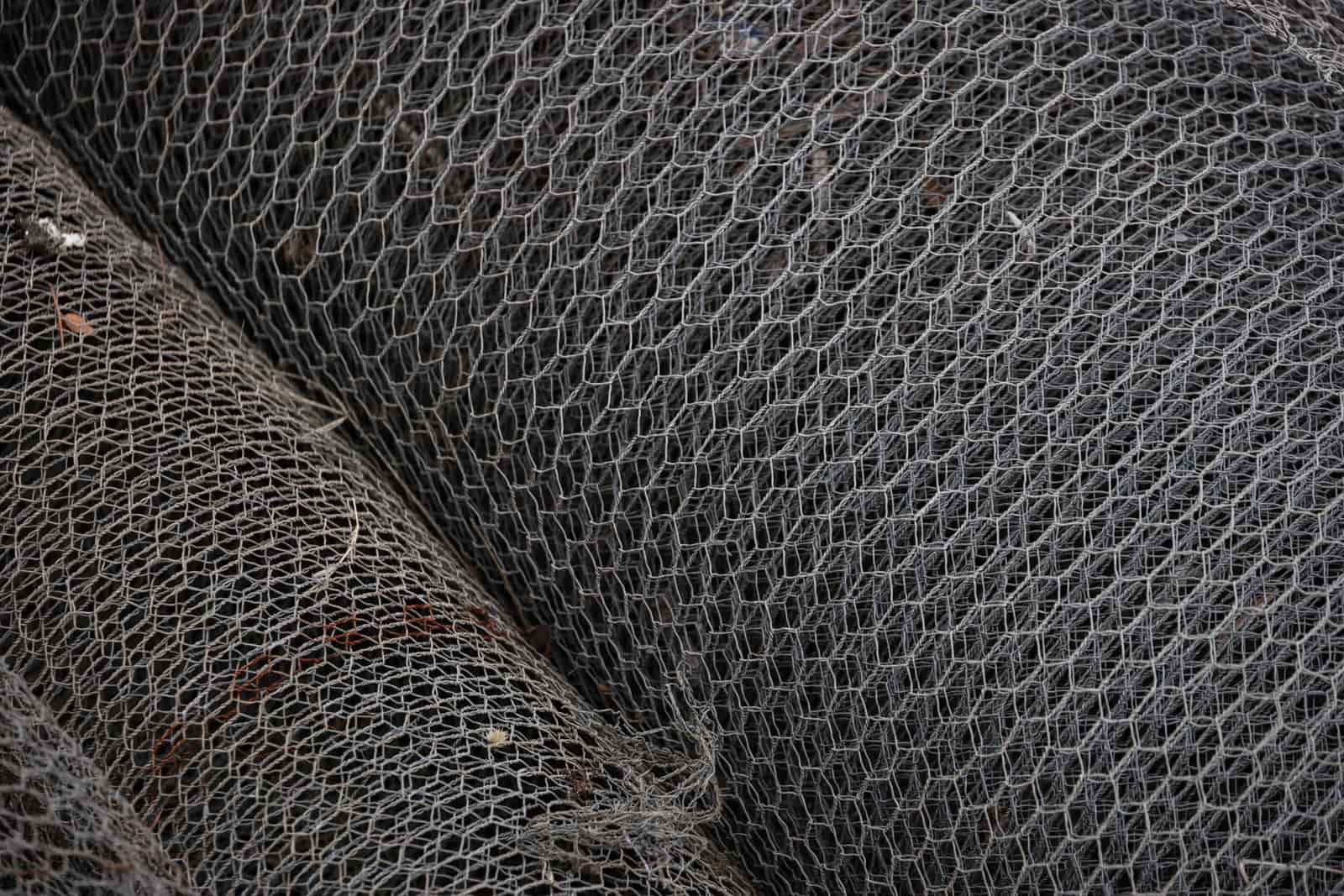
Metal chicken coops and runs
Steel runs and enclosures ranked on measured area, with the henhouse gap and the base-security fix stated up front.
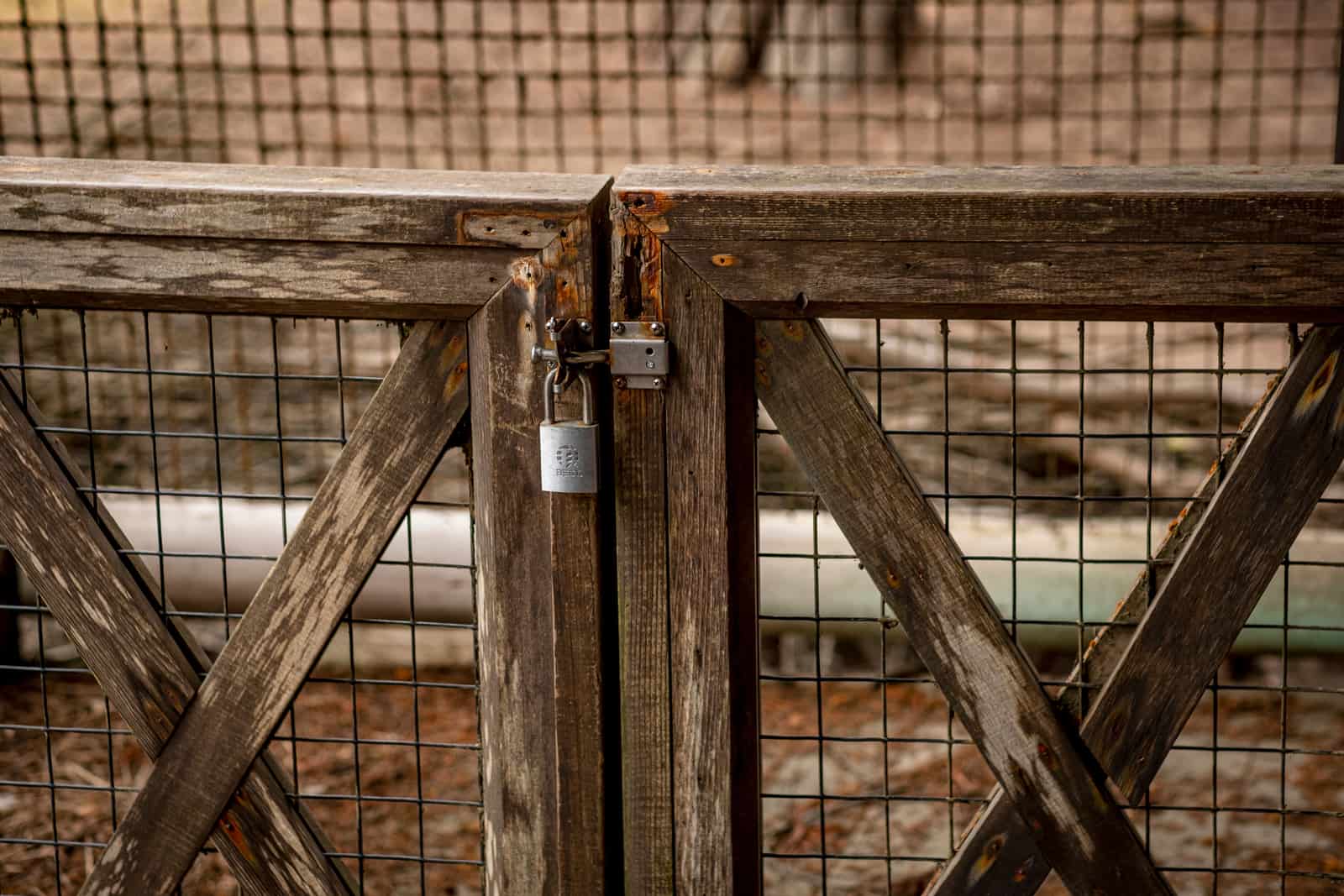
Raccoon-proofing a chicken coop
What a raccoon can actually do, the three fixes that stop it, and the openings people forget until the morning after.
Predator-proofing a coop, step by step
The full walkthrough: mesh, latches and apron, with a materials list and the openings that get missed.
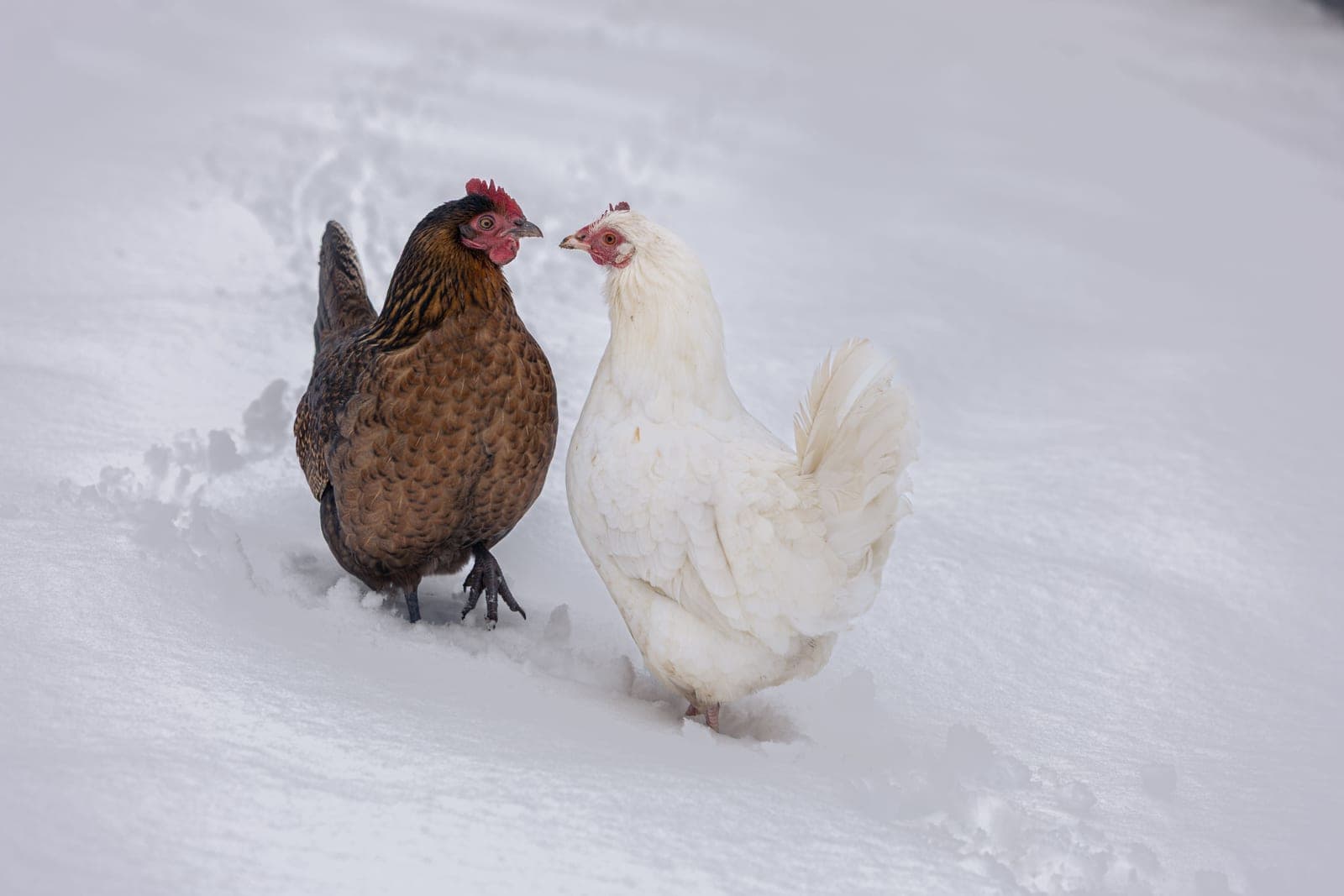
Chicken coops for cold climates
Cold-climate coops ranked on the things that matter below freezing - dryness, roof geometry, ventilation and floor area per bird.
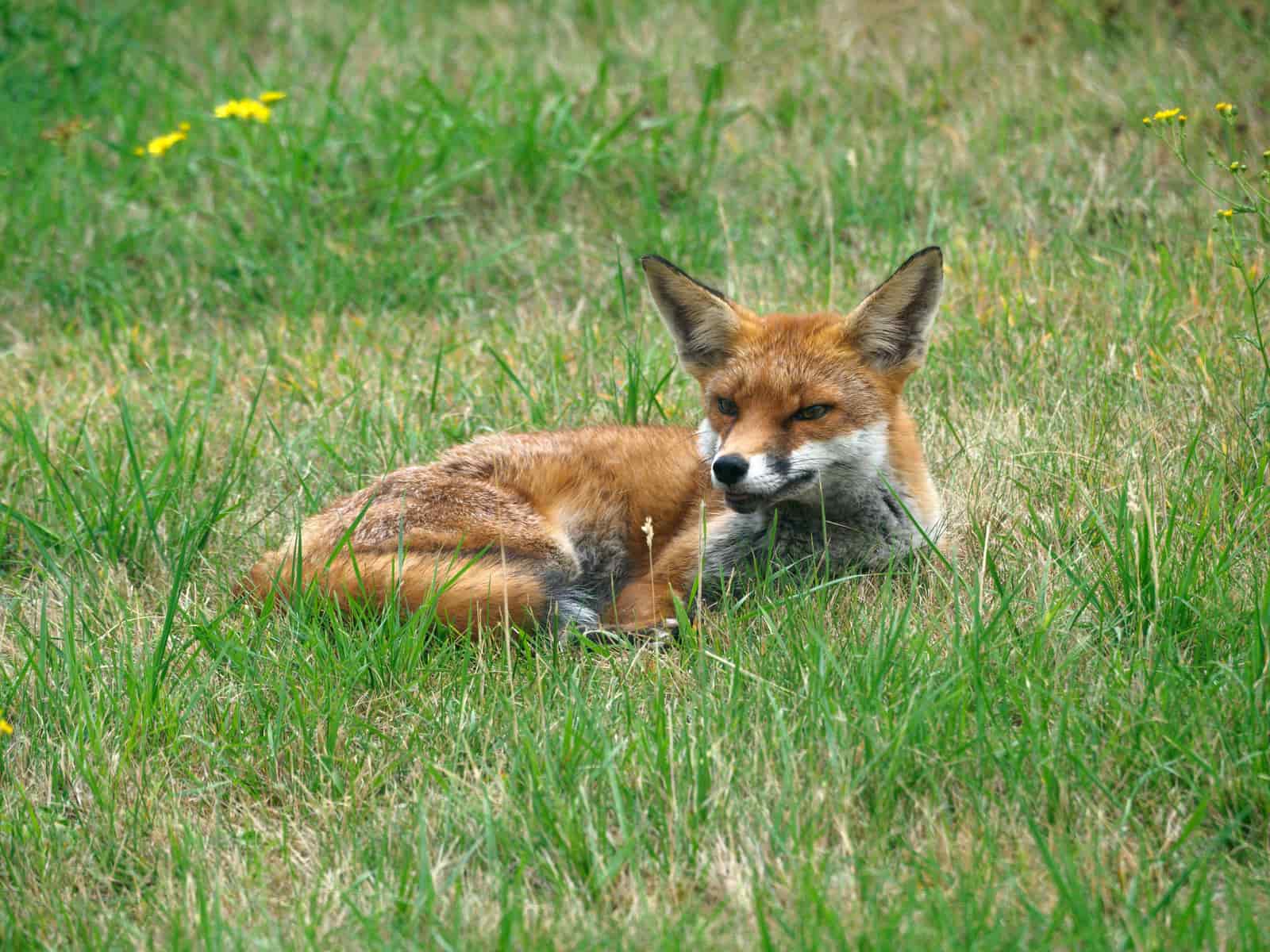
The closest thing to a predator-proof coop
The coops with the best security starting point, each listed with the exact upgrade it still requires before birds go in.