Chicken coops for wet climates
Cold gets all the attention and rain does more damage. Persistent wet is what rots a coop, caps the litter and turns a run into mud you cannot fix.
We have not handled these coops, and we do not pretend to have. Here is what we did instead. Links to Amazon earn us a commission at no extra cost to you - disclosure.

| # | Coop | Best for | Honest count | Price |
|---|---|---|---|---|
| 1 | 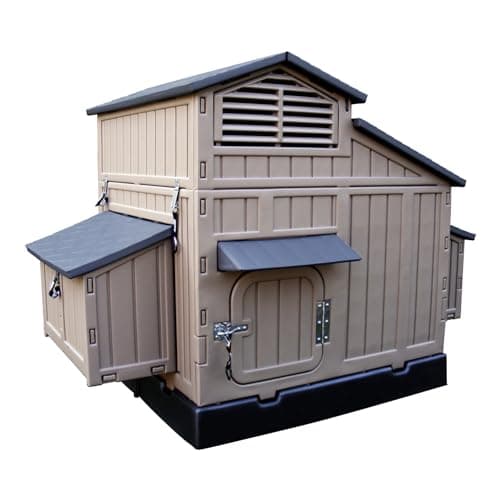 Hatching Time Formex Snap Lock Large Chicken CoopTop pickThe one coop here whose material genuinely earns its price, sized for four hens rather than the six on the box. | Cleaning, and cold that stays out | 4box says 6 | |
| 2 | 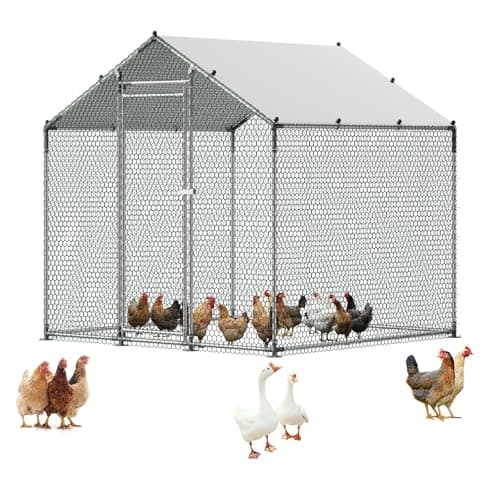 VEVOR Metal Walk-In Run, Spire Roof43 sq ft under a spire roof - the pitched cover is the reason to pick it over a flat-topped run. | Shedding snow and rain off a run | 10no claim made | |
| 3 | 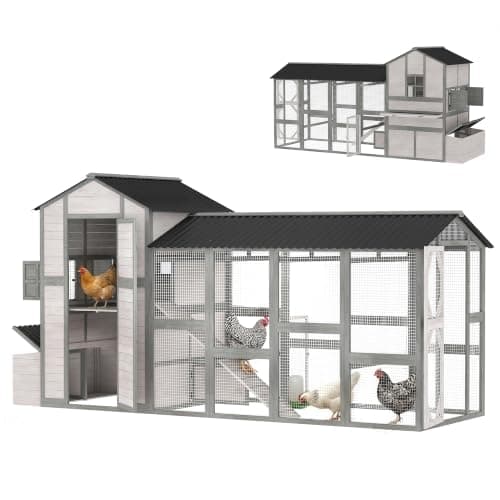 PawHut 147" Extra Large Wooden Hen House51.6 sq ft against a claim of eight to ten hens. It is the only coop on this site with real headroom over its own marketing. | The rare coop that beats its own claim | 12box says 10 | |
| 4 | 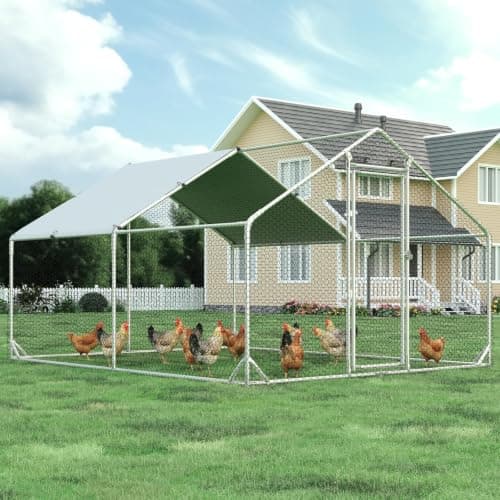 4ever2buy Metal Chicken Coop, 10x13 FT Walk-In Run128.4 sq ft of walk-in enclosure wrapped in galvanized hardware cloth - the largest ground area on this site, and a cover included. | A genuine walk-in enclosure | 32box says 15 | |
| 5 | 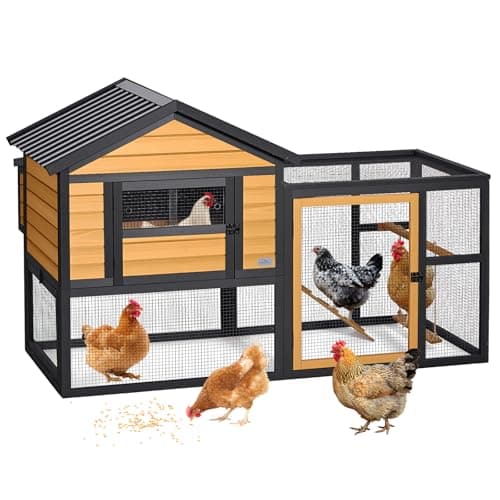 Petsfit Outdoor Coop with Run20.7 sq ft against a claim of six - one bird out, which makes it one of the more honest small coops here. | Five hens, honestly | 5box says 6 |
The Pacific Northwest, the Gulf coast, the upper Midwest in spring - a lot of the country has months where the ground simply never dries out. That is a different problem from a hard freeze and it gets far less coverage, largely because it is undramatic. Nothing fails overnight. It just gets slowly worse.
The birds are mostly fine. Feathers shed water, and a hen will stand in drizzle by choice. What does the damage is everything downstream of persistent wet: litter that cannot dry, ground that turns to mud, and a base rail sitting in it.
What wet actually costs you
- Damp litter, which is the direct cause of ammonia at bird height and the respiratory trouble that follows. This is the one that matters most and it is invisible from the doorway - crouch down.
- A rotting base. Untreated fir in contact with permanently wet ground is a coop with a three-to-six season life, and the base rail is what fails.
- Mud in the run. Once the grass is gone the ground stays bare, holds water, and gets tracked into the coop on the birds' feet, which brings the wet indoors.
- Parasite and bacterial pressure, both of which do better in warm damp ground than in dry.
- Red mite, which prefers damp timber and finds plenty of it.
What actually helps, in order
Site first, then material, then geometry. Siting is free and permanent, and it is the one thing you cannot fix later - where to put a coop puts drainage at the top of its list for exactly this reason.
| Feature | What it does | Worth it? |
|---|---|---|
| High, well-draining ground | Stops the problem existing | The single biggest lever, and free |
| Coop raised on slabs or legs | Keeps the base out of standing water | Adds seasons to a fir coop for a few dollars |
| Non-absorbent material | No rot pathway, no damp end grain | The strongest material argument there is |
| Roof overhang | Keeps rain off the walls and out of vents | Underrated - check it on any listing |
| Pitched or spire roof over the run | Sheds rather than pooling or collecting snow | Essential on any covered run |
| Covered run | Keeps the run floor dry and usable | Fixes mud and stops hawks at the same time |
| Coarse wood chips on the run floor | Drains, resists compaction, composts down | Cheap and effective on bare ground |
Bedding choice changes in a wet climate
Sand is a good answer in a dry climate and a poor one here - it holds water, sets, and stops draining. Pine shavings or hemp both absorb and can be turned and topped up, which is what deep litter needs to work. The bedding comparison judges every material on moisture rather than price per bag, which is the right axis for this problem.
Whatever you use, deal with a wet patch the day you find it rather than adding fresh bedding on top. A wet layer under a dry one keeps working on the floor underneath.
What we looked for
- A material that does not absorb, or one whose base can be kept clear of the ground.
- A roof that sheds water away from the walls, with an overhang rather than a flush edge.
- On covered runs, a pitched or spire roof rather than a flat span that pools.
- A raised henhouse where the format allows it, so the enclosed floor is not sitting on wet soil.
- Enough vent area high on the walls to keep drying the interior, and vents positioned where driving rain will not enter them.
- The usual measured floor area, because a wet climate is exactly when a flock spends more time indoors and a marginal coop stops being marginal.
The ranked picks
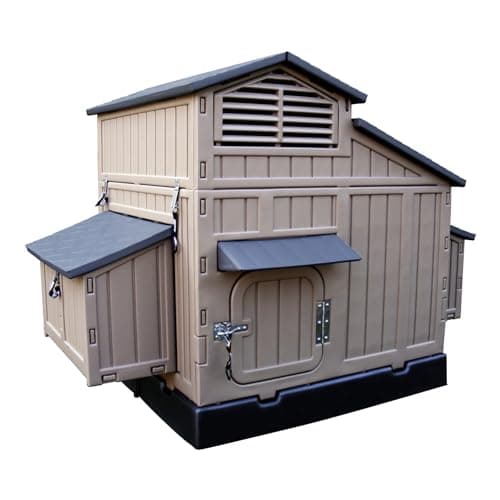
Top pick · Cleaning, and cold that stays out
Hatching Time Formex Snap Lock Large Chicken Coop
The one coop here whose material genuinely earns its price, sized for four hens rather than the six on the box.
What the numbers say
64in x 39in = 17.3 sq ft of enclosed henhouse floor. At 4 sq ft per standard hen that is 4 birds, against a claim of 6.
Figures from Hatching Time published specifications (Amazon listing) · 64"L x 39"W x 42"H · Double-walled polyethylene
This is a standalone henhouse with no attached run, so the published footprint is all enclosed floor. That makes it one of the few coops on this site where the generous reading and the honest reading are the same number.
17.3 sq ft supports four standard hens at the 4 sq ft figure. The listing says four to six. Four is right; six is a winter of pecked backs.
Double-walled polyethylene is the reason to buy it. There is no end grain to rot, no seam for mites to colonize, and it hoses out in minutes - the single biggest practical difference between a coop you keep clean and one you avoid.
Good
- Whole footprint is enclosed floor, not run
- Double-walled plastic will not rot, absorb, or harbor mites the way fir does
- Panels unclip for cleaning without tools
Not so good
- Costs more than the wooden coops it outlasts
- No run included, so budget for one
- Plastic walls hold no insulation value on their own
Skip this if: you want a coop and run in one purchase. This is a henhouse only, and pairing it with a run pushes the total past most wooden coop-plus-run kits.
#ad · how this is funded · price as of October 20, 2026
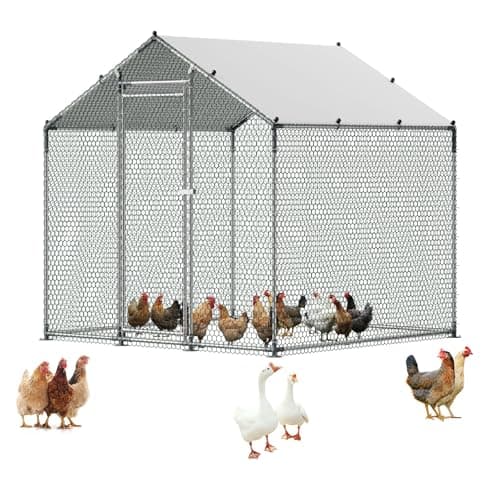
Pick 2 · Shedding snow and rain off a run
VEVOR Metal Walk-In Run, Spire Roof
43 sq ft under a spire roof - the pitched cover is the reason to pick it over a flat-topped run.
What the numbers say
78.72in x 78.72in = 43 sq ft of whole-unit footprint, which includes the attached run and is therefore generous. At 4 sq ft per standard hen that is 10 birds. The maker publishes no bird count of its own to compare against.
Figures from VEVOR published specifications (Amazon listing) · 78.72"L x 78.72"W x 78.72"H · High-carbon steel
43 sq ft in a perfect square, which is the most efficient shape for a given perimeter of frame.
The spire roof is the differentiator. Flat-covered runs pool water and collapse under wet snow; a pitched cover sheds both.
No bird count is claimed, which is correct for an enclosure.
Good
- Pitched roof sheds snow and standing water
- Square footprint is frame-efficient
- Security lock included
Not so good
- A run, not a coop
- Cover material will degrade before the frame does
- 6.5ft square is smaller than it sounds once a henhouse is inside
Skip this if: you get heavy snow loads. A spire helps, but no fabric-covered run is a substitute for a rigid roof where snow sits.
#ad · how this is funded · price as of October 20, 2026
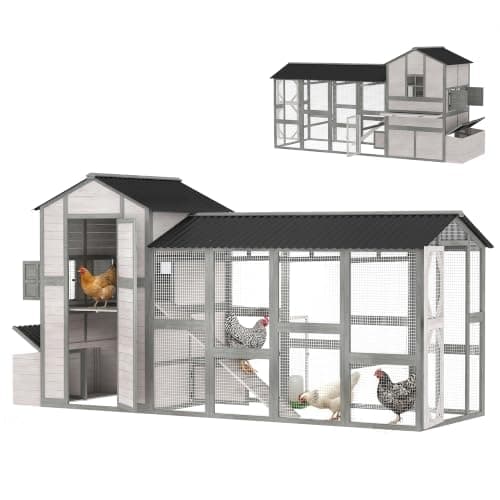
Pick 3 · The rare coop that beats its own claim
PawHut 147" Extra Large Wooden Hen House
51.6 sq ft against a claim of eight to ten hens. It is the only coop on this site with real headroom over its own marketing.
What the numbers say
146.9in x 50.6in = 51.6 sq ft of whole-unit footprint, which includes the attached run and is therefore generous. At 4 sq ft per standard hen that is 12 birds, against a claim of 10.
Figures from PawHut published specifications (Amazon listing) · 146.9"L x 50.6"W x 73.6"H · Fir and plastic
51.6 sq ft of whole-unit footprint supports twelve standard hens at 4 sq ft each. PawHut claims eight to ten. It is the only coop in this research pass that under-claims.
That matters more than it sounds. Every other maker here is asking you to trust a number that its own dimensions contradict; this one leaves you room.
At 73.6in tall it is genuinely walk-in at the run end, which changes daily keeping more than any feature on the spec sheet.
Good
- Beats its own claim - 12 hens of floor against a claim of 10
- Walk-in height at the run end makes cleaning tolerable
- Large enough to be the last coop you buy for a while
Not so good
- 12ft of yard is a real commitment
- Fir and plastic, so expect maintenance
- Assembly is a long afternoon with two people
Skip this if: your yard cannot give up a 12ft run of ground, or if you are keeping three or four hens - you would be heating and cleaning space nobody uses.
#ad · how this is funded · price as of October 20, 2026
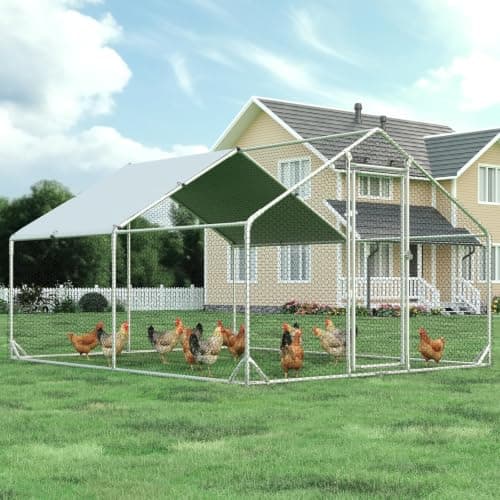
Pick 4 · A genuine walk-in enclosure
4ever2buy Metal Chicken Coop, 10x13 FT Walk-In Run
128.4 sq ft of walk-in enclosure wrapped in galvanized hardware cloth - the largest ground area on this site, and a cover included.
What the numbers say
157.2in x 117.6in = 128.4 sq ft of whole-unit footprint, which includes the attached run and is therefore generous. At 4 sq ft per standard hen that is 32 birds, against a claim of 15.
Figures from 4ever2buy published specifications (Amazon listing) · 157.2"L x 117.6"W x 76.8"H (10 x 13 ft) · Rust-resistant steel frame with galvanized hardware cloth
128.4 sq ft is the largest ground area on this site by a wide margin - more than twice the next biggest.
The listing claims room for 12 to 15 chickens. Read as run space at the published 8 sq ft a bird that is about 16, so the claim is reasonable - which is unusual enough here to say out loud. The bird column in our table divides by the 4 sq ft indoor figure, and that is the wrong measure for an enclosure with no henhouse in it.
Fully wrapped in galvanized hardware cloth rather than chicken wire is the specification that matters. Chicken wire keeps chickens in; hardware cloth keeps raccoons out, and they are not the same job.
A waterproof anti-UV cover is included, which is the detail that keeps the ground under it usable through a wet season.
Good
- Galvanized hardware cloth all round, not chicken wire
- 76.8in height is a true walk-in at 6.4 ft
- Waterproof cover included rather than sold separately
Not so good
- It is a run, not a coop - you still need a henhouse
- 13ft x 10ft needs serious yard space
- The 12-15 bird claim only holds as run space, never as roosting room
Skip this if: you expected a coop. There is no insulated, enclosed house in it, and birds cannot roost in a run overnight safely in most climates.
#ad · how this is funded · price as of October 20, 2026
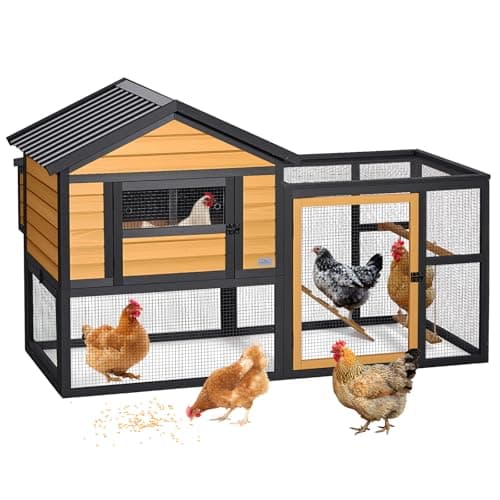
Pick 5 · Five hens, honestly
Petsfit Outdoor Coop with Run
20.7 sq ft against a claim of six - one bird out, which makes it one of the more honest small coops here.
What the numbers say
71in x 42in = 20.7 sq ft of whole-unit footprint, which includes the attached run and is therefore generous. At 4 sq ft per standard hen that is 5 birds, against a claim of 6.
Figures from Petsfit published specifications (Amazon listing) · 71"L x 42"W x 45"H · Fir
20.7 sq ft supports five standard hens. Petsfit claims four to six, so the arithmetic sits inside its stated range rather than outside it.
The 42in depth is why. Among the small coops on this site, depth is almost perfectly predictive of whether the claim survives contact with a tape measure.
Three nesting boxes for five hens is more than the one-per-four guidance requires, but not wastefully so.
Good
- Arithmetic lands inside the claimed range
- 42in depth is generous for this size class
- Predator-resistant hardware noted in the listing specification
Not so good
- Six is one bird past the floor
- Fir needs seasonal re-treating
- 45in height means stooping to clean
Skip this if: you are set on six birds. Five is what it holds, and the sixth is the one that gets pecked.
#ad · how this is funded · price as of October 20, 2026
Measured against the claims
| Coop | Published size | Floor area | Maker says | Arithmetic says |
|---|---|---|---|---|
| Hatching Time Formex Snap Lock Large Chicken Coop | 64"L x 39"W x 42"H | 17.3 sq ft | 6 hens | 4 hens |
| VEVOR Metal Walk-In Run, Spire Roof | 78.72"L x 78.72"W x 78.72"H | 43 sq ft | no claim | 10 hens |
| PawHut 147" Extra Large Wooden Hen House | 146.9"L x 50.6"W x 73.6"H | 51.6 sq ft | 10 hens | 12 hens |
| 4ever2buy Metal Chicken Coop, 10x13 FT Walk-In Run | 157.2"L x 117.6"W x 76.8"H (10 x 13 ft) | 128.4 sq ft | 15 hens | 32 hens |
| Petsfit Outdoor Coop with Run | 71"L x 42"W x 45"H | 20.7 sq ft | 6 hens | 5 hens |
Floor area is the maker’s published footprint. Where a unit includes an attached run that figure spans the run too, which makes it a generous reading - the enclosed roosting floor is smaller still. How we work these out.
Note the last point in the criteria list showing up in the table. In a climate where birds are shut in or under cover for weeks at a time, the gap between a coop's claim and its measured floor stops being an abstract complaint and becomes the thing that decides whether the litter stays manageable.
Questions people actually ask
+Can chickens stay out in the rain?
+How do I stop my chicken run turning into mud?
+What is the best coop material for a rainy climate?
+Should I close up the coop when it rains?
+Is sand good bedding for a wet climate?
Sources
Read next
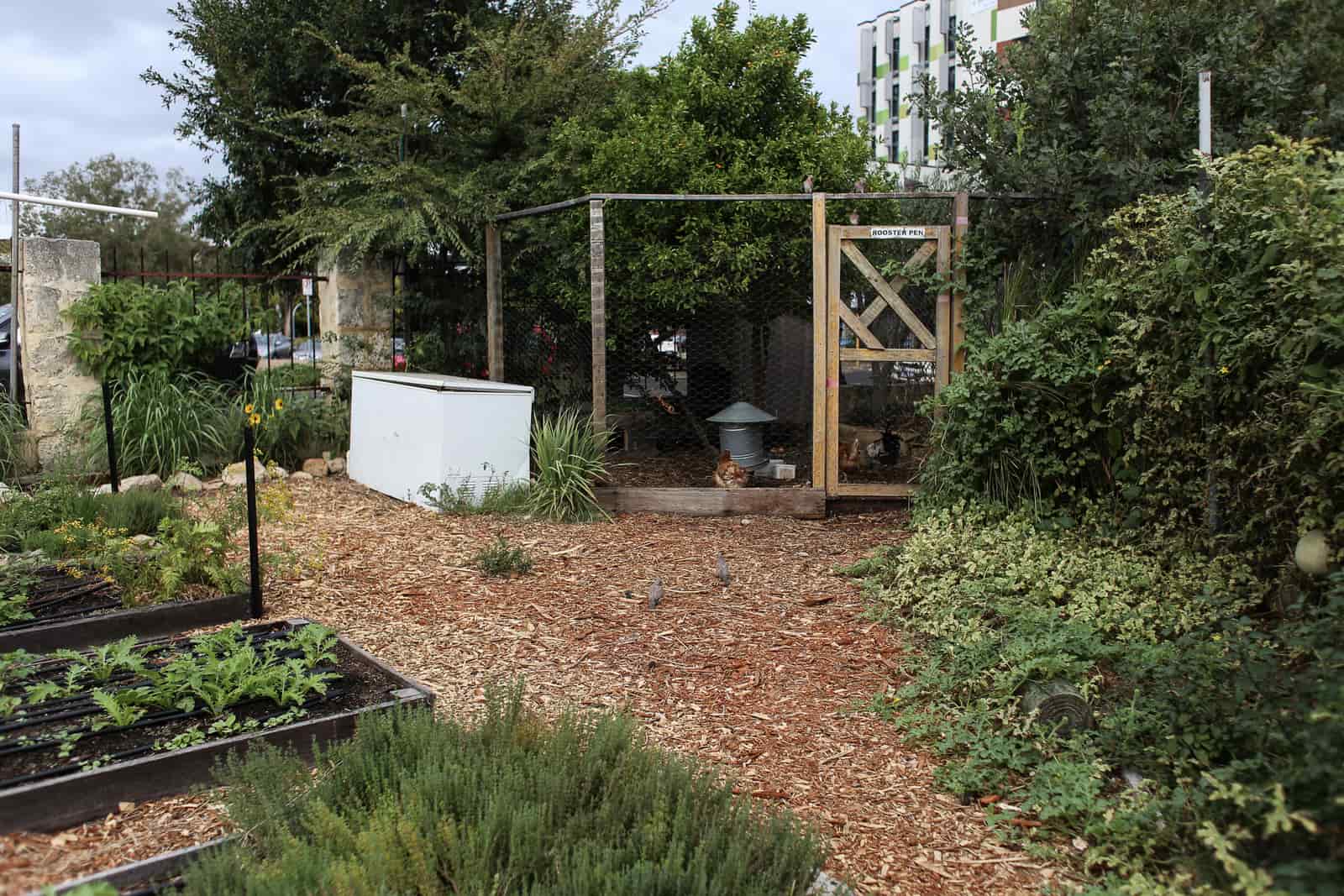
Where to put the coop
The siting order that matters - drainage, sun, wind, access - and the mistakes that no amount of good husbandry fixes.
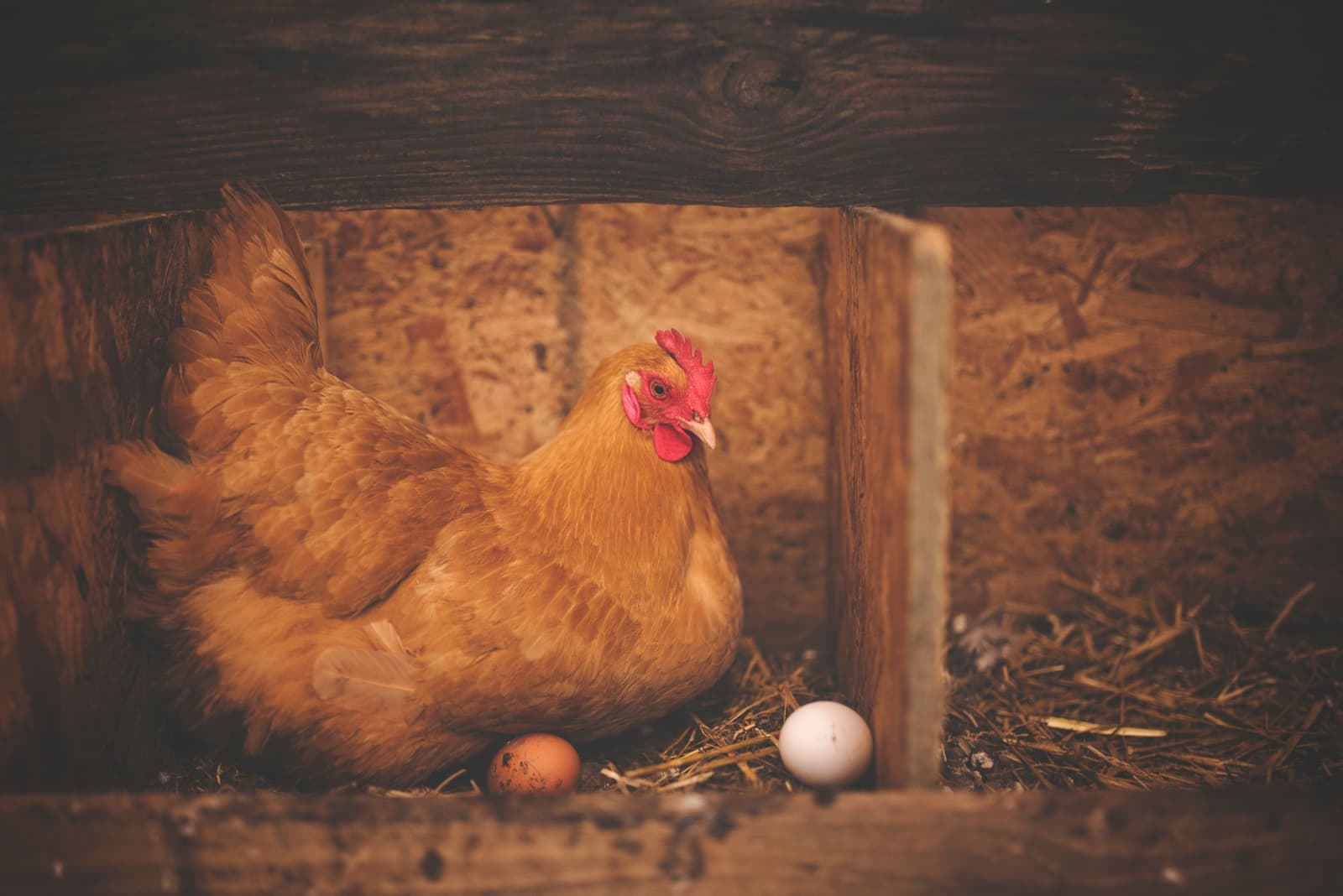
Coop bedding, judged on moisture
Shavings, straw, sand and hemp compared on absorbency and running cost, plus how the deep litter method actually works.
Climate, ventilation and the season problem
Why moisture rather than cold decides winter outcomes, what changes in heat, and the coops and gear that suit each climate.
Ventilation, not insulation
Why sealing a coop causes frostbite, where vents belong, and how to tell whether yours has enough.
Plastic chicken coops
Double-walled polyethylene coops measured and assessed - the format with the best material argument and the thinnest choice.
Chicken coops for cold climates
Cold-climate coops ranked on the things that matter below freezing - dryness, roof geometry, ventilation and floor area per bird.