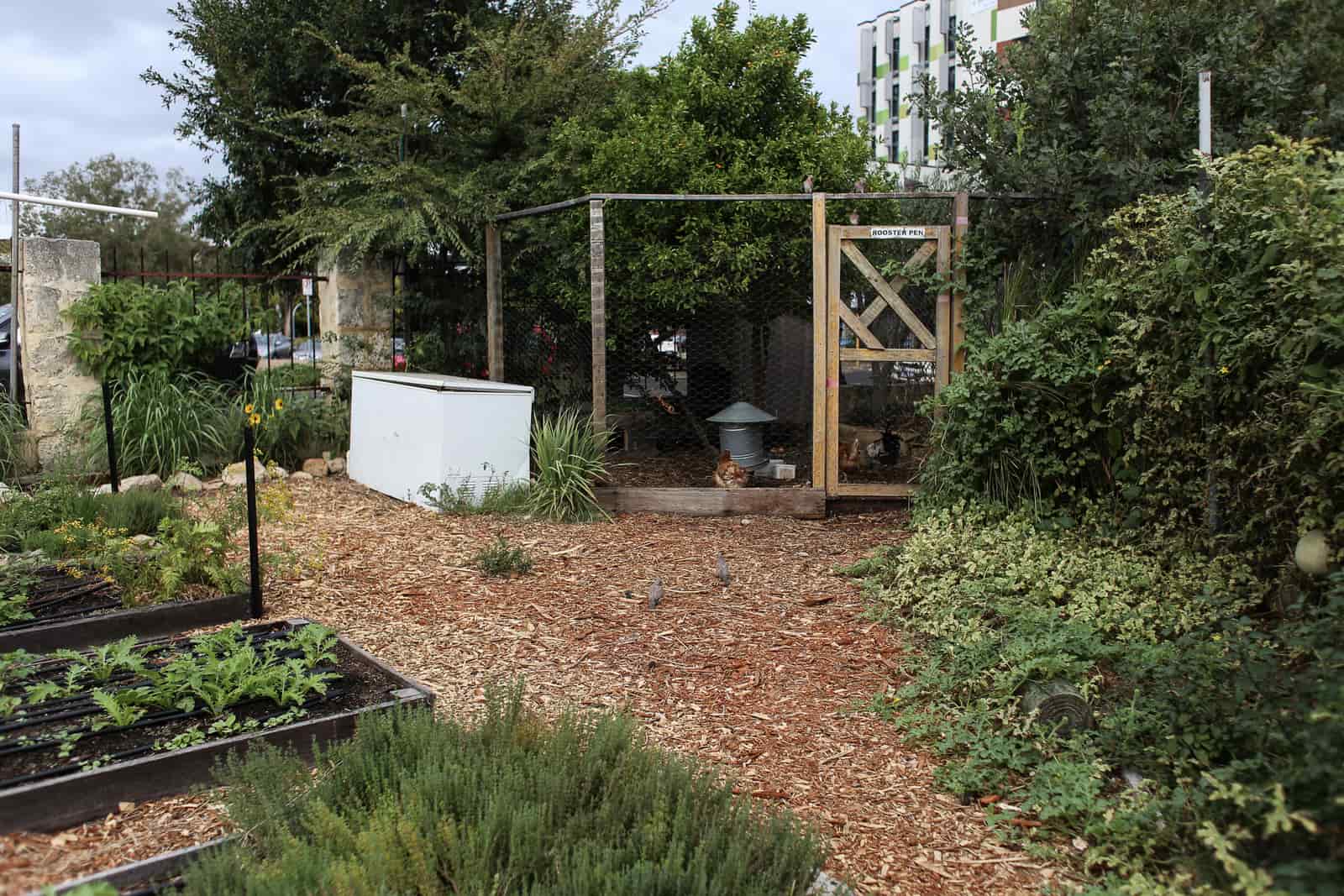
Where to put the coop
Drainage first. Everything else on this list can be adjusted later, and a coop in a wet corner cannot.
We have not handled these coops, and we do not pretend to have. Here is what we did instead. Links to Amazon earn us a commission at no extra cost to you - disclosure.
| # | Coop | Best for | Honest count | Price |
|---|---|---|---|---|
| 1 | 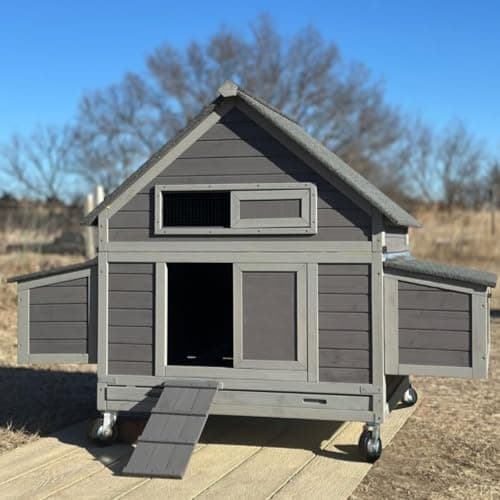 GUTINNEEN Mobile Coop on WheelsTop pick18.7 sq ft against a claim of eight. Four hens, and the best depth of any tractor here. | Four hens on the move | 4box says 8 | |
| 2 | 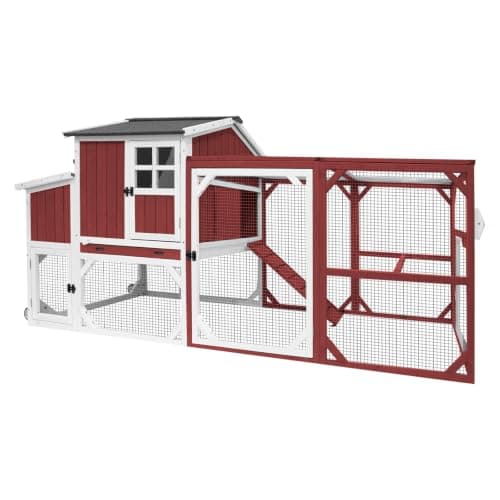 Pawbuilt 95.3" Coop with Run and Wheels20.8 sq ft against a claim of six, so five hens - and the wheels mean the grass underneath survives. | Moving the flock around the yard | 5box says 6 | Check price#ad |
Siting gets decided in about a minute, usually on the basis of where there is a gap, and then lived with for years. It is worth ten minutes instead, because one of the four criteria below is effectively permanent.
One: drainage
The highest ground you have, or the best-draining. A run that puddles is mud for half the year, and mud means constantly wet feet, wet litter tracked into the coop, and a rotting coop base. It is also the hardest thing to fix afterward - you can add shade, you can build a windbreak, and you cannot easily move water uphill.
If your only option is flat or low, build the site up rather than moving the coop: a gravel pad, coarse wood chips over the run floor, and the coop itself raised on slabs or bricks. That combination handles a lot of water.
Two: sun and shade
Morning sun and afternoon shade is the ideal. Morning sun dries the run and gets birds moving; afternoon shade is what stands between a flock and heat stress in July, and shade matters more than sun does because heat kills faster than cold. A deciduous tree does both jobs by itself, giving shade in summer and light in winter.
Three: wind
Put the coop's solid side into the prevailing wind and its vents on the sheltered side, so ventilation does not become a draft in every storm. A fence, hedge or building on the windward side is worth a great deal in winter. Avoid the bottom of a slope, where cold air settles and stays.
Four: your own access
- Close enough that you will go out in the rain, in the dark, in February. Coops at the bottom of the yard get visited less, and less is where problems start.
- On a path you can push a wheelbarrow along - the litter has to come out somehow.
- Within reach of water. Carrying water in winter is the chore that makes people give up on the whole enterprise.
- Within sight of a window if you can. You will notice a problem days sooner.
- Not directly under trees that drop branches, and not where roof runoff lands on the run.
- If your whole site is wet rather than just one corner, coops for wet climates covers what survives it.
Neighbors
Where practical, keep the coop away from a shared boundary and particularly away from a neighbor's windows. Most complaints about backyard flocks are about smell and rodents, both of which are management problems - but distance takes the edge off both and is free at the point of siting.
If your site is genuinely bad
A mobile coop sidesteps the problem: you move it off wet ground when the ground is wet and onto it when it dries, and you never let one patch get worn out. The trade is floor area - three or four birds is the ceiling for the format - and it is a reasonable trade if the alternative is a permanent coop on ground that never drains.
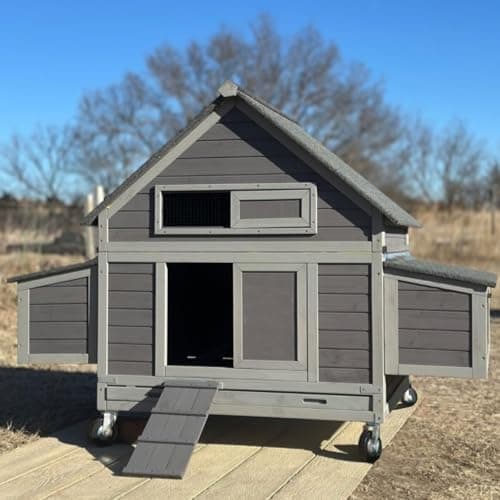
Top pick · Four hens on the move
GUTINNEEN Mobile Coop on Wheels
18.7 sq ft against a claim of eight. Four hens, and the best depth of any tractor here.
What the numbers say
67.3in x 40in = 18.7 sq ft of whole-unit footprint, which includes the attached run and is therefore generous. At 4 sq ft per standard hen that is 4 birds, against a claim of 8.
Figures from GUTINNEEN published specifications (Amazon listing) · 67.3"L x 40"W x 49.75"H · Wood
18.7 sq ft supports four standard hens. The claim is six to eight.
At 40 inches this is by some margin the deepest mobile coop in the research pass, and it is why it holds four birds in only 67in of length while the 82in Aivituvin holds three.
Six nesting boxes for four hens is again more than the one-per-four guidance calls for.
Good
- 40in depth is the best of any tractor here
- More floor in less length than its wheeled rivals
- Weatherproof build with a proper roof
Not so good
- Eight is double the honest count
- Six nest boxes for four hens
- Heavier to move than the narrow tractors
Skip this if: you need to move it daily on your own. The extra depth that makes it good is also what makes it heavy.
#ad · how this is funded · price as of October 17, 2026
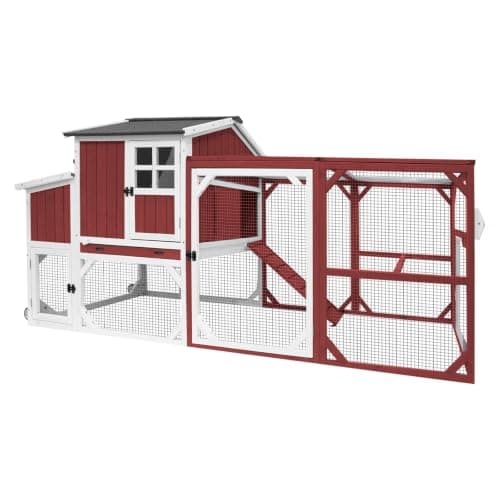
Pick 2 · Moving the flock around the yard
Pawbuilt 95.3" Coop with Run and Wheels
20.8 sq ft against a claim of six, so five hens - and the wheels mean the grass underneath survives.
What the numbers say
95.3in x 31.5in = 20.8 sq ft of whole-unit footprint, which includes the attached run and is therefore generous. At 4 sq ft per standard hen that is 5 birds, against a claim of 6.
Figures from Pawbuilt published specifications (Amazon listing) · 95.3"L x 31.5"W x 44.9"H · Asphalt, fir, metal and wood
20.8 sq ft is five standard hens against a claim of three to six. The bottom of the range is comfortable; the top is one bird optimistic.
The three-compartment nesting box is more than five hens need. One box per four birds is the published guidance.
The wheels are the point. A stationary run of this size turns to bare mud within a season; a moved one does not.
Good
- Wheels genuinely work at this size and weight
- Pull-out tray under the house end
- Comfortable at the middle of its claimed range
Not so good
- Six is one past the floor area
- 31.5in depth is narrow for the length
- Asphalt roof adds weight to something meant to move
Skip this if: the ground is uneven or sloped. Wheeled coops need reasonably flat ground, otherwise the frame racks and the doors stop closing square.
Questions people actually ask
+Where is the best place to put a chicken coop?
+Should a chicken coop be in sun or shade?
+How far should a coop be from the house?
+Can I put a chicken coop on grass?
Sources
Read next

Permits, zoning and the questions to ask first
What to ask your city, county and HOA before buying a coop, and why nobody online can tell you the answer for your address.
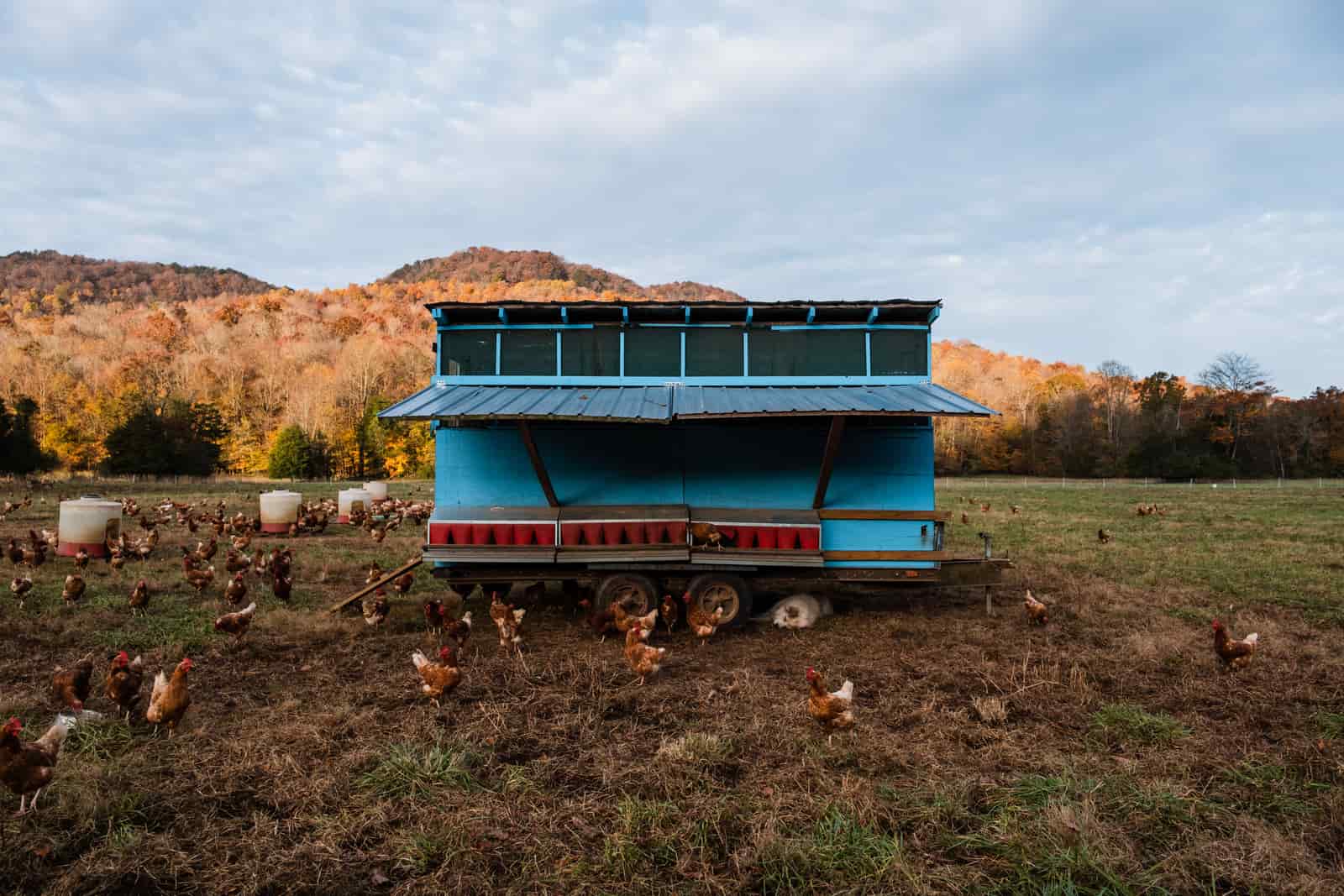
Mobile chicken coops and tractors
Wheeled coops and tractors ranked on measured area, with the honest three-to-four-bird ceiling stated rather than buried.
Chicken coops for hot climates
Coops and gear for genuine heat, ranked on airflow and shade rather than on how well they seal.

Ventilation, not insulation
Why sealing a coop causes frostbite, where vents belong, and how to tell whether yours has enough.
Guides, and the arithmetic behind them
The reference library: sizing arithmetic, ventilation, predator-proofing, bedding, cost and the permits nobody checks first.
A cleaning routine you will actually keep
Daily, weekly and seasonal jobs sized so they get done, plus the mite inspection nobody schedules until it is too late.