Ventilation, not insulation
The most common winter intervention is the one that causes the damage. Moisture is the variable, and it can only leave through an opening.
We have not handled these coops, and we do not pretend to have. Here is what we did instead. Links to Amazon earn us a commission at no extra cost to you - disclosure.
| # | Coop | Best for | Honest count | Price |
|---|---|---|---|---|
| 1 | 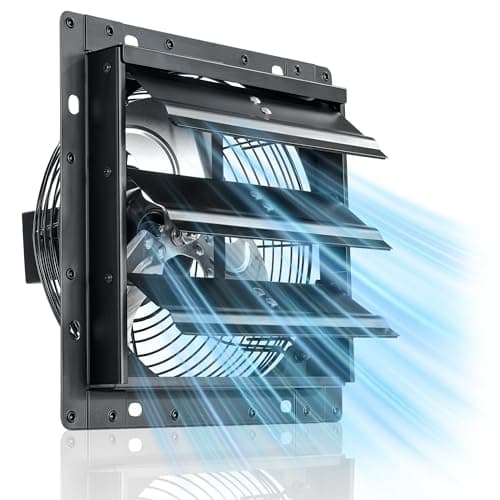 Generic 8in Shutter Exhaust Fan, 760 CFMTop pick760 CFM through an 8in shuttered opening. For hot climates this does more for the flock than any heater ever will. | Hot-climate summer ventilation | not published | |
| 2 | 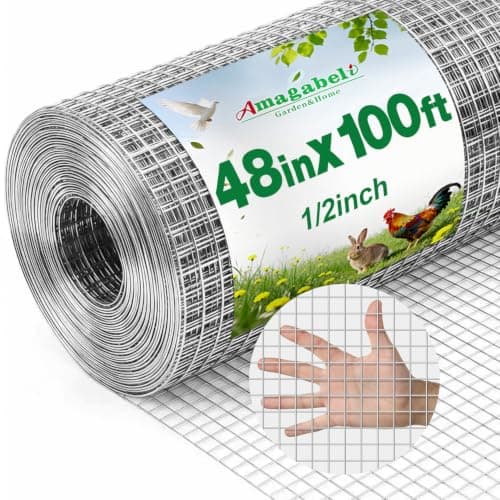 Amagabeli 1/2" Hardware Cloth, 48in x 100ftHalf-inch aperture, 19 gauge, hot-dipped galvanized after welding. This is the specification that actually keeps raccoons out. | The single most important predator purchase | not published |
If there is one thing on this site worth taking away, it is this: a cold coop is not the problem, a damp one is. A hen is well equipped for cold air and poorly equipped for standing in humidity while it condenses on the bare skin of her comb.
Where the moisture comes from
From the birds. Droppings are mostly water, and a flock produces them all night directly beneath the roost. Respiration adds more. In a coop sealed against the cold, that water has nowhere to go: it saturates the air, condenses on the coldest surfaces - the walls, and the birds' combs and wattles - and stays.
That is why well-ventilated coops in genuinely cold climates routinely see less frostbite than sealed coops in milder ones. The mechanism is moisture on skin in freezing air, and the only way to remove moisture from a closed box is to let air out of it.
Ventilation against drafts
| Opening | Position | Effect |
|---|---|---|
| Vent | High on the wall, above roost height | Warm moist air rises and leaves. Birds feel nothing. |
| Draft | At or below roost height | Air moves across roosting birds and strips warmth. |
| Winter | Close the low ones, keep the high ones open | Moisture out, no wind on the flock. |
| Summer | Open everything, add cross-flow | Heat leaves. Airflow is the only cooling lever birds have. |
How much opening
More than most coops ship with, and the practical test is condition rather than a number. Go out on a cold morning and look:
- Frost or condensation on the inside of the walls means not enough ventilation.
- An ammonia smell at bird height - crouch down, do not judge from the doorway - means not enough ventilation, or litter that needs changing, usually both.
- Damp, capped litter under the roost that does not dry out means not enough ventilation.
- Air moving noticeably across the roost bar means you have a draft rather than a vent, and it needs blocking at that level.
- Dry walls, dry litter, no smell, still air at roost height: correct.
Where to put them
High on the walls, near the eaves or under a roof overhang so rain does not drive in. On more than one side if you can, because air needs an inlet as well as an outlet. On the sheltered side if your site has a prevailing wind - see where to put a coop.
What about insulation
In most of the country, skip it. Insulation reduces airflow and traps the moisture that causes the damage, and the only heat source it can retain is the birds. Block drafts at roost level, keep the high vents open, and keep the litter deep and dry - those three do more than insulation in almost every US climate. In genuinely extreme cold, insulate only alongside more ventilation, never instead of it.
Do not deodorize the diagnostic
One thing worth saying before the hardware: if the coop smells of ammonia, that smell is the information. Spraying a scented deodorizer over it removes the readout and leaves the fault in place, and the smell returns because nothing about the moisture has changed. Coop cleaners covers which products are honest about that and which are masking.
Hardware that helps
Top pick · Hot-climate summer ventilation
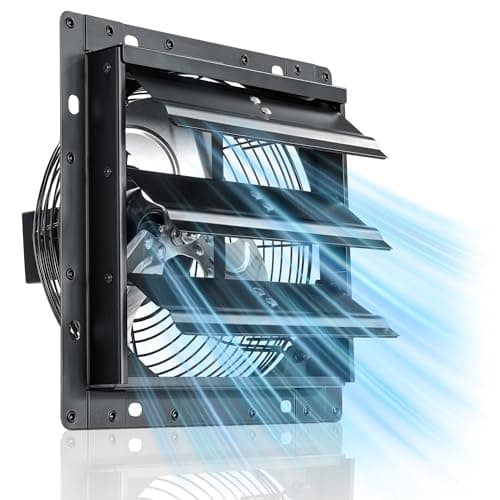
Generic 8in Shutter Exhaust Fan, 760 CFM
760 CFM through an 8in shuttered opening. For hot climates this does more for the flock than any heater ever will.
What the numbers say
The manufacturer does not publish the dimensions this calculation needs, so we do not print a number.
Figures from Generic published specifications (Amazon listing)
Heat kills far more backyard birds than cold does. A fan is the hot-climate equivalent of a coop heater, and it is more often the right purchase.
The shutter matters: it closes when the fan is off, so the same opening is not a winter draft.
760 CFM is generous for a backyard coop, which means it can run at lower speed and quieter for the same effect.
Good
- Shutter closes off the opening when not running
- Generous airflow for a backyard-sized coop
- Plug-and-play rather than hard-wired
Not so good
- Needs mains power at the coop
- Cutting an 8in opening is irreversible
- Dust needs clearing off the blades periodically
Skip this if: your summers are mild or your coop is well shaded and cross-ventilated. Passive ventilation solves most cases without a fan.
#ad · how this is funded · price as of October 17, 2026
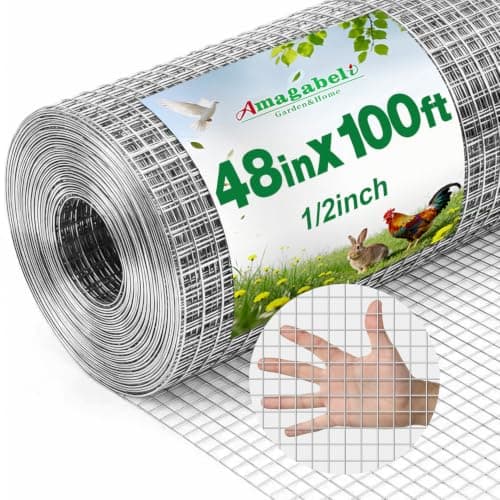
Pick 2 · The single most important predator purchase
Amagabeli 1/2" Hardware Cloth, 48in x 100ft
Half-inch aperture, 19 gauge, hot-dipped galvanized after welding. This is the specification that actually keeps raccoons out.
What the numbers say
The manufacturer does not publish the dimensions this calculation needs, so we do not print a number.
Figures from Amagabeli published specifications (Amazon listing)
Half-inch aperture is the number that matters. A raccoon can reach through 1in mesh and a weasel walks through 1in chicken wire; half-inch stops both.
Galvanized AFTER welding, not before, is the second specification to check. Welding burns the coating off, so mesh galvanized beforehand rusts at every joint - which is exactly where it needs to hold.
19 gauge is the practical minimum for a coop perimeter. Thinner mesh sold as hardware cloth exists and bends open by hand.
Good
- Half-inch aperture excludes raccoons and weasels
- Hot-dipped galvanized after welding, so joints do not rust first
- 48in width covers most run walls in a single run
Not so good
- Cutting it is hard on the hands and on your snips
- 100ft is more than a small coop needs
- Edges are sharp and need capping or folding
Skip this if: only if you already have half-inch hardware cloth. Do not substitute chicken wire - it is a containment material, not a security one.
#ad · how this is funded · price as of October 17, 2026
Questions people actually ask
+Should I close coop vents in winter?
+How do I know if my coop has enough ventilation?
+Where should chicken coop vents be placed?
+Does a coop vent need to be covered?
+Will more ventilation make my coop too cold?
Sources
Read next
Climate, ventilation and the season problem
Why moisture rather than cold decides winter outcomes, what changes in heat, and the coops and gear that suit each climate.
Chicken coops for cold climates
Cold-climate coops ranked on the things that matter below freezing - dryness, roof geometry, ventilation and floor area per bird.
Coop fans and ventilation hardware
Vent placement, how much opening a coop needs, and when a powered shutter fan earns its wiring.
Chicken coops for hot climates
Coops and gear for genuine heat, ranked on airflow and shade rather than on how well they seal.
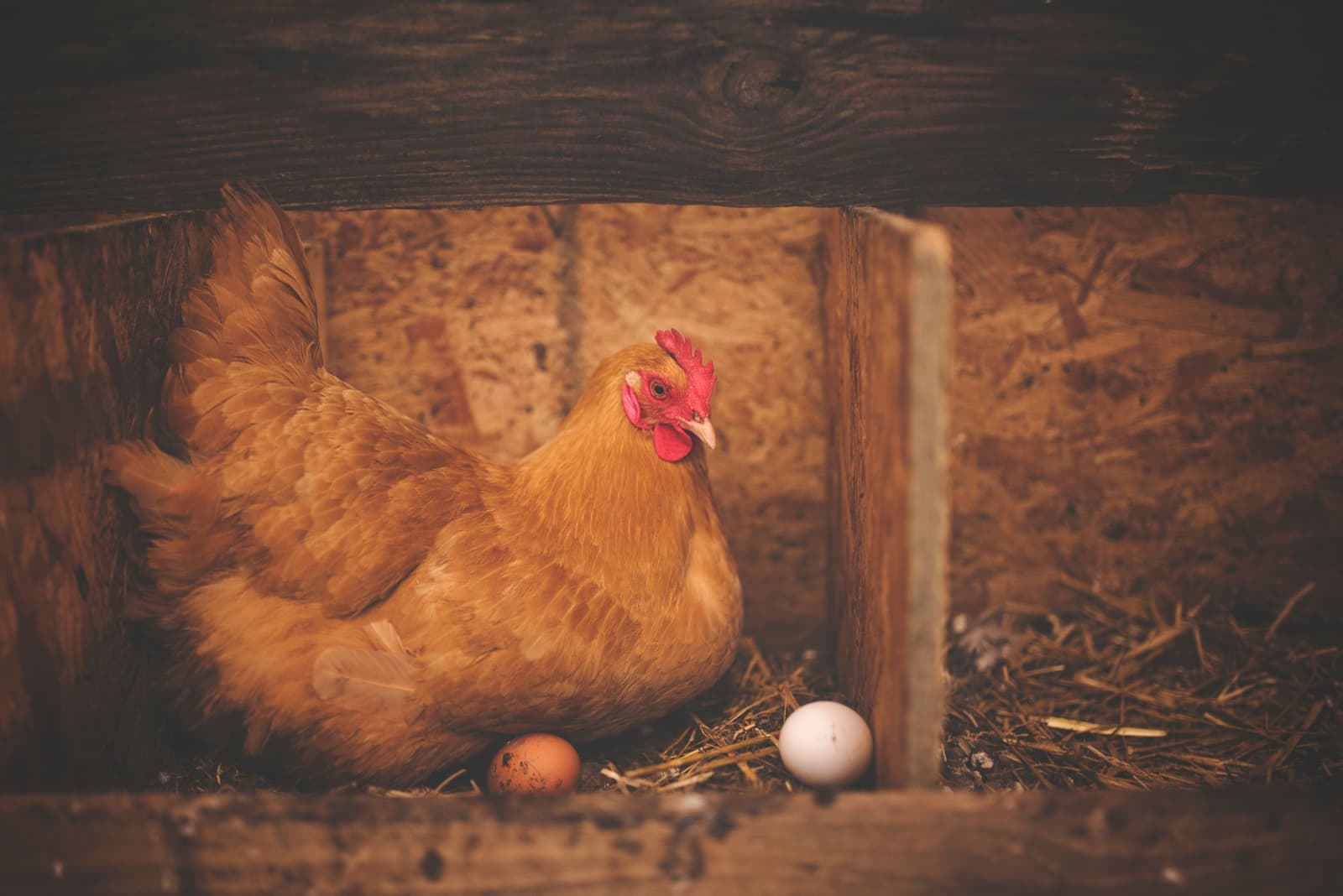
Coop bedding, judged on moisture
Shavings, straw, sand and hemp compared on absorbency and running cost, plus how the deep litter method actually works.
Guides, and the arithmetic behind them
The reference library: sizing arithmetic, ventilation, predator-proofing, bedding, cost and the permits nobody checks first.