Plastic against wood, in the cold
The question people ask is which one is warmer. The question that matters is which one stays dry.
We have not handled these coops, and we do not pretend to have. Here is what we did instead. Links to Amazon earn us a commission at no extra cost to you - disclosure.
| # | Coop | Best for | Honest count | Price |
|---|---|---|---|---|
| 1 | 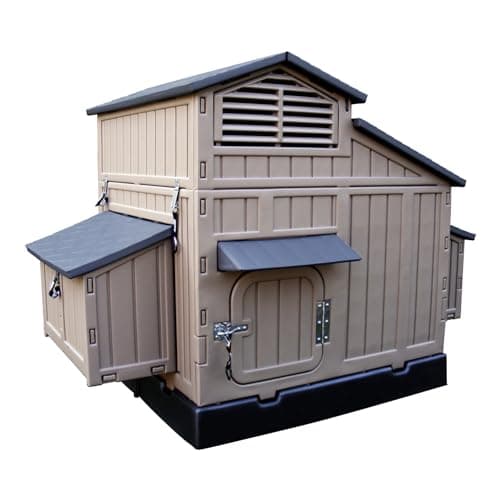 Hatching Time Formex Snap Lock Large Chicken CoopTop pickThe one coop here whose material genuinely earns its price, sized for four hens rather than the six on the box. | Cleaning, and cold that stays out | 4box says 6 | |
| 2 | 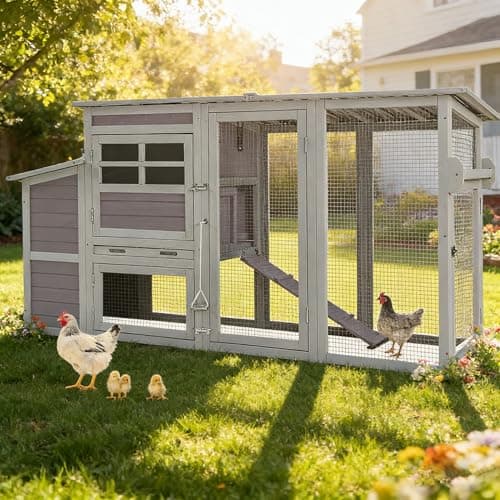 Aivituvin AIR31 Wooden Hen HouseWell made for the money and unusually honest by omission - Aivituvin publishes no bird count here at all. | A tidy two-hen setup in a small yard | 3no claim made |
Ask which coop material is warmer and you get an argument. Ask which one stays dry and the answer is clear, which is fortunate, because dryness is the variable that decides winter outcomes.
Warmth is not really on the table
A backyard coop is a small, ventilated box containing a handful of birds. The birds produce the heat. The ventilation - which you need, and which should stay open all winter - removes it along with the moisture. Under those conditions neither wood nor plastic holds a meaningful temperature advantage, and a double-walled plastic panel and a fir panel both end up close to ambient.
Where they genuinely differ
| Property | Double-walled polyethylene | Untreated fir |
|---|---|---|
| Absorbs moisture | No | Yes, especially at cut ends |
| Condensation behavior | Beads on the surface, wipes off | Soaks in and stays |
| Cleaning at freezing temperatures | Hoses or wipes down | Difficult once damp |
| Red mite harborage | Almost none - no cracks or grain | Cracks, joints and end grain |
| Rot at the base | None | The usual failure point |
| Cost | Higher up front | Lower up front |
| Lifespan | 10+ seasons | 3-6 seasons untreated |
The two coops compared
The Formex Snap Lock and the Aivituvin AIR31 are useful to put side by side because they are honest examples of each material at a similar size, and because their published measurements behave differently. The Formex publishes an enclosed henhouse footprint, so what you read is what the birds get. The Aivituvin publishes a whole-unit footprint that includes the open run under the raised house, so the enclosed portion is a fraction of the figure.
Top pick · Cleaning, and cold that stays out
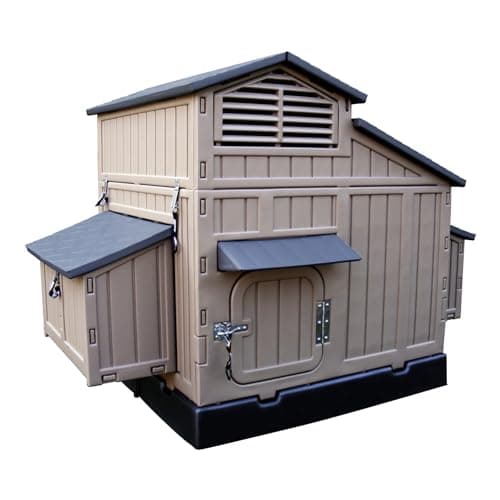
Hatching Time Formex Snap Lock Large Chicken Coop
The one coop here whose material genuinely earns its price, sized for four hens rather than the six on the box.
What the numbers say
64in x 39in = 17.3 sq ft of enclosed henhouse floor. At 4 sq ft per standard hen that is 4 birds, against a claim of 6.
Figures from Hatching Time published specifications (Amazon listing) · 64"L x 39"W x 42"H · Double-walled polyethylene
This is a standalone henhouse with no attached run, so the published footprint is all enclosed floor. That makes it one of the few coops on this site where the generous reading and the honest reading are the same number.
17.3 sq ft supports four standard hens at the 4 sq ft figure. The listing says four to six. Four is right; six is a winter of pecked backs.
Double-walled polyethylene is the reason to buy it. There is no end grain to rot, no seam for mites to colonize, and it hoses out in minutes - the single biggest practical difference between a coop you keep clean and one you avoid.
Good
- Whole footprint is enclosed floor, not run
- Double-walled plastic will not rot, absorb, or harbor mites the way fir does
- Panels unclip for cleaning without tools
Not so good
- Costs more than the wooden coops it outlasts
- No run included, so budget for one
- Plastic walls hold no insulation value on their own
Skip this if: you want a coop and run in one purchase. This is a henhouse only, and pairing it with a run pushes the total past most wooden coop-plus-run kits.
#ad · how this is funded · price as of October 17, 2026
Pick 2 · A tidy two-hen setup in a small yard
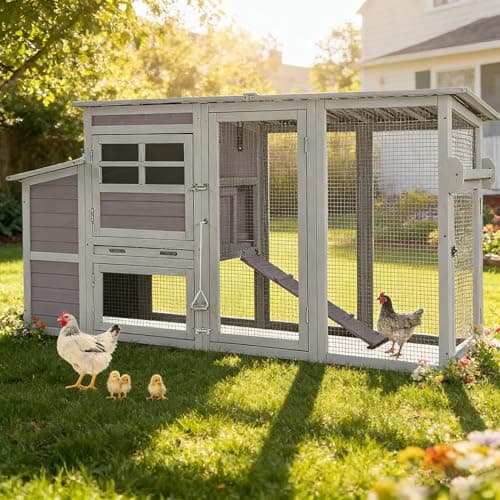
Aivituvin AIR31 Wooden Hen House
Well made for the money and unusually honest by omission - Aivituvin publishes no bird count here at all.
What the numbers say
74.9in x 26in = 13.5 sq ft of whole-unit footprint, which includes the attached run and is therefore generous. At 4 sq ft per standard hen that is 3 birds. The maker publishes no bird count of its own to compare against.
Figures from Aivituvin published specifications (Amazon listing) · 74.9"L x 26"W x 39.4"H · Fir
13.5 sq ft across the whole unit, and that figure includes the open run beneath the raised house. The enclosed portion is a fraction of it.
Aivituvin does not claim a bird count for this model. That is worth noting in a category where almost every competitor prints one it cannot support - there is nothing here to correct.
Treat it as a two-hen coop and it is a good one. The pull-out tray and the ramp are better executed than on most fir coops at this size.
Good
- No inflated bird-count claim to correct
- Pull-out tray makes weekly cleaning quick
- Fir construction is solid for the price
Not so good
- Narrow 26in depth limits usable roost space
- Whole-unit footprint counts the run, not just the house
- Fir needs re-treating every couple of seasons
Skip this if: you have three or more standard hens. The depth is the constraint, and no amount of length fixes a 26in-wide house.
#ad · how this is funded · price as of October 17, 2026
| Coop | Published size | Floor area | Maker says | Arithmetic says |
|---|---|---|---|---|
| Hatching Time Formex Snap Lock Large Chicken Coop | 64"L x 39"W x 42"H | 17.3 sq ft | 6 hens | 4 hens |
| Aivituvin AIR31 Wooden Hen House | 74.9"L x 26"W x 39.4"H | 13.5 sq ft | no claim | 3 hens |
Floor area is the maker’s published footprint. Where a unit includes an attached run that figure spans the run too, which makes it a generous reading - the enclosed roosting floor is smaller still. How we work these out.
When wood is the right answer anyway
The format itself is covered on plastic chicken coops. Cost, mostly, and it is a legitimate reason. Wood is also easier to modify - a vent cut, a perch added, a nest box moved are all Saturday jobs in fir and awkward in molded plastic. If you buy wood for a cold climate, the job is to keep it dry: raise it off the ground, treat it annually, keep the litter deep and dry, and inspect the joints for mite each spring. Wooden coops has the full maintenance picture.
Questions people actually ask
+Are plastic chicken coops warmer than wooden ones?
+Do plastic coops get condensation?
+Is a plastic chicken coop worth the extra money?
+Does a wooden coop need insulating in winter?
Sources
Read next
Aivituvin AIR31 against the Formex Snap Lock
Wood against plastic at the small end. One claims nothing, one over-claims - and both hold fewer birds than you think.
Chicken coops for cold climates
Cold-climate coops ranked on the things that matter below freezing - dryness, roof geometry, ventilation and floor area per bird.
Wooden chicken coops, measured and weathered
Wooden coops ranked on measured floor area, with the maintenance cost of untreated fir priced in rather than left out.
Ventilation, not insulation
Why sealing a coop causes frostbite, where vents belong, and how to tell whether yours has enough.
Climate, ventilation and the season problem
Why moisture rather than cold decides winter outcomes, what changes in heat, and the coops and gear that suit each climate.
Metal against wooden chicken coops
Metal wins for runs, wood for henhouses - and most metal 'coops' are really runs with no house.