Chicken coops for cold climates
Winter is a moisture problem wearing a temperature costume. The coops that do well in it are the ones that stay dry and shed snow, not the ones that seal tight.
We have not handled these coops, and we do not pretend to have. Here is what we did instead. Links to Amazon earn us a commission at no extra cost to you - disclosure.
| # | Coop | Best for | Honest count | Price |
|---|---|---|---|---|
| 1 | 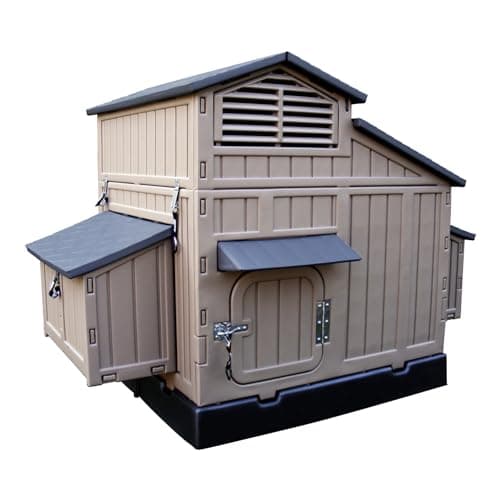 Hatching Time Formex Snap Lock Large Chicken CoopTop pickThe one coop here whose material genuinely earns its price, sized for four hens rather than the six on the box. | Cleaning, and cold that stays out | 4box says 6 | |
| 2 | 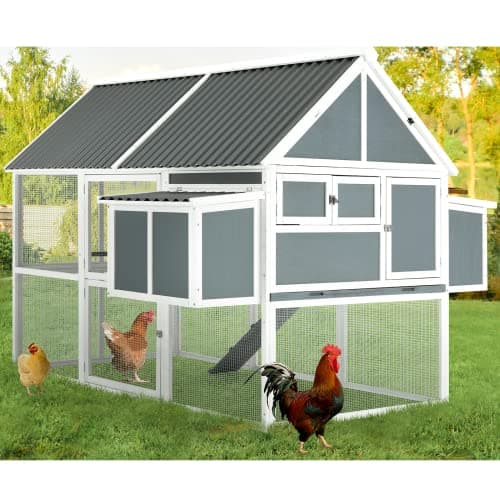 AECOJOY 84" Large Chicken Coop40.3 sq ft against a claim of ten. The numbers land exactly where the box says they do, which is rarer here than it should be. | Ten hens, claim and arithmetic agreeing | 10box says 10 | |
| 3 | 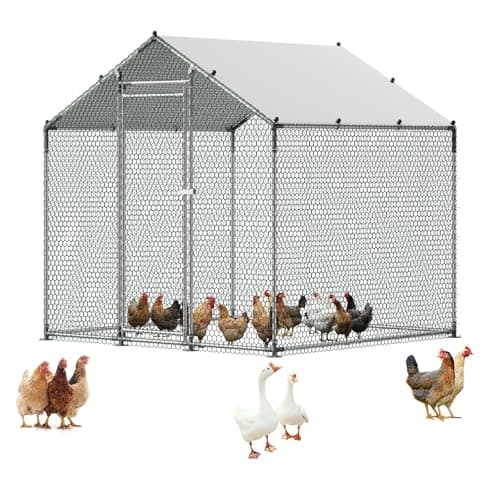 VEVOR Metal Walk-In Run, Spire Roof43 sq ft under a spire roof - the pitched cover is the reason to pick it over a flat-topped run. | Shedding snow and rain off a run | 10no claim made | |
| 4 | 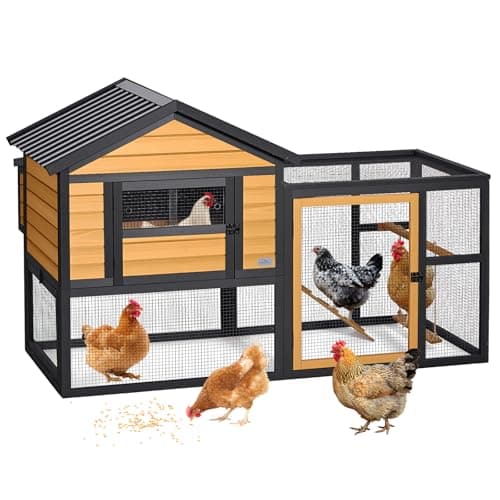 Petsfit Outdoor Coop with Run20.7 sq ft against a claim of six - one bird out, which makes it one of the more honest small coops here. | Five hens, honestly | 5box says 6 | Check price#ad |
| 5 | 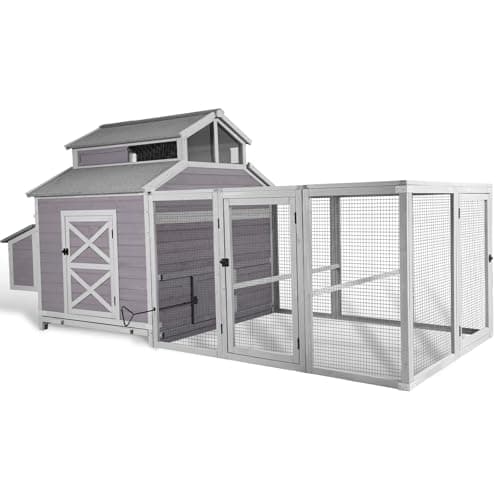 GUTINNEEN 115" Large Hen House with Run43.1 sq ft against a claim of eight to ten - it clears its own number with a small amount to spare. | Ten hens with a little margin | 10box says 10 |
There is a version of winter coop advice that has people taping over vents in November. It is well-meant and it is backwards. The hazard in a cold coop is humidity, and the humidity is generated inside by the birds. Seal the box and it has nowhere to go but onto combs, wattles and the inside of the walls.
What actually matters below freezing
- Dryness. A coop that stays dry is one where the litter is deep and loose, moisture leaves through high vents, and no rain or snow blows in.
- Ventilation above roost height. Air out, no wind across the birds.
- Draft blocking at roost level, and only there. Close the gaps beside the perch, not the ones near the roof.
- Roof geometry. A flat roof or flat fabric cover holds snow. A pitched or spire roof sheds it.
- Floor area. Birds spend far more time inside in winter, so a coop that was marginal in July is genuinely crowded in January.
Material, and what it does and does not do
Double-walled polyethylene will not absorb moisture and gives condensation nowhere to soak in, which is a real advantage in a wet cold winter. Wood absorbs and releases moisture, and its cut ends absorb fastest. Neither material meaningfully warms a coop - the birds do that, and only a little. Plastic against wood in cold weather goes through the comparison properly.
Snow load on runs
If your run has a fabric or flat mesh cover, snow will sit on it. A spire or peaked roof sheds it; a flat one accumulates until something bends. This is why the VEVOR's roof shape is a functional choice rather than a styling one in snow country, and it is worth checking before buying any covered metal run.
Water is the daily problem
Freezing water is the practical winter chore, not temperature. A heated base or a heated waterer solves it; swapping two containers twice a day also solves it and costs nothing but the trips. Either way, birds drink more than people expect in cold weather and reduced water intake shows up in egg production within days - Penn State Extension puts the limit at 12 hours without water. Chicken waterers ranks the heated and unheated options, and the Premier 1 heated waterer is reviewed in full.
Winter laying is about light, not cold
When egg production drops in winter it is the short days doing it, not the temperature. Penn State Extension's guidance for keeping hens laying is supplemental light on a timer, added in the morning, stepped up no more than an hour a week, and never cut back once birds are laying. It is optional - fewer winter eggs is the only cost of skipping it - and coop lights checks the lights and timers against those figures.
The ranked picks
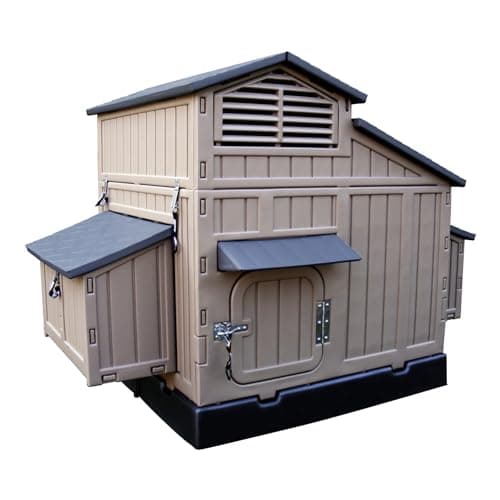
Top pick · Cleaning, and cold that stays out
Hatching Time Formex Snap Lock Large Chicken Coop
The one coop here whose material genuinely earns its price, sized for four hens rather than the six on the box.
What the numbers say
64in x 39in = 17.3 sq ft of enclosed henhouse floor. At 4 sq ft per standard hen that is 4 birds, against a claim of 6.
Figures from Hatching Time published specifications (Amazon listing) · 64"L x 39"W x 42"H · Double-walled polyethylene
This is a standalone henhouse with no attached run, so the published footprint is all enclosed floor. That makes it one of the few coops on this site where the generous reading and the honest reading are the same number.
17.3 sq ft supports four standard hens at the 4 sq ft figure. The listing says four to six. Four is right; six is a winter of pecked backs.
Double-walled polyethylene is the reason to buy it. There is no end grain to rot, no seam for mites to colonize, and it hoses out in minutes - the single biggest practical difference between a coop you keep clean and one you avoid.
Good
- Whole footprint is enclosed floor, not run
- Double-walled plastic will not rot, absorb, or harbor mites the way fir does
- Panels unclip for cleaning without tools
Not so good
- Costs more than the wooden coops it outlasts
- No run included, so budget for one
- Plastic walls hold no insulation value on their own
Skip this if: you want a coop and run in one purchase. This is a henhouse only, and pairing it with a run pushes the total past most wooden coop-plus-run kits.
#ad · how this is funded · price as of October 17, 2026
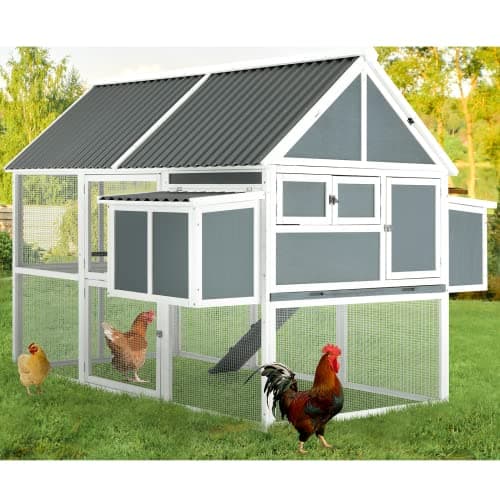
Pick 2 · Ten hens, claim and arithmetic agreeing
AECOJOY 84" Large Chicken Coop
40.3 sq ft against a claim of ten. The numbers land exactly where the box says they do, which is rarer here than it should be.
What the numbers say
84in x 69in = 40.3 sq ft of whole-unit footprint, which includes the attached run and is therefore generous. At 4 sq ft per standard hen that is 10 birds, against a claim of 10.
Figures from AECOJOY published specifications (Amazon listing) · 84"L x 69"W x 60"H · Wood
84 x 69 inches is 40.3 sq ft, which is exactly ten standard hens at the published 4 sq ft figure. AECOJOY claims eight to ten.
The 69in depth is what makes it work. Most coops in this class buy their length cheaply and stay narrow, which produces a corridor rather than a floor.
It is a square-ish footprint rather than a long thin one, so the usable area is genuinely usable - birds distribute across it instead of queueing down it.
Good
- Claim and arithmetic agree at ten hens
- 69in depth gives a floor rather than a corridor
- Two nesting boxes, which is the right count for ten hens on the published ratio
Not so good
- No margin - ten is the ceiling, not a comfortable number
- Wood construction needs annual attention
- Heavy once assembled and awkward to reposition
Skip this if: you plan to grow past ten birds. It meets its claim exactly, which means it has no room for the two extra chicks you will inevitably bring home.
#ad · how this is funded · price as of October 17, 2026
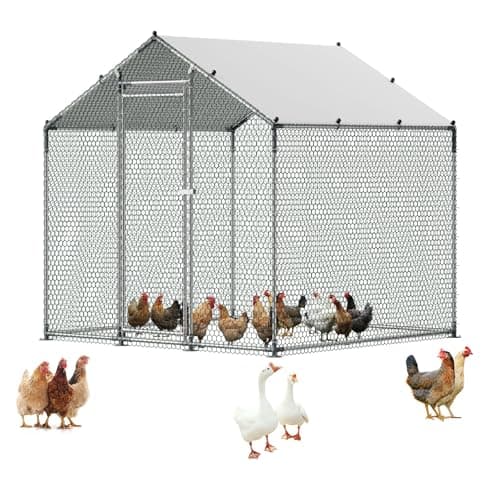
Pick 3 · Shedding snow and rain off a run
VEVOR Metal Walk-In Run, Spire Roof
43 sq ft under a spire roof - the pitched cover is the reason to pick it over a flat-topped run.
What the numbers say
78.72in x 78.72in = 43 sq ft of whole-unit footprint, which includes the attached run and is therefore generous. At 4 sq ft per standard hen that is 10 birds. The maker publishes no bird count of its own to compare against.
Figures from VEVOR published specifications (Amazon listing) · 78.72"L x 78.72"W x 78.72"H · High-carbon steel
43 sq ft in a perfect square, which is the most efficient shape for a given perimeter of frame.
The spire roof is the differentiator. Flat-covered runs pool water and collapse under wet snow; a pitched cover sheds both.
No bird count is claimed, which is correct for an enclosure.
Good
- Pitched roof sheds snow and standing water
- Square footprint is frame-efficient
- Security lock included
Not so good
- A run, not a coop
- Cover material will degrade before the frame does
- 6.5ft square is smaller than it sounds once a henhouse is inside
Skip this if: you get heavy snow loads. A spire helps, but no fabric-covered run is a substitute for a rigid roof where snow sits.
#ad · how this is funded · price as of October 17, 2026
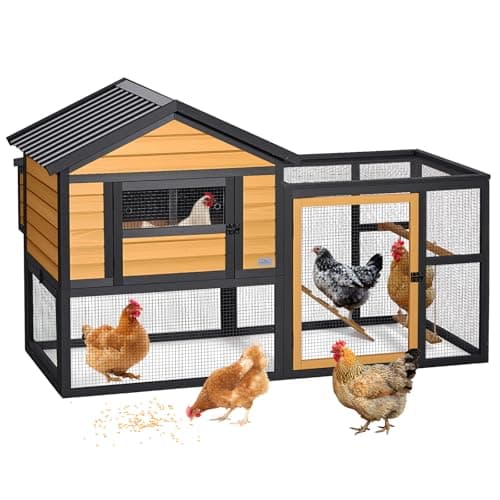
Pick 4 · Five hens, honestly
Petsfit Outdoor Coop with Run
20.7 sq ft against a claim of six - one bird out, which makes it one of the more honest small coops here.
What the numbers say
71in x 42in = 20.7 sq ft of whole-unit footprint, which includes the attached run and is therefore generous. At 4 sq ft per standard hen that is 5 birds, against a claim of 6.
Figures from Petsfit published specifications (Amazon listing) · 71"L x 42"W x 45"H · Fir
20.7 sq ft supports five standard hens. Petsfit claims four to six, so the arithmetic sits inside its stated range rather than outside it.
The 42in depth is why. Among the small coops on this site, depth is almost perfectly predictive of whether the claim survives contact with a tape measure.
Three nesting boxes for five hens is more than the one-per-four guidance requires, but not wastefully so.
Good
- Arithmetic lands inside the claimed range
- 42in depth is generous for this size class
- Predator-resistant hardware noted in the listing specification
Not so good
- Six is one bird past the floor
- Fir needs seasonal re-treating
- 45in height means stooping to clean
Skip this if: you are set on six birds. Five is what it holds, and the sixth is the one that gets pecked.
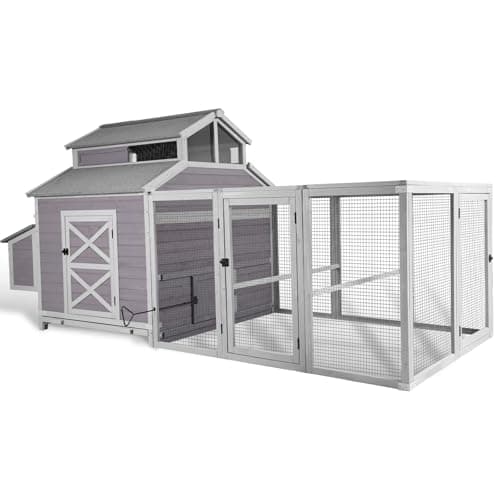
Pick 5 · Ten hens with a little margin
GUTINNEEN 115" Large Hen House with Run
43.1 sq ft against a claim of eight to ten - it clears its own number with a small amount to spare.
What the numbers say
115in x 54in = 43.1 sq ft of whole-unit footprint, which includes the attached run and is therefore generous. At 4 sq ft per standard hen that is 10 birds, against a claim of 10.
Figures from GUTINNEEN published specifications (Amazon listing) · 115"L x 54"W x 56"H · Fir
43.1 sq ft is ten standard hens with roughly three square feet left over. The claim is eight to ten, so the arithmetic supports the top of the range.
The 54in depth is the reason. It is not as generous as the AECOJOY's 69in, but it is well clear of the 22-26in corridors that dominate the cheaper end.
Six nesting boxes for ten hens is more than the one-per-four guidance needs. Extra boxes do not reduce squabbling; they add cleaning.
Good
- Clears its claim rather than exactly meeting it
- 54in depth produces a genuinely usable floor
- Run and house in a single purchase
Not so good
- Six nest boxes is more than ten hens need
- Fir at this size is a lot of surface to re-treat
- Nearly 10ft long - measure the yard first
Skip this if: you want walk-in access. At 56in tall you are still stooping, and for a coop this long that gets old fast.
#ad · how this is funded · price as of October 17, 2026
The measured figures
| Coop | Published size | Floor area | Maker says | Arithmetic says |
|---|---|---|---|---|
| Hatching Time Formex Snap Lock Large Chicken Coop | 64"L x 39"W x 42"H | 17.3 sq ft | 6 hens | 4 hens |
| AECOJOY 84" Large Chicken Coop | 84"L x 69"W x 60"H | 40.3 sq ft | 10 hens | 10 hens |
| VEVOR Metal Walk-In Run, Spire Roof | 78.72"L x 78.72"W x 78.72"H | 43 sq ft | no claim | 10 hens |
| Petsfit Outdoor Coop with Run | 71"L x 42"W x 45"H | 20.7 sq ft | 6 hens | 5 hens |
| GUTINNEEN 115" Large Hen House with Run | 115"L x 54"W x 56"H | 43.1 sq ft | 10 hens | 10 hens |
Floor area is the maker’s published footprint. Where a unit includes an attached run that figure spans the run too, which makes it a generous reading - the enclosed roosting floor is smaller still. How we work these out.
Questions people actually ask
+Do chicken coops need to be insulated in winter?
+How do I stop my chicken coop from getting damp in winter?
+Are plastic coops better in winter than wooden ones?
+Should I use a heat lamp in a chicken coop?
Sources
Read next
Climate, ventilation and the season problem
Why moisture rather than cold decides winter outcomes, what changes in heat, and the coops and gear that suit each climate.

Ventilation, not insulation
Why sealing a coop causes frostbite, where vents belong, and how to tell whether yours has enough.
Plastic against wood, in the cold
A material comparison judged on condensation, cleaning and mite resistance rather than on an insulation value neither material really has.
Coop heaters, and whether you need one
Flat radiant panels compared, with an honest answer first on whether heat is the right intervention at all.
The best chicken coops, ranked by what they actually hold
The flagship roundup. Twelve coops ranked on measured floor area against the maker's own bird-count claim.
Chicken coops for hot climates
Coops and gear for genuine heat, ranked on airflow and shade rather than on how well they seal.