How long can you leave chickens alone?
Three days is the honest answer with good gear, and the reason is not capacity. It is that nothing is there to notice when a waterer fails.
We have not handled these coops, and we do not pretend to have. Here is what we did instead. Links to Amazon earn us a commission at no extra cost to you - disclosure.
| # | Coop | Best for | Honest count | Price |
|---|---|---|---|---|
| 1 | 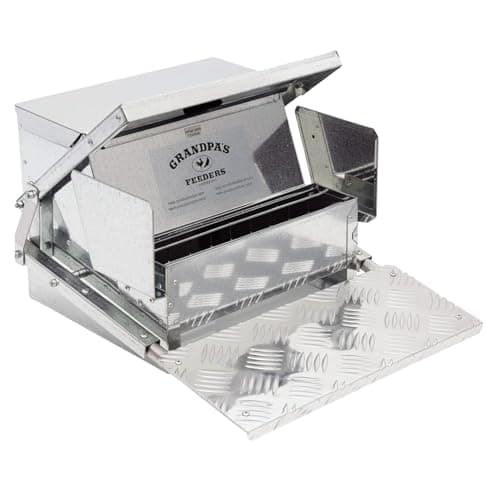 Grandpa's Feeders Automatic Chicken Feeder, 20 lbs TreadleTop pickThe benchmark treadle feeder, and the rare product on this site whose published bird-count claim is conservative rather than inflated. | Rodents, and a claim that survives checking | not published | |
| 2 | 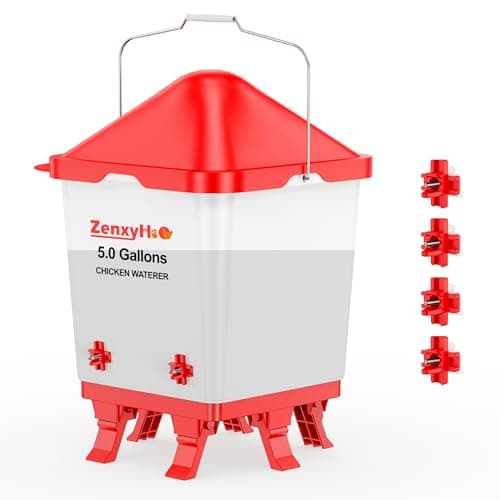 ZenxyHoC 5.0 Gal Chicken Waterer Bucket with 4 Horizontal Water NipplesFive gallons, four nipples, an anti-roost cone and legs that extend as the birds grow. The default answer if your water does not freeze. | Most flocks, most of the year | not published | |
| 3 | 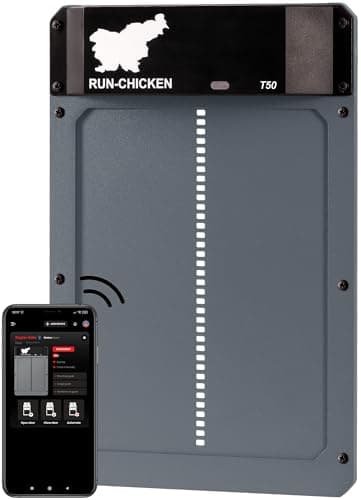 RUN-CHICKEN Door T50 Automatic OpenerBattery-powered aluminum with app and timer control. The one automatic door here that does not depend on winter sun. | The door that just keeps working | not published | |
| 4 | 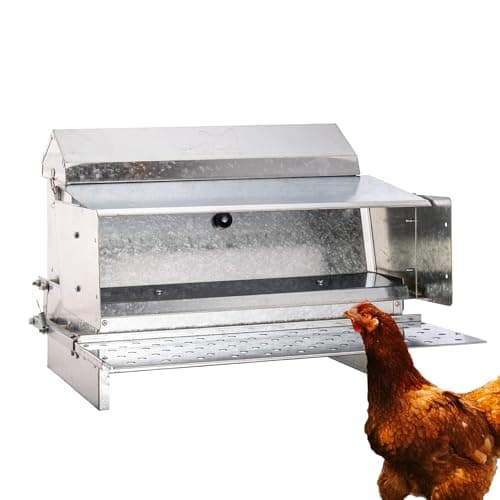 RentACoop Automatic Treadle Chicken Feeder, 25 lbA 25 pound treadle with a detachable step weight, so lighter birds can trigger it - the fix for the one thing treadle feeders reliably get wrong. | A treadle a bantam can actually open | not published | |
| 5 | 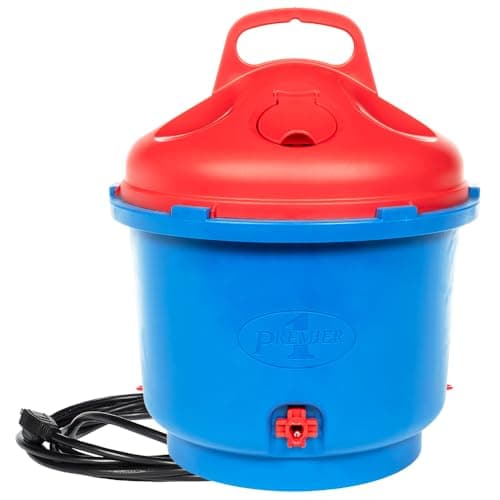 Premier 1 Supplies All-Season Heated Poultry Waterer for Chickens & Ducks, 3 GallonThe only heated unit here that solves both winter and fouling at once - a real thermostat plus three recessed nipple drinkers, so nothing gets kicked into it. | Unfrozen water that also stays clean | not published |
This question usually gets answered with a number of days and no working. The working is worth seeing, because it changes which gear you buy: the capacity problem is easy and nearly solved by any decent feeder, and the problem that is left is a different one entirely.
The feed arithmetic, which is the easy half
Alabama Cooperative Extension publishes the figure this runs on: a laying hen will consume between 100 and 150 grams of feed per day, or roughly 0.25 pounds. That is all you need.
What a feeder does earn its place for while you are away is waste and rodents. Alabama Extension notes that crumbles are wasted more than pellets, and University of Minnesota Extension links cleanliness and the removal of wet feed directly to house mice and Norway rats. An open trough left for a week is a rodent invitation rather than a feed supply - which is why both picks here are treadle feeders rather than larger open hoppers.
The water arithmetic, which looks easy and is not
Penn State Extension publishes at least 5 gallons of water per 100 birds daily, which is 0.05 gallons per bird - six hens drink about 0.3 gallons a day, so a 3-gallon waterer is nominally ten days.
Then Penn State publishes the figure that actually decides this page: birds should never go more than 12 hours without water. And University of Georgia Extension's drinking-water primer notes that consumption rises about 7 percent for every degree Fahrenheit of temperature rise - stated for broilers, so we label it as such rather than applying it to layers - which means a hot spell moves the number while you are away.
The three risks a feeder cannot solve
- Water failure, as above. Mitigation: two separate waterers of different designs, so a single failure mode cannot take out both.
- The pop door at dusk. A flock shut out overnight is a flock exposed to everything this site's predator pages are about, and an automatic door is the only thing that closes it when you are not there.
- Eggs accumulating in the nest. Penn State Extension's egg-eating guidance is blunt that egg breakage is a major reason why hens start eating eggs, that eggs should be collected often and early in the day, and that prevention is the only proven treatment. A week of uncollected eggs is how a flock acquires a habit that does not go away.
That third one is the argument for a roll-away nest box if you travel regularly: it takes the egg out of the nest immediately rather than relying on someone being there to collect it. Roll-away nest boxes measures them against the published nest dimensions.
Days of supply, worked for every feeder and waterer here
| Item | Published capacity | Days for 4 hens | Days for 6 hens | Days for 10 hens |
|---|---|---|---|---|
| Grandpa's Feeders treadle | 20 lb feed | 20 | 13 | 8 |
| RentACoop treadle | 25 lb feed | 25 | 16 | 10 |
| Nipple bucket waterer | 5 gal water | 25 | 16 | 10 |
| Premier 1 heated waterer | 3 gal water | 15 | 10 | 6 |
Feed days are capacity divided by 0.25 lb a bird a day, from Alabama Extension. Water days are capacity divided by 0.05 gallons a bird a day, from Penn State's 5 gallons per 100 birds. Both are arithmetic on published figures and both overshoot what is actually safe, which is the point of printing them.
What the table does usefully is show you where the margin is thin. A three-gallon waterer and ten hens is six days on paper, and six days on paper is about two days of real tolerance once you allow for a hot spell, a bird standing in it, or a nipple that weeps. That is the row to buy against.
A checklist for the morning you leave
- Fill both waterers and then check each one actually delivers - press every nipple, look for a drip, stand the bucket level.
- Fill the feeder and work the treadle a few times, because a treadle that is stiff or sticking is a feeder that is closed.
- Clear spilled feed. University of Minnesota Extension links wet feed and soiled bedding directly to house mice and Norway rats, and a week is long enough for a rodent population to find you.
- Collect every egg, and take the nest material down to clean and dry - Penn State's egg-eating guidance is that breakage is a major cause and prevention is the only proven treatment.
- Watch the automatic door run one full cycle, in the evening if you can, rather than assuming it will.
- Fresh bedding, deeper than usual, because nobody is turning it.
- Leave someone the coop's details even if they are not coming daily - which bird is which, where the switch is, who to call.
What we are not going to tell you
We are not going to give you a maximum number of days, because no extension source publishes one and the honest answer depends on your climate, your flock and your gear. What we can do is give you the published figures and the failure modes, which is what the arithmetic above is.
We will say plainly that beyond a long weekend, the answer is a person rather than a product. No gear on this page replaces someone looking at the flock once a day, and we would rather say that than sell you a bigger feeder.
How we judged these picks
- Does it reduce a failure mode rather than just add capacity - which is the distinction that reorders this whole list.
- Published capacity, run against the 0.25 lb and 0.05 gallon per bird daily figures.
- Whether it keeps feed dry and away from rodents unattended, since nobody is there to clear spillage.
- Whether it works unattended in cold, because a frozen waterer is the most common failure of the lot.
- Independence - two devices that fail differently beat one that fails completely.
What to buy before you go
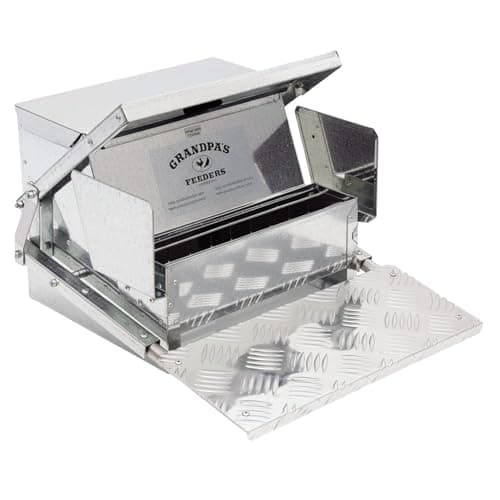
Top pick · Rodents, and a claim that survives checking
Grandpa's Feeders Automatic Chicken Feeder, 20 lbs Treadle
The benchmark treadle feeder, and the rare product on this site whose published bird-count claim is conservative rather than inflated.
What the numbers say
The manufacturer does not publish the dimensions this calculation needs, so we do not print a number.
Figures from Grandpa's Feeders published specifications (Amazon listing) · 17"L x 15"W x 12"H, 20 lb capacity · Galvanized steel
The listing claims it feeds 6 chickens for up to 10 days. Run that against the published feed figure - roughly 0.25 pounds per laying hen per day - and six birds for ten days is 15 pounds against a 20 pound capacity. The claim is not only plausible, it leaves headroom. We almost never get to write that sentence.
The lid only opens when a bird stands on the treadle, which is the entire rodent argument. Feed left in an open trough overnight is a standing invitation, and University of Minnesota Extension names house mice and Norway rats as the specific problem.
An anti-flick grill sits in the trough to stop birds raking feed onto the ground. Billing out is where most feed waste actually goes, and a grill addresses it directly rather than by exhortation.
Side guards stop birds feeding from the sides. That sounds like a detail and is not - side access is how birds get pecked at a feeder and how feed gets scattered.
Good
- Published claim of 6 chickens for 10 days checks out against the feed arithmetic
- Lid closes when no bird is standing on it - rodents and wild birds shut out
- Anti-flick grill addresses billing out, the main source of waste
- Galvanized steel, and a brand that has been doing this for decades
Not so good
- Comfortably the most expensive feeder here
- Birds must be trained to the treadle, which takes days and patience
- Light birds and bantams may not weigh enough to trigger it
- One trough means one feeding station, not the 3 inches per bird a trough figure assumes
Skip this if: your flock is mostly bantams or young pullets. A treadle needs a bird heavy enough to work it, and a feeder your smallest birds cannot open is a feeder that starves the bottom of the pecking order.
#ad · how this is funded · price as of October 17, 2026
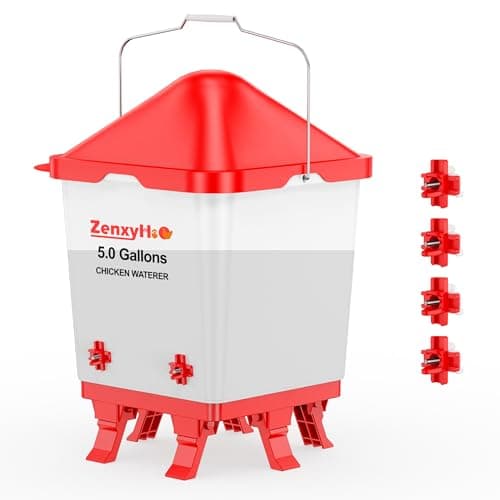
Pick 2 · Most flocks, most of the year
ZenxyHoC 5.0 Gal Chicken Waterer Bucket with 4 Horizontal Water Nipples
Five gallons, four nipples, an anti-roost cone and legs that extend as the birds grow. The default answer if your water does not freeze.
What the numbers say
The manufacturer does not publish the dimensions this calculation needs, so we do not print a number.
Figures from ZenxyHoC published specifications (Amazon listing) · 12.4"L x 12.4"W x 19.6"H, 5 gallon · Plastic
Five gallons against Penn State Extension's at-least-5-gallons-per-100-birds-daily means a small backyard flock is not refilling this every morning - which is the point of a closed system over an open font.
The anti-roost cone is not a gimmick. A flat lid at bird height becomes a perch, and a perch above the water supply becomes the reason you are scrubbing it.
Four nipples is more drinking points than the premium heated unit here offers, which matters at dusk when a flock drinks heavily before roosting.
Adjustable legs let the nipple height rise with the birds. Nipples set too high for chicks or too low for adults are the usual reason a nipple waterer gets abandoned.
Good
- Five gallons, so refills are weekly rather than daily for a small flock
- Four nipples - more drinking points than most units at any price
- Anti-roost cone and a removable lid for top filling
- Adjustable, foldable legs that grow with the flock
Not so good
- Not heated - nipples freeze solid and are the first thing to do so
- Birds have to learn nipples, which takes a few days of watching
- Generic brand with no published thermostat or material grade
- A full 5 gallon bucket is heavy to move once sited
Skip this if: you get hard winters and have no power at the coop. An unheated nipple waterer in a freeze is a solid block with four blocked outlets, and you will be carrying warm water out twice a day regardless.
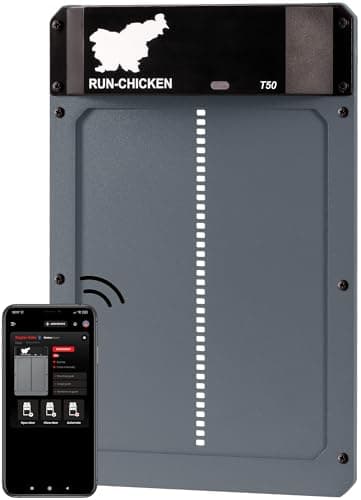
Pick 3 · The door that just keeps working
RUN-CHICKEN Door T50 Automatic Opener
Battery-powered aluminum with app and timer control. The one automatic door here that does not depend on winter sun.
What the numbers say
The manufacturer does not publish the dimensions this calculation needs, so we do not print a number.
Figures from RUN-CHICKEN published specifications (Amazon listing) · 13.8"L x 9.4"W x 1.3"H · Aluminum
Battery rather than solar is the important choice. A solar door's worst performance and your longest nights arrive in the same week, which is exactly when a door failing open costs you a flock.
Aluminum construction rather than plastic matters at the door itself, because this is the part a raccoon works at.
App and timer control both present, so it works whether or not you want it on your phone.
Good
- Battery power is unaffected by December daylight
- Aluminum door rather than plastic
- Timer and app control both supported
Not so good
- Batteries need replacing on a schedule you must remember
- Costs more than the solar units
- Opening size fixed by the unit
Skip this if: you have no way to check on it. Any automatic door needs an occasional look; a battery one needs its cells thought about before winter.
#ad · how this is funded · price as of October 17, 2026
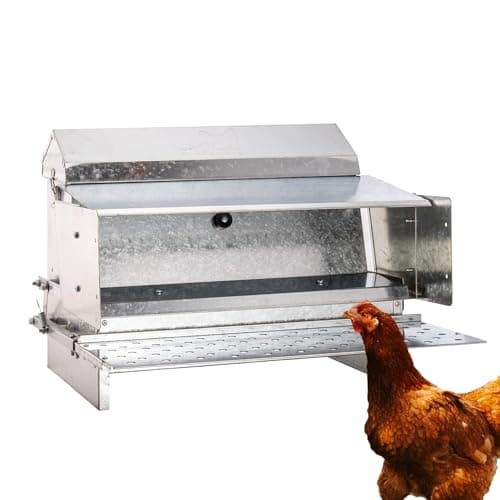
Pick 4 · A treadle a bantam can actually open
RentACoop Automatic Treadle Chicken Feeder, 25 lb
A 25 pound treadle with a detachable step weight, so lighter birds can trigger it - the fix for the one thing treadle feeders reliably get wrong.
What the numbers say
The manufacturer does not publish the dimensions this calculation needs, so we do not print a number.
Figures from RentACoop published specifications (Amazon listing) · 21"L x 18.5"W x 14"H, 25 lb capacity · Galvanized metal with stainless-steel hardware
The detachable step weight is the specification that matters. Every treadle feeder has a threshold a bird must exceed, and the usual failure is a flock of silkies or young pullets standing next to a feeder they cannot open. Making that threshold adjustable is the right answer.
The step also locks shut overnight, which turns a feed-on-demand feeder into a closed container at exactly the hours rodents are working.
A grate in the trough stops billing out, and an adjustable internal feed-flow plate lets you restrict how much feed sits exposed at once - which is the mechanical version of Penn State's advice to fill a trough only a third to a half full.
The box includes two blinders, a rain cover and an anti-roost lid. The anti-roost part is not decorative: anything flat at bird height in a coop becomes a perch, and a perch over a feeder means droppings in the feed.
Good
- Detachable step weight so bantams and light birds can trigger it
- Treadle locks shut overnight, closing the feeder to rodents entirely
- Adjustable feed-flow plate controls how much feed is exposed
- Ships with rain cover, anti-roost lid and blinders rather than selling them separately
Not so good
- Still expensive, even sitting below the category benchmark
- The largest footprint here at 21 by 18.5 inches - it needs real floor space
- Training period applies the same as any treadle
- Galvanized metal in a wet run will eventually show wear at the hinge
Skip this if: your coop floor is tight. Twenty-one inches by eighteen and a half is a meaningful share of a small coop's measured floor, and floor area is the thing this site spends most of its time telling people not to give away.
#ad · how this is funded · price as of October 17, 2026
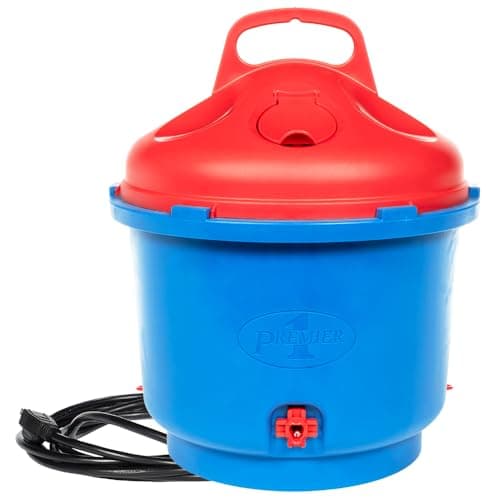
Pick 5 · Unfrozen water that also stays clean
Premier 1 Supplies All-Season Heated Poultry Waterer for Chickens & Ducks, 3 Gallon
The only heated unit here that solves both winter and fouling at once - a real thermostat plus three recessed nipple drinkers, so nothing gets kicked into it.
What the numbers say
The manufacturer does not publish the dimensions this calculation needs, so we do not print a number.
Figures from Premier 1 Supplies published specifications (Amazon listing) · 13"L x 13"W x 14"H, 3 gallon · Insulated plastic with a heavy-duty handle
Premier 1 publishes the thermostat behavior rather than implying it: a 100 watt element that switches on below 40F and off at 60F. That is a specification you can check against your own winter, which is more than most heated waterers offer.
Three recessed nipple drinkers mean the water is not an open dish sitting at scratching height. This is the single biggest difference between a waterer you refill and a waterer you scrub.
The listing claims 3 gallons is suitable for up to 35 adult chickens. That is the manufacturer's number, not a published extension figure - Penn State Extension's guidance is at least 5 gallons per 100 birds daily, which works out far more conservatively.
Premier 1 says outright that in extreme cold the insulated lid may freeze to the basin, which is why they added a hinged quick-fill cap. A maker documenting its own failure mode is worth more than one that does not.
Good
- Published thermostat range - on below 40F, off at 60F
- Nipple drinkers keep the water clean, not just liquid
- Hinged quick-fill cap for when the lid ices to the basin
- Heavy-duty handle for carrying or hanging
Not so good
- The most expensive waterer here by a clear margin
- The maker itself warns the lid can freeze to the basin in extreme cold
- Only three nipples, so a large flock queues at dusk
- Needs mains power run safely to the coop
Skip this if: your winter never reaches freezing - you are paying for a heating element you will never switch on, and an unheated nipple bucket does the clean-water half for a fraction of it.
#ad · how this is funded · price as of October 17, 2026
The automatic door sits third rather than first only because many people already have one. If you do not, it is the single purchase on this list that changes the risk of being away most.
Where to go next
- Chicken feeders, ranked on waste and rodents - the capacity figures in full
- Chicken waterers - the published water numbers, and what stays unfrozen
- Automatic chicken coop doors - the upgrade that closes the coop when you are not there
- Roll-away nest boxes - taking the egg out of the nest while you are away
Questions people actually ask
+How long can chickens be left alone?
+Can I leave my chickens for a week?
+How much water does a chicken drink per day?
+What should I set up before going on holiday?
+Will chickens be fine if they run out of water for a day?
Sources
- Penn State Extension - Management requirements for laying flocks (3 inches of feeder space per bird; feeder lip level with the birds' back height; trough filled only one-third to one-half full to prevent wastage; at least 5 gallons of water per 100 birds daily; 1 inch of water space per bird; never more than 12 hours without water; 14-16 hours of light per day; never decrease the lighting period on birds in production)
- Alabama Cooperative Extension - Feeding the laying hen (a laying hen eats 100-150 grams, roughly 0.25 lb, of feed per day; crumbles are wasted more than pellets)
- University of Georgia Extension B1301 - Poultry drinking water primer (broiler water consumption rises ~7% per degree F; broilers drink ~1.6-2.0x their feed weight in water)
- Penn State Extension - Prevention of egg eating in chickens (one 12in x 12in nest per 4-5 hens, never fewer than 4 boxes; nests 2ft off the ground and 4ft from roosts; 2 inches of nesting material at all times; collect eggs early; prevention is the only proven treatment)
- University of Minnesota Extension - Common concerns with backyard or urban poultry keeping (remove wet feed and soiled bedding; cleanliness reduces house mice and Norway rats)
Read next
Chicken feeders, ranked on waste and rodents
Treadle, port and DIY feeders measured against the published 3 inches of feeder space per bird and 0.25 lb of feed per hen per day.
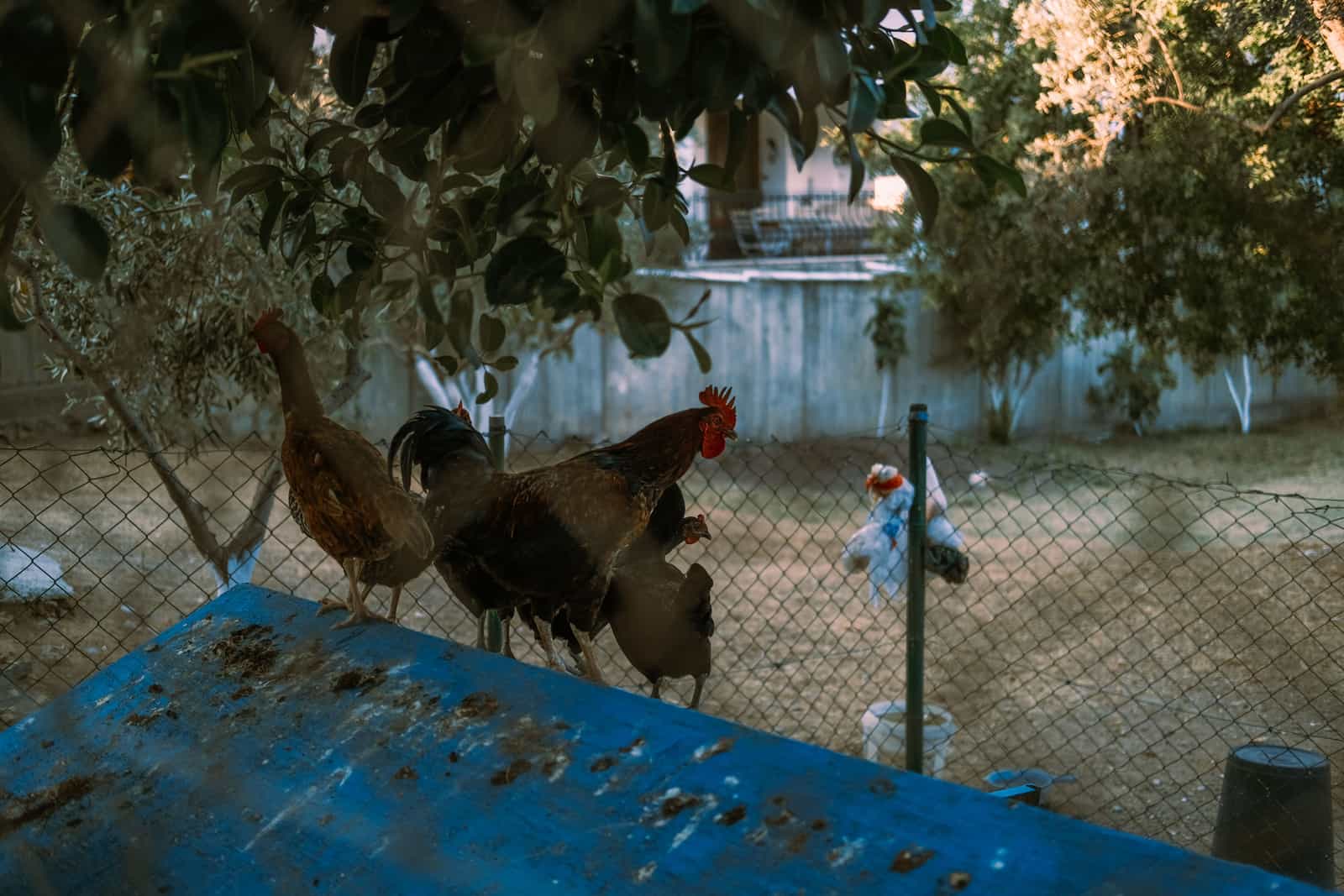
Chicken waterers, ranked on the published numbers
Heated, nipple and open waterers measured against the published 5 gallons per 100 birds daily, 1 inch of water space per bird, and the 12-hour rule.
Automatic chicken coop doors
Automatic pop doors compared on trigger, power source, opening size and what happens when it is 10 degrees out.
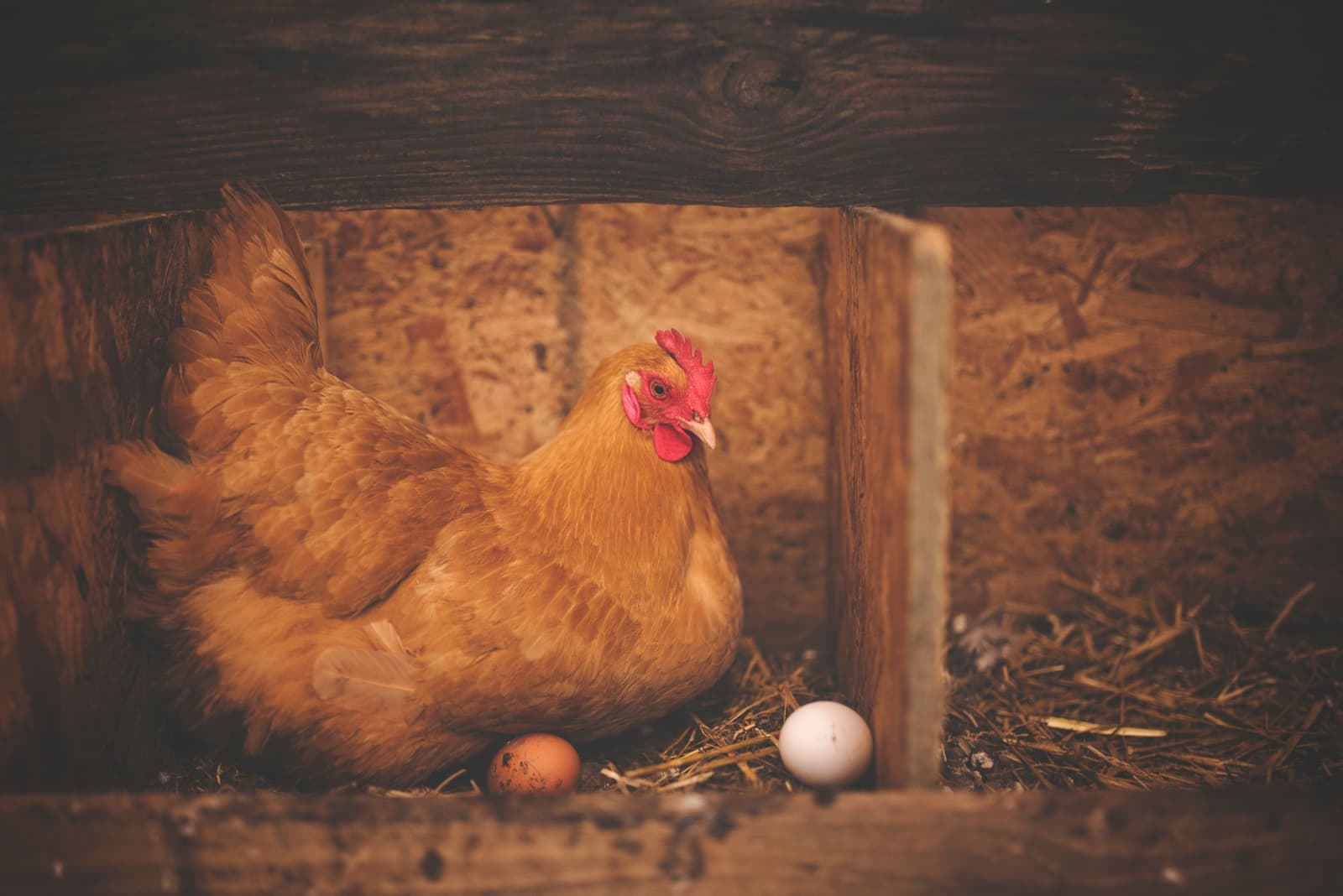
Roll-away nest boxes, measured against the published nest
Roll-out nest boxes judged on the published 12in nest, one per four to five hens, and the two inches of bedding a roll-away box cannot hold.
Grandpa's Feeders Automatic Chicken Feeder, 20 lb
A treadle feeder reviewed on rodent exclusion, feed waste and the one claim on this site that survived checking.
A cleaning routine you will actually keep
Daily, weekly and seasonal jobs sized so they get done, plus the mite inspection nobody schedules until it is too late.