Is pressure-treated wood safe for a chicken coop?
The arsenic answer is settled and the question is mostly moot anyway, because not one coop in this category is treated. Rot is a material and elevation problem.
We have not handled these coops, and we do not pretend to have. Here is what we did instead. Links to Amazon earn us a commission at no extra cost to you - disclosure.
| # | Coop | Best for | Honest count | Price |
|---|---|---|---|---|
| 1 | 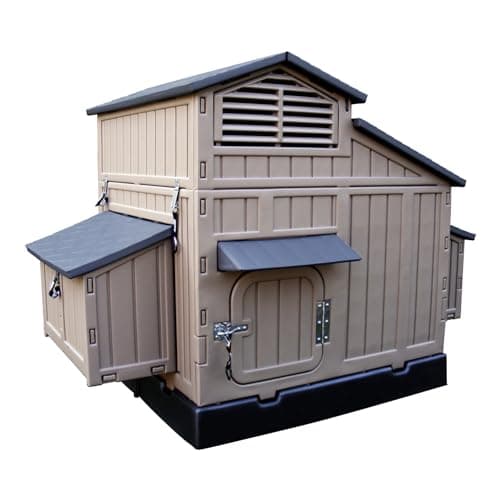 Hatching Time Formex Snap Lock Large Chicken CoopTop pickThe one coop here whose material genuinely earns its price, sized for four hens rather than the six on the box. | Cleaning, and cold that stays out | 4box says 6 | |
| 2 | 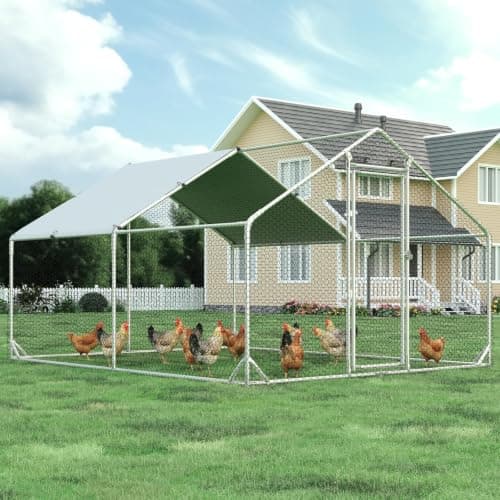 4ever2buy Metal Chicken Coop, 10x13 FT Walk-In Run128.4 sq ft of walk-in enclosure wrapped in galvanized hardware cloth - the largest ground area on this site, and a cover included. | A genuine walk-in enclosure | 32box says 15 | |
| 3 | 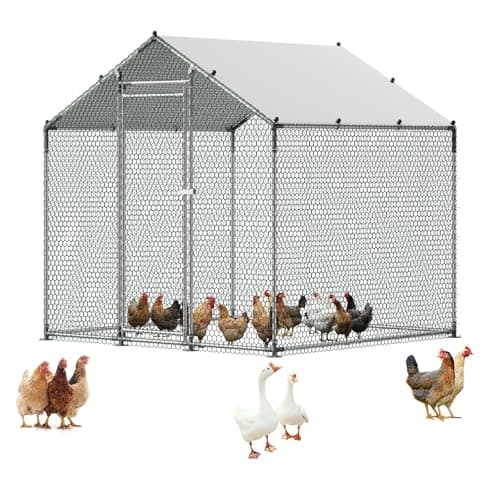 VEVOR Metal Walk-In Run, Spire Roof43 sq ft under a spire roof - the pitched cover is the reason to pick it over a flat-topped run. | Shedding snow and rain off a run | 10no claim made | |
| 4 | 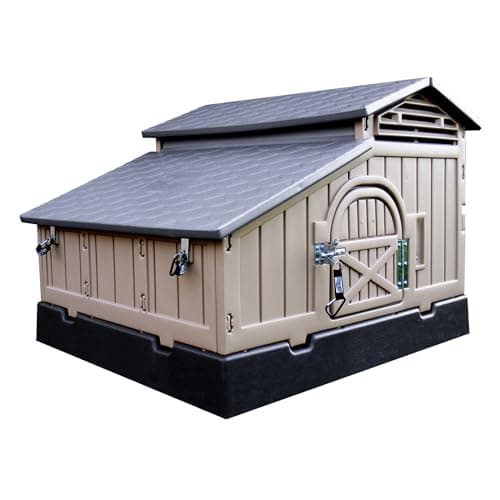 Hatching Time SnapLock Formex Standard CoopSame material logic as its bigger sibling, but the claim of four hens is the most overstated on this page relative to its size. | Two hens, or a bantam trio | 2box says 4 | |
| 5 | 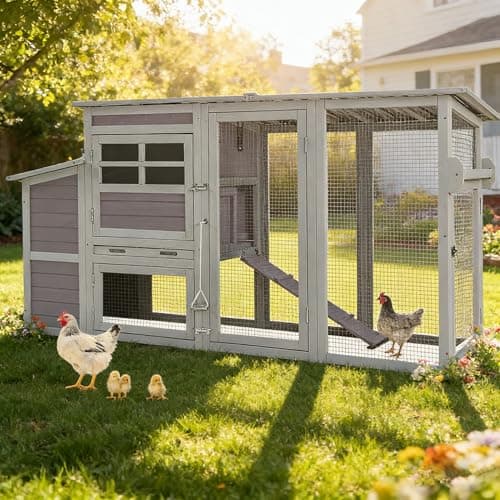 Aivituvin AIR31 Wooden Hen HouseWell made for the money and unusually honest by omission - Aivituvin publishes no bird count here at all. | A tidy two-hen setup in a small yard | 3no claim made |
Two different questions get asked in the same words here. One is whether treated lumber is dangerous to chickens. The other is how to stop a coop rotting. They have different answers, and the second one is the one that costs people money.
What EPA actually records about treated wood
The arsenic concern traces to chromated copper arsenate, or CCA. EPA's own page states that in December 2003, chromated arsenicals manufacturers voluntarily discontinued manufacturing wood treated with CCA for residential items like decks and playsets, and describes CCA-treated wood today in terms of commercial poles, posts, shakes, shingles, permanent foundation support beams and pilings - applied in treatment facilities by certified pesticide applicators only.
EPA also records what it does not require: EPA does not require the removal of existing structures made with wood treated with chromated arsenicals. For older CCA structures it suggests applying a penetrating protective coating such as an oil- or water-based stain on a regular basis, which it says may reduce leaching.
| Preservative | What EPA says about it |
|---|---|
| ACQ (alkaline copper quaternary) | Registered for residential lumber; currently the most widely used wood preservative for residential applications; relatively low risks based on its copper oxide and quaternary ammonium components |
| Copper azole | Registered for residential lumber; widely used throughout the United States and Canada |
| Borates (DOT) | Registered for residential lumber; typical applications include furnishings and interior construction |
| Copper naphthenate | Registered for residential lumber; effective in protecting wood against insect damage |
| Copper-HDO, polymeric betaine | Registered for treatment of lumber for the residential lumber and timber market |
| CCA (chromated copper arsenate) | No longer used in most residential settings; manufacturers voluntarily discontinued residential manufacture in December 2003 |
What EPA does not say, which matters more
Neither EPA page we cite addresses poultry housing, animal housing or any agricultural animal use. So we are not going to tell you that modern treated lumber is safe for chickens, because the source that would support that statement does not exist in what we have read.
What we can tell you is narrower and still useful: the specific hazard people are thinking of - arsenic - is not in residential treated lumber sold today, and EPA's own position on existing arsenic-treated structures is that they do not have to come out. Anything beyond that is a question for your extension service or a veterinarian, not for a coop site.
Why the question is mostly moot anyway
We checked every product in our registry. All eighteen wooden coops in it publish an untreated material - fir, plain wood, or fir in combination with asphalt, metal or plastic - and the one product in the whole registry described as treated is a wooden swing perch rather than a coop structure. If you are buying a kit coop, the treated-wood decision is not yours to make.
Which means the real question under this one is rot, and untreated fir gives three to six seasons in a backyard coop with the base rail going first. Wooden chicken coops, measured and weathered has that in full, including why red mite lives in timber seams and not in plastic.
What every wooden coop here is actually made of
This is the evidence for the claim above, taken from the makers' own published material descriptions rather than from our reading of a photograph.
| Published material | How many coops | Treated? |
|---|---|---|
| Wood | 7 | No |
| Fir | 5 | No |
| Fir with asphalt roof | 2 | No |
| Asphalt, fir, metal and wood | 2 | No |
| Wood, PVC and asphalt | 1 | No |
| Fir and plastic | 1 | No |
Eighteen wooden coops, and not one treated. The only product in the whole registry whose published material mentions treatment at all is a wooden swing perch rather than a coop structure. The closest any coop listing comes is the word weather-resistant on a perch, which is a description rather than a preservative specification - and no coop listing here uses even that.
Where the water actually gets in
Rot is not uniform and it does not start on the painted face you are looking at. It starts at end grain - the cut ends of a board, where the grain runs into the timber like a bundle of straws - and at the cut edges assembly leaves behind, which no factory finish ever covered.
- The base rail, because it sits in wet litter inside and wet ground outside. This is the one that fails first on almost every coop.
- Every cut you make during assembly, including the holes you drill. The protected surface is the one that came out of the factory; yours is not.
- Leg ends standing on soil. A leg wicks water upward as efficiently as a straw, which is why a coop on blocks outlasts the same coop on grass.
- Nest-box corners, where droppings and broken egg collect and nothing dries.
- Under any roof-edge gap, where water runs down the inside of a wall instead of off the outside.
All five are reasons the material and the elevation matter more than the finish. A coop that cannot absorb water has no end grain to protect, and a coop standing clear of the ground keeps the one surface that always fails out of the water that always kills it.
The three things that actually stop a coop rotting
- Material. A moulded polyethylene coop has no end grain to wick water and no seam to hold it, which is the whole reason it outlasts timber. Galvanized steel is the same argument in a different material.
- Elevation. Rot starts at the base rail because that is where water sits. Getting the timber off the ground - on blocks, on a frame, on a skirted stand - moves the one point that fails first.
- The floor. Droppings are mostly water and they sit on the floor all night. A continuous non-absorbent covering over the floor is the cheapest intervention on this list - coop floor coverings covers what works and what traps water underneath itself.
How we judged these picks
- Published material first, on whether it can rot at all rather than on how it is finished.
- Whether the structure keeps timber off the ground, where that is published.
- Floor area against the flock, because a rot-proof coop that is too small is still the wrong coop.
- Cleaning, since standing moisture is the mechanism behind both rot and mites.
Coops that take the question off the table
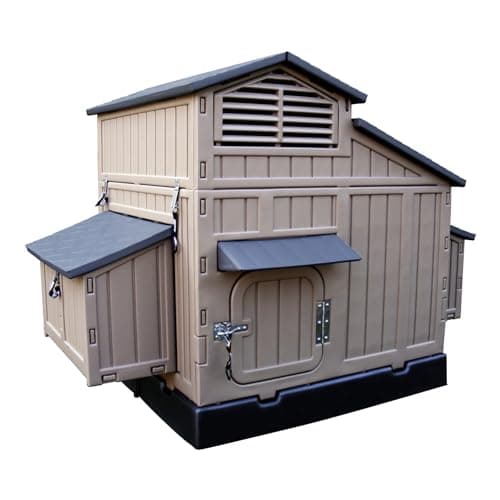
Top pick · Cleaning, and cold that stays out
Hatching Time Formex Snap Lock Large Chicken Coop
The one coop here whose material genuinely earns its price, sized for four hens rather than the six on the box.
What the numbers say
64in x 39in = 17.3 sq ft of enclosed henhouse floor. At 4 sq ft per standard hen that is 4 birds, against a claim of 6.
Figures from Hatching Time published specifications (Amazon listing) · 64"L x 39"W x 42"H · Double-walled polyethylene
This is a standalone henhouse with no attached run, so the published footprint is all enclosed floor. That makes it one of the few coops on this site where the generous reading and the honest reading are the same number.
17.3 sq ft supports four standard hens at the 4 sq ft figure. The listing says four to six. Four is right; six is a winter of pecked backs.
Double-walled polyethylene is the reason to buy it. There is no end grain to rot, no seam for mites to colonize, and it hoses out in minutes - the single biggest practical difference between a coop you keep clean and one you avoid.
Good
- Whole footprint is enclosed floor, not run
- Double-walled plastic will not rot, absorb, or harbor mites the way fir does
- Panels unclip for cleaning without tools
Not so good
- Costs more than the wooden coops it outlasts
- No run included, so budget for one
- Plastic walls hold no insulation value on their own
Skip this if: you want a coop and run in one purchase. This is a henhouse only, and pairing it with a run pushes the total past most wooden coop-plus-run kits.
#ad · how this is funded · price as of October 17, 2026
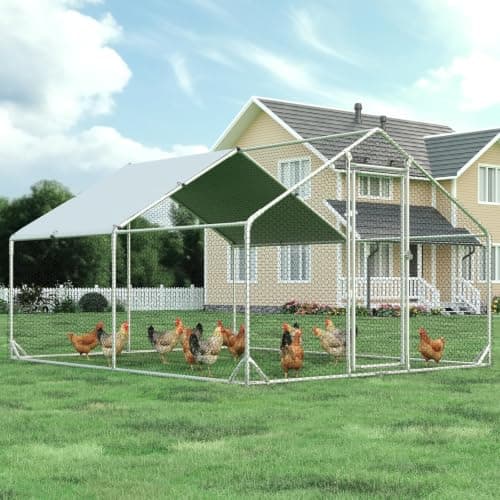
Pick 2 · A genuine walk-in enclosure
4ever2buy Metal Chicken Coop, 10x13 FT Walk-In Run
128.4 sq ft of walk-in enclosure wrapped in galvanized hardware cloth - the largest ground area on this site, and a cover included.
What the numbers say
157.2in x 117.6in = 128.4 sq ft of whole-unit footprint, which includes the attached run and is therefore generous. At 4 sq ft per standard hen that is 32 birds, against a claim of 15.
Figures from 4ever2buy published specifications (Amazon listing) · 157.2"L x 117.6"W x 76.8"H (10 x 13 ft) · Rust-resistant steel frame with galvanized hardware cloth
128.4 sq ft is the largest ground area on this site by a wide margin - more than twice the next biggest.
The listing claims room for 12 to 15 chickens. Read as run space at the published 8 sq ft a bird that is about 16, so the claim is reasonable - which is unusual enough here to say out loud. The bird column in our table divides by the 4 sq ft indoor figure, and that is the wrong measure for an enclosure with no henhouse in it.
Fully wrapped in galvanized hardware cloth rather than chicken wire is the specification that matters. Chicken wire keeps chickens in; hardware cloth keeps raccoons out, and they are not the same job.
A waterproof anti-UV cover is included, which is the detail that keeps the ground under it usable through a wet season.
Good
- Galvanized hardware cloth all round, not chicken wire
- 76.8in height is a true walk-in at 6.4 ft
- Waterproof cover included rather than sold separately
Not so good
- It is a run, not a coop - you still need a henhouse
- 13ft x 10ft needs serious yard space
- The 12-15 bird claim only holds as run space, never as roosting room
Skip this if: you expected a coop. There is no insulated, enclosed house in it, and birds cannot roost in a run overnight safely in most climates.
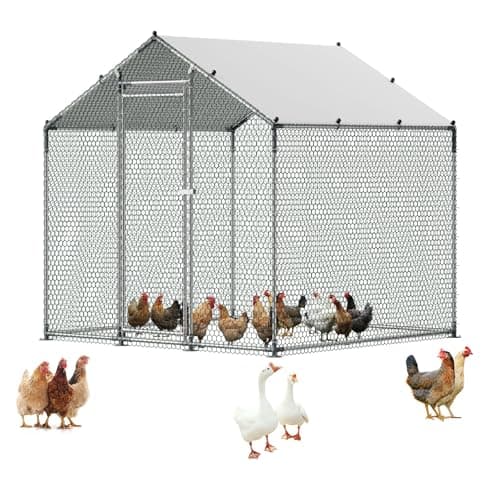
Pick 3 · Shedding snow and rain off a run
VEVOR Metal Walk-In Run, Spire Roof
43 sq ft under a spire roof - the pitched cover is the reason to pick it over a flat-topped run.
What the numbers say
78.72in x 78.72in = 43 sq ft of whole-unit footprint, which includes the attached run and is therefore generous. At 4 sq ft per standard hen that is 10 birds. The maker publishes no bird count of its own to compare against.
Figures from VEVOR published specifications (Amazon listing) · 78.72"L x 78.72"W x 78.72"H · High-carbon steel
43 sq ft in a perfect square, which is the most efficient shape for a given perimeter of frame.
The spire roof is the differentiator. Flat-covered runs pool water and collapse under wet snow; a pitched cover sheds both.
No bird count is claimed, which is correct for an enclosure.
Good
- Pitched roof sheds snow and standing water
- Square footprint is frame-efficient
- Security lock included
Not so good
- A run, not a coop
- Cover material will degrade before the frame does
- 6.5ft square is smaller than it sounds once a henhouse is inside
Skip this if: you get heavy snow loads. A spire helps, but no fabric-covered run is a substitute for a rigid roof where snow sits.
#ad · how this is funded · price as of October 17, 2026
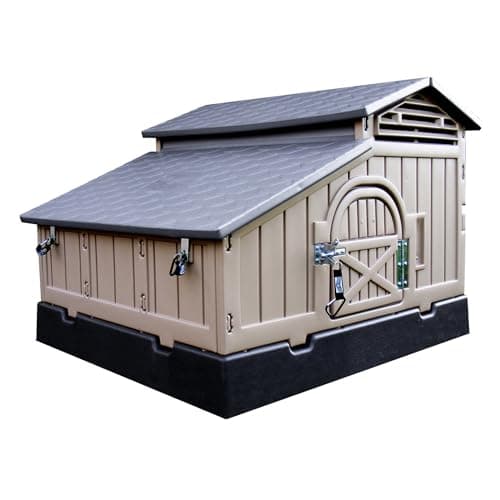
Pick 4 · Two hens, or a bantam trio
Hatching Time SnapLock Formex Standard Coop
Same material logic as its bigger sibling, but the claim of four hens is the most overstated on this page relative to its size.
What the numbers say
39in x 42in = 11.4 sq ft of enclosed henhouse floor. At 4 sq ft per standard hen that is 2 birds, against a claim of 4.
Figures from Hatching Time published specifications (Amazon listing) · 39"L x 42"W x 29"H · Lightweight double-walled polyethylene
11.4 sq ft of enclosed floor is two standard hens. The listing says four.
For bantams, where the published guidance is nearer 2 sq ft a bird, four is defensible. For standard-size layers it is not, and the listing does not draw that distinction.
The material is the same double-walled polyethylene that makes the larger Snap Lock worth owning. The problem here is arithmetic, not build quality.
Good
- Genuinely easy to clean and impossible to rot
- Small enough for a courtyard or a side return
- Honest fit for a bantam trio
Not so good
- Two standard hens, not the four claimed
- Low roof height limits where you can put roost bars
- Run sold separately
Skip this if: you keep standard-size layers and want more than two. Buy the larger Snap Lock instead - the price step is smaller than the space step.
#ad · how this is funded · price as of October 17, 2026
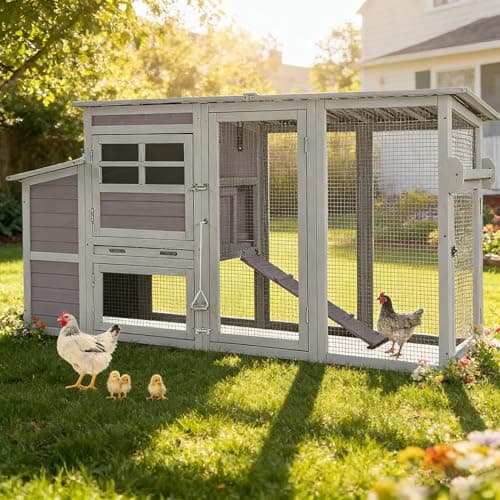
Pick 5 · A tidy two-hen setup in a small yard
Aivituvin AIR31 Wooden Hen House
Well made for the money and unusually honest by omission - Aivituvin publishes no bird count here at all.
What the numbers say
74.9in x 26in = 13.5 sq ft of whole-unit footprint, which includes the attached run and is therefore generous. At 4 sq ft per standard hen that is 3 birds. The maker publishes no bird count of its own to compare against.
Figures from Aivituvin published specifications (Amazon listing) · 74.9"L x 26"W x 39.4"H · Fir
13.5 sq ft across the whole unit, and that figure includes the open run beneath the raised house. The enclosed portion is a fraction of it.
Aivituvin does not claim a bird count for this model. That is worth noting in a category where almost every competitor prints one it cannot support - there is nothing here to correct.
Treat it as a two-hen coop and it is a good one. The pull-out tray and the ramp are better executed than on most fir coops at this size.
Good
- No inflated bird-count claim to correct
- Pull-out tray makes weekly cleaning quick
- Fir construction is solid for the price
Not so good
- Narrow 26in depth limits usable roost space
- Whole-unit footprint counts the run, not just the house
- Fir needs re-treating every couple of seasons
Skip this if: you have three or more standard hens. The depth is the constraint, and no amount of length fixes a 26in-wide house.
#ad · how this is funded · price as of October 17, 2026
The fifth pick is wooden on purpose. It is here as the honest comparison: a tidy fir coop is a real thing to buy, and knowing it is a three-to-six-season purchase rather than a twenty-year one is the point of this page.
Measured against the claims
| Coop | Published size | Floor area | Maker says | Arithmetic says |
|---|---|---|---|---|
| Hatching Time Formex Snap Lock Large Chicken Coop | 64"L x 39"W x 42"H | 17.3 sq ft | 6 hens | 4 hens |
| 4ever2buy Metal Chicken Coop, 10x13 FT Walk-In Run | 157.2"L x 117.6"W x 76.8"H (10 x 13 ft) | 128.4 sq ft | 15 hens | 32 hens |
| VEVOR Metal Walk-In Run, Spire Roof | 78.72"L x 78.72"W x 78.72"H | 43 sq ft | no claim | 10 hens |
| Hatching Time SnapLock Formex Standard Coop | 39"L x 42"W x 29"H | 11.4 sq ft | 4 hens | 2 hens |
| Aivituvin AIR31 Wooden Hen House | 74.9"L x 26"W x 39.4"H | 13.5 sq ft | no claim | 3 hens |
Floor area is the maker’s published footprint. Where a unit includes an attached run that figure spans the run too, which makes it a generous reading - the enclosed roosting floor is smaller still. How we work these out.
Where to go next
- Wooden chicken coops, measured and weathered - how long fir actually lasts
- Plastic chicken coops - the material argument in full
- Coop floor coverings - the cheapest thing you can do about rot
- What a coop costs beyond the listing price - including replacement
Questions people actually ask
+Is pressure-treated wood safe for a chicken coop?
+Are chicken coops made of pressure-treated wood?
+How do I stop my chicken coop from rotting?
+Should I paint or seal a chicken coop?
+Can I use old deck boards to build a coop?
Sources
- US EPA - Chromated arsenicals (CCA) (manufacturers voluntarily discontinued CCA for residential wood in December 2003; CCA is applied only in treatment facilities by certified applicators; EPA does not require removal of existing CCA structures; a regular penetrating coating may reduce leaching)
- US EPA - Overview of wood preservative chemicals (ACQ, borates, copper azole, copper naphthenate, Copper-HDO and polymeric betaine are registered for residential lumber; ACQ is the most widely used residential wood preservative; CCA-treated wood is no longer used in most residential settings)
- Penn State Extension - Small-scale poultry housing
- University of Minnesota Extension - Raising chickens for eggs (3-5 sq ft indoor space per bird; one nest box per 4-5 birds)
Read next
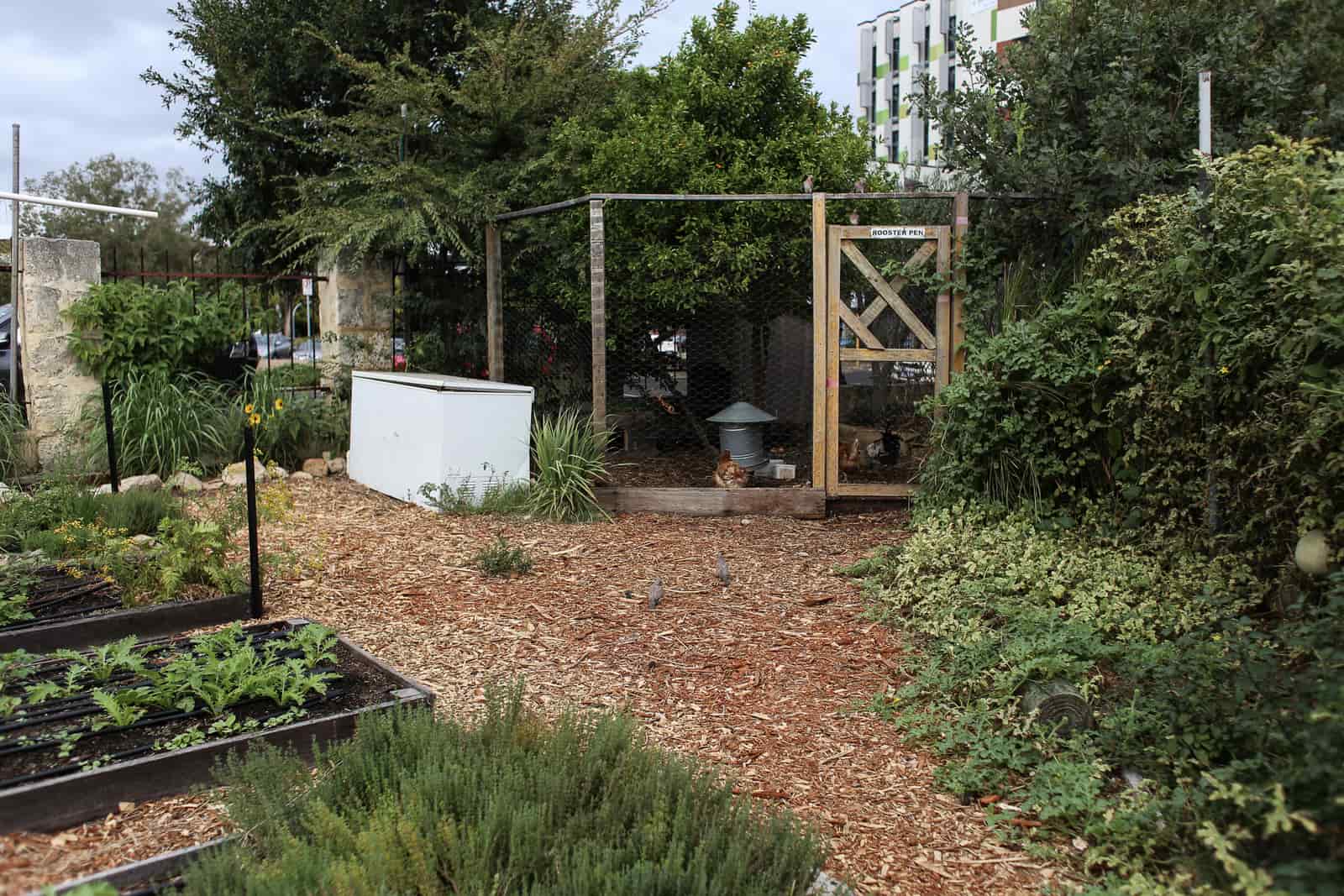
Wooden chicken coops, measured and weathered
Wooden coops ranked on measured floor area, with the maintenance cost of untreated fir priced in rather than left out.
Plastic chicken coops
Double-walled polyethylene coops measured and assessed - the format with the best material argument and the thinnest choice.
Chicken coop flooring, and what the bedding sits on
Coop floor coverings, judged on whether water can get under them. Almost none are sold for poultry, which is itself the finding.
What a coop costs, beyond the listing price
The four costs that follow a coop purchase, and why the cheapest coop is usually the expensive one over a decade.
How to choose a chicken coop
The nine checks that decide a coop purchase, in priority order, and the coop we would buy at each flock size once they are applied.
Metal chicken coops and runs
Steel runs and enclosures ranked on measured area, with the henhouse gap and the base-security fix stated up front.