Coop vs run
They are not two words for the same thing and they are not alternatives. One is a bedroom with a locked door; the other is a fenced yard. Buying as if you get to pick is the most common first-flock mistake.
We have not handled these coops, and we do not pretend to have. Here is what we did instead. Links to Amazon earn us a commission at no extra cost to you - disclosure.
| # | Coop | Best for | Honest count | Price |
|---|---|---|---|---|
| 1 | 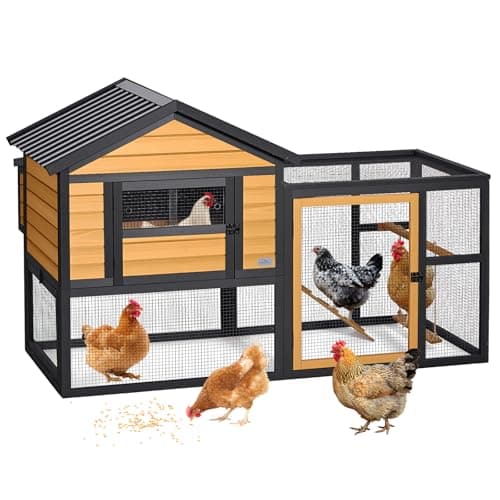 Petsfit Outdoor Coop with RunTop pick20.7 sq ft against a claim of six - one bird out, which makes it one of the more honest small coops here. | Five hens, honestly | 5box says 6 | |
| 2 | 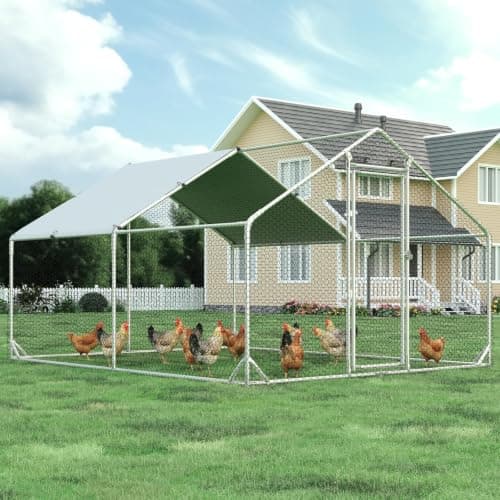 4ever2buy Metal Chicken Coop, 10x13 FT Walk-In Run128.4 sq ft of walk-in enclosure wrapped in galvanized hardware cloth - the largest ground area on this site, and a cover included. | A genuine walk-in enclosure | 32box says 15 | |
| 3 | 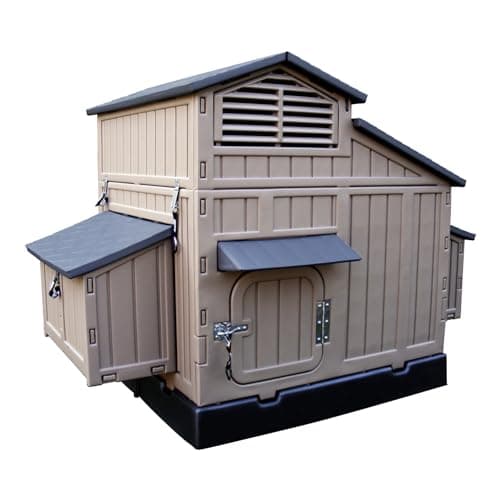 Hatching Time Formex Snap Lock Large Chicken CoopThe one coop here whose material genuinely earns its price, sized for four hens rather than the six on the box. | Cleaning, and cold that stays out | 4box says 6 | |
| 4 | 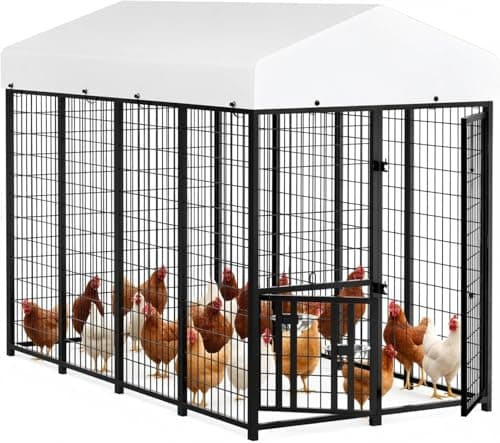 LUXEYARD Advanced Series Metal Run31.3 sq ft with hardware cloth on the sides - a sensible extension for a coop that came with a flimsy run. | Bolting a secure run onto an existing coop | 7no claim made | |
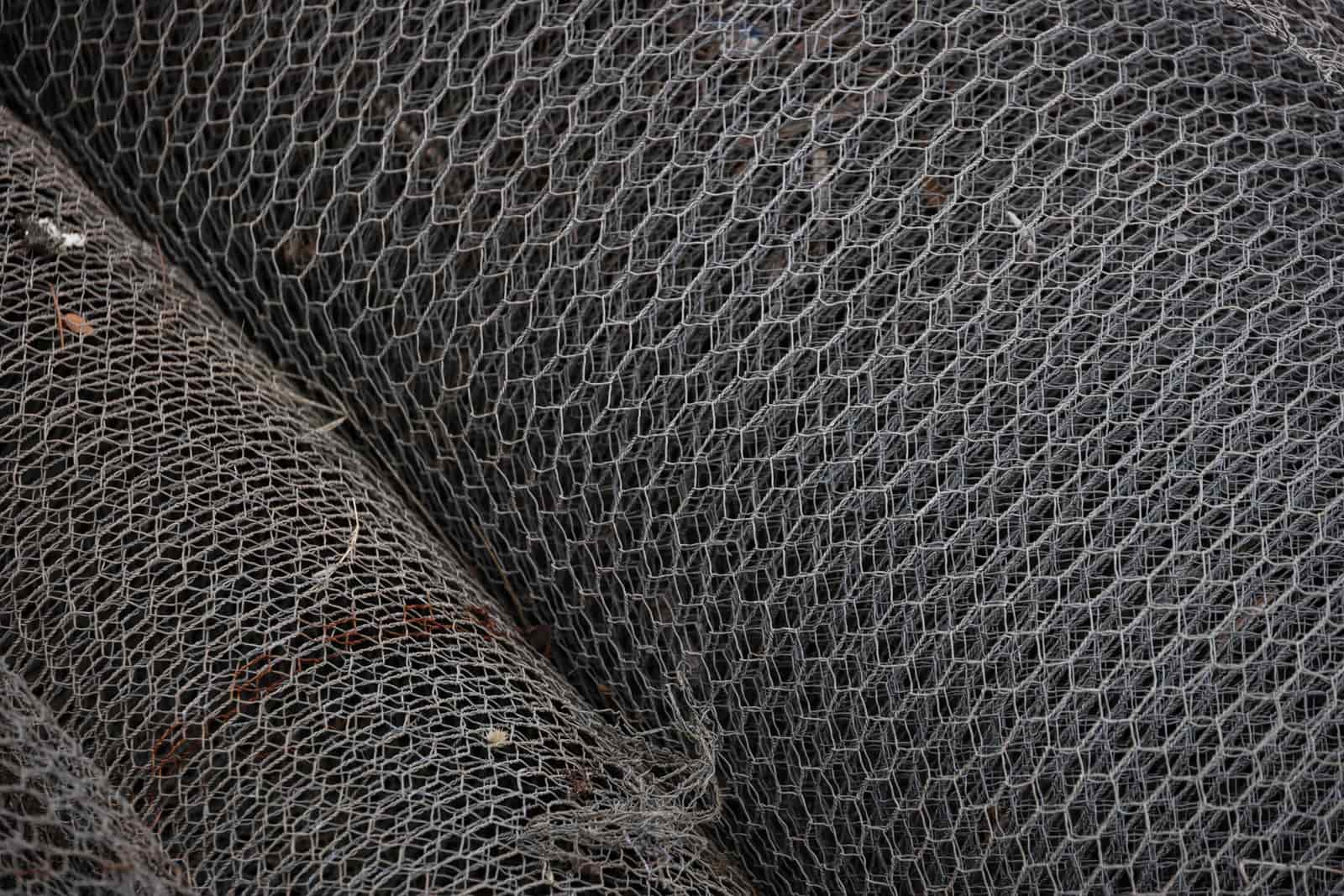
| 5 | 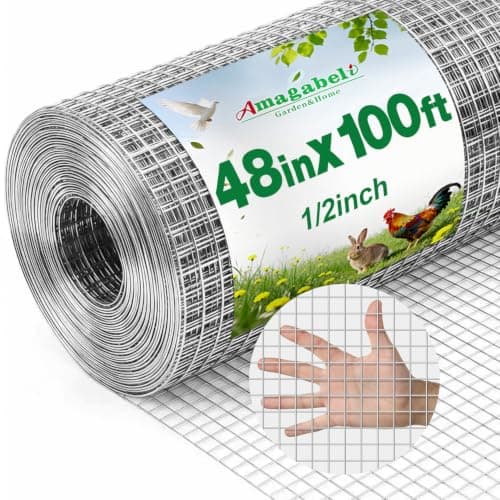 Amagabeli 1/2" Hardware Cloth, 48in x 100ftHalf-inch aperture, 19 gauge, hot-dipped galvanized after welding. This is the specification that actually keeps raccoons out. | The single most important predator purchase | not published |
This confusion is manufactured. Listings for a wooden kit quote one bird count against the whole footprint - henhouse, run and the open ground under the raised box all counted as one number - and a shopper reasonably concludes the two are interchangeable volumes of space. They are not.
The distinction is functional rather than decorative, and everything about what you buy follows from it.
What each one actually does
| Coop | Run | |
|---|---|---|
| Used | Dusk to dawn, and to lay | Daylight hours |
| Roofed | Always, solid | Usually mesh; solid only in wet or hawk country |
| Locked at night | Yes - this is the point of it | No, and it does not need to be if the coop locks |
| Contains | Roost bars, nest boxes, ventilation above head height | Ground, dust bath, feeder, water, shade |
| Space per standard hen | About 4 sq ft of floor | About 8 sq ft of ground |
| Failure mode | Too small - birds pick and foul the litter | Too small - bare mud, boredom, parasites |
The night-time lock is the part people underrate. Almost every predator loss in a backyard flock happens between dusk and dawn, and it happens to birds inside a structure that was never built to hold anything out. A run keeps hens in. A coop keeps raccoons, weasels and foxes out - if it is built for it, which most are not out of the box.
The space figures add, they do not overlap
This is why the same coop appears on this site as honest for three birds and dishonest for six. It has not changed size. The listing counted the run.
Can a run ever be the whole answer?
No, and it is worth saying plainly because the price per square foot makes it tempting. A galvanized walk-in run gives several times the ground area per dollar of any wooden coop-and-run kit, and it lasts years longer. It is also the best value in the category.
It is still not a coop. Hens need a dark, draft-free, enclosed place to roost off the ground and a private box to lay in. A mesh box does not do that in any climate, and in cold or wet weather it is actively dangerous. The correct read of the value argument is: buy the run generously and solve roosting separately, not skip roosting.
Can a coop ever be the whole answer?
Only if the birds free range from sunrise. Otherwise a flock shut in a coop all day produces exactly the outcomes the space guidance exists to prevent: feather picking, fouled litter, wet bedding and the respiratory problems that follow, and hens that stop using the nest boxes.
Most people arrive at the answer the hard way - they buy a kit, discover the attached run is a corridor, and then buy a run. Doing it in that order costs more than doing it in one.
How we judged the picks
- Which half of the problem it solves - and whether it admits to solving only one.
- Measured area from the maker published dimensions, read on the same basis for every product.
- For coop-and-run kits, whether the split between henhouse and run is stated or has to be inferred.
- For runs, height. A run you can stand in gets cleaned; a run you crawl into does not.
- What has to be bought alongside it. Every enclosure here needs half-inch hardware cloth before birds go in.
What to buy, by where you are starting
- Nothing yet, three or four birds - a coop-and-run kit is the sensible one-delivery answer, bought on measured floor rather than the bird count. See best coops for beginners.
- Nothing yet, six or more birds - buy the henhouse and the run as two products. No kit in this category honestly houses six. Coops for 8 chickens works that through.
- Coop is fine, run is a corridor - buy a modular steel run and attach it. This is the most common position and the cheapest fix. Run extensions.
- Run is fine, no henhouse - a plastic or wooden henhouse inside or against the run. Plastic cleans faster and lasts longer; see plastic coops.
- Both fine, birds still being taken - it is a security problem, not a space one. Predator-proof a coop.
The picks
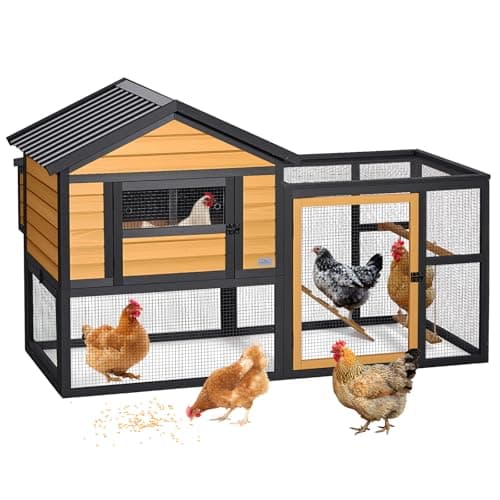
Top pick · Five hens, honestly
Petsfit Outdoor Coop with Run
20.7 sq ft against a claim of six - one bird out, which makes it one of the more honest small coops here.
What the numbers say
71in x 42in = 20.7 sq ft of whole-unit footprint, which includes the attached run and is therefore generous. At 4 sq ft per standard hen that is 5 birds, against a claim of 6.
Figures from Petsfit published specifications (Amazon listing) · 71"L x 42"W x 45"H · Fir
20.7 sq ft supports five standard hens. Petsfit claims four to six, so the arithmetic sits inside its stated range rather than outside it.
The 42in depth is why. Among the small coops on this site, depth is almost perfectly predictive of whether the claim survives contact with a tape measure.
Three nesting boxes for five hens is more than the one-per-four guidance requires, but not wastefully so.
Good
- Arithmetic lands inside the claimed range
- 42in depth is generous for this size class
- Predator-resistant hardware noted in the listing specification
Not so good
- Six is one bird past the floor
- Fir needs seasonal re-treating
- 45in height means stooping to clean
Skip this if: you are set on six birds. Five is what it holds, and the sixth is the one that gets pecked.
#ad · how this is funded · price as of September 13, 2026
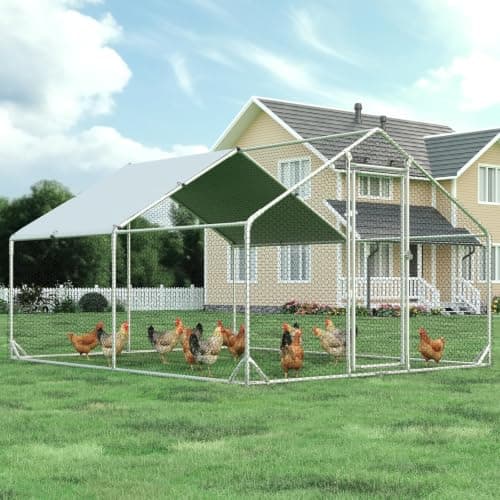
Pick 2 · A genuine walk-in enclosure
4ever2buy Metal Chicken Coop, 10x13 FT Walk-In Run
128.4 sq ft of walk-in enclosure wrapped in galvanized hardware cloth - the largest ground area on this site, and a cover included.
What the numbers say
157.2in x 117.6in = 128.4 sq ft of whole-unit footprint, which includes the attached run and is therefore generous. At 4 sq ft per standard hen that is 32 birds, against a claim of 15.
Figures from 4ever2buy published specifications (Amazon listing) · 157.2"L x 117.6"W x 76.8"H (10 x 13 ft) · Rust-resistant steel frame with galvanized hardware cloth
128.4 sq ft is the largest ground area on this site by a wide margin - more than twice the next biggest.
The listing claims room for 12 to 15 chickens. Read as run space at the published 8 sq ft a bird that is about 16, so the claim is reasonable - which is unusual enough here to say out loud. The bird column in our table divides by the 4 sq ft indoor figure, and that is the wrong measure for an enclosure with no henhouse in it.
Fully wrapped in galvanized hardware cloth rather than chicken wire is the specification that matters. Chicken wire keeps chickens in; hardware cloth keeps raccoons out, and they are not the same job.
A waterproof anti-UV cover is included, which is the detail that keeps the ground under it usable through a wet season.
Good
- Galvanized hardware cloth all round, not chicken wire
- 76.8in height is a true walk-in at 6.4 ft
- Waterproof cover included rather than sold separately
Not so good
- It is a run, not a coop - you still need a henhouse
- 13ft x 10ft needs serious yard space
- The 12-15 bird claim only holds as run space, never as roosting room
Skip this if: you expected a coop. There is no insulated, enclosed house in it, and birds cannot roost in a run overnight safely in most climates.
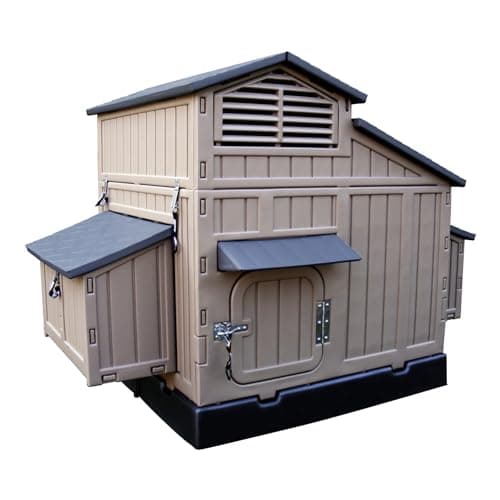
Pick 3 · Cleaning, and cold that stays out
Hatching Time Formex Snap Lock Large Chicken Coop
The one coop here whose material genuinely earns its price, sized for four hens rather than the six on the box.
What the numbers say
64in x 39in = 17.3 sq ft of enclosed henhouse floor. At 4 sq ft per standard hen that is 4 birds, against a claim of 6.
Figures from Hatching Time published specifications (Amazon listing) · 64"L x 39"W x 42"H · Double-walled polyethylene
This is a standalone henhouse with no attached run, so the published footprint is all enclosed floor. That makes it one of the few coops on this site where the generous reading and the honest reading are the same number.
17.3 sq ft supports four standard hens at the 4 sq ft figure. The listing says four to six. Four is right; six is a winter of pecked backs.
Double-walled polyethylene is the reason to buy it. There is no end grain to rot, no seam for mites to colonize, and it hoses out in minutes - the single biggest practical difference between a coop you keep clean and one you avoid.
Good
- Whole footprint is enclosed floor, not run
- Double-walled plastic will not rot, absorb, or harbor mites the way fir does
- Panels unclip for cleaning without tools
Not so good
- Costs more than the wooden coops it outlasts
- No run included, so budget for one
- Plastic walls hold no insulation value on their own
Skip this if: you want a coop and run in one purchase. This is a henhouse only, and pairing it with a run pushes the total past most wooden coop-plus-run kits.
#ad · how this is funded · price as of September 13, 2026
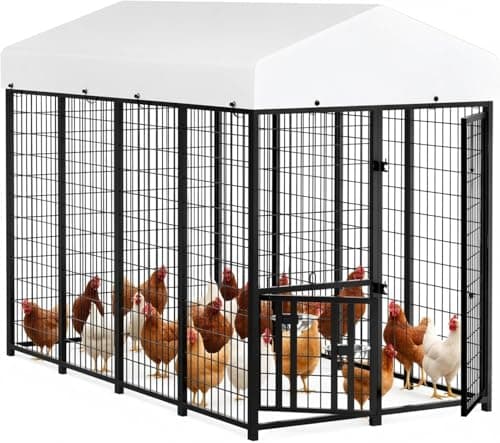
Pick 4 · Bolting a secure run onto an existing coop
LUXEYARD Advanced Series Metal Run
31.3 sq ft with hardware cloth on the sides - a sensible extension for a coop that came with a flimsy run.
What the numbers say
47in x 96in = 31.3 sq ft of whole-unit footprint, which includes the attached run and is therefore generous. At 4 sq ft per standard hen that is 7 birds. The maker publishes no bird count of its own to compare against.
Figures from LUXEYARD published specifications (Amazon listing) · 47"L x 96"W x 67"H · Galvanized steel
31.3 sq ft of ground at 67 inches tall - not quite walk-in for most adults, but close enough to work in.
Side hardware cloth is the specification that matters. Most bundled runs use chicken wire, which a raccoon opens without much trouble.
No bird count is claimed. Correct for a run.
Good
- Hardware cloth sides rather than chicken wire
- Right size to extend a small coop's run
- Galvanized steel frame
Not so good
- 67in is just short of true walk-in height
- A run only - no house
- Needs anchoring or skirting to stop digging predators
Skip this if: you have not solved the floor. A run with no buried apron or skirt is a dig-under waiting to happen, whatever the sides are made of.
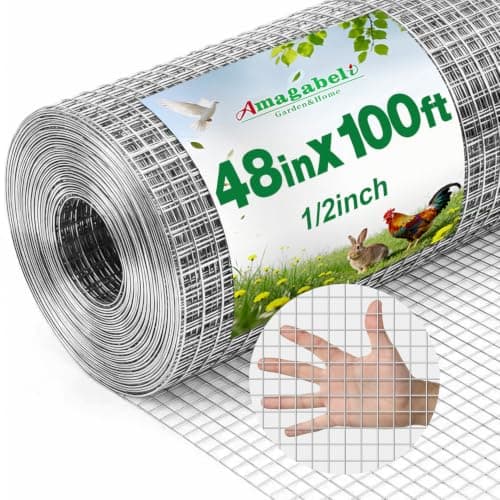
Pick 5 · The single most important predator purchase
Amagabeli 1/2" Hardware Cloth, 48in x 100ft
Half-inch aperture, 19 gauge, hot-dipped galvanized after welding. This is the specification that actually keeps raccoons out.
What the numbers say
The manufacturer does not publish the dimensions this calculation needs, so we do not print a number.
Figures from Amagabeli published specifications (Amazon listing)
Half-inch aperture is the number that matters. A raccoon can reach through 1in mesh and a weasel walks through 1in chicken wire; half-inch stops both.
Galvanized AFTER welding, not before, is the second specification to check. Welding burns the coating off, so mesh galvanized beforehand rusts at every joint - which is exactly where it needs to hold.
19 gauge is the practical minimum for a coop perimeter. Thinner mesh sold as hardware cloth exists and bends open by hand.
Good
- Half-inch aperture excludes raccoons and weasels
- Hot-dipped galvanized after welding, so joints do not rust first
- 48in width covers most run walls in a single run
Not so good
- Cutting it is hard on the hands and on your snips
- 100ft is more than a small coop needs
- Edges are sharp and need capping or folding
Skip this if: only if you already have half-inch hardware cloth. Do not substitute chicken wire - it is a containment material, not a security one.
Measured against the claims
| Coop | Published size | Floor area | Maker says | Arithmetic says |
|---|---|---|---|---|
| Petsfit Outdoor Coop with Run | 71"L x 42"W x 45"H | 20.7 sq ft | 6 hens | 5 hens |
| 4ever2buy Metal Chicken Coop, 10x13 FT Walk-In Run | 157.2"L x 117.6"W x 76.8"H (10 x 13 ft) | 128.4 sq ft | 15 hens | 32 hens |
| Hatching Time Formex Snap Lock Large Chicken Coop | 64"L x 39"W x 42"H | 17.3 sq ft | 6 hens | 4 hens |
| LUXEYARD Advanced Series Metal Run | 47"L x 96"W x 67"H | 31.3 sq ft | no claim | 7 hens |
Floor area is the maker’s published footprint. Where a unit includes an attached run that figure spans the run too, which makes it a generous reading - the enclosed roosting floor is smaller still. How we work these out.
Read that table with the split in mind. A whole-unit figure that looks generous for six birds is usually a henhouse for three with a run for three attached, and the birds all sleep in the henhouse.
Where to go next
- Coop size per chicken - the numbers behind both halves
- How makers count birds - why the two get merged in listings
- Coops with a run - the kit format, measured
- Work out your own numbers
Questions people actually ask
+What is the difference between a chicken coop and a run?
+Do chickens need a run if they have a coop?
+Does run space count toward coop space?
+Can chickens sleep in the run instead of the coop?
+Is it cheaper to buy a coop and run separately?
+How big should a run be for 6 chickens?
Sources
- University of Minnesota Extension - Raising chickens for eggs (3-5 sq ft indoor space per bird; one nest box per 4-5 birds)
- Penn State Extension - Small-scale poultry housing
- eXtension Small and Backyard Poultry - Space allowances in housing (3-4 sq ft indoor / 10 sq ft outdoor per laying hen; states there is very little peer-reviewed research on backyard space allowances)
- Michigan State University Extension - Backyard chickens: housing
Read next
How much space one chicken needs
The per-bird floor figure by breed class and run access, with worked examples and the coops that actually meet it.
The best chicken coops with attached runs
Coop-and-run kits ranked on measured whole-unit area, with the run counted honestly rather than sold to you as coop floor.
Run extensions for a coop you already own
Bolt-on runs ranked by measured area added, with the crucial distinction between what an extension fixes and what it does not.
What a coop listing means by holds 6 chickens
How listing bird counts are constructed, the four ways they drift, and a thirty-second check that works on any product page.
Guides, and the arithmetic behind them
The reference library: sizing arithmetic, ventilation, predator-proofing, bedding, cost and the permits nobody checks first.
The best chicken coops for beginners
First flock, no prior kit. The coops that are easy to clean, secure, and honestly sized.