Hen's Choice Reversible Roll Out Nest Box, 2 Compartment
Roll-away boxes move the egg out of reach. This one also addresses the reason eggs get dirty in the first place, which almost none of them do.
We have not handled these coops, and we do not pretend to have. Here is what we did instead. Links to Amazon earn us a commission at no extra cost to you - disclosure.
| # | Coop | Best for | Honest count | Price |
|---|---|---|---|---|
| 1 | 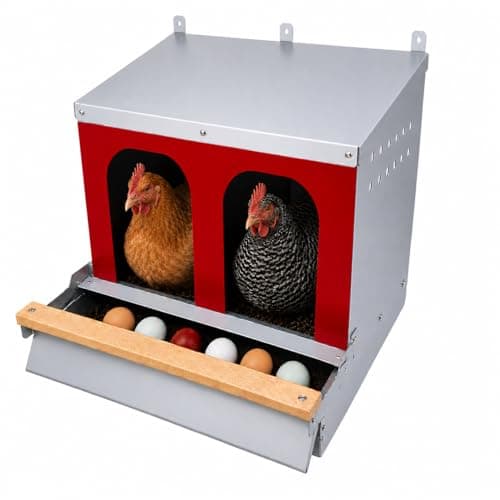 Hen's Choice Reversible Roll Out Nest Box, 2 Compartment 21inTop pickFully galvanized, reversible so you can collect from outside the coop, and the only pick here with a hinged perch that shuts hens out of the box at night. | The two problems a roll-away box should solve at once | not published |
The roll-away idea is simple: the nest floor slopes, so an egg rolls into a covered tray within seconds of being laid. By the time the hen stands up it is somewhere she cannot reach, which stops egg eating, cuts breakage and keeps eggs clean.
What makes this particular box worth a page of its own is the feature that has nothing to do with rolling.
The hinged perch, and why it matters more than the slope
Most dirty eggs are not dirty because of what happened after they were laid. They are dirty because hens slept in the nest box overnight and fouled it, and the next morning's egg landed in that.
A roll-away box moves the egg out of the nest, which helps - but a box that has been slept in is still a box full of droppings, and the collection tray collects whatever rolls in with the egg. This one ships with a wood perch that hinges up in the evening to close the box off, and the listing notes it is designed so the egg collection lid still opens without touching it.
That is a nightly habit rather than an automatic feature, and it is worth being honest about that. But it is the only pick in this category that offers the option at all, and it addresses the cause rather than the symptom. The underlying fix is usually roost bar - a flock short of perch sorts it out by pecking order and the birds at the bottom sleep in the boxes. Roost bar length, height and shape covers the published 8 inches per standard hen.
The bedding conflict, and how this box resolves it
Every roll-away box has the same problem and almost no listing mentions it. Penn State Extension and eXtension both say to keep two inches of clean, dry nesting material in the nest at all times, and eXtension explains why: as protective egg padding, because egg breakage is what starts egg eating.
Two inches of loose shavings is precisely what stops an egg rolling anywhere. A roll-away box filled with bedding is a nest box with a slope in it.
The resolution is a thin washable pad, and this box includes one - a commercial-grade nesting pad with large openings in a grass-like texture, which the listing frames as removing the need to strip soiled bedding. Boxes that do not include a pad leave you to buy one, and it is not optional in this format. Nesting pads covers that purchase.
Reversible collection
The box assembles either way round, so the collection lid faces into the coop or out of it. Collecting from outside is a small thing on a dry morning and a large one in February - it is the difference between opening a lid and going inside in muck boots.
It also changes where the box can go. A reversible box can be let into a coop wall with the collection side outside, which is the arrangement most people want and few boxes allow.
Build, and what galvanized means here
The listing's claim is no plastic parts and no painted metal - all galvanized steel. In a coop that is a meaningful durability difference, because damp and droppings find every coating and painted mild steel rusts from the chip outward.
The costs are weight and price. This is a heavy object that has to be mounted level, because a roll-away box out of true either fails to roll or rolls too fast, and neither is obvious until eggs start arriving cracked.
Sizing it against the published nest
Two compartments covers eight to ten hens on the published figure of one 12 inch by 12 inch nest per four or five hens. For a backyard flock of six that is one compartment more than the ratio requires - which is not waste so much as the smallest unit the format is sold in.
Worth knowing: Penn State adds a floor of never fewer than four nesting boxes, and eXtension says never fewer than six. The two disagree, and both read as written for flocks larger than a backyard six. How many nesting boxes explains why this site works from the ratio.
Who should buy it
- Anyone with an egg eater, a persistent breakage problem, or eggs that arrive dirty every morning.
- Keepers who collect from outside the coop, or who want to - the reversible assembly is built for that.
- Anyone who has bought a cheaper roll-away box and discovered it needs a pad nobody mentioned.
- Coops where the nest boxes are getting slept in and you want the option to close them at night.
Who should not
- Anyone who wants a hen to go broody and hatch a clutch. The eggs leave within seconds, every time - keep a conventional nest as well.
- Anyone buying on price. It sits at the premium end of the format, and cheaper roll-away boxes do the core mechanism.
- Coops with no solid framing to hang a heavy galvanized box from, level.
- Flocks whose eggs are fine. The published free measures - two inches of bedding, collecting early, correct nest numbers and placement - come first.
The full write-up
Top pick · The two problems a roll-away box should solve at once
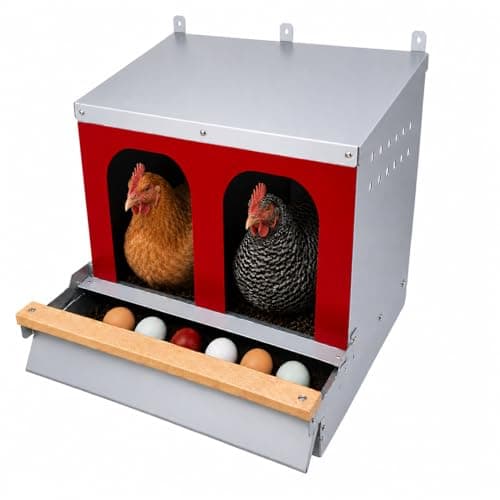
Hen's Choice Reversible Roll Out Nest Box, 2 Compartment 21in
Fully galvanized, reversible so you can collect from outside the coop, and the only pick here with a hinged perch that shuts hens out of the box at night.
What the numbers say
The manufacturer does not publish the dimensions this calculation needs, so we do not print a number.
Figures from Hen's Choice published specifications (Amazon listing) · 21"L x 19"W x 20"H, 2 compartments · Fully galvanized steel, no plastic or painted parts
The hinged wood perch is the feature worth paying for and almost nobody else fits one. Birds that sleep in a nest box foul it overnight, and that is where dirty eggs come from - a perch you can flip up in the evening closes the box without you removing anything.
Reversible assembly means the collection lid can face into the coop or out of it. Collecting from outside is the difference between a two-minute job in the rain and a trip inside in muck boots.
It ships with a washable nesting pad, which matters more than it sounds. Penn State says to keep two inches of clean, dry nesting material in a nest at all times - and two inches of loose bedding is exactly what stops an egg rolling. A pad is how a roll-away box resolves that conflict, and a box that does not include one leaves you to buy it.
No plastic and no painted metal is a real durability claim in a coop, where damp and droppings find every coating. The cost is weight and price - this sits at the premium end of the format.
Good
- Hinged perch flips up to keep hens out of the box overnight
- Reversible - collect eggs from inside or outside the coop
- Washable nesting pad included, which a roll-away actually needs
- Fully galvanized with no plastic or painted parts
Not so good
- Premium pricing for two compartments
- Two compartments is more box than a small flock needs on the published ratio
- Heavy, and it has to be mounted level for the roll to work
- A flipped-up perch is a nightly habit, not an automatic feature
Skip this if: you want a broody hen to hatch a clutch. Every roll-away box takes the eggs away from her within seconds, and no amount of sitting will change that.
#ad · how this is funded · price as of September 21, 2026
The alternatives
Roll-away nest boxes compares this against a budget two-compartment box that publishes its compartment width, a premium open community nest, a box with predator locks on the lid, and a ten-compartment bank - all measured against the published 12 inch nest.
Questions people actually ask
+Does a roll away nest box stop egg eating?
+Can you put bedding in the Hen's Choice roll out box?
+What does the hinged perch do?
+Can you collect eggs from outside the coop with it?
+How many hens does a 2 compartment nest box serve?
+Is it worth the price over a cheaper roll away box?
Sources
- Penn State Extension - Prevention of egg eating in chickens (one 12in x 12in nest per 4-5 hens, never fewer than 4 boxes; nests 2ft off the ground and 4ft from roosts; 2 inches of nesting material at all times; collect eggs early; prevention is the only proven treatment)
- eXtension Small and Backyard Poultry - Egg eating by chickens in small and backyard flocks (egg eating usually starts from accidental breakage; one 12in nest per 4-5 hens, never fewer than six boxes; 2 inches of nesting material as protective padding; cull a confirmed egg eater)
- University of Minnesota Extension - Raising chickens for eggs (3-5 sq ft indoor space per bird; one nest box per 4-5 birds)
- Penn State Extension - Small-scale poultry housing
Read next
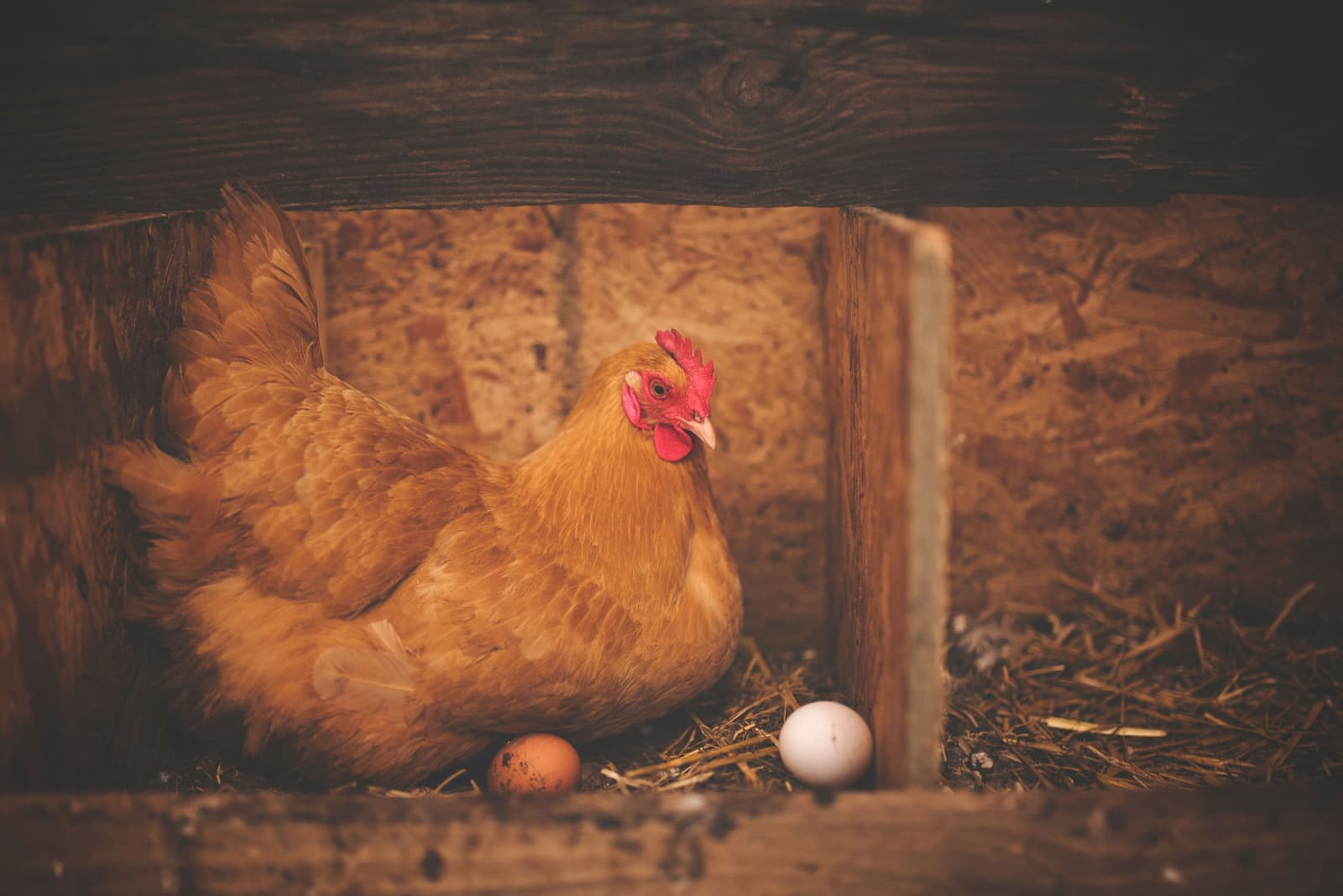
Roll-away nest boxes, measured against the published nest
Roll-out nest boxes judged on the published 12in nest, one per four to five hens, and the two inches of bedding a roll-away box cannot hold.
Nesting pads, and the two inches they replace
Excelsior and washable nest pads measured against the published 12-inch nest and the two inches of material the sources call for.
How many nesting boxes a flock needs
The per-flock box count, why coops oversupply boxes at the cost of floor area, and how to fix hens that will not use them.
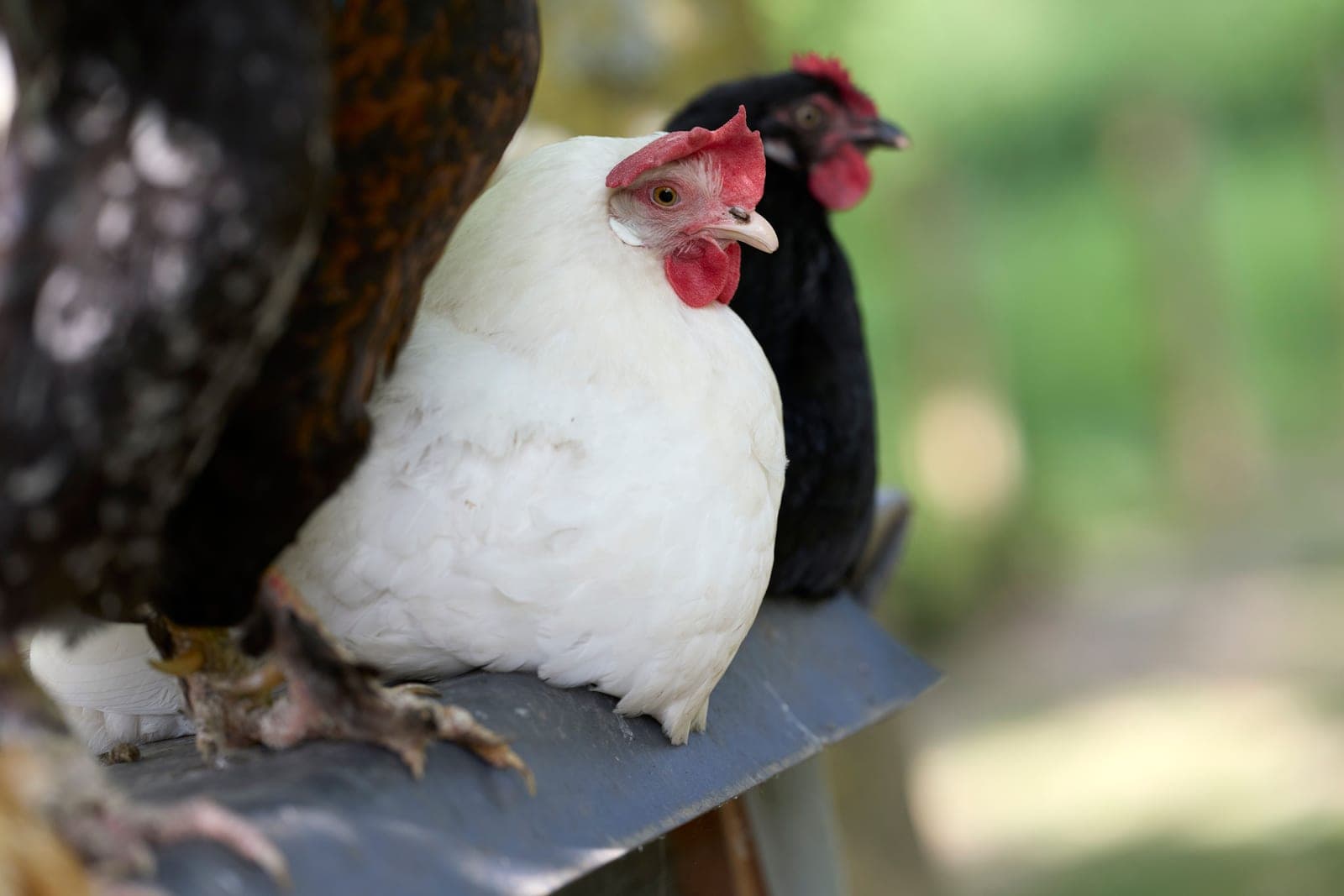
Roost bar length, height and shape
Per-bird bar length by breed, the flat-versus-round question, mounting height, and how to add bar without carpentry.

Single-model reviews
Individual coop reviews, each measured against the maker's own published dimensions rather than its marketing.
Nesting boxes, and the six-box three-hen coop
How many boxes a flock needs, why coops oversupply them, and what to do when you genuinely are short.