Farm Innovators Heated 3 Gallon Hanging Water Fountain
The heated waterer most keepers end up with, and the one whose published limit is worth reading before your first hard freeze.
We have not handled these coops, and we do not pretend to have. Here is what we did instead. Links to Amazon earn us a commission at no extra cost to you - disclosure.
| # | Coop | Best for | Honest count | Price |
|---|---|---|---|---|
| 1 | 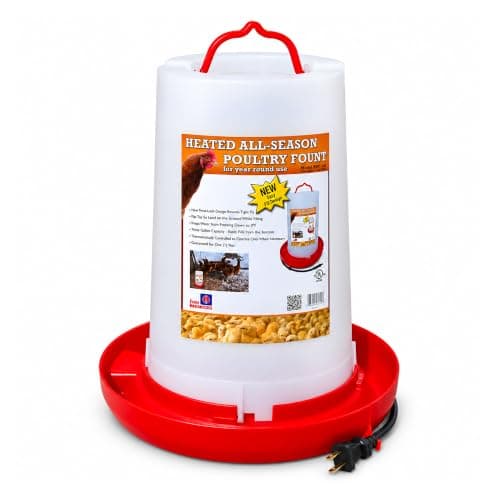 Farm Innovators Thermostatically Controlled Heated 3 Gallon Hanging Water FountainTop pickThe category's long-standing default. Thermostatically controlled, published as preventing freezing down to 0F, and it hangs - which is the only way an open font stays usable. | The traditional heated font, done properly | not published |
If you keep chickens somewhere cold you will end up looking at this waterer, because it is what everyone else bought. It is worth understanding precisely what it does, because it does one of the two winter water jobs very well and the other not at all.
Why unfrozen water is a production decision
Penn State Extension's laying-flock guide is blunt: never let laying hens go without water for more than 12 hours, or you will see a drop or stoppage of egg production.
Twelve hours is shorter than a winter night plus a slow morning. A waterer frozen at dusk and not dealt with until after breakfast has crossed the line, and it takes one ordinary frost and one late start rather than a cold snap. That is what makes a heated waterer a production item in a freezing climate rather than a comfort one.
The published limit, and why it is worth knowing
The listing states the unit is thermostatically controlled, operating only when necessary, and capable of preventing water from freezing in temperatures down to 0 degrees F.
That is a specific, checkable figure, and specificity is worth rewarding in a category full of the word winterproof. It also tells you where the product stops. If your winter routinely goes below zero, the maker has told you that you are outside what it claims - and that is useful information, not a defect.
Thermostatic rather than always-on matters for running cost too. The element works when the temperature calls for it and sits idle otherwise, which over a season is the difference between a heated waterer and an outdoor kettle.
The open-font problem
This is where the honest assessment lives. It is an open fountain. Water sits exposed in a trough around the base, and in a coop that means bedding, droppings and everything a scratching hen kicks sideways ends up in it.
Keeping water liquid and keeping water clean are two different jobs, and this unit is built for the first. An enclosed nipple waterer solves the second, and the heated nipple options on chicken waterers solve both at a higher price.
Capacity, against the published figure
Read that as a floor rather than a refill schedule. Nothing in it says the water will still be fit to drink on day ten, and in an open font it will not be - fouling, not volume, sets the refill interval here.
A discrepancy worth knowing about
The listing's own dimension fields and its feature bullets do not agree with each other on the physical size of the unit. The 3 gallon capacity is consistent across both, so that is the figure to plan around, and we are not going to publish a size we cannot reconcile.
That is a small thing and it is the kind of small thing this site notices, because the whole method here depends on published figures meaning something.
What it needs from you
- Mains power at the coop, run safely - an outdoor-rated circuit with GFCI protection, not an extension cord under a tarp. The same requirement as a coop heater.
- A hanging point at roughly the height of the birds' backs, and the willingness to adjust it as pullets grow.
- A check on the coldest nights rather than an assumption, particularly if your winter approaches the published 0F limit.
- Plastic care. Plastic gets brittle after several hard winters, and a cracked font in January is a bad week.
Who should buy it
- Keepers in a climate that freezes but does not routinely go below 0F, with power at the coop.
- Anyone who wants the category default and a published temperature rating rather than a marketing adjective.
- Flocks already using an open font in summer, where this is a like-for-like winter swap rather than a change of habit.
Who should not
- Anyone whose real complaint is dirty water. This keeps it liquid, not clean - a nipple system is the answer to fouling.
- Coops with no safe mains route. Carrying warm water out twice a day remains a legitimate answer and costs nothing.
- Keepers well below 0F in normal winters, which is outside the published rating.
- Runs that flood or flocks that kick bedding everywhere, where an open font is a daily scrub whatever you do.
The full write-up
Top pick · The traditional heated font, done properly
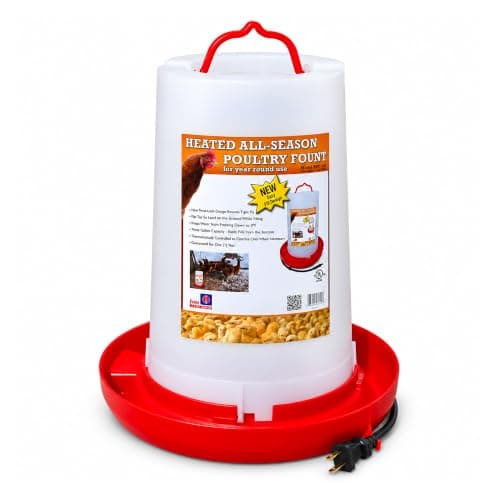
Farm Innovators Thermostatically Controlled Heated 3 Gallon Hanging Water Fountain
The category's long-standing default. Thermostatically controlled, published as preventing freezing down to 0F, and it hangs - which is the only way an open font stays usable.
What the numbers say
The manufacturer does not publish the dimensions this calculation needs, so we do not print a number.
Figures from Farm Innovators published specifications (Amazon listing) · 3 gallon reservoir; listing states 20"L x 13.5"W x 13.5"H · Plastic
The published claim is specific and therefore checkable: thermostatically controlled, operating only when needed, and capable of preventing water from freezing down to 0F. If your winter goes below zero, the maker has told you where its limit is.
It is an open fountain, and that is the trade. Open water at floor level collects bedding, droppings and everything a scratching hen kicks sideways, which is why hanging it is not optional.
Hang it so the water lip sits at roughly the height of the birds' backs. Too low and it fouls in a day; too high and the smaller birds stop drinking.
Note a discrepancy worth knowing about: the listing's own dimension fields and its feature bullets do not agree with each other. The 3 gallon capacity is consistent across both, so that is the figure to plan around.
Good
- Thermostatic control, so it runs only when it needs to
- Published freeze protection down to 0F
- Designed to hang, which is what keeps an open font clean
- The most widely used heated waterer in the category
Not so good
- Open fountain - it fouls far faster than any nipple system
- 0F is a stated limit, not a guarantee below it
- Plastic, and plastic gets brittle after several hard winters
- The listing's own dimension fields contradict its feature bullets
Skip this if: your birds have a habit of kicking bedding everywhere or your run floods. An open font in a wet, scratched-up run is a daily scrub, and a nipple bucket removes the job entirely.
#ad · how this is funded · price as of September 27, 2026
The alternatives
Chicken waterers compares this against a heated nipple unit that publishes its thermostat range, an unheated 5 gallon nipple bucket, a thermostatic base for a waterer you already own, and a solar option - on capacity, drinking points and freeze behavior.
Questions people actually ask
+How cold can the Farm Innovators heated waterer handle?
+Does a heated waterer keep the water clean?
+Why does a frozen waterer matter so much?
+Should a heated waterer be hung or stood on the floor?
+How many chickens does a 3 gallon waterer serve?
+Does it need mains power?
Sources
- Penn State Extension - Management requirements for laying flocks (3 inches of feeder space per bird; feeder lip level with the birds' back height; trough filled only one-third to one-half full to prevent wastage; at least 5 gallons of water per 100 birds daily; 1 inch of water space per bird; never more than 12 hours without water; 14-16 hours of light per day; never decrease the lighting period on birds in production)
- University of Georgia Extension B1301 - Poultry drinking water primer (broiler water consumption rises ~7% per degree F; broilers drink ~1.6-2.0x their feed weight in water)
- University of Minnesota Extension - Raising chickens for eggs (3-5 sq ft indoor space per bird; one nest box per 4-5 birds)
- Penn State Extension - Small-scale poultry housing
Read next
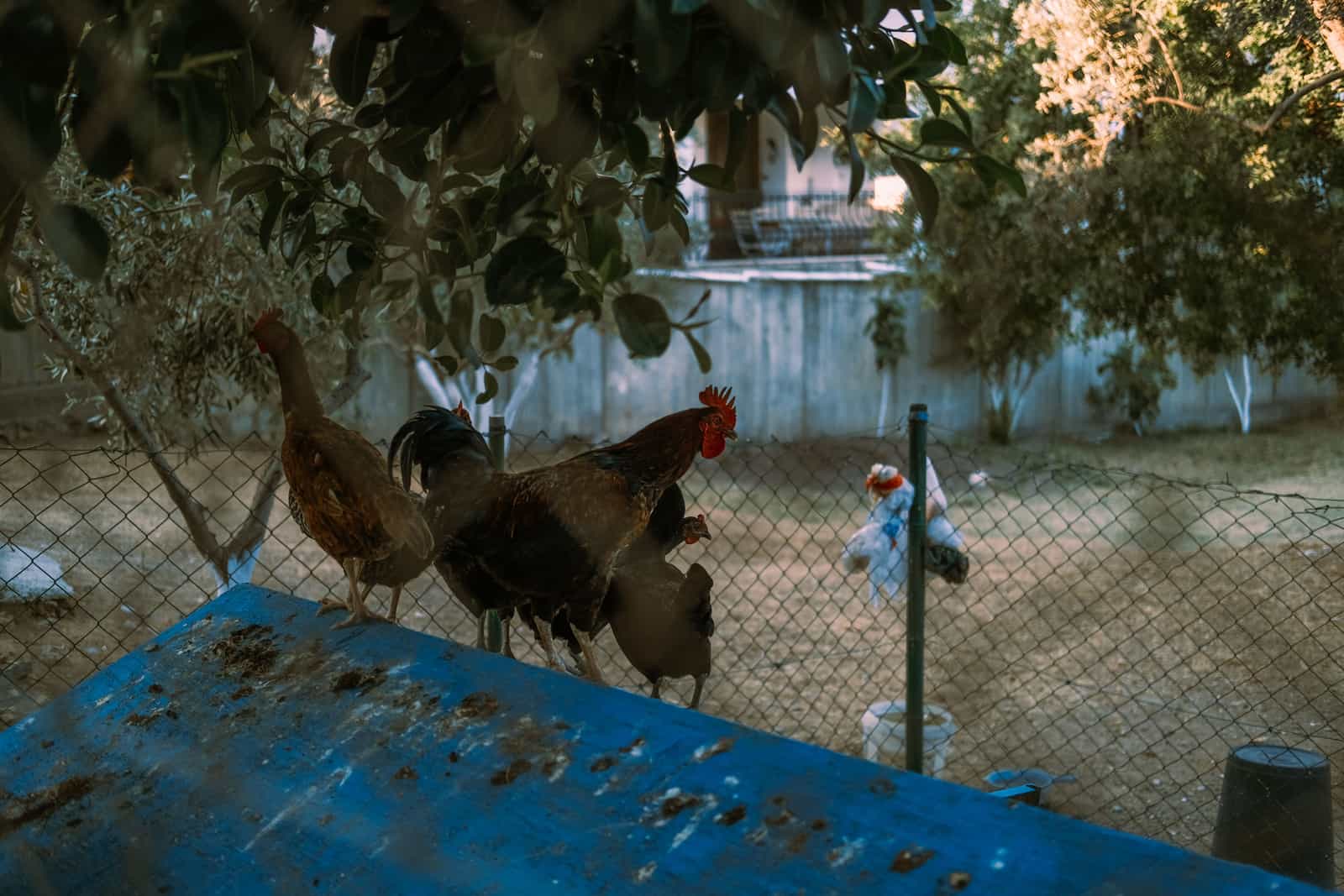
Chicken waterers, ranked on the published numbers
Heated, nipple and open waterers measured against the published 5 gallons per 100 birds daily, 1 inch of water space per bird, and the 12-hour rule.
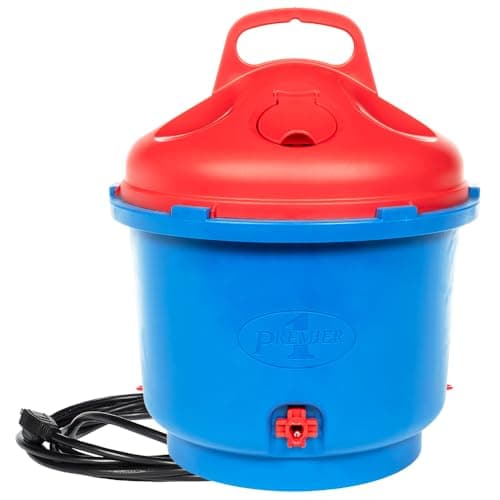
Premier 1 All-Season Heated Poultry Waterer, 3 Gallon
A heated nipple waterer reviewed on its published thermostat range, the 12-hour rule, and the lid-freeze problem the maker discloses.
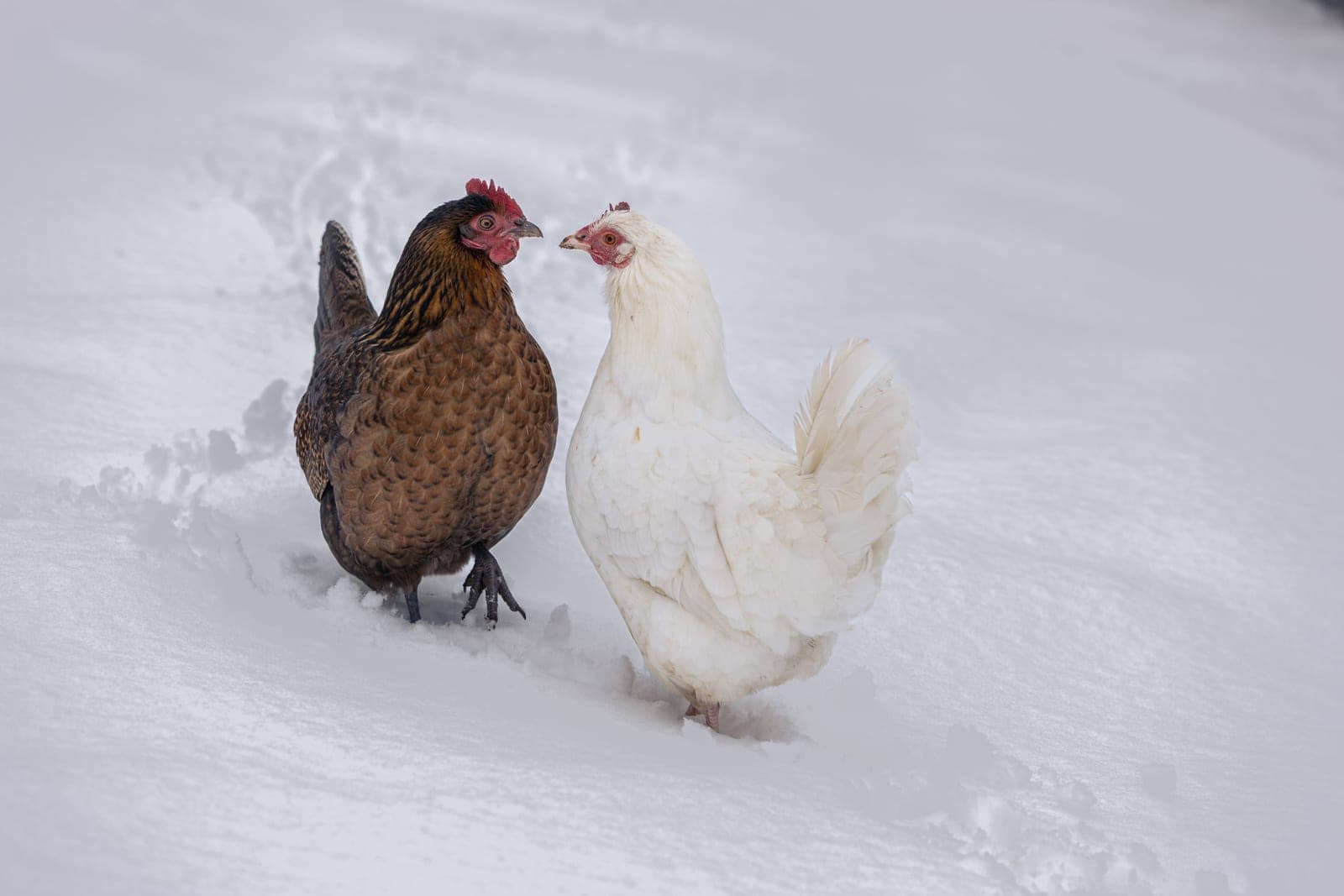
Chicken coops for cold climates
Cold-climate coops ranked on the things that matter below freezing - dryness, roof geometry, ventilation and floor area per bird.
Coop heaters, and whether you need one
Flat radiant panels compared, with an honest answer first on whether heat is the right intervention at all.
Single-model reviews
Individual coop reviews, each measured against the maker's own published dimensions rather than its marketing.
A cleaning routine you will actually keep
Daily, weekly and seasonal jobs sized so they get done, plus the mite inspection nobody schedules until it is too late.