Weasels, mink and the gaps you cannot see
A raccoon has to defeat your coop. A weasel just has to find a hole slightly larger than its own skull, and there are more of those than you think.
We have not handled these coops, and we do not pretend to have. Here is what we did instead. Links to Amazon earn us a commission at no extra cost to you - disclosure.
| # | Coop | Best for | Honest count | Price |
|---|---|---|---|---|
| 1 | 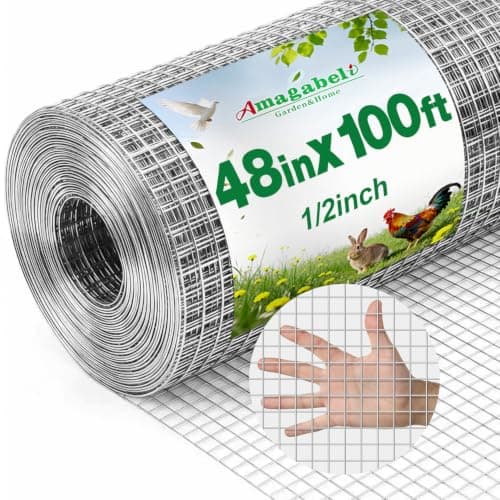 Amagabeli 1/2" Hardware Cloth, 48in x 100ftTop pickHalf-inch aperture, 19 gauge, hot-dipped galvanized after welding. This is the specification that actually keeps raccoons out. | The single most important predator purchase | not published | |
| 2 | 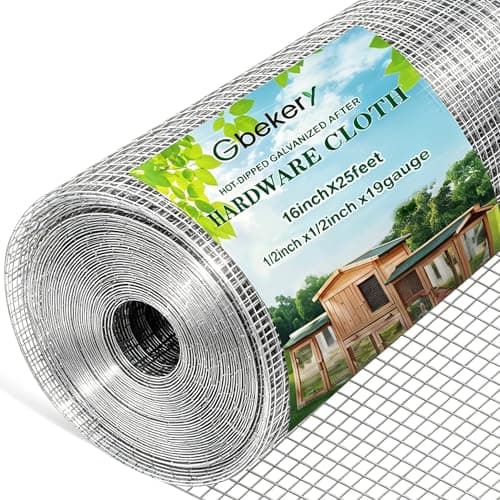 Gbekery 1/2" Hardware Cloth, 16in x 25ftSame half-inch, 19-gauge, galvanized-after-welding specification in a narrow roll - the right shape for a buried apron. | Aprons, skirts and patching | not published | |
| 3 | 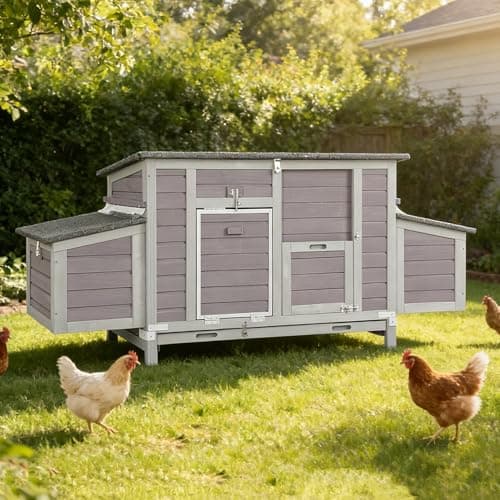 MEDEHOO Reinforced Predator-Proof Coop12.3 sq ft against a claim of six. Genuinely reinforced, genuinely a three-hen coop. | Security hardware on a small footprint | 3box says 6 |
Most coop security is about force: a raccoon pulling at a panel, a dog leaning on a frame, a fox digging at a wall. Small mustelids and rodents are a different category of problem entirely. They do not need to overcome your coop. They need a gap.
That is why this is the one threat where a coop can be entirely secure by every other measure - solid frame, two-motion latches, apron pinned down - and still lose birds overnight.
Aperture is the only specification that matters here
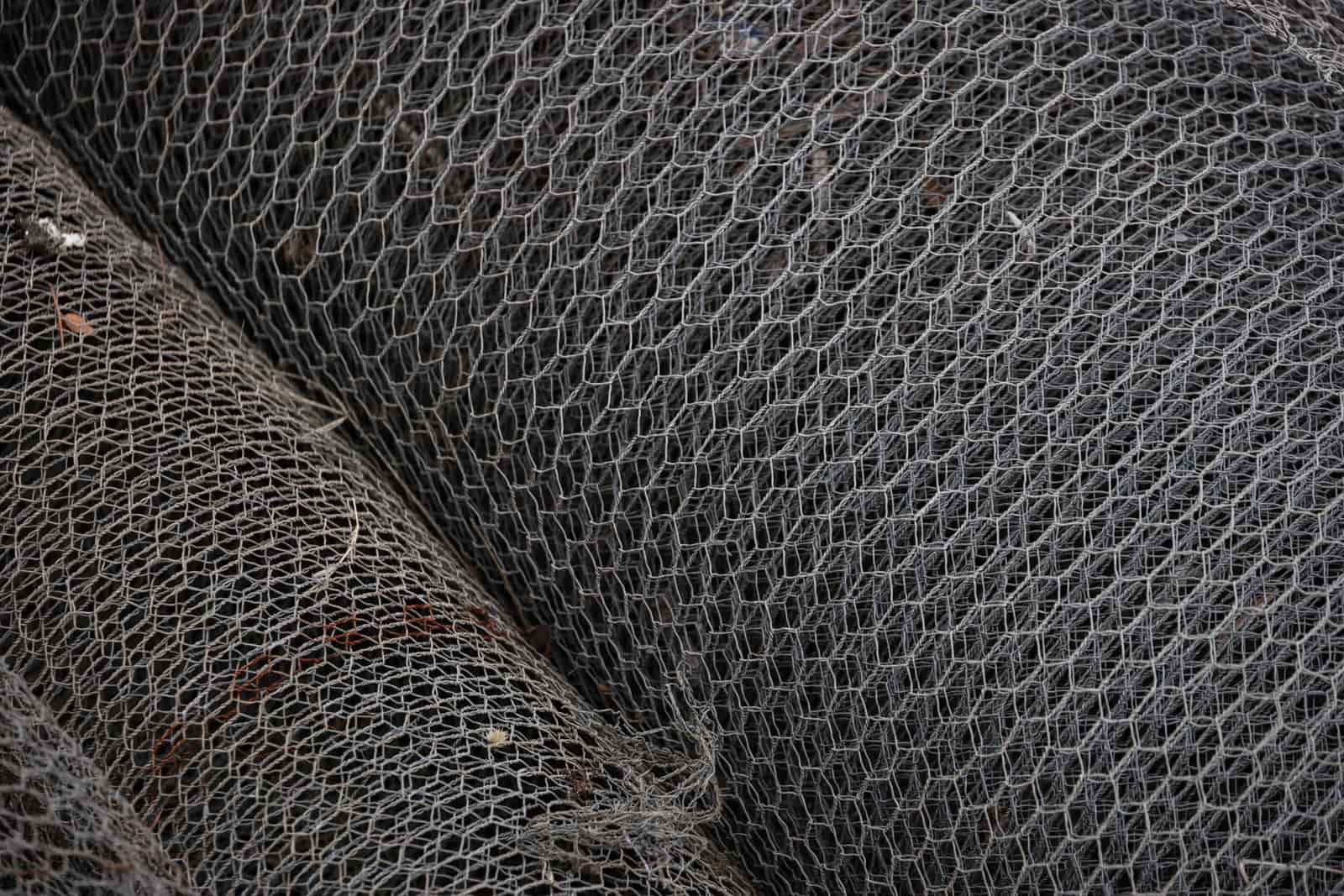
The mesh comparison from hardware cloth against chicken wire applies with more force. A weasel's body follows its head, and the head is smaller than people estimate. Anything larger than about an inch is a doorway.
| Mesh | Aperture | Weasel or mink | Rat | Mouse |
|---|---|---|---|---|
| Chicken wire (hex) | 1in or larger | No | No | No |
| Welded mesh 1in x 2in | 1in x 2in | No | No | No |
| Hardware cloth 1/2in | 0.5in | Yes | Yes | No |
| Hardware cloth 1/4in | 0.25in | Yes | Yes | Yes |
The second row is the trap. Welded 1in x 2in mesh looks and feels like a security product - it is rigid, galvanized, and sold on the same shelf. It excludes a raccoon's body and it does not exclude anything on this page.
Where the gaps actually are
Meshing the run walls and calling it done is the common mistake. Walk the coop looking specifically for openings above waist height and at junctions, because that is where small predators get in and where nobody looks.
- The roofline. Where a roof panel meets the wall there is frequently a gap of an inch or more, deliberately, for ventilation. Mesh it rather than blocking it.
- Vent openings themselves. A vent is a hole by design, and on a lot of coops it ships uncovered or covered in the wrong mesh.
- Around the pop door and its track, including the gap an automatic door leaves when it is fully closed.
- Where the nest box housing meets the coop body - an external box is a separate structure bolted on, and the joint is rarely tight.
- Cable and cord entries if you have run power for a heater or fan.
- Knots and splits in the timber itself, which open up as fir dries out over a season or two.
Rats are a feed problem wearing a predator costume
Rats come for spilled grain rather than for birds, though they will take eggs and chicks. That changes the fix: mesh and an apron help, and they do not solve it on their own. Store feed in a metal bin with a fastened lid, take feeders in at night or use a treadle feeder, and clear spillage. Feed left available overnight is the reason most coops have rats.
The digging half of the problem is covered on stopping predators that dig - the same wire apron that stops a fox stops a rat tunneling under the wall.
Quarter-inch, and when it is worth it
Half-inch is the standard answer and excludes everything that threatens adult birds. Quarter-inch additionally excludes mice and small snakes, costs more, and restricts airflow slightly. The case for it is a brooder: chicks are vulnerable to things adult hens are not, and a brooder is a small enough area that the extra cost is trivial and the airflow penalty does not matter.
What to buy
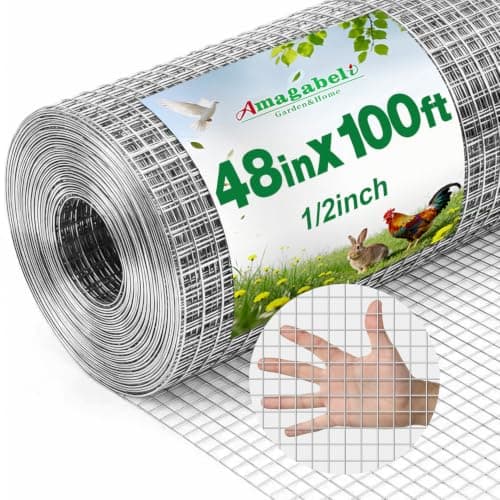
Top pick · The single most important predator purchase
Amagabeli 1/2" Hardware Cloth, 48in x 100ft
Half-inch aperture, 19 gauge, hot-dipped galvanized after welding. This is the specification that actually keeps raccoons out.
What the numbers say
The manufacturer does not publish the dimensions this calculation needs, so we do not print a number.
Figures from Amagabeli published specifications (Amazon listing)
Half-inch aperture is the number that matters. A raccoon can reach through 1in mesh and a weasel walks through 1in chicken wire; half-inch stops both.
Galvanized AFTER welding, not before, is the second specification to check. Welding burns the coating off, so mesh galvanized beforehand rusts at every joint - which is exactly where it needs to hold.
19 gauge is the practical minimum for a coop perimeter. Thinner mesh sold as hardware cloth exists and bends open by hand.
Good
- Half-inch aperture excludes raccoons and weasels
- Hot-dipped galvanized after welding, so joints do not rust first
- 48in width covers most run walls in a single run
Not so good
- Cutting it is hard on the hands and on your snips
- 100ft is more than a small coop needs
- Edges are sharp and need capping or folding
Skip this if: only if you already have half-inch hardware cloth. Do not substitute chicken wire - it is a containment material, not a security one.
#ad · how this is funded · price as of October 21, 2026
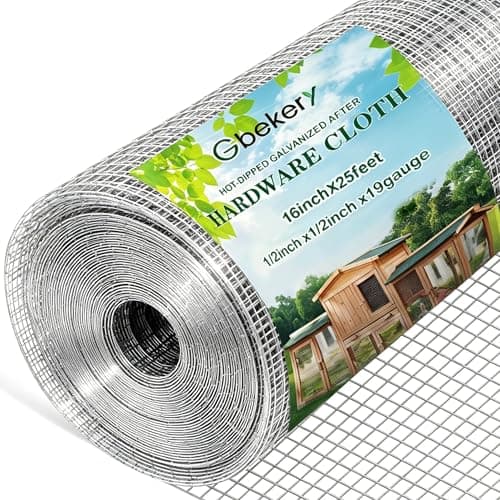
Pick 2 · Aprons, skirts and patching
Gbekery 1/2" Hardware Cloth, 16in x 25ft
Same half-inch, 19-gauge, galvanized-after-welding specification in a narrow roll - the right shape for a buried apron.
What the numbers say
The manufacturer does not publish the dimensions this calculation needs, so we do not print a number.
Figures from Gbekery published specifications (Amazon listing)
A 16in width is awkward for walls and ideal for a predator apron: laid flat around the base of a run, it is exactly the skirt that stops digging.
Same specification that matters as the wide roll - half-inch aperture, 19 gauge, galvanized after welding.
25ft covers the perimeter of a small run without buying 100ft you will not use.
Good
- Right width for an apron or skirt
- Same protective specification as the wide roll
- Sensible quantity for a small coop
Not so good
- Too narrow to sheet a run wall efficiently
- 25ft goes quickly on anything large
- Still needs pinning down or burying
Skip this if: you are sheeting walls. Buy the 48in roll for that and use this width for the ground apron.
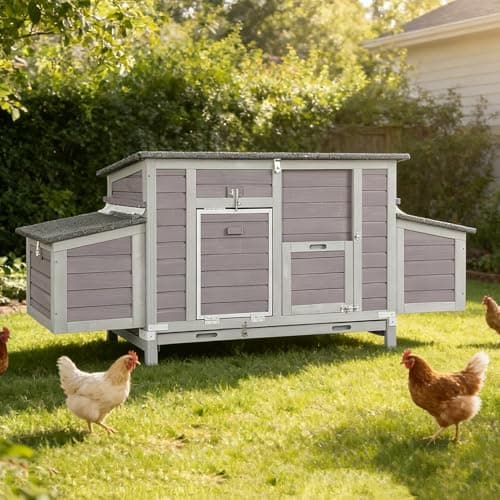
Pick 3 · Security hardware on a small footprint
MEDEHOO Reinforced Predator-Proof Coop
12.3 sq ft against a claim of six. Genuinely reinforced, genuinely a three-hen coop.
What the numbers say
70.6in x 25in = 12.3 sq ft of whole-unit footprint, which includes the attached run and is therefore generous. At 4 sq ft per standard hen that is 3 birds, against a claim of 6.
Figures from MEDEHOO published specifications (Amazon listing) · 70.6"L x 25"W x 28"H · Wood
12.3 sq ft is three standard hens against a claim of four to six.
The reinforced frame and the ventilated design are real, and at 25in deep and 28in tall this is a low, tight unit - more hutch than coop.
Ventilation matters more in a small enclosed volume, not less, so the ventilated design is the right call for the size.
Good
- Reinforced frame is a genuine build feature
- Ventilated design suited to the tight interior volume
- Pull-out tray for cleaning
Not so good
- Six is double the honest count
- 28in height is the lowest here - awkward to service
- 25in depth is the narrowest on this page
Skip this if: you want to reach into the coop comfortably. At 28in tall and 25in deep, every cleaning job is done at arm's length through a hatch.
#ad · how this is funded · price as of October 21, 2026
The large roll covers a run; the small roll is for patching, vent covers and the roofline gaps this page is really about. The coop is included as a reasonable starting point in a small footprint - like everything in this category it still needs its supplied mesh replaced.
Questions people actually ask
+What size mesh keeps weasels out?
+Can a weasel get through chicken wire?
+How do I keep rats out of a chicken coop?
+Should I use quarter-inch hardware cloth?
+Where do small predators get into a coop?
Sources
Read next
Hardware cloth against chicken wire
Why hexagonal chicken wire fails, what gauge and aperture to buy instead, and how many feet a typical coop actually needs.
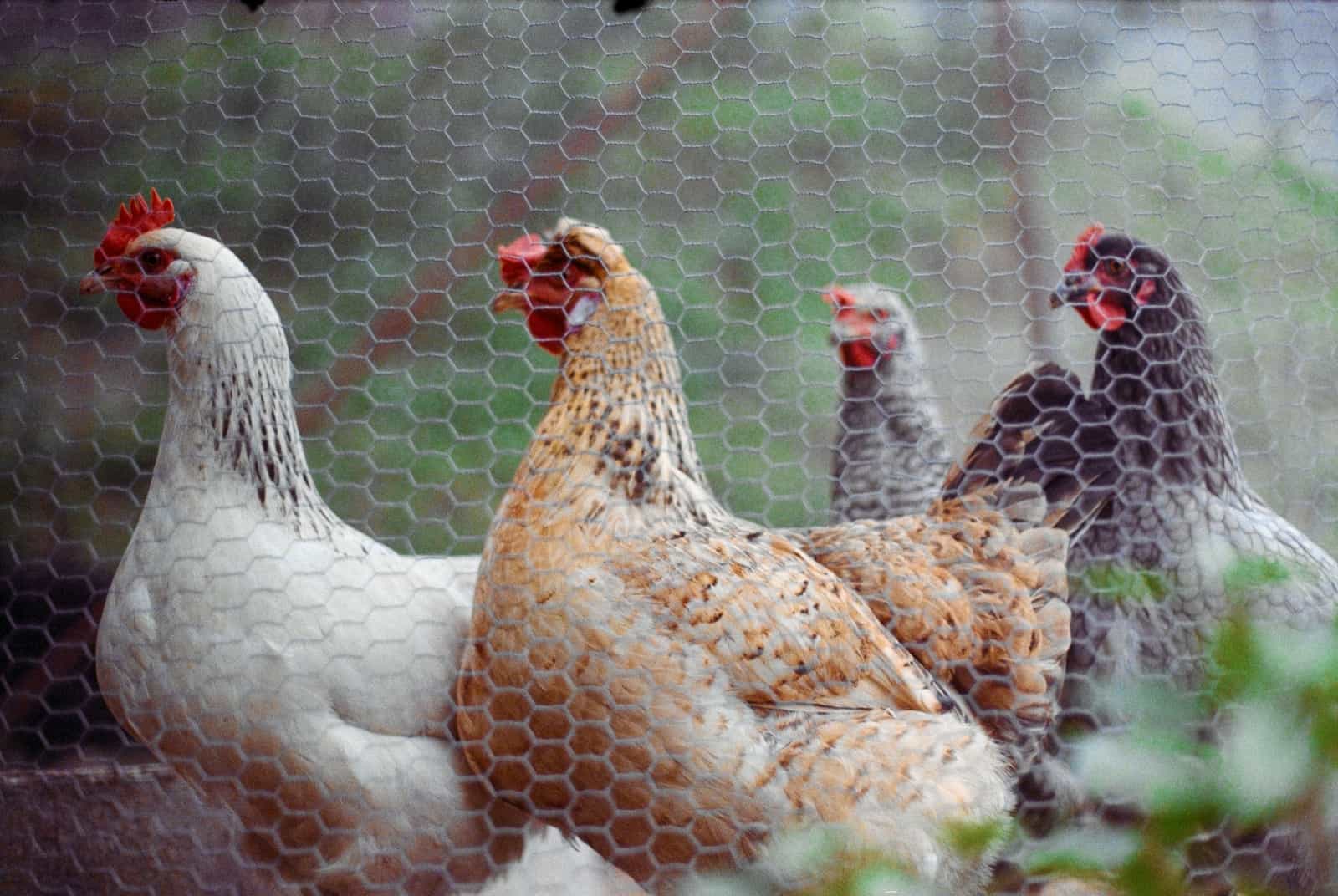
Predator-proofing, as numbers rather than adjectives
The three specifics that decide whether a coop holds - aperture, gauge and latch - with the products that fix what every kit gets wrong.

Stopping predators that dig under the run
Why the apron beats a buried perimeter, how to lay one properly, and how much hardware cloth a typical run needs.
Predator-proofing a coop, step by step
The full walkthrough: mesh, latches and apron, with a materials list and the openings that get missed.
The closest thing to a predator-proof coop
The coops with the best security starting point, each listed with the exact upgrade it still requires before birds go in.

Ventilation, not insulation
Why sealing a coop causes frostbite, where vents belong, and how to tell whether yours has enough.