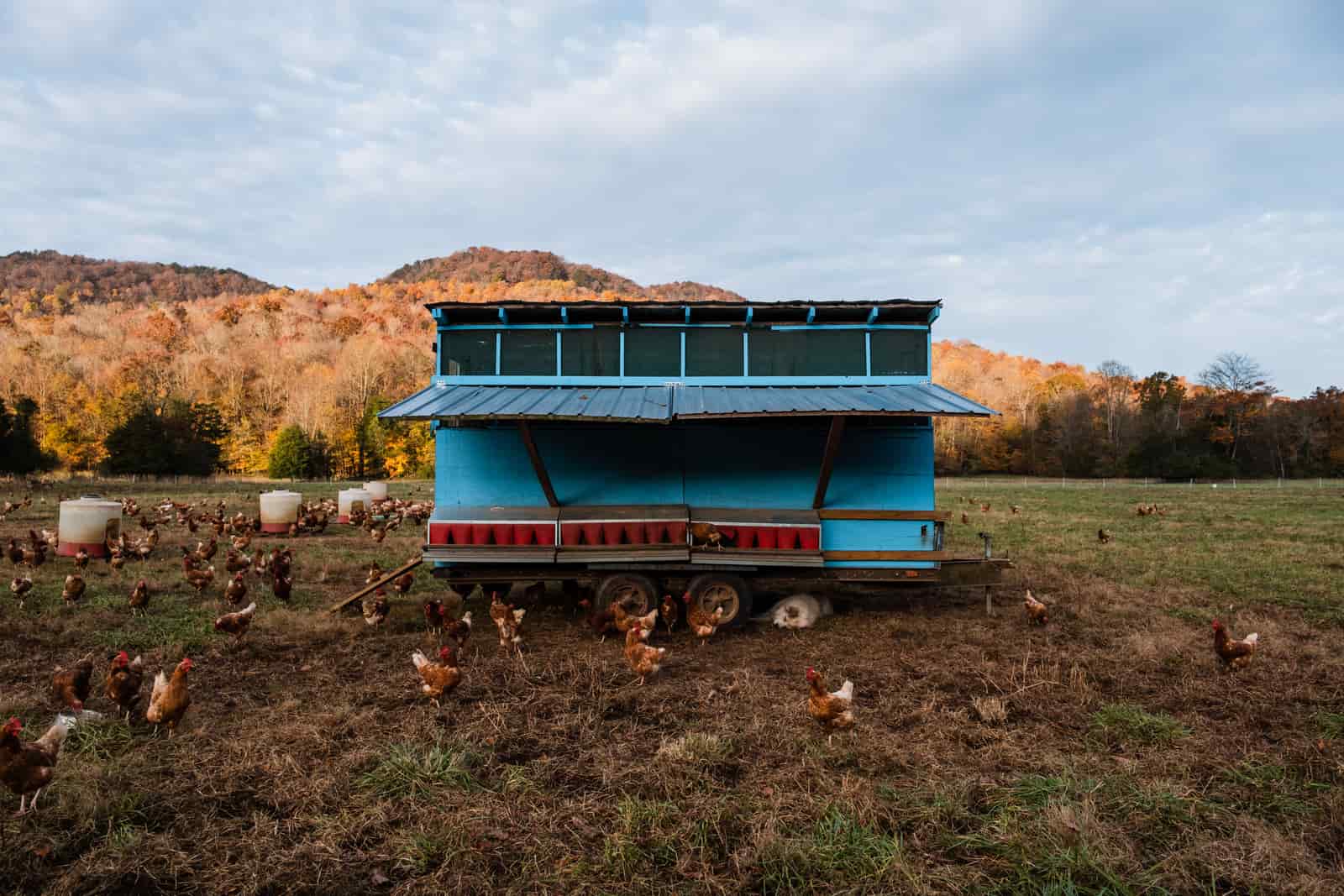
Chicken tractor against a stationary coop
The decision is not mobility against security. It is four birds against more than four, because a coop you can lift cannot carry the floor area.
We have not handled these coops, and we do not pretend to have. Here is what we did instead. Links to Amazon earn us a commission at no extra cost to you - disclosure.
| # | Coop | Best for | Honest count | Price |
|---|---|---|---|---|
| 1 | 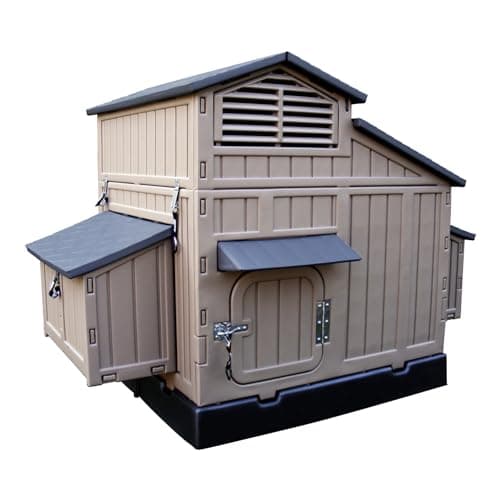 Hatching Time Formex Snap Lock Large Chicken CoopTop pickThe one coop here whose material genuinely earns its price, sized for four hens rather than the six on the box. | Cleaning, and cold that stays out | 4box says 6 | |
| 2 | 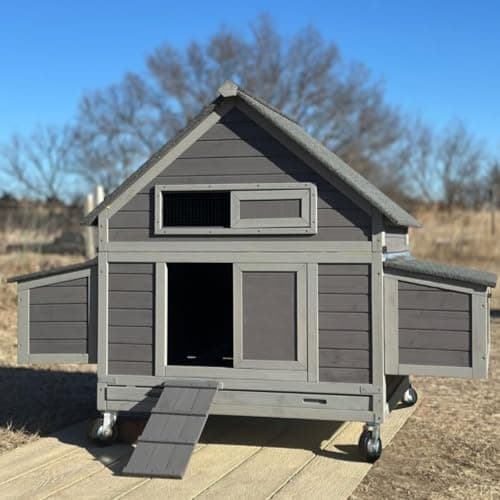 GUTINNEEN Mobile Coop on Wheels18.7 sq ft against a claim of eight. Four hens, and the best depth of any tractor here. | Four hens on the move | 4box says 8 | |
| 3 | 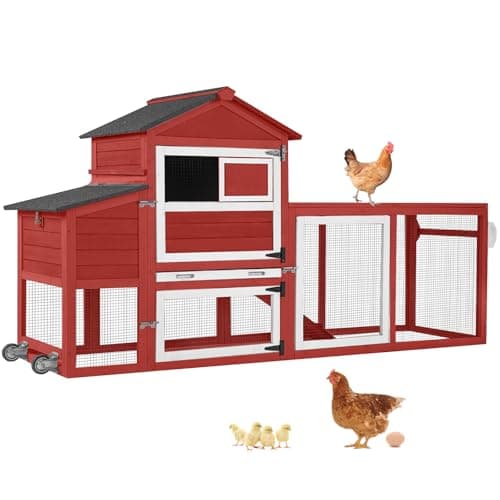 Aivituvin Mobile Coop with Wheels14.9 sq ft against a claim of six. Three hens, but it moves - which is worth more than the two phantom birds. | A movable three-hen setup | 3box says 6 | |
| 4 | 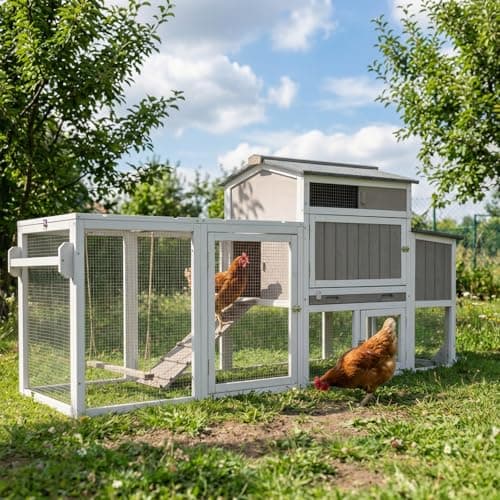 PetsCosset Mobile Chicken Tractor13.8 sq ft against a claim of six. A competent tractor sized for three, with roosting bars already fitted. | Rotating three hens over fresh ground | 3box says 6 | |
| 5 | 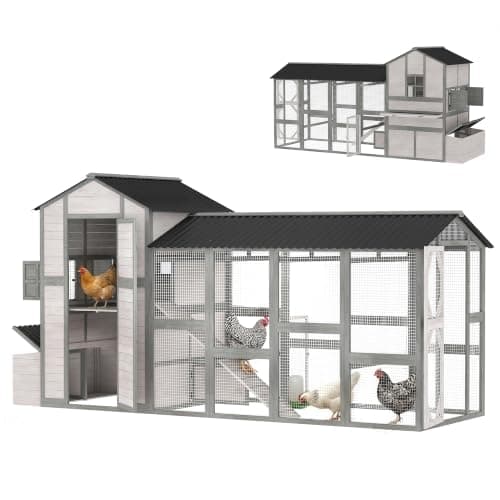 PawHut 147" Extra Large Wooden Hen House51.6 sq ft against a claim of eight to ten hens. It is the only coop on this site with real headroom over its own marketing. | The rare coop that beats its own claim | 12box says 10 |
Most comparisons of these two formats are about lifestyle - pasture rotation against permanence. The useful version is narrower, because one side of this comparison has a hard ceiling that the other does not, and it decides the answer before any of the lifestyle arguments get a turn.
The ceiling nobody mentions
A tractor has to be moved by a person, usually one person, often across uneven ground. That constrains its weight, which constrains its size, which constrains its floor area - and floor area is the only figure that decides how many birds a coop holds. The mobility is not free; it is paid for in square feet.
| Coop | Published footprint | Floor area | Honest hens at 4 sq ft | Maker's claim |
|---|---|---|---|---|
| GUTINNEEN mobile | 67.3in x 40in | 18.7 sq ft | 4 | 8 |
| Aivituvin mobile 82 | 82.4in x 26in | 14.9 sq ft | 3 | 6 |
| Petscosset tractor 77 | 77.41in x 25.6in | 13.8 sq ft | 3 | 6 |
Three coops, three or four hens each, and claims of six to eight. The pattern is not a coincidence and it is not any one maker being optimistic - it is the format telling you what it is. If your flock is five birds, no tractor in this market houses it, whatever the listing says.
What a stationary coop does with the same money
Our largest wooden stationary coop publishes 51.6 square feet of whole-unit footprint and our largest metal walk-in run publishes 128.4. Those are 12 and 32 hens respectively at 4 square feet per bird - numbers a tractor cannot approach, because nobody is dragging 128 square feet of structure across a lawn.
The head-to-head, on the things buyers actually compare
| Attribute | Chicken tractor | Stationary coop |
|---|---|---|
| Flock ceiling in this market | 3 to 4 standard hens | Up to 12 in a kit, 30+ in a walk-in run |
| Fresh ground | Yes, that is the point - new forage every move | No, the run is bare inside a season |
| Predator digging | No permanent skirt is possible, so the gap moves with the coop | A buried apron or skirt is a one-off job that stays done |
| Mud and drainage | Moves off the wet patch | Needs siting right the first time, or run flooring later |
| Daily effort | A move every few days, plus the usual | Lower - nothing to move |
| Winter | Moving a tractor over frozen or waterlogged ground is the worst job in the category | Site it with winter in mind and it is done |
| Automatic door | Fits, but the power and the pop-door position move with the coop | Simple - fixed position, fixed power |
| Resale and longevity | Wheels, axles and a lifted frame are extra things to fail | Fewer moving parts |
How we judged
- Floor area per bird from published dimensions, on both sides, because that is the figure the format constrains.
- Whether the coop can carry a permanent predator skirt, which a moved structure cannot.
- What the mobility actually costs in square feet, measured rather than assumed.
- Daily and weekly effort, honestly stated for each.
- Material and the published claim gap, as everywhere else on this site.
The move itself, which is the part nobody costs
A tractor is sold on where the birds end up and bought on how often you move it, and those are different experiences. Worth thinking about before rather than after.
- Frequency. The ground under a tractor is scratched bare in a few days at three or four birds, so the realistic cadence is every two to four days through the growing season.
- Distance. A move has to be at least the length of the tractor or you are putting the birds back on ground they just cleared.
- Recovery. Grass needs weeks, not days, to come back from being scratched out - which means a tractor needs several times its own area of lawn to rotate through, not a spare corner.
- Ground. A tractor drags well on firm level turf and badly on anything else. Slopes, tree roots and soft winter ground all make it a two-person job.
- Birds. They have to be in it or out of it when it moves, and either way that is part of the routine rather than a one-off.
None of that is an argument against the format. It is the argument for being honest about the four-bird ceiling: at three or four hens the move is a two-minute job and the pasture benefit is real, and the reason it stops working at eight birds is that both the structure and the lawn requirement scale faster than your enthusiasm does.
Which format, by flock size
| Flock | Coop floor needed at 4 sq ft | Format | Why |
|---|---|---|---|
| 2-3 hens | 8-12 sq ft | Either | Both formats cover it; pick on whether you will keep moving it |
| 4 hens | 16 sq ft | Either, at the limit | The largest tractor here measures 18.7 sq ft - this is the top of the format |
| 5-8 hens | 20-32 sq ft | Stationary | No tractor in this market reaches it, whatever the listing claims |
| 9-12 hens | 36-48 sq ft | Stationary, wooden walk-in | A kit still does it in one purchase at the top end |
| 13+ hens | 52+ sq ft | Metal walk-in run, or build | Past where the wooden kit market goes |
The step between the second and third rows is the whole decision, and it is an arithmetic step rather than a preference. Work out your own numbers first and the format question usually answers itself.
Buy a tractor if
- You have four or fewer standard hens, or a bantam flock.
- You have grass you are willing to rotate them over, and enough of it that each patch recovers.
- You will still be moving it in February. This is the one that catches people.
- Your yard has no good permanent site - bad drainage everywhere, or a landlord.
Buy stationary if
- You have five or more standard hens, which rules the format out on arithmetic.
- Digging predators are your main threat, because a buried apron is the answer and it needs somewhere to stay buried.
- You want the lowest daily effort, which is the honest trade for giving up fresh ground.
- You already have a site that drains, gets morning sun and is reachable with a hose.
The picks, both sides
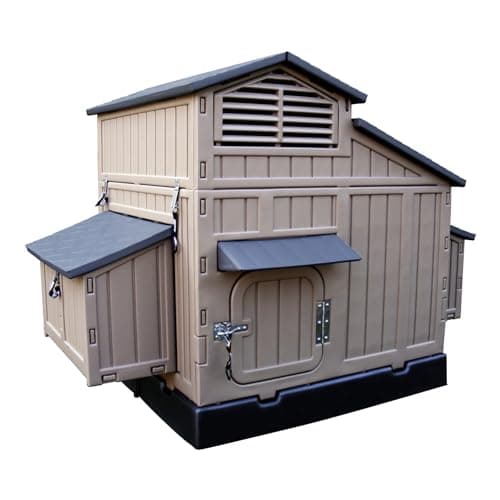
Top pick · Cleaning, and cold that stays out
Hatching Time Formex Snap Lock Large Chicken Coop
The one coop here whose material genuinely earns its price, sized for four hens rather than the six on the box.
What the numbers say
64in x 39in = 17.3 sq ft of enclosed henhouse floor. At 4 sq ft per standard hen that is 4 birds, against a claim of 6.
Figures from Hatching Time published specifications (Amazon listing) · 64"L x 39"W x 42"H · Double-walled polyethylene
This is a standalone henhouse with no attached run, so the published footprint is all enclosed floor. That makes it one of the few coops on this site where the generous reading and the honest reading are the same number.
17.3 sq ft supports four standard hens at the 4 sq ft figure. The listing says four to six. Four is right; six is a winter of pecked backs.
Double-walled polyethylene is the reason to buy it. There is no end grain to rot, no seam for mites to colonize, and it hoses out in minutes - the single biggest practical difference between a coop you keep clean and one you avoid.
Good
- Whole footprint is enclosed floor, not run
- Double-walled plastic will not rot, absorb, or harbor mites the way fir does
- Panels unclip for cleaning without tools
Not so good
- Costs more than the wooden coops it outlasts
- No run included, so budget for one
- Plastic walls hold no insulation value on their own
Skip this if: you want a coop and run in one purchase. This is a henhouse only, and pairing it with a run pushes the total past most wooden coop-plus-run kits.
#ad · how this is funded · price as of October 17, 2026
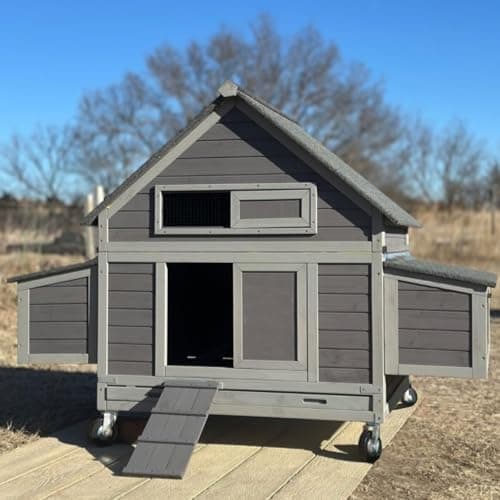
Pick 2 · Four hens on the move
GUTINNEEN Mobile Coop on Wheels
18.7 sq ft against a claim of eight. Four hens, and the best depth of any tractor here.
What the numbers say
67.3in x 40in = 18.7 sq ft of whole-unit footprint, which includes the attached run and is therefore generous. At 4 sq ft per standard hen that is 4 birds, against a claim of 8.
Figures from GUTINNEEN published specifications (Amazon listing) · 67.3"L x 40"W x 49.75"H · Wood
18.7 sq ft supports four standard hens. The claim is six to eight.
At 40 inches this is by some margin the deepest mobile coop in the research pass, and it is why it holds four birds in only 67in of length while the 82in Aivituvin holds three.
Six nesting boxes for four hens is again more than the one-per-four guidance calls for.
Good
- 40in depth is the best of any tractor here
- More floor in less length than its wheeled rivals
- Weatherproof build with a proper roof
Not so good
- Eight is double the honest count
- Six nest boxes for four hens
- Heavier to move than the narrow tractors
Skip this if: you need to move it daily on your own. The extra depth that makes it good is also what makes it heavy.
#ad · how this is funded · price as of October 17, 2026
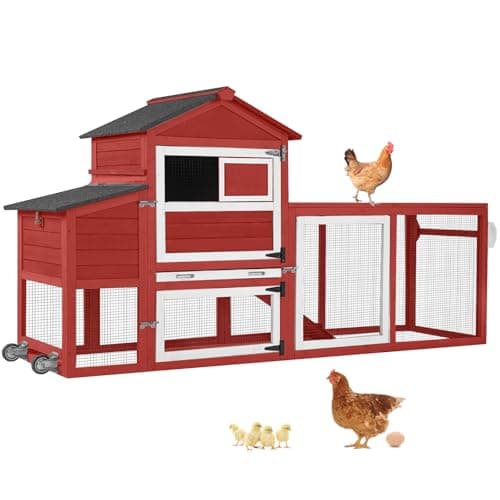
Pick 3 · A movable three-hen setup
Aivituvin Mobile Coop with Wheels
14.9 sq ft against a claim of six. Three hens, but it moves - which is worth more than the two phantom birds.
What the numbers say
82.4in x 26in = 14.9 sq ft of whole-unit footprint, which includes the attached run and is therefore generous. At 4 sq ft per standard hen that is 3 birds, against a claim of 6.
Figures from Aivituvin published specifications (Amazon listing) · 82.4"L x 26"W x 44"H · Fir with asphalt roof
14.9 sq ft is three standard hens against a claim of four to six.
The wheels change the calculation in a way floor area does not capture. A three-hen coop moved weekly keeps grass under it; a six-hen coop parked permanently produces mud and the parasite load that comes with it.
The expandable run section is genuinely useful, though the published footprint is what it is with the run in place.
Good
- Wheels make weekly repositioning realistic
- Expandable run section
- Leak-resistant asphalt roof
Not so good
- Six is double the honest count
- 26in depth is narrow
- Wheeled coops need flat ground to stay square
Skip this if: the coop will live in one place permanently. You are paying for mobility you will not use, and a static coop of the same money is bigger.
#ad · how this is funded · price as of October 17, 2026
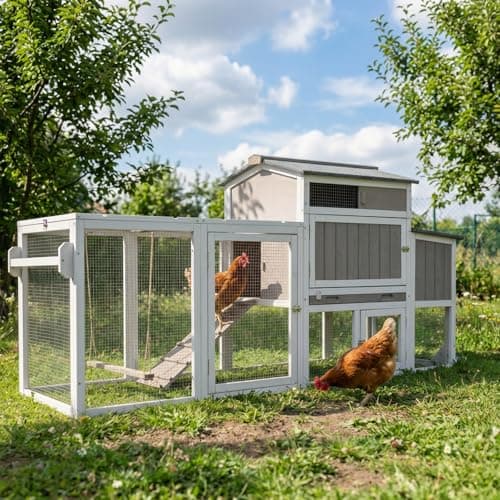
Pick 4 · Rotating three hens over fresh ground
PetsCosset Mobile Chicken Tractor
13.8 sq ft against a claim of six. A competent tractor sized for three, with roosting bars already fitted.
What the numbers say
77.41in x 25.6in = 13.8 sq ft of whole-unit footprint, which includes the attached run and is therefore generous. At 4 sq ft per standard hen that is 3 birds, against a claim of 6.
Figures from PetsCosset published specifications (Amazon listing) · 77.41"L x 25.6"W x 39.4"H · Fir
13.8 sq ft is three standard hens against a claim of four to six.
Roosting bars and a nesting box come fitted, which is not universal at this price and saves a fiddly retrofit.
A tractor is the one format where a small floor is defensible: the birds are on fresh ground constantly, so the fixed floor matters less than it would in a static coop.
Good
- Roost bars and nest box fitted as standard
- Light enough to move single-handed
- Pull-out tray for cleaning
Not so good
- Six is double the honest count
- 25.6in depth is narrow even for a tractor
- Fir frame needs checking for racking after repeated moves
Skip this if: you cannot commit to moving it. An unmoved tractor is just a small coop, and this one is small.
#ad · how this is funded · price as of October 17, 2026
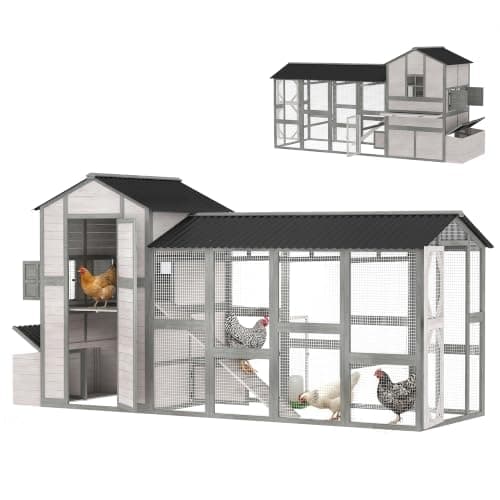
Pick 5 · The rare coop that beats its own claim
PawHut 147" Extra Large Wooden Hen House
51.6 sq ft against a claim of eight to ten hens. It is the only coop on this site with real headroom over its own marketing.
What the numbers say
146.9in x 50.6in = 51.6 sq ft of whole-unit footprint, which includes the attached run and is therefore generous. At 4 sq ft per standard hen that is 12 birds, against a claim of 10.
Figures from PawHut published specifications (Amazon listing) · 146.9"L x 50.6"W x 73.6"H · Fir and plastic
51.6 sq ft of whole-unit footprint supports twelve standard hens at 4 sq ft each. PawHut claims eight to ten. It is the only coop in this research pass that under-claims.
That matters more than it sounds. Every other maker here is asking you to trust a number that its own dimensions contradict; this one leaves you room.
At 73.6in tall it is genuinely walk-in at the run end, which changes daily keeping more than any feature on the spec sheet.
Good
- Beats its own claim - 12 hens of floor against a claim of 10
- Walk-in height at the run end makes cleaning tolerable
- Large enough to be the last coop you buy for a while
Not so good
- 12ft of yard is a real commitment
- Fir and plastic, so expect maintenance
- Assembly is a long afternoon with two people
Skip this if: your yard cannot give up a 12ft run of ground, or if you are keeping three or four hens - you would be heating and cleaning space nobody uses.
#ad · how this is funded · price as of October 17, 2026
The order is deliberate: the stationary pick first because it is the right answer for more people, then the three tractors in measured order, then the large stationary coop for a flock that has outgrown the question entirely.
Measured against the claims
| Coop | Published size | Floor area | Maker says | Arithmetic says |
|---|---|---|---|---|
| Hatching Time Formex Snap Lock Large Chicken Coop | 64"L x 39"W x 42"H | 17.3 sq ft | 6 hens | 4 hens |
| GUTINNEEN Mobile Coop on Wheels | 67.3"L x 40"W x 49.75"H | 18.7 sq ft | 8 hens | 4 hens |
| Aivituvin Mobile Coop with Wheels | 82.4"L x 26"W x 44"H | 14.9 sq ft | 6 hens | 3 hens |
| PetsCosset Mobile Chicken Tractor | 77.41"L x 25.6"W x 39.4"H | 13.8 sq ft | 6 hens | 3 hens |
| PawHut 147" Extra Large Wooden Hen House | 146.9"L x 50.6"W x 73.6"H | 51.6 sq ft | 10 hens | 12 hens |
Floor area is the maker’s published footprint. Where a unit includes an attached run that figure spans the run too, which makes it a generous reading - the enclosed roosting floor is smaller still. How we work these out.
Where to go next
- Mobile chicken coops and tractors - the tractors ranked among themselves
- Coop wheel kits - making a stationary coop movable
- Stopping predators that dig under the run - the job a tractor cannot do
- Where to put the coop - which matters far more once you go stationary
Questions people actually ask
+Is a chicken tractor better than a coop?
+What is a chicken tractor?
+How many chickens fit in a chicken tractor?
+Can you predator-proof a chicken tractor?
+Is a chicken tractor worth it in winter?
Sources
- University of Minnesota Extension - Raising chickens for eggs (3-5 sq ft indoor space per bird; one nest box per 4-5 birds)
- Penn State Extension - Small-scale poultry housing
- eXtension Small and Backyard Poultry - Space allowances in housing (3-4 sq ft indoor / 10 sq ft outdoor per laying hen; 5 sq ft indoor per duck; 6 sq ft indoor and 20 sq ft outdoor per turkey; states there is very little peer-reviewed research on backyard space allowances)
Read next
Mobile chicken coops and tractors
Wheeled coops and tractors ranked on measured area, with the honest three-to-four-bird ceiling stated rather than buried.
Coop wheel kits, and the gap underneath
Retrofit caster and lift kits judged on load rating, wheel size and whether the coop returns to the ground between moves.

Stopping predators that dig under the run
Why the apron beats a buried perimeter, how to lay one properly, and how much hardware cloth a typical run needs.
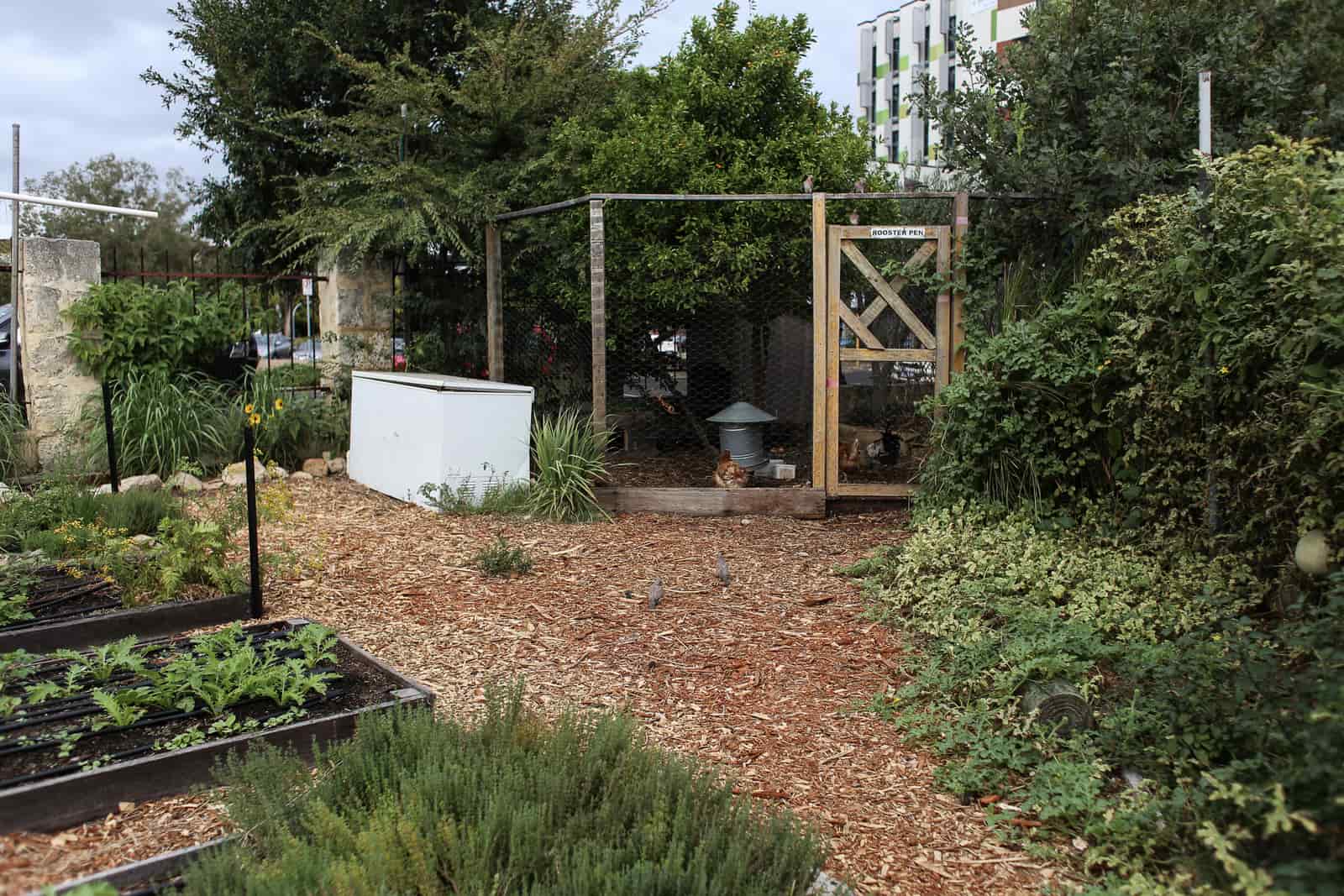
Where to put the coop
The siting order that matters - drainage, sun, wind, access - and the mistakes that no amount of good husbandry fixes.
Coop types, and what each format actually gives you
Five formats compared on measured floor area, security ceiling and lifespan, with the picks that survive their own spec sheet.
How to choose a chicken coop
The nine checks that decide a coop purchase, in priority order, and the coop we would buy at each flock size once they are applied.