Metal against wooden chicken coops
The short version: metal is the better material for a run and the wrong material for a henhouse, and most metal units sold as coops are actually runs.
We have not handled these coops, and we do not pretend to have. Here is what we did instead. Links to Amazon earn us a commission at no extra cost to you - disclosure.
| # | Coop | Best for | Honest count | Price |
|---|---|---|---|---|
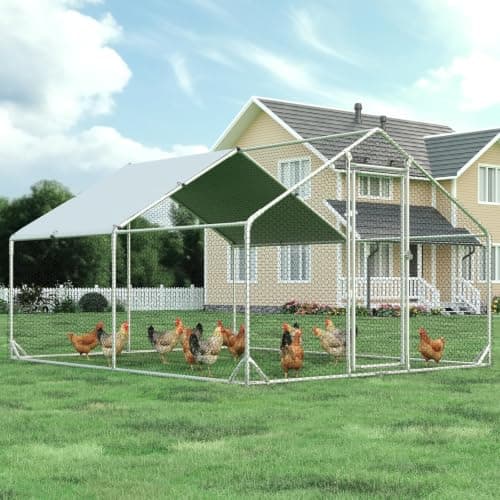
| 1 | 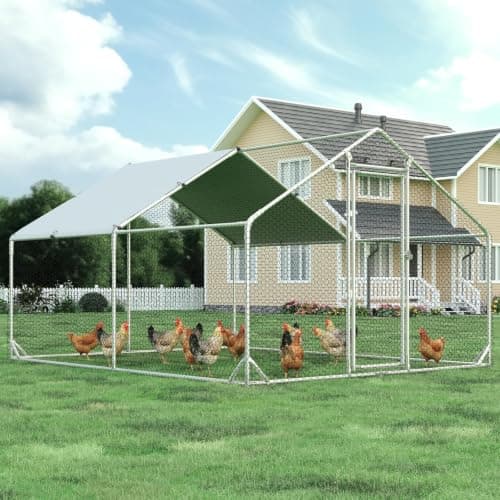 4ever2buy Metal Chicken Coop, 10x13 FT Walk-In RunTop pick128.4 sq ft of walk-in enclosure wrapped in galvanized hardware cloth - the largest ground area on this site, and a cover included. | A genuine walk-in enclosure | 32box says 15 | |
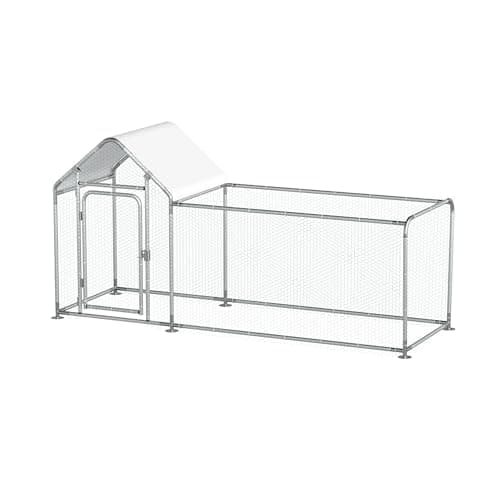
| 2 | 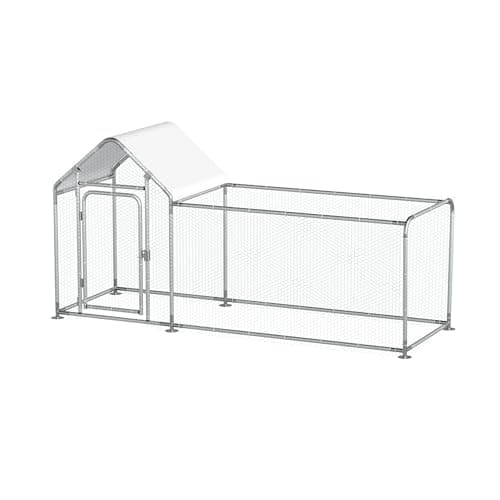 GOJOOASIS Outdoor Large Metal Chicken Coop Run, 118in32.4 sq ft of galvanized steel run, and a maker that publishes no bird count at all - which counts in its favor here. | A metal run that will not rot | 8no claim made | |
| 3 | 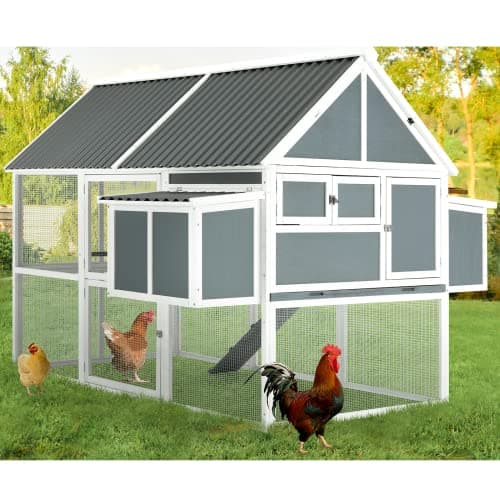 AECOJOY 84" Large Chicken Coop40.3 sq ft against a claim of ten. The numbers land exactly where the box says they do, which is rarer here than it should be. | Ten hens, claim and arithmetic agreeing | 10box says 10 | |
| 4 | 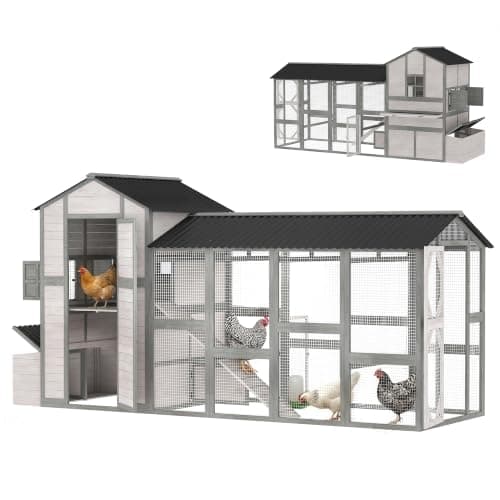 PawHut 147" Extra Large Wooden Hen House51.6 sq ft against a claim of eight to ten hens. It is the only coop on this site with real headroom over its own marketing. | The rare coop that beats its own claim | 12box says 10 | |
| 5 | 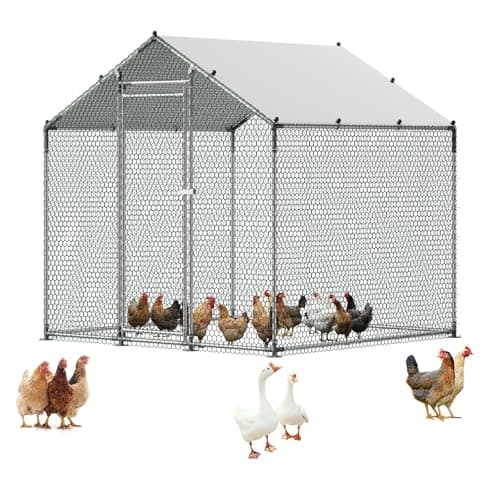 VEVOR Metal Walk-In Run, Spire Roof43 sq ft under a spire roof - the pitched cover is the reason to pick it over a flat-topped run. | Shedding snow and rain off a run | 10no claim made |
This comparison is usually framed as a durability question, and framed that way metal wins easily. That framing hides the more important distinction, which is that the two materials are generally being used for two different jobs.
The distinction that actually matters
A chicken coop is two things bolted together: an enclosed, weather-tight henhouse where birds roost and lay overnight, and an open run where they spend the day. They have opposite requirements.
| Henhouse | Run | |
|---|---|---|
| Job | Weather-tight overnight shelter | Secure daytime enclosure |
| Wants | Warmth retention, fixings for roosts and boxes, controllable ventilation | Rot resistance, security, low maintenance |
| Wood | Good - insulates, takes screws, easy to modify | Poor - ground contact rots, needs re-treating |
| Metal | Poor - conducts heat out, condenses moisture, hard to modify | Excellent - no rot, no re-treating, no mite habitat |
Nearly every metal product in this category is a run. The 4ever2buy at 128.4 square feet, the Amopatio at 65.3, the VEVOR at 43 - all are hardware-cloth enclosures with a cover, and none contains an insulated henhouse. They are excellent at what they are, and they are not coops.
Where wood genuinely loses
Two failure modes, and both are worse than people expect.
Red mite lives in wooden seams
Red mite hides in cracks and joints during the day and feeds on the birds at night. Rough sawn timber, and particularly the end grain of cut fir, is close to ideal habitat. Once a wooden coop has an established infestation it is very hard to clear, and this is one of the most common reasons people stop keeping chickens.
Smooth non-porous surfaces - galvanized steel, double-walled polyethylene - give mites nowhere to hide and can be hosed. This is the strongest practical argument against wood, and it has nothing to do with structural durability.
Thin fir at ground contact rots quickly
Most coops in this category are built from fir thin enough to keep the price and shipping weight down. Where that timber meets wet ground it absorbs water, and re-treating it every couple of seasons is a real maintenance commitment rather than an optional extra.
Where metal genuinely loses
Metal conducts heat away from the birds and condenses moisture on its inner surface on cold nights. In a henhouse that is exactly wrong: you get a cold, wet interior, and wet is what causes frostbite and respiratory problems rather than cold on its own.
Metal is also awkward to modify. Adding a roost bar, moving a nest box or cutting in an automatic pop door is straightforward in timber and a job in steel.
The practical answer
- Wooden henhouse, or a plastic one if you can stretch to it - it beats wood on cleaning and mites without metal's condensation problem.
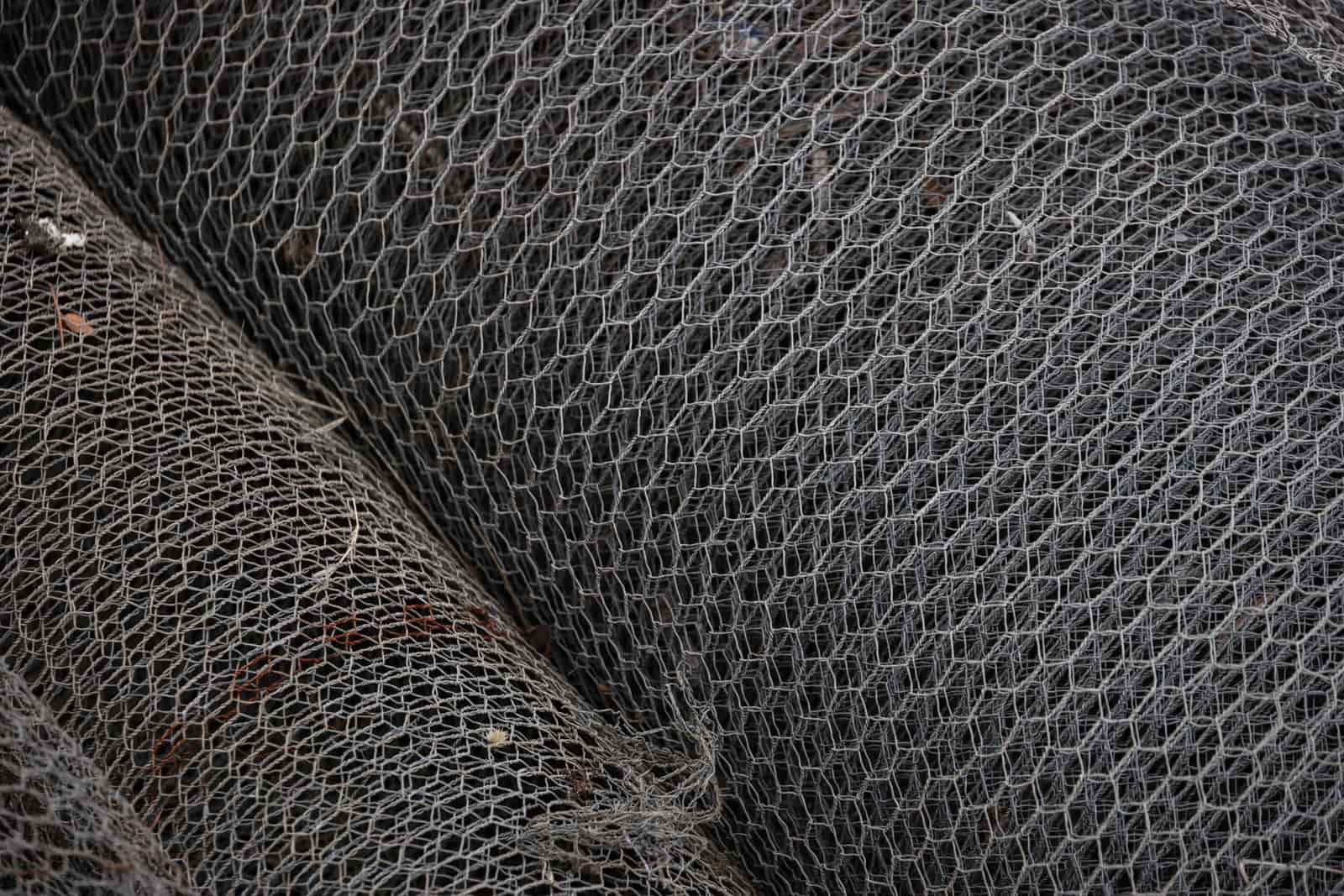
- Metal run, clad in half-inch hardware cloth rather than the chicken wire most kits ship with.
- If you buy a wooden coop-and-run kit, treat the run as a starting point and plan to upgrade the mesh. See hardware cloth against chicken wire.
Top pick · A genuine walk-in enclosure
4ever2buy Metal Chicken Coop, 10x13 FT Walk-In Run
128.4 sq ft of walk-in enclosure wrapped in galvanized hardware cloth - the largest ground area on this site, and a cover included.
What the numbers say
157.2in x 117.6in = 128.4 sq ft of whole-unit footprint, which includes the attached run and is therefore generous. At 4 sq ft per standard hen that is 32 birds, against a claim of 15.
Figures from 4ever2buy published specifications (Amazon listing) · 157.2"L x 117.6"W x 76.8"H (10 x 13 ft) · Rust-resistant steel frame with galvanized hardware cloth
128.4 sq ft is the largest ground area on this site by a wide margin - more than twice the next biggest.
The listing claims room for 12 to 15 chickens. Read as run space at the published 8 sq ft a bird that is about 16, so the claim is reasonable - which is unusual enough here to say out loud. The bird column in our table divides by the 4 sq ft indoor figure, and that is the wrong measure for an enclosure with no henhouse in it.
Fully wrapped in galvanized hardware cloth rather than chicken wire is the specification that matters. Chicken wire keeps chickens in; hardware cloth keeps raccoons out, and they are not the same job.
A waterproof anti-UV cover is included, which is the detail that keeps the ground under it usable through a wet season.
Good
- Galvanized hardware cloth all round, not chicken wire
- 76.8in height is a true walk-in at 6.4 ft
- Waterproof cover included rather than sold separately
Not so good
- It is a run, not a coop - you still need a henhouse
- 13ft x 10ft needs serious yard space
- The 12-15 bird claim only holds as run space, never as roosting room
Skip this if: you expected a coop. There is no insulated, enclosed house in it, and birds cannot roost in a run overnight safely in most climates.
Pick 2 · A metal run that will not rot
GOJOOASIS Outdoor Large Metal Chicken Coop Run, 118in
32.4 sq ft of galvanized steel run, and a maker that publishes no bird count at all - which counts in its favor here.
What the numbers say
118in x 39.5in = 32.4 sq ft of whole-unit footprint, which includes the attached run and is therefore generous. At 4 sq ft per standard hen that is 8 birds. The maker publishes no bird count of its own to compare against.
Figures from GOJOOASIS published specifications (Amazon listing) · 118"L x 39.5"W x 59"H · Galvanized steel frame with a UV and water-resistant cover
118 by 39.5 inches is 32.4 square feet, which is eight standard hens on the published 4 square feet a bird. The listing states no bird count of its own, so there is no claim here to fail - and on this site that is a point in a maker's favor rather than an omission.
Read the shape rather than the headline area. Thirty-nine inches of width is narrow, so the usable space is a long corridor rather than a yard, and birds use length less efficiently than they use breadth.
At 59 inches high it is a stoop rather than the crawl the older 39-inch version demanded, but it is still under five feet. Call it head-down access rather than walk-in, whatever the category name suggests.
What you are buying is the frame. Galvanized steel does not rot, hosts no mites in its end grain and needs no re-treating, which is the right material for a structure that lives outdoors permanently.
Good
- Publishes no bird count, so there is no inflated claim to correct
- Galvanized steel frame will outlast any fir coop here
- 59in height is a genuine improvement on the older 39in version
- Long enough to give birds real running distance
Not so good
- A run, not a coop - there is no henhouse and roosting is still unsolved
- 39.5in width makes it a corridor rather than a yard
- Still under five feet, so not walk-in in the sense the name implies
- The cover is the weak point and will need replacing before the frame does
Skip this if: you need somewhere for the birds to sleep. This is outdoor space and predator exclusion only - there is no insulated house in it, and the per-bird floor guidance applies to enclosed roosting space you still have to provide.
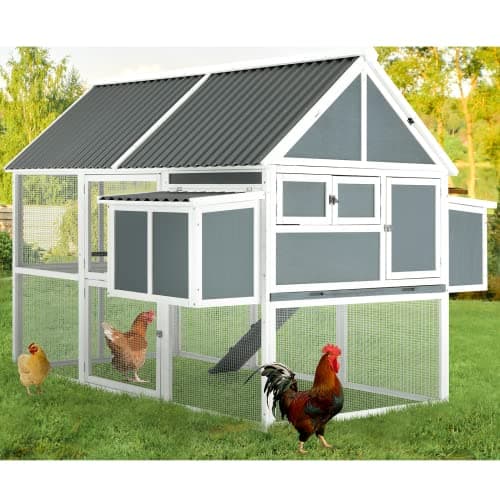
Pick 3 · Ten hens, claim and arithmetic agreeing
AECOJOY 84" Large Chicken Coop
40.3 sq ft against a claim of ten. The numbers land exactly where the box says they do, which is rarer here than it should be.
What the numbers say
84in x 69in = 40.3 sq ft of whole-unit footprint, which includes the attached run and is therefore generous. At 4 sq ft per standard hen that is 10 birds, against a claim of 10.
Figures from AECOJOY published specifications (Amazon listing) · 84"L x 69"W x 60"H · Wood
84 x 69 inches is 40.3 sq ft, which is exactly ten standard hens at the published 4 sq ft figure. AECOJOY claims eight to ten.
The 69in depth is what makes it work. Most coops in this class buy their length cheaply and stay narrow, which produces a corridor rather than a floor.
It is a square-ish footprint rather than a long thin one, so the usable area is genuinely usable - birds distribute across it instead of queueing down it.
Good
- Claim and arithmetic agree at ten hens
- 69in depth gives a floor rather than a corridor
- Two nesting boxes, which is the right count for ten hens on the published ratio
Not so good
- No margin - ten is the ceiling, not a comfortable number
- Wood construction needs annual attention
- Heavy once assembled and awkward to reposition
Skip this if: you plan to grow past ten birds. It meets its claim exactly, which means it has no room for the two extra chicks you will inevitably bring home.
#ad · how this is funded · price as of October 17, 2026
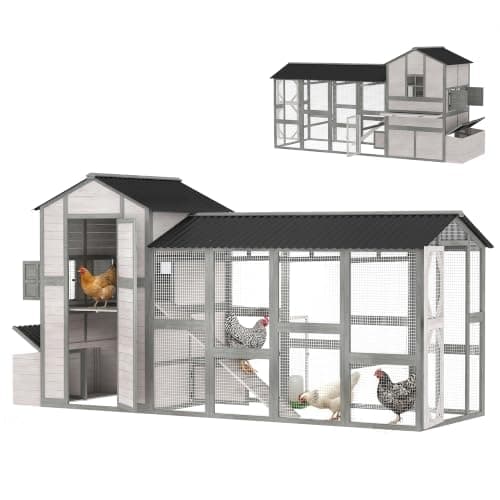
Pick 4 · The rare coop that beats its own claim
PawHut 147" Extra Large Wooden Hen House
51.6 sq ft against a claim of eight to ten hens. It is the only coop on this site with real headroom over its own marketing.
What the numbers say
146.9in x 50.6in = 51.6 sq ft of whole-unit footprint, which includes the attached run and is therefore generous. At 4 sq ft per standard hen that is 12 birds, against a claim of 10.
Figures from PawHut published specifications (Amazon listing) · 146.9"L x 50.6"W x 73.6"H · Fir and plastic
51.6 sq ft of whole-unit footprint supports twelve standard hens at 4 sq ft each. PawHut claims eight to ten. It is the only coop in this research pass that under-claims.
That matters more than it sounds. Every other maker here is asking you to trust a number that its own dimensions contradict; this one leaves you room.
At 73.6in tall it is genuinely walk-in at the run end, which changes daily keeping more than any feature on the spec sheet.
Good
- Beats its own claim - 12 hens of floor against a claim of 10
- Walk-in height at the run end makes cleaning tolerable
- Large enough to be the last coop you buy for a while
Not so good
- 12ft of yard is a real commitment
- Fir and plastic, so expect maintenance
- Assembly is a long afternoon with two people
Skip this if: your yard cannot give up a 12ft run of ground, or if you are keeping three or four hens - you would be heating and cleaning space nobody uses.
#ad · how this is funded · price as of October 17, 2026
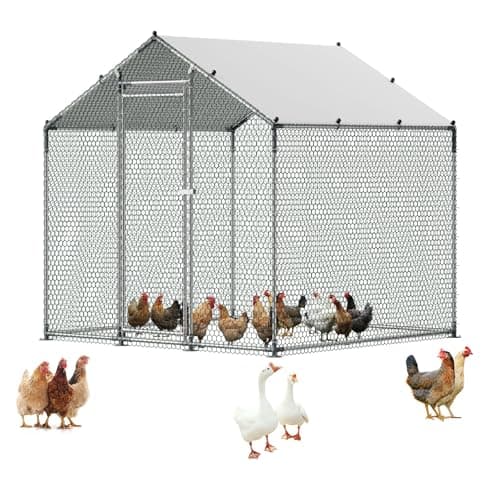
Pick 5 · Shedding snow and rain off a run
VEVOR Metal Walk-In Run, Spire Roof
43 sq ft under a spire roof - the pitched cover is the reason to pick it over a flat-topped run.
What the numbers say
78.72in x 78.72in = 43 sq ft of whole-unit footprint, which includes the attached run and is therefore generous. At 4 sq ft per standard hen that is 10 birds. The maker publishes no bird count of its own to compare against.
Figures from VEVOR published specifications (Amazon listing) · 78.72"L x 78.72"W x 78.72"H · High-carbon steel
43 sq ft in a perfect square, which is the most efficient shape for a given perimeter of frame.
The spire roof is the differentiator. Flat-covered runs pool water and collapse under wet snow; a pitched cover sheds both.
No bird count is claimed, which is correct for an enclosure.
Good
- Pitched roof sheds snow and standing water
- Square footprint is frame-efficient
- Security lock included
Not so good
- A run, not a coop
- Cover material will degrade before the frame does
- 6.5ft square is smaller than it sounds once a henhouse is inside
Skip this if: you get heavy snow loads. A spire helps, but no fabric-covered run is a substitute for a rigid roof where snow sits.
#ad · how this is funded · price as of October 17, 2026
- Metal coops in full - the format and what it is good for
- Wooden coops in full - and how to make thin fir last
- Plastic against wood in cold weather - the third material, and the winter case
- Best chicken coops overall - the full ranked list
Questions people actually ask
+Are metal chicken coops good?
+Do metal chicken coops get too hot in summer?
+Do metal chicken coops get too cold in winter?
+Which lasts longer, a metal or wooden chicken coop?
+Is a plastic chicken coop better than wood or metal?
+Can chickens sleep in a metal run overnight?
Sources
Read next
Metal chicken coops and runs
Steel runs and enclosures ranked on measured area, with the henhouse gap and the base-security fix stated up front.
Wooden chicken coops, measured and weathered
Wooden coops ranked on measured floor area, with the maintenance cost of untreated fir priced in rather than left out.
Plastic against wood, in the cold
A material comparison judged on condensation, cleaning and mite resistance rather than on an insulation value neither material really has.
The best chicken coops, ranked by what they actually hold
The flagship roundup. Twelve coops ranked on measured floor area against the maker's own bird-count claim.
Hardware cloth against chicken wire
Why hexagonal chicken wire fails, what gauge and aperture to buy instead, and how many feet a typical coop actually needs.
Coop types, and what each format actually gives you
Five formats compared on measured floor area, security ceiling and lifespan, with the picks that survive their own spec sheet.