Formex Snap Lock Standard Coop
Excellent material, wrong number. Same double-walled polyethylene as its larger sibling, sold for four standard hens on a footprint that supports two.
We have not handled these coops, and we do not pretend to have. Here is what we did instead. Links to Amazon earn us a commission at no extra cost to you - disclosure.
| # | Coop | Best for | Honest count | Price |
|---|---|---|---|---|
| 1 | 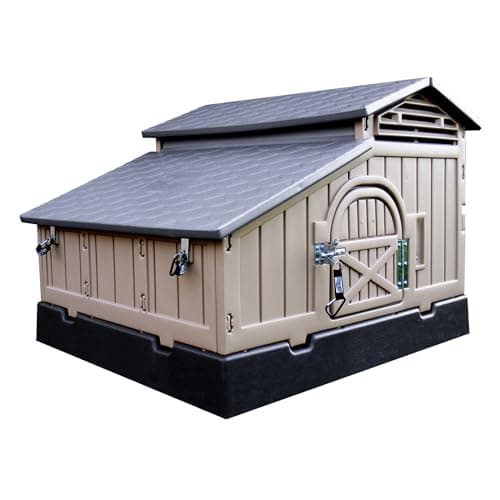 Hatching Time SnapLock Formex Standard CoopTop pickSame material logic as its bigger sibling, but the claim of four hens is the most overstated on this page relative to its size. | Two hens, or a bantam trio | 2box says 4 |
This coop is a useful test of whether this site is being fair. The material is the best in the category and we say so on every page it appears on. The claim is among the furthest from its own dimensions of anything we measured. Both things are true at once, and a review that only reported one of them would be doing a job other than the one we set out to do.
The measurement
39 inches by 42 inches is 1,638 square inches, which is 11.4 square feet. At the published 4 square feet per standard hen that is two birds, against a listing claim of four.
The important detail is what that 11.4 square feet consists of. This is a standalone henhouse with no attached run, so the published footprint is entirely enclosed floor. On almost every wooden coop-and-run kit on this site the equivalent figure spans open run as well, and the real roosting floor is smaller than the number we print. Here it is not. The generous reading and the honest reading are the same.
Which means the overstatement is not an artifact of how the coop is measured. It is a straightforward doubling.
Where four is defensible
For bantams. Penn State Extension publishes a bantam minimum of 1 square foot of coop floor, and this site uses 2 - double that minimum. At 2 square feet a bird, 11.4 square feet is five bantams, and the claim of four is comfortably inside it.
So the coop is honestly a four-bird coop for the flock a lot of people buying a small plastic henhouse actually keep. The problem is that nothing in the listing says so, and a buyer with four Rhode Island Reds is going to be disappointed by the same product a buyer with four silkies would rate highly. Coops for silkies and bantams is the page for the second case.
The material is genuinely the reason to buy it
- Double-walled polyethylene does not rot. There is no base rail sitting in wet ground slowly failing, which is how most coops on this site end their lives.
- It does not absorb droppings or moisture, and it has no end grain to soak.
- Red mite gets almost no harborage - no cracks, no joints in timber, no grain. That is the argument keepers make after their first infestation.
- It hoses out. Panels unclip without tools, and a coop that can be cleaned in minutes gets cleaned more often than one that cannot.
- It will still be in the yard when a fir coop bought at the same time has been replaced twice.
Where the low roof matters
At 29 inches high this is the lowest coop on the site by some margin. For two standard hens that is workable - they need a roost bar with clearance to sit upright, and 29 inches provides it if the bar is mounted sensibly low. It does constrain where a bar can go, and it means the coop is cleaned by reaching in rather than by any other method.
For bantams the same figure reads better, because Penn State puts bantam roosts at 12 to 18 inches off the floor against 18 to 24 for standard birds. A low coop suits a low roost.
What it still needs
- A run. This is a henhouse only, and pairing it with one is what pushes the total past a wooden coop-plus-run kit - the honest cost comparison rather than the sticker price.
- Half-inch hardware cloth over any vent or opening, exactly as on every other coop here.
- A two-motion latch on each opening. Plastic does not make a coop secure; the latch does.
- A ground apron if it sits directly on soil.
- A realistic bird count, which you have to supply yourself.
The full write-up
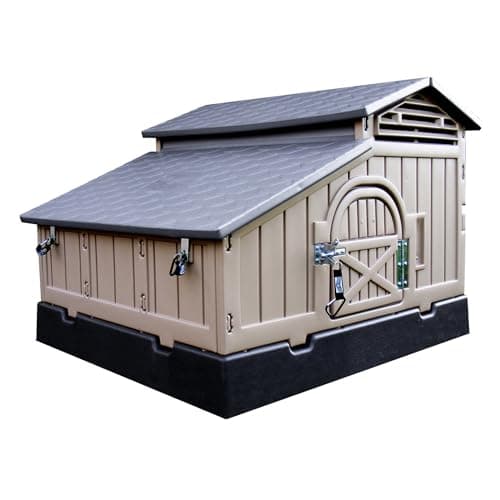
Top pick · Two hens, or a bantam trio
Hatching Time SnapLock Formex Standard Coop
Same material logic as its bigger sibling, but the claim of four hens is the most overstated on this page relative to its size.
What the numbers say
39in x 42in = 11.4 sq ft of enclosed henhouse floor. At 4 sq ft per standard hen that is 2 birds, against a claim of 4.
Figures from Hatching Time published specifications (Amazon listing) · 39"L x 42"W x 29"H · Lightweight double-walled polyethylene
11.4 sq ft of enclosed floor is two standard hens. The listing says four.
For bantams, where the published guidance is nearer 2 sq ft a bird, four is defensible. For standard-size layers it is not, and the listing does not draw that distinction.
The material is the same double-walled polyethylene that makes the larger Snap Lock worth owning. The problem here is arithmetic, not build quality.
Good
- Genuinely easy to clean and impossible to rot
- Small enough for a courtyard or a side return
- Honest fit for a bantam trio
Not so good
- Two standard hens, not the four claimed
- Low roof height limits where you can put roost bars
- Run sold separately
Skip this if: you keep standard-size layers and want more than two. Buy the larger Snap Lock instead - the price step is smaller than the space step.
#ad · how this is funded · price as of October 20, 2026
| Coop | Published size | Floor area | Maker says | Arithmetic says |
|---|---|---|---|---|
| Hatching Time SnapLock Formex Standard Coop | 39"L x 42"W x 29"H | 11.4 sq ft | 4 hens | 2 hens |
Floor area is the maker’s published footprint. Where a unit includes an attached run that figure spans the run too, which makes it a generous reading - the enclosed roosting floor is smaller still. How we work these out.
The alternative
If you keep standard-size layers and want more than two, the answer is the larger Snap Lock rather than this one - reviewed here at 17.3 square feet and four standard hens. The price step between them is smaller than the space step, which is the whole recommendation. Plastic chicken coops covers the format and why the category is so small.
Questions people actually ask
+How many chickens does the Formex Snap Lock Standard hold?
+Is the Formex Snap Lock Standard good for bantams?
+Does it come with a run?
+Should I buy this or the larger Snap Lock?
Sources
Read next
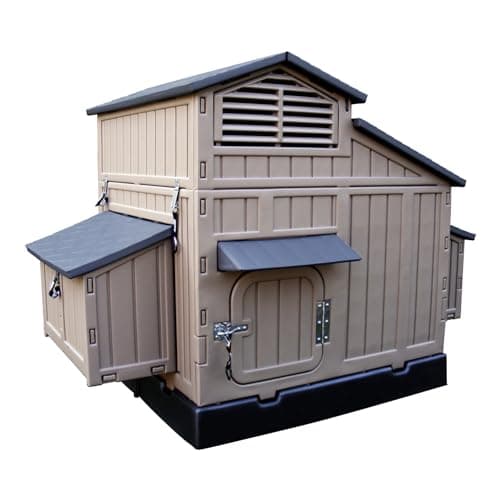
Formex Snap Lock Large Chicken Coop
17.3 sq ft of real henhouse floor in double-walled polyethylene - four hens, not the six on the box.
Plastic chicken coops
Double-walled polyethylene coops measured and assessed - the format with the best material argument and the thinnest choice.
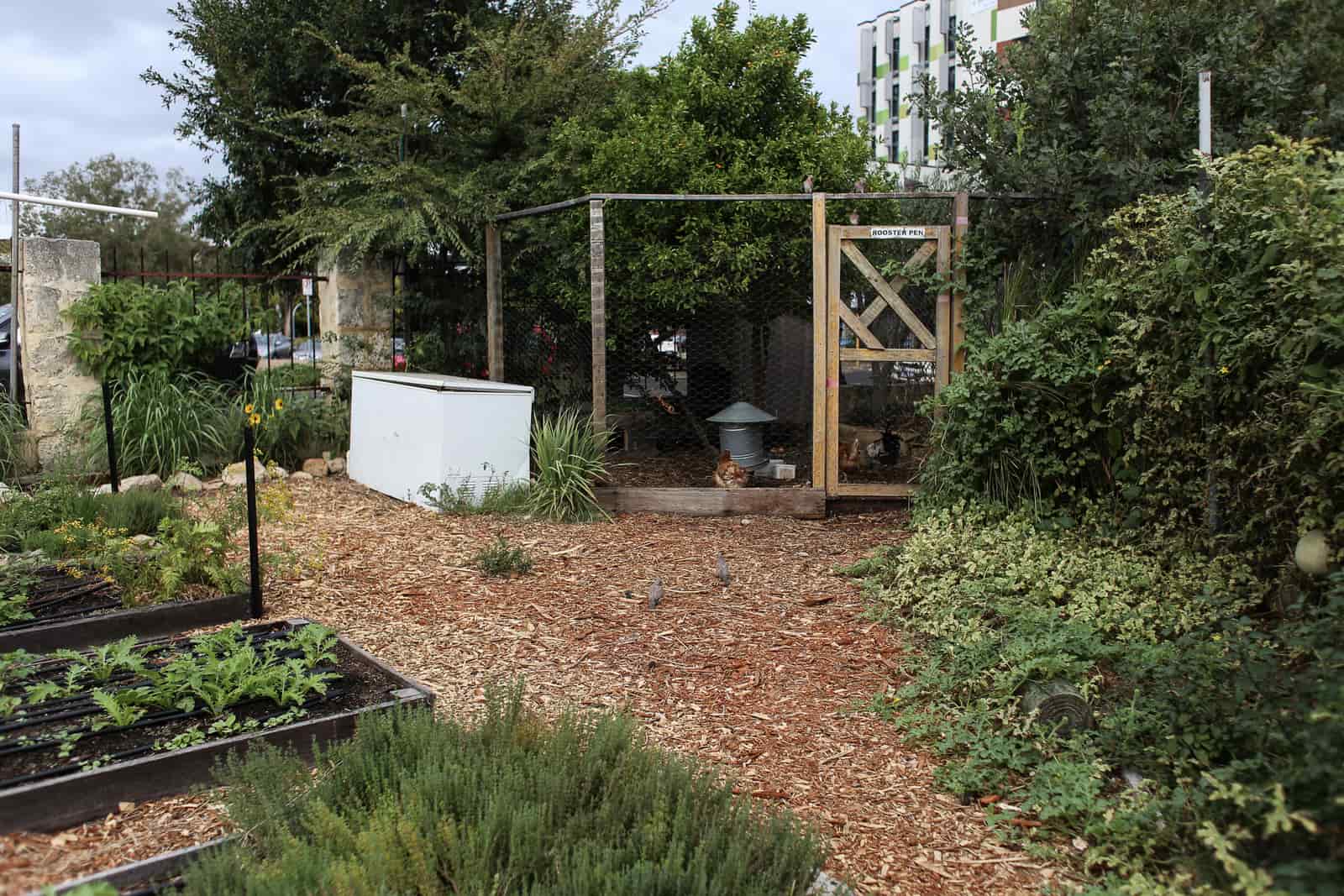
Chicken coops for 2 chickens
Coops that genuinely house a pair, measured from published dimensions - the size class where claims are inflated by the widest ratio.
Chicken coops for silkies and bantams
Six small coops measured against the published bantam figures, with roost height and dryness treated as the deciding factors rather than floor area alone.
Single-model reviews
Individual coop reviews, each measured against the maker's own published dimensions rather than its marketing.
Aivituvin AIR31 against the Formex Snap Lock
Wood against plastic at the small end. One claims nothing, one over-claims - and both hold fewer birds than you think.